
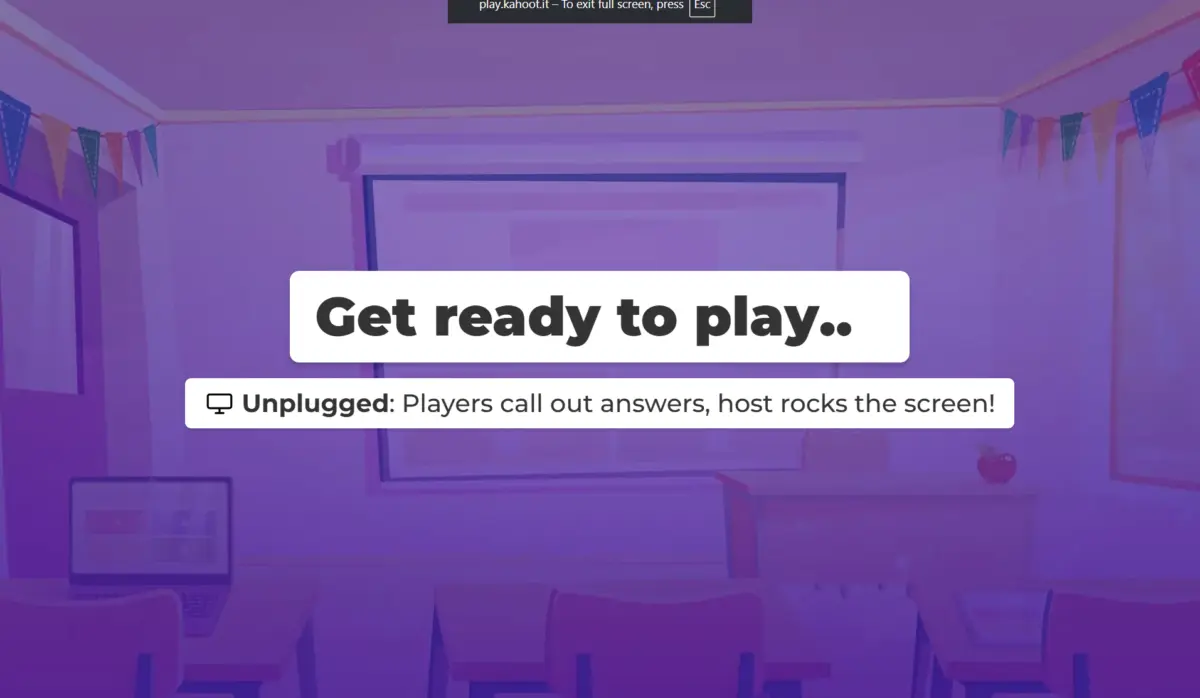
Executive Overview
For over a decade, educational technology has marched under the banner of the 1:1 device model—a paradigm asserting that every student must have a screen in their hands to achieve optimal engagement. Platforms like Kahoot! became household names through this digital-first approach, transforming traditional classrooms into vibrant, gamified arenas powered by smartphones, tablets, and laptops. However, as classrooms evolve, educators increasingly encounter formidable hurdles that challenge the universal viability of screen-based learning.
From strict "no-phone" policies in secondary schools and chronic device shortages in underfunded districts to developmental delays, sensory sensitivities, and special learning needs that can make fast-paced digital interfaces overwhelming, the digital divide has taken on a new shape. Engagement, educators argue, should never be tethered exclusively to a piece of hardware.
In response to these classroom realities, a groundbreaking pedagogical movement is quietly taking root. Partnering with Teacher Ambassadors, innovators are proving that the true "magic" of Kahoot! has never been about the device itself, but rather its foundational design architecture: clear questions, visual answer cues, predictable routines, shared anticipation, and joyful feedback. By decoupling this structure from individual screens, educators across diverse learning environments are pioneering high-engagement, low-tech adaptations. This comprehensive report explores how unplugged experiences, kinesthetic movement, autonomous gallery walks, and tactile storyboards are redefining inclusive education and proving that powerful innovation often lies in thoughtful adaptation rather than technological accumulation.
Detailed Chronology: The Evolution of Classroom Engagement
To understand the significance of the current "offline Kahoot!" movement, it is essential to trace the trajectory of gamified learning over the past fifteen years and examine how systemic shifts in school policies and pedagogical philosophy forced a reevaluation of digital tools.
Phase 1: The Digital-First Boom (Early 2010s–2020)
When interactive quiz platforms first disrupted traditional lecturing, the educational landscape was hungry for digital integration. Schools rushed to secure grants, pass bond measures, and procure tablets and laptops to achieve 1:1 student-to-device ratios. During this era, gamification was synonymous with individual digital interaction. Success was measured by how fast a student could tap an answer on their personal screen, climb a real-time leaderboard, and secure a spot on the coveted end-of-game podium.
Phase 2: The Policy Pendulum and Access Realities (2021–2024)
As digital integration matured, unexpected friction points emerged. Secondary schools nationwide began pushing back against the societal and academic disruptions caused by smartphones, leading to sweeping "phone-free" mandates that locked personal devices away in backpacks or lockers from the first bell to the last. Simultaneously, early childhood and special education educators noted a troubling paradox: while gamification drove high engagement, the fast-paced, high-stimulus nature of digital games often overwhelmed students with sensory sensitivities, developmental delays, or motor skill challenges. Furthermore, socioeconomic disparities meant that device availability fluctuated wildly between—and even within—school districts.
Phase 3: The Pedagogical Renaissance and "Teacher Takeovers" (2025–Present)
Recognizing that exclusionary technology policies risked sidelining valuable instructional tools, educators began experimenting with unconventional methods. Rather than abandoning interactive platforms entirely, innovative teachers started asking a radical question: What happens if we take the game off the screen?
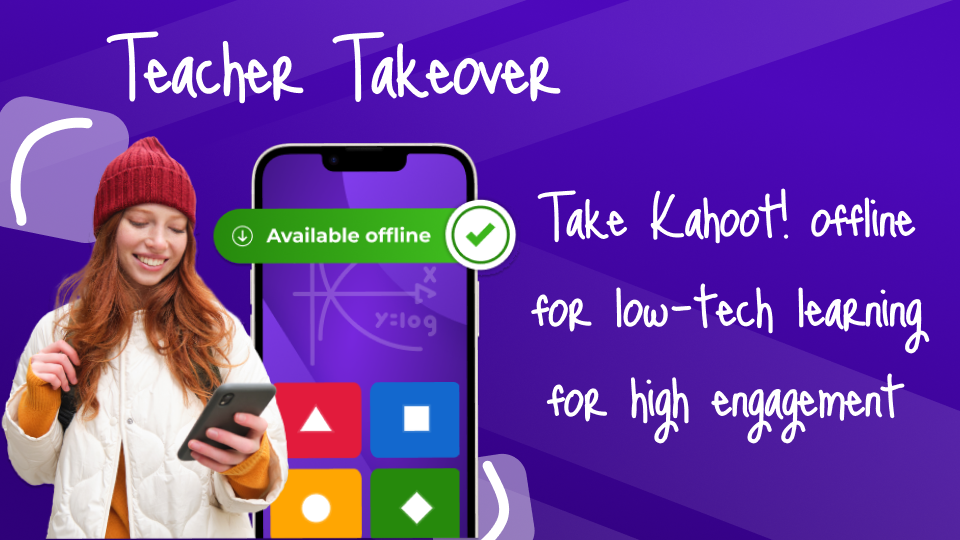
This inquiry sparked the "Teacher Takeover" movement, a grassroots collaboration between educators and platform developers to design formal, supported methodologies for offline play. Features that once required individual devices—such as multiple-choice question structures, pacing controls, and group reflection prompts—were systematically re-engineered for communal, physical, and tactile environments. Today, this shift represents a maturation of edtech philosophy: technology is no longer viewed as an end in itself, but as a flexible framework adaptable to any human environment.
Supporting Context & Metrics: Overcoming Barriers to Learning
The necessity for low-tech and device-free gamification is underscored by a convergence of pedagogical research, technological limitations, and inclusivity mandates. Modern classrooms are complex ecosystems where one-size-fits-all solutions routinely fail.
The Anatomy of Classroom Barriers
- The Infrastructure Gap: In many rural and underfunded urban schools, device shortages remain a chronic issue. Sharing devices often diminishes the collaborative spirit of gamification, leaving students sidelined while a single peer controls the input.
- The Regulatory Landscape: The proliferation of district-wide phone bans has effectively barred personal devices from secondary classrooms, instantly cutting off BYOD (Bring Your Own Device) learning strategies.
- The Neurodiversity Imperative: For students with autism spectrum disorder, ADHD, processing differences, or sensory sensitivities, the relentless ticking clock and hyper-competitive podium culture of digital quizzes can trigger acute anxiety rather than joyful learning.
The Low-Tech Solution Matrix
| Adaptation Strategy | Target Learning Environment | Primary Pedagogical Benefit | Technical Requirements |
|---|---|---|---|
| Classic Unplugged | Device-restricted classrooms, corporate training | Removes speed pressure; fosters collaborative group discussion | Single host screen / projector only |
| Kinesthetic Four-Corners | Primary & middle school, physical education | Combines academic review with physical "brain breaks" | Classroom floor space, host screen |
| Gallery Walk | Differentiated learning environments | Promotes student autonomy, peer collaboration, and permanent artifacts | Printed question cards, stations |
| DIY Storyboards | Special education, occupational therapy | Builds fine-motor skills, executive functioning, and tactile engagement | Physical cards, paper, scissors |
By shifting the locus of interaction from individual screens to communal spaces, these strategies preserve the dopaminergic and cognitive benefits of gamified learning while dismantling the barriers that exclude vulnerable or under-resourced learners.
Official Statements and Methodological Frameworks
Educational leaders and curriculum designers have formalized these grassroots experiments into actionable, structured methodologies. Below is an examination of the four core implementation frameworks endorsed by Teacher Ambassadors and instructional specialists.
1. The Classic Unplugged Experience: Collaboration Over Competition
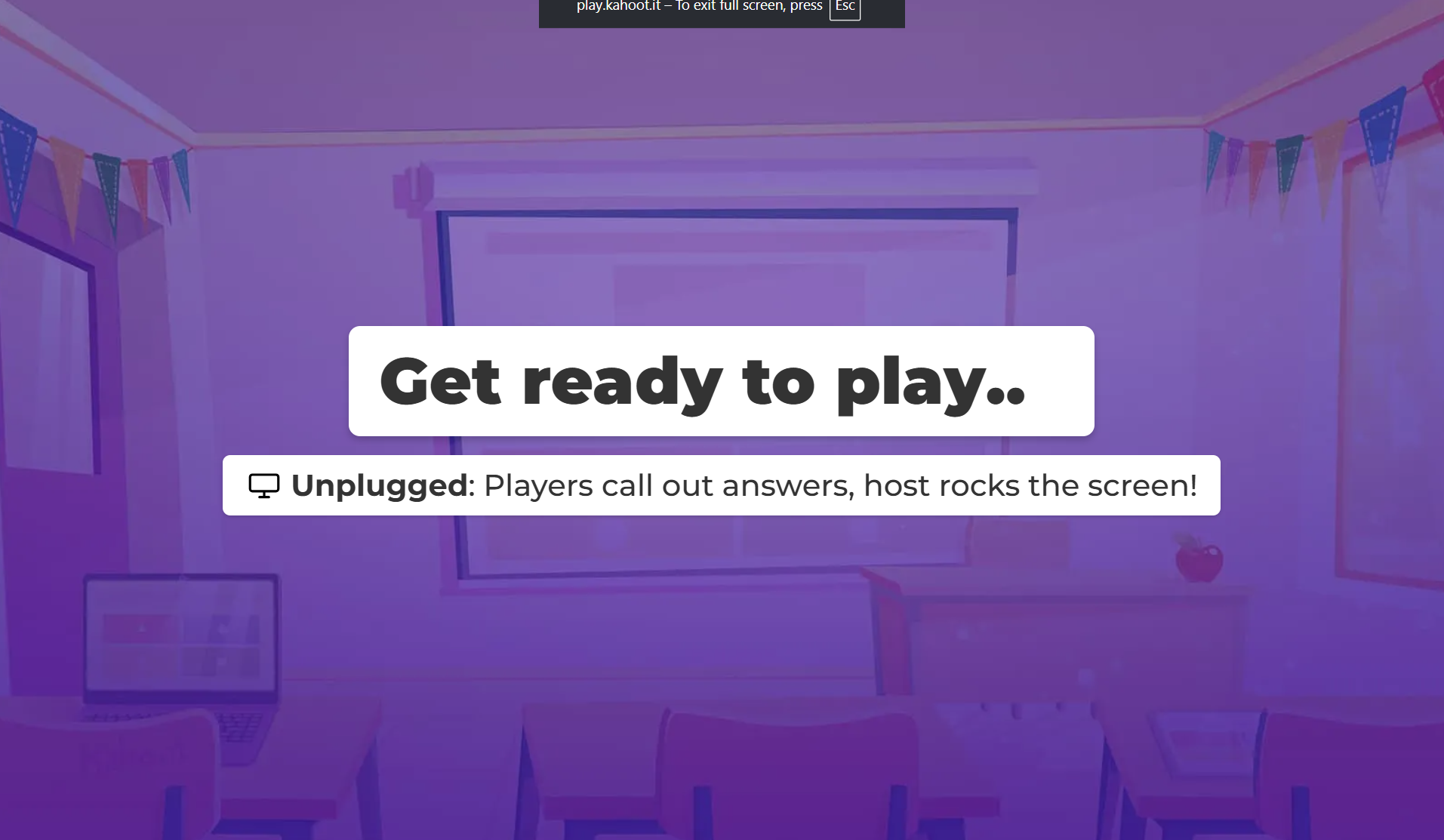
Designed specifically for content review and formative assessment without the anxiety of a ticking clock, the Classic Unplugged mode mirrors the philosophy of self-study tools.
- How it Works: The host projects the question on a central screen. Instead of tapping individual devices, the room engages in open dialogue, calling out answers collectively. The host then inputs the consensus answer on the main screen.
- The Podium Shift: Crucially, the traditional individual podium is replaced by a collective celebration screen that tallies the group’s overall score (e.g., 3 out of 10 correct).
- Expert Insight: Educational specialists note that this format eliminates performance anxiety. Because the error is absorbed by the collective rather than the individual, struggling learners feel safe to voice hypotheses and participate actively.
2. Kinesthetic Movement and Whole-Body Quizzing
Transforming a traditional multiple-choice quiz into a physical, spatial experience turns the classroom into a living game board.
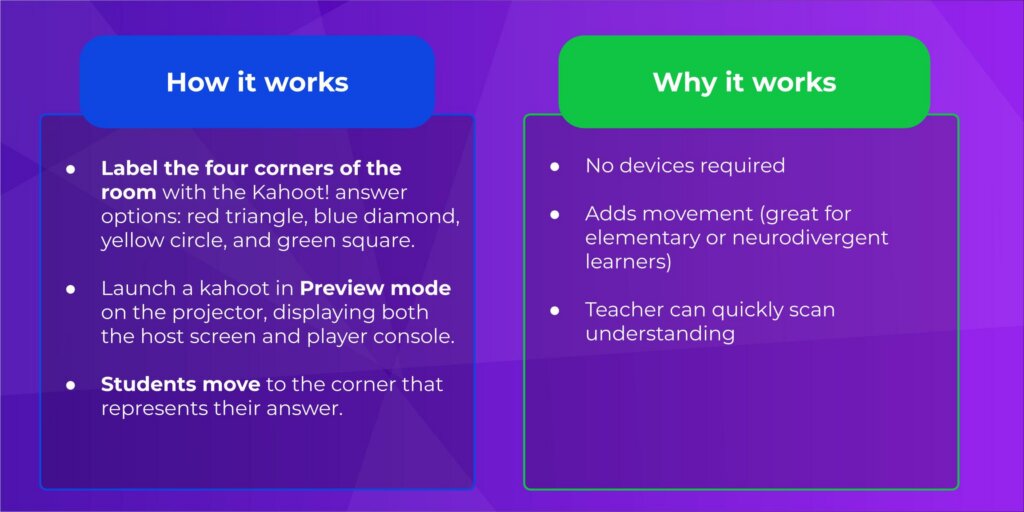
- Execution: Each corner of the classroom is designated as a multiple-choice option (A, B, C, D). Utilizing platform features that allow up to six answer choices, teachers can even designate fifth and sixth spatial zones.
- The Group-Think Protocol: Students physically move to the corner corresponding to their chosen answer. The corner with the highest concentration of students represents the class consensus, which the teacher then selects on the main board.
- Cognitive and Physical Synergy: This method delivers a dual benefit: students receive an essential kinesthetic "brain break" that reactivates neural pathways through movement, while collaborative peer discussions naturally occur as students negotiate which corner to move toward.
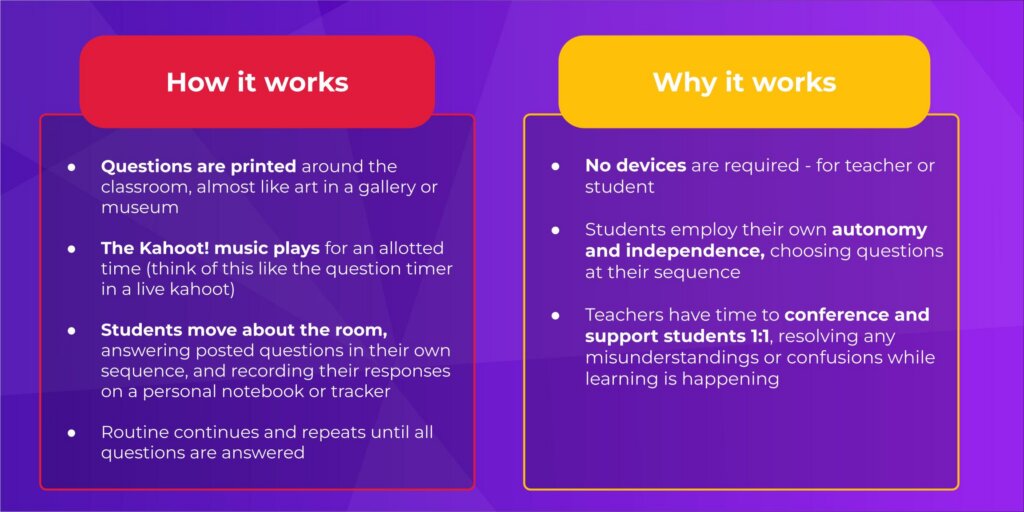
3. The Autonomous "Gallery Walk"
When curriculum sequencing is flexible and students benefit from self-directed pacing, the Gallery Walk adaptation offers a powerful alternative to synchronized digital gameplay.
- Implementation: Teachers print out Kahoot! questions and place them at distinct stations around the room. Students, working individually or in pairs, navigate the room at their own pace, reading prompts, discussing options, and recording their answers.
- Tangible Learning Records: Unlike digital sessions that yield ephemeral data reports, Gallery Walks generate permanent physical artifacts of student work. These artifacts can be displayed, portfolioed, or revisited for remediation.
- Blended Extension: To cement understanding, educators often pair the in-class physical Gallery Walk with a digital, online Kahoot assignment assigned as homework, bridging tactile exploration with digital reinforcement.
4. DIY Storyboards for Motor Skills and Executive Functioning
In early childhood education, special education settings, and occupational therapy programs, fine-motor skill development is just as critical as academic mastery.
- The Tactile Workflow: Educators print out physical cards featuring Kahoot! question prompts and answer choices. Students physically manipulate, sort, match, and separate these cards to complete the quiz.
- Dual-Standard Efficiency: This approach achieves two distinct instructional goals simultaneously: students master curricular content while exercising fine-motor precision (cutting, grasping, sorting) and executive functioning (organizing sequential tasks).
- Resource Optimization: Teachers are encouraged to leverage the platform’s extensive Discover library, searching by specific curriculum standards to source pre-made content that can be instantly printed and adapted into tactile learning cards.
Future Outlook: The Hybrid Classroom of Tomorrow
The evolution of offline gamification points toward a mature, nuanced future for educational technology—one where the false dichotomy between "digital" and "traditional" teaching is permanently dissolved.
As school districts grapple with shifting device policies, screen-time fatigue, and the imperative of inclusive design, the demand for flexible, platform-agnostic tools is projected to soar. Future iterations of instructional software will likely feature native "unplugged companion" toolkits, enabling educators to seamlessly toggle between high-tech individual gameplay and low-tech communal experiences using the same underlying content repository.
Ultimately, the "Teacher Takeover" movement signals a profound professional empowerment among educators. By recognizing that the essence of great teaching lies not in the machinery we use, but in the human connections we foster, teachers are reclaiming control over their learning environments. Engagement is no longer bound by the battery life of a tablet or restricted by the boundaries of a phone ban; it is driven by curiosity, collaboration, and the timeless joy of shared discovery.

