
Executive Overview
History is rarely experienced as a grand, sweeping narrative in real-time; instead, it arrives in jagged, disorienting shards. For previous generations, the assassination of John F. Kennedy, the civil rights marches led by Martin Luther King Jr., or the live broadcast of humanity setting foot on the moon served as immutable cultural flashpoints. These were the moments that cleaved time cleanly into a "before" and an "after."
For Generation X and Millennials, September 11, 2001, stands as the defining rupture of modern life. It was a day that fundamentally altered the psychological landscape of the Western world, upending geopolitical norms, rewriting domestic security protocols, and stripping away a naive sense of invulnerability born of late-20th-century stability.
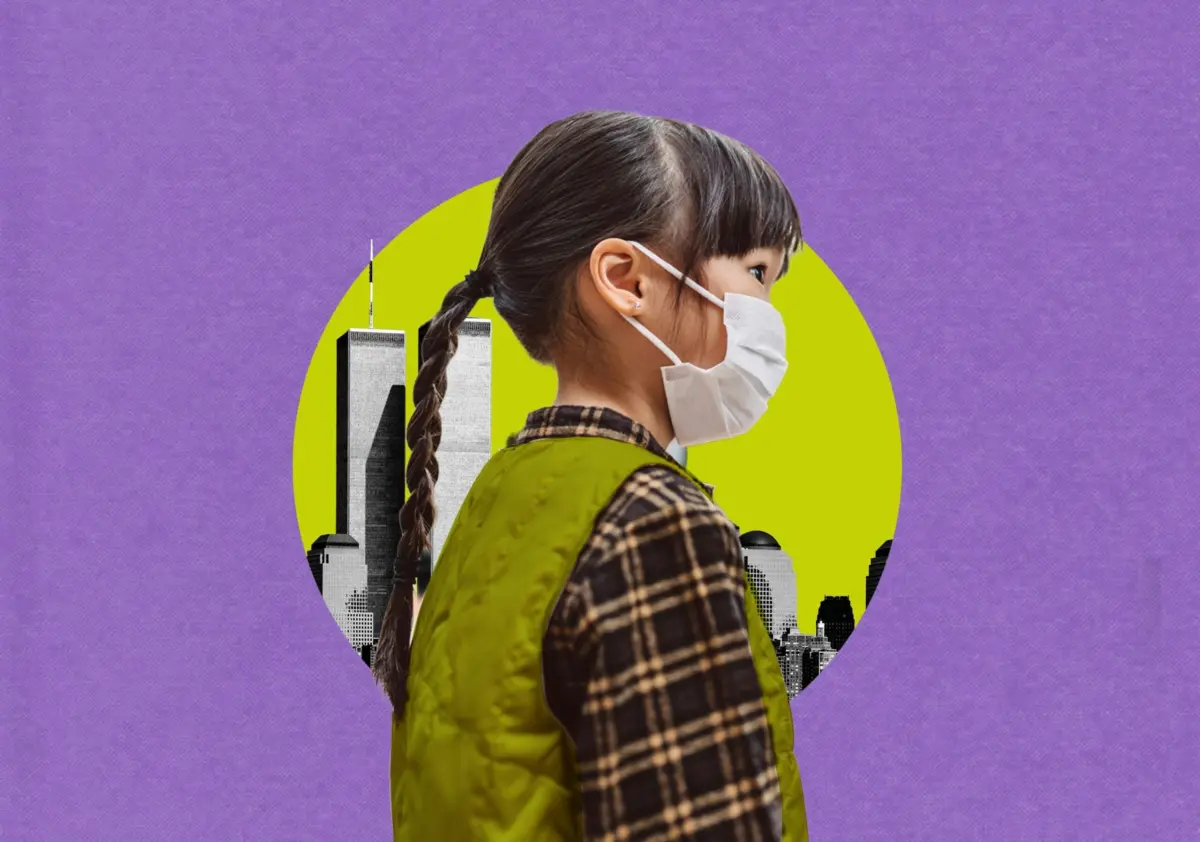
However, time marches forward relentlessly, creating a fascinating generational paradox. The events that traumatize and define one cohort inevitably become historical curriculum for the next. Today’s children do not remember the acrid smoke billowing over Manhattan, the chaotic silence of grounded commercial airspace, or the frantic television broadcasts of that Tuesday morning. To them, 9/11 is a chapter in a textbook, a worksheet with a smiley face at the top, or a solemn exhibit behind museum glass. Their own defining generational crucible—the COVID-19 pandemic, alongside contemporary geopolitical conflicts and domestic civil unrest—has forged a distinctly different worldview.
This article examines the transmission of collective trauma across generations, exploring how historical flashpoints shape parenting, civic consciousness, and the psychological architecture of children growing up in a post-9/11 world. By analyzing the transition of 9/11 from lived experience to historical artifact, and juxtaposing it with the multi-year disruption of the pandemic era, we uncover how historical weight is shouldered, metabolized, and ultimately handed down to the future.
Detailed Chronology: From the Classroom to the Memorial
To understand the enduring psychological footprint of September 11, one must retrace the exact mechanics of how the day unfolded for those on the cusp of adulthood.
September 11, 2001: The Rural Pennsylvania Perspective
While the images of the Twin Towers collapsing dominated global television screens, the reality of the day was felt differently across the American landscape. In rural southwestern Pennsylvania, a high school senior sat in a morning math class, dimly aware of a mounting, unnameable panic rippling through the institutional hallways. Teachers attempted to maintain structural normalcy, whispering in doorways and trying to silence the mounting static of rumor.
The illusion of detachment shattered entirely when a biology instructor burst into the classroom with an urgent directive: turn on the television immediately. Moments later, the second hijacked airliner struck the World Trade Center.
As the morning progressed, the sheer scale of the coordinated attacks became terrifyingly apparent. By mid-morning, news reached the local community that United Airlines Flight 93 had crashed into an abandoned strip-mine field in Shanksville, Pennsylvania—located dangerously close to popular regional camping grounds and rural homesteads. For students in that region, the abstract terror of terrorism suddenly acquired local coordinates. The world was no longer safely distant; it was volatile, porous, and profoundly unsafe.
The Decades-Long Archival Journey
In the years that followed, that singular Tuesday morning transformed from an active emergency into an institutionalized ritual of remembrance. For the generation that lived through it, the memory remains sensory: the smell of jet fuel, the endless loop of collapsing towers, the tolling of memorial bells reading out lists of names.
For their children, however, the chronology of 9/11 is mediated entirely through secondary sources:
- Early Childhood: Picture books detailing the events sit on suburban bookshelves alongside biographies of historical figures, lending the tragedy an aura of distant mythology.
- Primary Education: Standardized worksheets, classroom reading modules, and television news anniversary clips reduce a complex geopolitical catastrophe into digestible, standardized segments.
- Adolescence: Digital literacy lessons and standardized testing modules (such as digital learning platforms and curriculum units) treat the day as a fixed historical marker, akin to Pearl Harbor or the assassination of Archduke Ferdinand.
Physical Pilgrimages to Sacred Ground
Recognizing the widening gulf between lived memory and historical awareness, parents increasingly turn to physical memorials to bridge the gap. Trips to the Flight 93 National Memorial in Shanksville, the Pentagon Memorial in Washington, D.C., and the National September 11 Memorial & Museum in New York City serve as secular pilgrimages.
During guided tours at these sites, children often exhibit a spontaneous, solemn quietude. Standing before the stark, minimalist architecture designed to trace the final flight path of heroes or the footprint of fallen towers, young minds absorb the gravitational pull of history. They collect Junior Ranger badges, souvenir booklets, and educational pamphlets—tangible artifacts that transform abstract history into a personal, tactile memory.
Supporting Context & Metrics: The Post-9/11 Childhood Ecosystem
The impact of September 11 extends far beyond the emotional resonance of memorial sites; it has fundamentally reorganized the physical and regulatory infrastructure of childhood.
The Security State and Daily Life
Children born decades after 2001 inhabit a deeply institutionalized security state. Every facet of modern life bears the invisible scaffolding of post-9/11 legislation and cultural shifts:
- Aviation and Travel: Enhanced Transportation Security Administration (TSA) protocols mean that children cannot fathom an era when family members could walk loved ones directly to boarding gates. Even toy selections—ranging from novelty gel items to themed play equipment—are strictly regulated under federal aviation safety warnings.
- Surveillance and Privacy: The normalization of algorithmic monitoring, enhanced school campus security, and persistent digital surveillance stems directly from the legislative expansion of executive power following the 2001 attacks (such as the USA PATRIOT Act).
- Geopolitical Anxiety: Global politics are no longer background noise; they are immediate realities. Contemporary children navigate school active-shooter drills—a direct institutional descendant of heightened threat awareness—alongside persistent media exposure to global conflicts in Eastern Europe, the Middle East, and domestic political polarization.
The Pandemic Paradigm Shift
While parents view the world through the lens of 9/11, their children’s foundational trauma is of an entirely different variety. The COVID-19 pandemic represented a protracted, multi-year disruption that fundamentally altered formative developmental stages.
| Generational Flashpoint | Nature of Disruption | Primary Psychological Impact | Long-Term Societal Legacy |
|---|---|---|---|
| September 11, 2001 | Acute, catastrophic single-day event. | Loss of national innocence; awakening to external geopolitical threats. | Transformation of global travel, domestic surveillance, and security theater. |
| The COVID-19 Pandemic | Chronic, multi-year systemic crisis. | Social isolation, educational disruption, and health-related anxiety. | Re-evaluation of public health infrastructure, remote work/schooling, and youth mental health crises. |
Where 9/11 was an explosive morning that interrupted a normal day, the pandemic was an invisible, lingering fog that canceled school years, isolated children from peers, and hospitalized family members. The artifacts of this era are digital: archived Zoom classrooms, public radio segments documenting vaccine rollouts, and lingering gaps in academic and social development.
Official Statements & Expert Perspectives
Sociologists, developmental psychologists, and cultural historians frequently emphasize that generational trauma is neither inherently destructive nor entirely avoidable; rather, it is the primary mechanism by which historical consciousness is forged.
Sociological Implications of Shared Memory
Dr. Elena Vance, a professor of generational sociology at a prominent East Coast university, notes that collective memory operates as an invisible inheritance:
"Every generation inherits the unresolved anxieties of its predecessors. When Millennials and Gen X parents recount the events of their youth, they are attempting to inoculate their children against a dangerous world. However, children must also process the unique systemic crises of their own era—primarily public health emergencies and ecological instability. The friction between these two layers of awareness is where modern identity is forged."
Educational Frameworks and Trauma-Informed Teaching
Child psychologists stress that how historical events are communicated to youth shapes their resilience. Modern educational curricula increasingly favor trauma-informed approaches, recognizing that children absorb the ambient stress of their parents alongside official lesson plans.
Dr. Marcus Holloway, a specialist in youth cognitive development, points out:
"It is not just the historical fact of 9/11 or the pandemic that impacts a child; it is the emotional climate in which those facts are delivered. When parents and educators model resilience, young people learn to view historic disruption not as a reason for despair, but as a call for collective problem-solving."
Future Outlook: Inheriting the Mess and Creating Beauty
As we look toward the horizon—with travel plans extending to historical landmarks in New York City for the coming years, and an aging demographic of parents realizing that their high school memories now belong to a quarter-century-old archive—the overarching question remains: What do we do with the accumulated weight of history?
The Intergenerational Cycle
The building blocks of a life are constructed from a mosaic of personal milestones and global disruptions. The events that shaped our parents made them the architects of our upbringing; the events that shaped us inform how we guide our children. A child growing up in the post-pandemic, post-9/11 era absorbs multiple layers of historic friction:
- The inherited caution of a world altered by terrorism and border security.
- The digital resilience forged during periods of prolonged isolation and civic unrest.
- The acute awareness of intersecting global crises, from geopolitical instability to economic uncertainty.
Finding Hope in Contemporary Literature
In many households, this complex emotional reality is met not with cynicism, but with a deliberate choice toward grace and creation. As reflected in contemporary artistic touchstones—such as Maggie Smith’s acclaimed poem Good Bones, which hangs framed in living rooms across the nation—the modern parenting ethos acknowledges the profound brokenness of the world while remaining fiercely committed to repairing it.
The poem’s central thesis—that the world is undeniably heavy, difficult, and sometimes terrifying, but that our duty as adults is to construct a livable, beautiful reality within it—serves as a fitting manifesto for contemporary child-rearing.
Ultimately, the children of today will inherit a deeply complicated global landscape. Yet, armed with the historical consciousness passed down from those who watched the towers fall, combined with the hard-won adaptability learned during their own era of isolation, they possess the unique capacity to take the fragmented pieces of their inheritance and forge something durable, empathetic, and profoundly resilient.

