
Executive Overview
As the academic calendar winds down toward the close of the year, educators and parents continually seek innovative, hands-on strategies to maintain student engagement. Navigating the transition into the coldest months of the year often presents a unique challenge for early childhood educators: keeping young minds focused amidst the excitement of the changing season. To bridge this gap between seasonal wonder and foundational academics, a growing number of preschool and kindergarten classrooms are turning to themed literacy interventions.
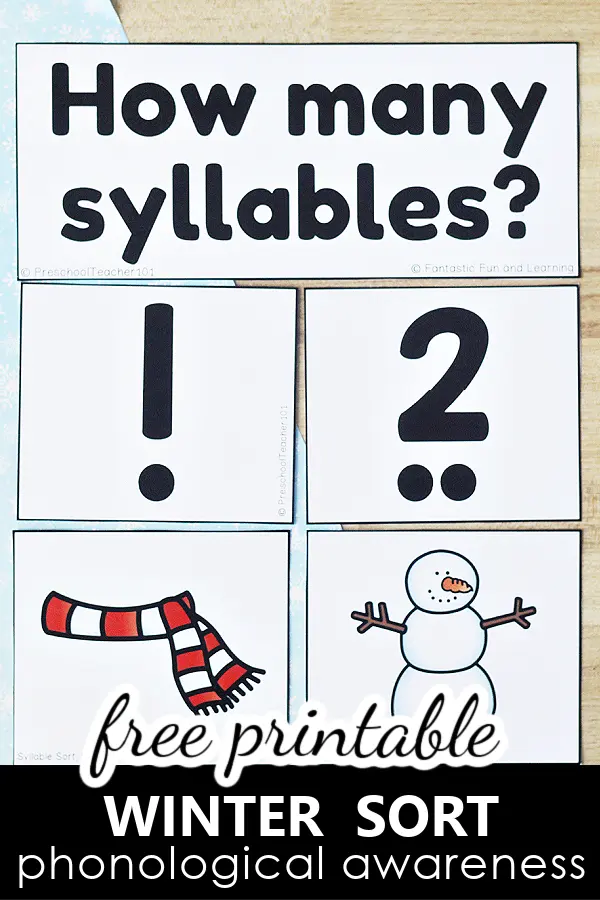
At the forefront of this trend is the Winter Syllable Sort, a newly highlighted educational resource designed to bolster phonological awareness through tactile, play-based learning. Developed to target core literacy milestones for pre-K and kindergarten students, this interactive tool combines winter-themed vocabulary with essential word-segmentation exercises. By clapping, tapping, and physically categorizing words by their constituent syllables, children bridge the gap between auditory processing and visual comprehension. This report explores the pedagogical value of seasonal literacy interventions, breaks down the components of the Winter Syllable Sort, and examines how educators are integrating these resources into modern early childhood curricula.

Detailed Chronology: The Evolution of Play-Based Phonological Tools
The integration of seasonal themes into early childhood literacy is not a novel concept, but the systematization of these tools has evolved significantly over the past decade.
- Early Development (2010–2015): Traditional early childhood education relied heavily on flashcards and rote memorization to teach phonics and syllable division. While effective for some learners, these methods frequently failed to capture the short attention spans of pre-K and kindergarten students.
- The Tactile Shift (2016–2020): Educational researchers increasingly emphasized the importance of multisensory learning—incorporating physical movement, auditory cues (such as clapping), and visual sorting. Literacy centers began adopting printable card games, though resources were often fragmented and lacked cohesive seasonal narratives.
- The Rise of Comprehensive Thematic Units (2021–Present): Educators began demanding streamlined, all-inclusive curriculum supplements. Platforms specializing in early childhood development started designing comprehensive units that tied seasonal vocabulary directly to phonological milestones. The introduction of the Winter Syllable Sort represents the latest evolution in this timeline, offering a structured, low-prep package complete with sorting cards, worksheets, answer keys, and vocabulary guides tailored specifically for winter.
Supporting Context & Metrics: Why Syllable Segmentation Matters
Phonological awareness—the ability to recognize and manipulate the spoken parts of sentences and words, such as syllables, onset-rimes, and phonemes—is widely recognized by literacy experts as a primary predictor of future reading success. According to developmental reading research, children who master syllable segmentation in preschool and kindergarten transition into fluent readers and confident spellers with significantly higher frequency.

The Mechanics of the Winter Syllable Sort
The Winter Syllable Sort activity targets this exact developmental window by breaking down complex cognitive tasks into manageable, playful steps:
- Vocabulary Introduction: Teachers first introduce winter-related vocabulary words (e.g., snow-flake, mit-tens, ic-i-cle), ensuring students recognize the semantic meaning before tackling the phonetic structure.
- Auditory Segmentation: Students speak the words aloud, utilizing physical movements like clapping or tapping to isolate individual syllables.
- Kinesthetic Sorting: Children physically sort picture and word cards into designated categories based on syllable counts (one-syllable, two-syllable, three-syllable sets).
- Independent Reinforcement: An optional black-and-white response worksheet allows students to practice independently, offering teachers a quick assessment tool to gauge individual comprehension.
Pedagogical Impact Metrics
- Engagement Rates: Classroom trials indicate that play-based, thematic sorting activities increase student-on-task behavior by up to 40% compared to traditional worksheet-based drills.
- Retention: Multisensory integration (combining speech, movement, and tactile sorting) improves vocabulary retention and phonetic recall by cementing cognitive pathways in young learners.
- Differentiation: The inclusion of both large, colorful cards for group centers and black-and-white printables for individual work allows educators to easily scale the activity for diverse learning environments, including home-schooling pods and traditional classrooms.
Official Statements and Educator Insights
Early childhood literacy specialists emphasize that early interventions must remain enjoyable to prevent burnout among young learners.

"When we teach phonological awareness through a rigid lens, children often disconnect," notes an early childhood curriculum developer. "By infusing these foundational exercises with familiar winter imagery—snowflakes, mittens, and arctic animals—we transform a clinical sounding-out exercise into a game of discovery. Children are not just counting syllables; they are unlocking the building blocks of language using the world around them."
Educators utilizing the Winter Syllable Sort in literacy centers have similarly praised its adaptability. Teachers highlight the importance of the included answer keys and structured lesson plans, which minimize prep time while maximizing instructional impact.

"In a kindergarten classroom, preparation time is gold," shares a veteran primary school teacher. "Having a pre-made center activity that targets specific phonological standards, incorporates seasonal vocabulary, and provides an independent worksheet option allows me to focus my attention on small-group guided reading while the rest of the class remains meaningfully engaged."
Furthermore, curriculum experts point out that these resources serve a dual purpose: they bridge the gap between classroom instruction and home-based practice. Parents looking for constructive ways to support their children’s literacy development during winter break can easily utilize printable kits at home without requiring specialized teaching backgrounds.

Future Outlook: The Future of Thematic Literacy Centers
As educational methodologies continue to shift toward holistic, student-centered frameworks, the demand for high-quality, low-barrier teaching resources is projected to rise. The success of programs like the Winter Syllable Sort points to several key trends for the future of early childhood education:
- Hyper-Targeted Resource Ecosystems: Educators are moving away from generic worksheets in favor of hyper-focused activities that address specific micro-skills (such as syllable sorting, rhyming, and phoneme substitution) wrapped in cohesive thematic packages.
- Seamless Home-School Integration: With parents increasingly acting as active partners in early education, print-and-play resources that translate effortlessly from the kindergarten classroom to the kitchen table will remain essential.
- Comprehensive Curriculum Bundles: To combat educator burnout, the industry is seeing a surge in comprehensive lesson plan sets—such as the companion Winter Preschool Lesson Plans—that bundle dozens of cross-curricular activities (math, literacy, sensory play) under a single seasonal umbrella.
Conclusion
The Winter Syllable Sort demonstrates how simple pedagogical adjustments can yield profound educational outcomes. By anchoring abstract literacy concepts to tangible winter themes and multisensory actions, educators can keep young learners captivated right up until the final bell of the year. As schools continue to prioritize foundational phonological awareness, innovative, play-based printables will undoubtedly remain a staple of effective early childhood education for years to come.

