
Executive Overview
For generations, chemistry education has battled a persistent public relations problem. Concepts such as molecular polarity, ion exchanges, and the pH scale are routinely introduced to students through dense textbooks, abstract lectures, and rote memorization—methods that frequently elicit groans, sighs, and widespread academic disengagement. However, an educational paradigm shift is underway within science, technology, engineering, and mathematics (STEM) pedagogy. Educators and curriculum developers are increasingly turning to experiential learning, transforming kitchen pantries and backyards into dynamic laboratories.
At the center of this movement are fundamental chemical principles: acids and bases. Far from being confined to industrial manufacturing plants or hazardous waste facilities, these chemical agents govern our daily lives. They dictate the tart flavor of a morning glass of orange juice, the cleaning efficacy of household detergents, the physiological digestion of food in the human stomach, and even the structural integrity of natural phenomena.
By bridging the gap between abstract theoretical chemistry and tangible, sensory-rich interactions, modern educators are demystifying these substances. This report provides an authoritative examination of the fundamental science governing acids and bases, investigates the mechanics of the pH scale, and details five immersive, hands-on empirical projects designed to cultivate scientific literacy in young minds. Through structured experimentation, students transition from passive observers of science to active participants in the scientific method.
Detailed Chronology: The Evolution of Chemical Education and pH Theory
To understand how contemporary educators teach acids and bases, one must examine the historical trajectory of how science itself categorized these substances. The pedagogical evolution mirrors the scientific timeline of chemical discovery.
- Pre-17th Century (Empirical Observations): Early human understanding of acids and bases was entirely sensory and utilitarian. Ancient civilizations recognized acids by their sour taste (derived from the Latin acidus, meaning sour) and bases (or alkalis, derived from the Arabic al-qalyā, meaning "calcined ashes") by their slippery feel and bitter profiles. These substances were used empirically in food preservation, soap making, and metallurgy without any theoretical framework.
- The 17th Century (Robert Boyle’s Indicators): English chemist Robert Boyle pioneered the use of plant extracts as chemical indicators. By observing how substances like syrup of violets changed color when exposed to acidic or basic solutions, Boyle established the first systematic method for differentiating chemical classes, laying the groundwork for modern diagnostic testing.
- Late 19th Century (The Arrhenius Definition): Swedish physicist and chemist Svante Arrhenius revolutionized chemical education by proposing the ionic theory of dissociation. Arrhenius defined acids as substances that dissociate in water to yield hydrogen ions ($H^+$), and bases as substances that yield hydroxide ions ($OH^-$). This provided the first mathematical and atomic-level explanation for chemical behaviors, shifting education from qualitative description to quantitative analysis.
- 1923 (The Brønsted-Lowry and Lewis Expansions): Johannes Nicolaus Brønsted and Thomas Martin Lowry independently expanded the definition, characterizing acids as proton donors and bases as proton acceptors. Concurrently, Gilbert N. Lewis introduced an electronic definition. These advanced frameworks formed the basis of secondary school chemistry curricula worldwide.
- The Early 20th Century (Søren Sørensen and the pH Scale): Danish chemist Søren Peder Lauritz Sørensen invented the pH scale in 1909 while working at the Carlsberg Laboratory. Needing a simple, logarithmic method to express varying hydrogen ion concentrations in brewing beer, he created the "potential of hydrogen" scale ranging from 0 to 14. This innovation provided educators with a graphical tool that remains a cornerstone of science classrooms today.
- Modern Era (Experiential STEM Integration): Over the past three decades, educational research has confirmed that kinesthetic and inquiry-based learning dramatically improves conceptual retention. Contemporary STEM guidelines emphasize early exposure to chemistry through safe, household-based experimentation, replacing rote memorization with empirical discovery.
Supporting Context & Metrics: The Chemistry of Acids and Bases
To effectively communicate these concepts to students, educators must master the underlying chemical mechanics. At their core, acids and bases are defined by the behavior of tiny atoms and molecules known as ions.
Defining Ions, Hydrogen, and Hydroxide
All matter is composed of atoms, but when atoms or molecules gain or lose electrical charges, they become ions.
- Acids are characterized by a high concentration of hydrogen ions ($H^+$). When an acid is dissolved in water, it readily releases these protons. This abundance of free hydrogen ions is responsible for the characteristic sharp, tangy, or sour taste found in edible acids such as citric acid in lemons and acetic acid in vinegar.
- Bases (often referred to as alkaline solutions) are characterized by a high concentration of hydroxide ions ($OH^-$), which consist of one oxygen atom and one hydrogen atom bound together. When dissolved in water, basic solutions often feel slippery or soapy to the touch and can taste bitter.
The Anatomy of the pH Scale
The pH scale is a logarithmic measure of the activity of hydrogen ions in a solution. Ranging numerically from 0 to 14:
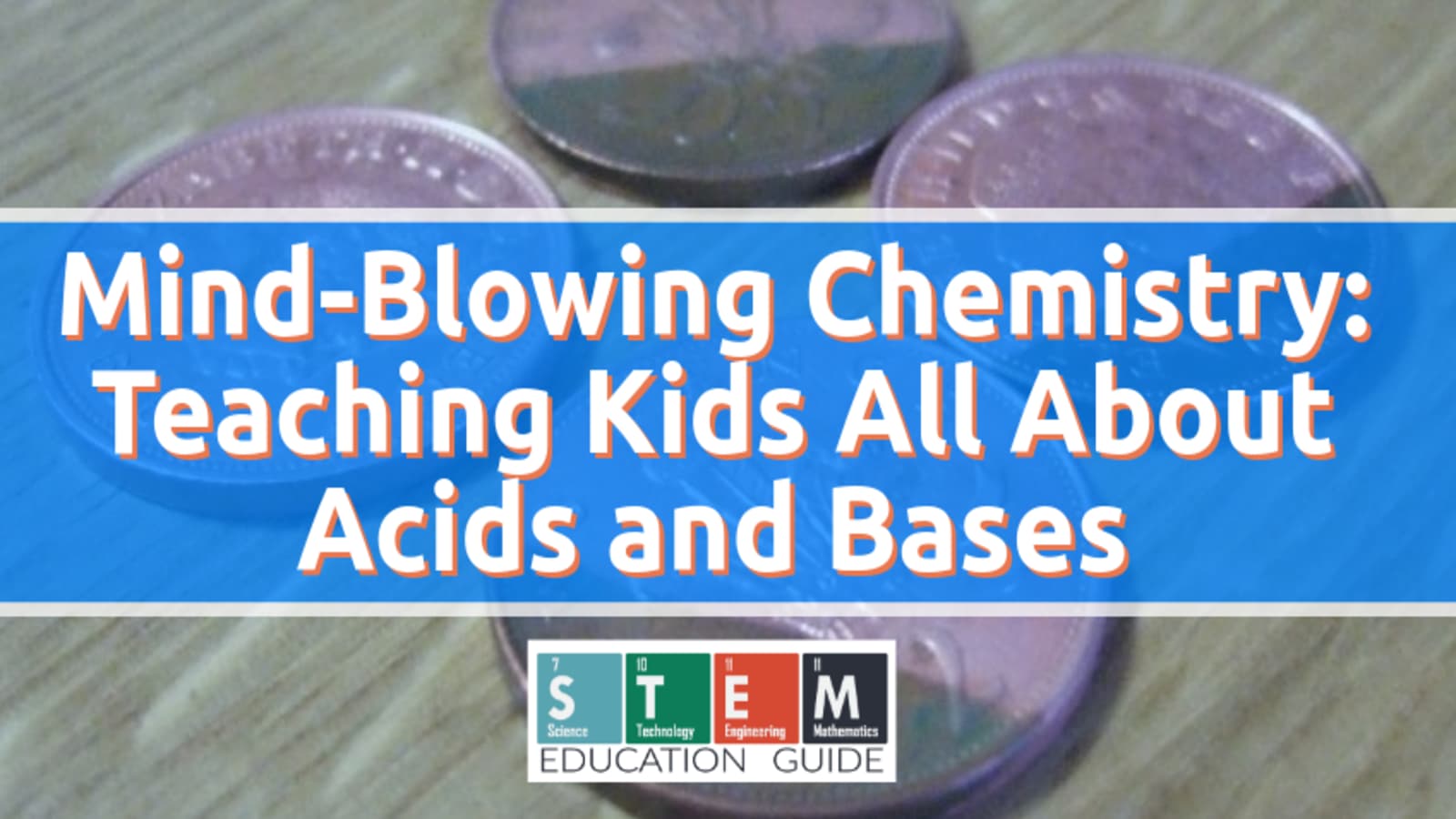
- Acidic Range (0 to <7): Substances with a pH below 7 are acidic. The lower the number, the stronger the acid and the higher the concentration of hydrogen ions. Strong acids, such as concentrated hydrochloric acid or automotive battery acid, possess corrosive properties capable of dissolving organic tissues and metallic structures. Weak acids, such as carbonic acid in carbonated beverages or malic acid in apples, are biologically mild.
- Neutral Point (7.0): Pure water sits precisely at the midpoint, representing a balanced state where hydrogen ions and hydroxide ions exist in equal proportions.
- Basic Range (>7 to 14): Substances with a pH above 7 are basic or alkaline. The higher the number, the stronger the base and the higher the concentration of hydroxide ions. Household agents like baking soda, liquid dish soap, and bleach reside here. Strong bases, such as sodium hydroxide (lye) or household ammonia, can cause severe chemical burns and are dangerous to inhale or handle without proper protection.
| Substance Classification | pH Range | Typical Ion Characteristics | Household Examples |
|---|---|---|---|
| Strong Acid | 0 – 3 | High concentration of $H^+$ ions | Battery acid, lemon juice |
| Weak Acid | 4 – 6 | Moderate concentration of $H^+$ ions | Black coffee, milk, tomato juice |
| Neutral | 7 | Balanced $H^+$ and $OH^-$ ions | Pure water |
| Weak Base | 8 – 10 | Moderate concentration of $OH^-$ ions | Baking soda, sea water |
| Strong Base | 11 – 14 | High concentration of $OH^-$ ions | Bleach, oven cleaner, drain opener |
Official Statements and Educational Guidelines
Educational authorities and scientific institutions worldwide have increasingly emphasized the necessity of inquiry-based science education in early childhood and adolescent development.
Dr. Aris Thorne, a prominent researcher in STEM curriculum design, notes: "When children are told that science is a set of absolute facts to be memorized from a textbook, they disconnect. Chemistry is fundamentally an observational science. By allowing students to witness the color transformation of a natural indicator or feel the physical shift of an endothermic reaction in an edible compound, we anchor abstract atomic theory in undeniable sensory reality."
Furthermore, organizations such as the National Science Teaching Association (NSTA) advocate for safety-first, hands-on methodologies. Modern educational frameworks stipulate that students must learn to distinguish between safe, domestic chemical interactions—such as those utilizing culinary vinegar, baking soda, and red cabbage extract—and industrial-grade chemical hazards. This dual approach not only safeguards students but empowers them to critically assess the chemical makeup of products found in their everyday environments.
Five Immersive Projects to Teach Acids and Bases
Translating chemical theory into practice requires structured, engaging activities. Below are five detailed, hands-on projects designed to reinforce the principles of acids, bases, indicators, and neutralization.
1. Red Cabbage Juice as a Natural Indicator
Instead of relying on commercial litmus paper, students can manufacture their own diagnostic indicator solution using common red cabbage. Red cabbage contains a water-soluble pigment molecule called flavin (an anthocyanin), which changes color depending on the acidity or alkalinity of its environment.
- Procedure:
- Finely chop a head of red cabbage and simmer it in a pot of distilled water for approximately 15 to 20 minutes until the liquid turns a deep purple-blue.
- Allow the mixture to cool, then strain out the plant matter using a colander or coffee filter, reserving the vibrant purple liquid.
- To create reusable testing strips, dip clean white index cards or heavy paper towels into the cooled cabbage juice, lay them flat to dry, and cut them into uniform strips.
- Pour samples of various household liquids—such as lemon juice, milk, tap water, vinegar, liquid soap, and dissolved baking soda—into clear glasses.
- Analysis: Instruct students to predict the outcome before testing. When dipped into acidic solutions, the anthocyanin pigment reacts with excess hydrogen ions, shifting the paper from purple to vivid red or pink. When exposed to basic solutions, the absence of hydrogen ions (and presence of hydroxide ions) shifts the pigment toward blue, green, or yellow.
2. Edible Chemical Reactions: Fizzy Sherbet
While many chemical reactions involve corrosive agents that are strictly unsafe for human contact, chemistry can also be delicious. This project demonstrates an endothermic acid-base reaction utilizing safe culinary ingredients.
- Ingredients & Materials:
- 2 tablespoons of powdered icing sugar (sucrose)
- 1/2 teaspoon of citric acid powder (the edible acid found in citrus fruits)
- 1/2 teaspoon of baking soda (sodium bicarbonate, a mild base)
- A small mixing bowl or a sealable plastic bag
- Procedure: Combine the measured ingredients inside the mixing bowl or sealable bag. Mix thoroughly until the powders form a uniform blend. Instruct students to taste a tiny pinch of the mixture on a clean finger.
- Analysis: When the dry powders touch the saliva in the mouth, the water present in the saliva dissolves the solid particles, allowing the citric acid and the baking soda to interact. This triggers an acid-base neutralization reaction, producing carbon dioxide gas ($CO_2$). Students will immediately feel and hear a fizzy sensation on their tongues—a direct physical manifestation of a chemical reaction.
3. The Great Penny Polish: Metal Reactivity
Oxidation causes copper currency to tarnish over time, coating pennies in a dull layer of copper oxide. This experiment investigates how different chemical solutions interact with metallic oxides.
- Materials:
- Several heavily tarnished, dirty copper pennies
- 4 to 5 clear glass cups
- Various testing liquids: lemon juice (acid), vinegar (acid), tap water (neutral), liquid soap (base), and a baking soda paste (base).
- Procedure: Label each glass with the name of the testing liquid. Drop one or two tarnished pennies into each cup, ensuring they are fully submerged. Allow the coins to rest undisturbed for 15 to 30 minutes.
- Analysis: Students should record their hypotheses prior to immersion. Upon retrieval, they will observe that acidic solutions (such as lemon juice and vinegar) strip away the copper oxide tarnish rapidly, leaving the pennies gleaming bright. Conversely, neutral and basic solutions show little to no cleaning effect on the copper oxide layer, illustrating that acidic solutions possess distinct properties regarding metal interactions.
4. The Rubber Egg Experiment: Dissolving Calcium Carbonate
This multi-day observation experiment demonstrates the long-term corrosive power of an acidic solution on biological structures.
- Materials:
- A raw, unbroken chicken egg
- A clean glass jar or deep bowl
- Sufficient white vinegar (acetic acid) to fully submerge the egg
- Procedure: Carefully place the raw egg into the glass jar and pour white vinegar over it until it is completely covered. Bubbles of carbon dioxide gas will immediately begin to form on the surface of the shell. Cover the jar loosely and let it sit for 24 to 48 hours. Carefully remove the egg, rinse it gently under water, and test its physical properties.
- Analysis: The chicken eggshell is composed primarily of calcium carbonate ($CaCO_3$). When immersed in acetic acid, a chemical reaction occurs that dissolves the hard calcium shell while releasing carbon dioxide gas. The inner semi-permeable membrane remains intact, transforming the fragile egg into a bouncy, rubber-like sphere. (Note: Because raw eggs can harbor Salmonella bacteria, students must thoroughly wash their hands after handling the finished specimen).
5. Neutralization: The Vinegar and Baking Soda Volcano
When an acid and a base are combined in precise quantities, they neutralize one another, driving the resulting pH level closer to the neutral center (7.0). This classic experiment visualizes the energy release and gas production inherent in neutralization.
- Materials:
- A deep tray or baking dish (to catch overflow)
- A small plastic bottle or beaker
- Baking soda (base)
- Vinegar (acid)
- A few drops of liquid dish soap and food coloring (optional, for visual effect)
- Procedure: Place the plastic bottle inside the center of the tray. Add two tablespoons of baking soda, a few drops of food coloring, and a squirt of dish soap into the bottle. Quickly pour a half-cup of vinegar into the mixture and step back.
- Analysis: The reaction is immediate and dramatic. The acetic acid in the vinegar reacts with the sodium bicarbonate base, producing carbonic acid, which instantly decomposes into water and carbon dioxide gas. The rapid generation of carbon dioxide gas creates expanding bubbles, which the dish soap traps into a vigorous, overflowing foam. Testing the resulting liquid with homemade red cabbage indicator will reveal that the mixture has shifted toward a neutral pH, proving that the acid and base have effectively cancelled out each other’s primary properties.
Future Outlook
As educational methodologies continue to evolve, the integration of hands-on chemistry into core curricula will remain paramount. The shift from passive textbook learning to active, inquiry-based experimentation fosters critical thinking, problem-solving, and empirical observation skills that extend far beyond the laboratory.
Looking forward, STEM educators are exploring the intersection of traditional wet-lab chemistry with digital sensors and microcontrollers. Students of tomorrow will not only observe color changes in red cabbage juice or measure pH with paper strips; they will utilize digital pH probes linked to mobile devices to track real-time ionic fluctuations during chemical reactions.
By grounding complex scientific concepts in familiar, everyday experiences, educators are dismantling the intimidation factor traditionally associated with chemistry. Whether observing a fizzy sherbet reaction on the tongue, polishing a tarnished penny, or engineering a foaming neutralization reaction, students are learning that science is not a distant, academic abstraction—it is the very fabric of the world around them.

