
Executive Overview
In an era defined by an overwhelming abundance of digital information, contemporary education faces a paradoxical challenge: how to teach students not merely to consume data, but to critically interrogate, contextualize, and derive meaning from historical artifacts. Addressing this imperative, the National Council of Teachers of English (NCTE) has forged a dynamic, multi-year collaboration with the Library of Congress as an active participant in the Teaching with Primary Sources (TPS) Consortium.
This nationwide initiative is fundamentally reshaping how English language arts (ELA) educators approach literacy instruction. By embedding digitized, primary source artifacts directly into daily curricula, the partnership moves students beyond the sterile pages of modernized textbooks and places them face-to-face with the raw, unfiltered documentation of human history.
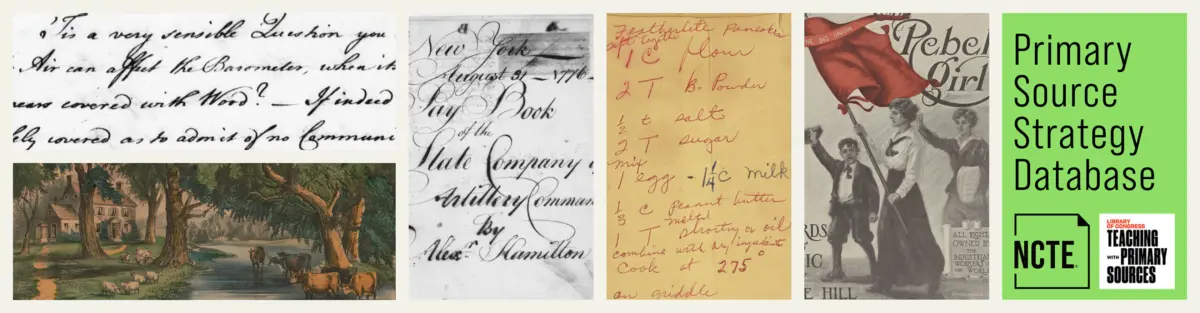
At the core of this initiative is a newly expanded, highly searchable digital database hosted by NCTE. Designed specifically for literacy teachers, curriculum coordinators, and students, the platform houses instructional strategies for over 150 meticulously curated items selected directly from the Library of Congress’s vast digitized collections. Crafted by more than two dozen distinguished educators and ELA leaders, these instructional frameworks articulate clear literacy merits, suggest thematic units, and align directly with state and national academic standards.
Among the most compelling artifacts featured within this database is a rare, seventeenth-century petition penned by ten imprisoned women awaiting trial during the Salem Witch Trials. This document—and the pedagogical framework built around it—exemplifies the overarching mission of the NCTE-Library of Congress partnership: to amplify historically marginalized voices, foster deep critical thinking, and transform how students interact with the foundational texts of American history.
Detailed Chronology: The Evolution of the NCTE and Library of Congress Partnership
The integration of Library of Congress archives into modern English language arts classrooms did not happen overnight. It represents the culmination of years of targeted programmatic development, strategic networking, and a shared national commitment to media and historical literacy.
Phase I: The Inception of the TPS Consortium
The foundation of this current educational shift lies in the Library of Congress’s long-standing Teaching with Primary Sources program. Established to help educators harness the institution’s millions of digitized manuscripts, maps, photographs, and audio recordings, the TPS program sought institutional partners capable of scaling these resources for specific academic disciplines. While history and social studies classrooms were early adopters of primary sources, the English language arts sector recognized an equally profound opportunity: utilizing historical documents not just as historical evidence, but as rich, complex informational texts that demand rigorous close reading, rhetorical analysis, and empathetic engagement.
Phase II: NCTE Integration and Educator Collaboration
Recognizing the synergy between literacy instruction and historical artifacts, the NCTE joined the TPS Consortium. The council immediately mobilized a task force of more than two dozen elite English language arts teachers, curriculum specialists, and pedagogical leaders. Their mandate was clear yet demanding: review over 150 specific items from the Library of Congress archives and engineer practical, classroom-ready instructional strategies for each.
Rather than treating these artifacts as supplementary reading, these educators developed cross-disciplinary pathways. They mapped out specific literacy merits, tied the documents to vital thematic units, and aligned every single entry with both NCTE standards and the Common Core State Standards (CCSS).
Phase III: Launch of the Searchable Digital Database
The culmination of this collaborative effort is the deployment of NCTE’s searchable digital portal. Built with user experience and classroom applicability in mind, the platform allows educators to filter content using targeted tags such as picturebook, argument, government, law, and informational text.
This database serves as an evolving pedagogical ecosystem. As teachers across the nation adopt these resources, the repository continues to expand, offering robust frameworks for exploring everything from founding political documents to deeply personal, handwritten appeals from the dark chapters of America’s past.
Supporting Context & Metrics: Unlocking the Ipswich Prison Petition
To understand the transformative potential of the NCTE-Library of Congress database, one must examine a specific artifact within the collection: the Ipswich Prison Petition.
Historical Context: The Shadows of 17th-Century Massachusetts
During the winter of the Salem Witch Trials—a period of mass hysteria and socio-political panic in seventeenth-century Massachusetts—hundreds of individuals, predominantly women, were accused of witchcraft. While historical records often focus on the sensationalized courtroom examinations, magistrates’ notes, and ministerial tracts, the lived realities of the accused have frequently been relegated to historical footnotes.
Mainstream historical accounts have historically prioritized the perspectives of the accusers, the judges, and the theocratic elite. The voices of the accused—particularly those languishing in overcrowded, freezing provincial jails for months without a trial—were systematically silenced.
The Artifact: A Desperate Cry for Justice
The Ipswich Prison Petition shatters this historical silence. Authored by ten women incarcerated in the Ipswich jail during the brutal New England winter, the petition is a harrowing, primary-source plea for humanity and due process.
Having spent months imprisoned under horrific conditions, the petitioners did not merely argue their innocence; they made an urgent, pragmatic appeal for survival. With winter setting in, noting that some among them were pregnant and others severely ill, the women articulated their very real fear of perishing in custody before ever seeing a courtroom. Their petition formally requested release on bail, promising to return for trial in the spring.
Instructional Value and Literacy Merit
Within the NCTE database, this petition is highlighted as an invaluable asset for secondary ELA educators teaching units on Puritan America, early American literature (such as Arthur Miller’s The Crucible or the writings of Anne Bradstreet), or civil rights and rhetoric.
From an instructional standpoint, the document offers students:
- Unheard Perspectives: Exposure to historical actors who were stripped of institutional power yet utilized formal legal petitioning to advocate for their own survival.
- Rhetorical Analysis: An opportunity to examine how marginalized individuals deploy formal administrative language, persuasive appeals, and pathos within structured government frameworks.
- Empathy and Historical Inquiry: A bridge between cold historical statistics of the Salem Witch Trials and the beating human hearts behind the archival ink.
Official Standards Alignment and Pedagogical Framework
The integration of primary sources like the Ipswich Prison Petition is not merely an exercise in historical trivia; it is meticulously designed to meet and exceed rigorous national educational standards. The NCTE database provides explicit mappings to foundational English language arts benchmarks.
NCTE Standards for the English Language Arts
- NCTE-1 (Reading for Understanding): Students read a wide range of print and nonprint texts to build an understanding of texts, of themselves, and of the cultures of the United States and the world. By engaging with seventeenth-century handwritten petitions, students develop the capacity to decode archaic orthography, navigate historical syntax, and connect with the lived experiences of early Americans.
- NCTE-2 (Evaluating Human Experience): Students read a wide range of literature and historical nonfiction from various periods and genres to explore the philosophical, ethical, and aesthetic dimensions of the human experience. The petition forces students to grapple with institutional injustice, religious extremism, and the fragility of due process.
Common Core State Standards (CCSS) Integration
- CCSS.ELA-LITERACY.L.9-10.3: Apply knowledge of language to understand how language functions in different contexts, to make effective choices for meaning or style, and to comprehend more fully when reading or listening.
When students analyze seventeenth-century petitions, they dissect how lexical choices, formal tone, and structural constraints are manipulated by writers operating under extreme duress. This deepens their understanding of pragmatics and historical linguistics far beyond what standard textbook summaries can achieve.
Future Outlook: The Next Frontier in Literacy Education
As the NCTE and the Library of Congress look toward the future of the Teaching with Primary Sources Consortium, the implications for American classrooms are profound.
Scaling Digital Literacy and Archival Access
The expansion of NCTE’s searchable database signals a permanent shift in curriculum design. As more teachers embrace tag-based, inquiry-driven lesson plans, the demand for authentic, unmediated historical documents in ELA classrooms will only accelerate. Future phases of the initiative aim to incorporate advanced digital literacy modules, teaching students how to cross-reference archival manuscripts with contemporary media literacy principles—equipping them to evaluate bias, provenance, and intent across both historical and modern information landscapes.
Bridging Past and Present Through Critical Inquiry
Ultimately, initiatives like this prove that history and literacy are inseparable. By bringing artifacts like the Ipswich Prison Petition into the hands of modern students, educators are doing more than teaching reading comprehension; they are cultivating a generation of discerning, empathetic citizens.
When a student reads the frantic, courageous words of women pleading for their lives in a freezing colonial jail, history ceases to be a distant list of dates and names. It becomes a living, breathing dialogue about justice, power, and the enduring human right to be heard.
For educators, curriculum specialists, and researchers looking to explore the searchable database, access professional development modules, or integrate Library of Congress primary sources into upcoming ELA units, further resources and partnership details are available directly through the NCTE Teaching with Primary Sources portal.

