
Executive Overview
In an era characterized by theological pluralism, shifting cultural norms, and widespread biblical illiteracy, the preservation of orthodox Christian doctrine has never been more critical. The latest installment of the Read, Do, & Tell podcast—Episode 26, hosted by Becky and Amy—confronts this challenge head-on. Titled Heresies Against God, this episode marks a deep-dive continuation of a multi-part series examining how distorted teachings infiltrate the modern church.
Moving beyond tertiary denominational debates or secondary preferences, Becky and Amy direct their focus toward primary theological violations: teachings that intentionally distort, undermine, or directly contradict the fundamental nature, character, and triune identity of God. By bridging the gap between historical ecclesiastical struggles and contemporary pulpit aberrations, the hosts argue that historical church awareness is not an academic luxury, but a vital defensive shield for modern believers.
This comprehensive report examines the theological framework established in Episode 26, analyzing the definition of heresy, the historical precedent set by early church councils, the persistent threat of modern distortions regarding the Trinity, and the robust educational resources provided to equip believers for spiritual discernment.
Detailed Chronology: Tracing the Evolution of Theological Deviation
To understand the weight of modern heretical movements, the Read, Do, & Tell hosts emphasize that false teaching is rarely novel. Throughout the history of Christendom, adversaries of orthodox theology have continually recycled ancient errors under new terminology.
The Foundational Distinction: Heresy vs. Secondary Disagreements
In the preceding installments of their series (specifically Episodes 23 and 24), the hosts established vital parameters to prevent semantic confusion among listeners:
- Non-Essential Doctrines: Christians can—and frequently do—hold diverse perspectives on secondary and tertiary matters, such as modes of baptism, styles of church governance, or eschatological timelines. These differences do not constitute heresy.
- Essential Doctrines (Orthodoxy): Heresy, by contrast, is a grave spiritual offense that directly attacks the core tenets of the Christian faith as revealed in Scripture. It targets the very nature and character of God, attempting to redefine who He is, how He operates, and what He has accomplished for humanity. Those who knowingly and persistently propagate such views are categorized historically as "heretics."
Historical Precedent: The Early Church Councils
To demonstrate that contemporary theological errors are simply modern iterations of ancient disputes, Becky and Amy guide listeners through a survey of early church history. They examine four foundational early church councils and creeds formulated by the church fathers:
- The Council of Nicaea (325 AD): Convened to address the pervasive threat of Arianism—the teaching that Jesus Christ was a created being rather than co-eternal and co-substantial with the Father. The resulting Nicene Creed firmly established the orthodox understanding of Christ’s full divinity.
- The Council of Constantinople (381 AD): Expanded upon the work of Nicaea, focusing heavily on the full divinity and personhood of the Holy Spirit, thereby solidifying the doctrine of the Trinity against Macedonianism.
- The Council of Ephesus (431 AD): Addressed Nestorianism, which sought to divide Christ into two distinct persons (one divine, one human), protecting the integrity of the hypostatic union—the reality that Jesus is fully God and fully man in one undivided person.
- The Council of Chalcedon (451 AD): Countered Eutychianism (Monophysitism), which argued that Christ’s divine nature swallowed up His human nature. The Chalcedonian Definition meticulously mapped the boundaries of orthodox Christology.
By reviewing these historical milestones, the podcast underscores a vital principle: the creeds and confessions of the early church were not arbitrary rules imposed by power-hungry clerics, but vital boundary markers erected to protect the flock from doctrines that ultimately severed believers from the true God of Scripture.
Supporting Context & Metrics: The Modern Landscape of Theological Illiteracy
The urgency behind Episode 26 of the Read, Do, & Tell podcast is underscored by a troubling reality: modern professing Christians are increasingly susceptible to ancient heresies due to a widespread decline in robust theological education.
The Persistence of Modalism and Arianism in Modern Pews
While historical heretics like Arius, Sabellius, and Pelagius no longer walk the earth, their theological frameworks remain astonishingly vibrant. Theological surveys consistently reveal that a staggering percentage of regular churchgoers unknowingly hold views that mirror ancient heresies:
- Modalism (Sabellianism): Many modern Christians inadvertently describe the Trinity in modalistic terms—suggesting that God is one person who merely changes "masks" or roles, acting as the Father in the Old Testament, the Son during the Gospels, and the Holy Spirit today. This denies the eternal, simultaneous co-existence of the three distinct persons of the Godhead.
- Functional Arianism / Subordinationism: Others view Jesus as a glorified human or a subordinate spiritual being elevated by God, stripping Him of His eternal, uncreated deity.
- Moralistic Therapeutic Deism: Though not a classic ancient heresy, modern sociological data identifies this worldview as the dominant de facto religion among many Western youth and adults, reducing God to a cosmic therapist whose primary goal is to make individuals feel good about themselves rather than calling them to repentance, holiness, and the worship of a holy Creator.
The Educational Imperative
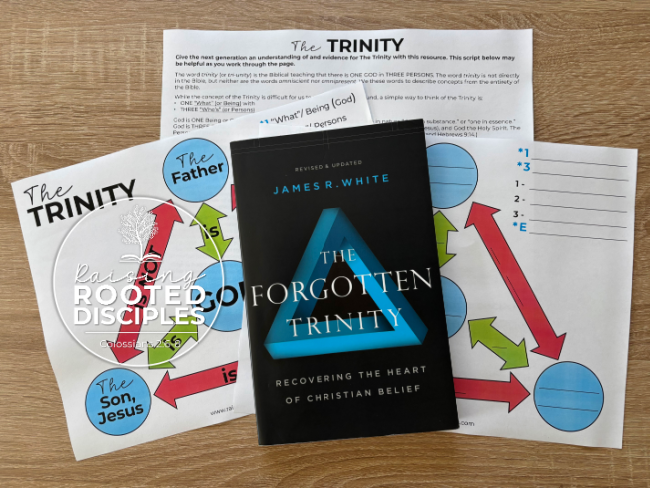
Recognizing this crisis, the creators of Raising Rooted Disciples and the Read, Do, & Tell podcast have integrated practical teaching tools into their outreach. Central to this effort is the Trinity Diagram & Teaching Pack, an exclusive resource designed to help families and small groups visualize and articulate the orthodox understanding of the Trinity—upholding that God is one in essence and three in persons, without confusion, division, or subordination of divine attributes.
Official Statements and Educational Resources
The mission of the Read, Do, & Tell podcast is anchored in a deep reverence for biblical authority and spiritual diligence. Reflecting on the biblical mandate to guard the truth, host Becky frames the series with a call to action inspired by the biblical scribe Ezra:
"Let’s be determined as Ezra: to read, do and tell the Word of the Lord!"
Empowering the Community: The Podcast+ Membership
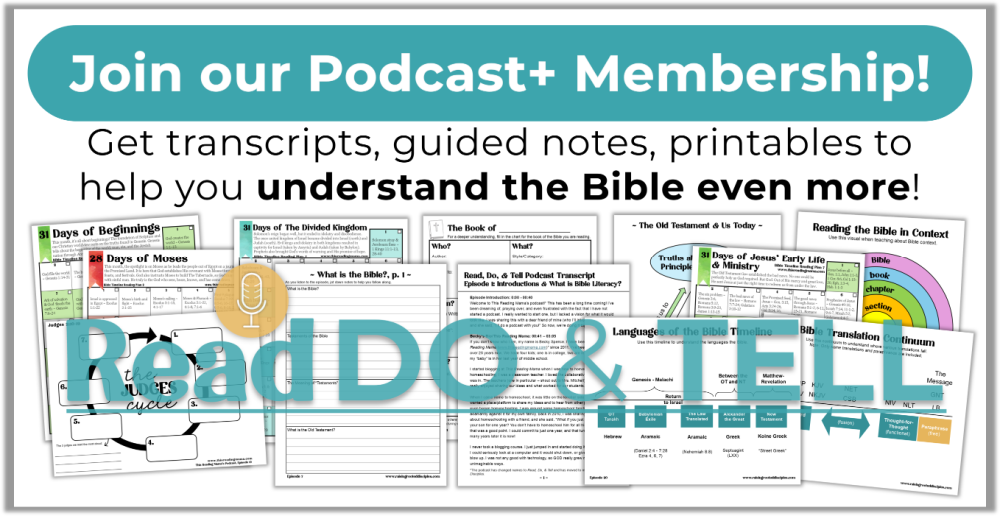
To ensure that listeners are not merely passive consumers of audio content but active participants in theological literacy, the ministry provides an extensive suite of auxiliary study tools. Subscribers to the Podcast+ Membership gain access to:
- Comprehensive Transcripts: Verbatim records of each episode for close reading and personal study.
- Guided Notes: Structured outlines that assist individuals, families, and Sunday school classes in processing complex historical and theological concepts.
- Exclusive Bible Reading Plans: Curated scriptural paths designed to ground believers in orthodox truth directly from the text.
- Bible Printables and Visual Aids: Practical tools—such as the aforementioned Trinity diagram—that simplify profound mysteries without compromising theological accuracy.
By combining accessible digital media (YouTube video broadcasts and podcast audio streams) with rigorous print resources, the ministry bridges the gap between high-level historical theology and everyday discipleship.
Future Outlook: Navigating the Theological Horizon
As the Read, Do, & Tell podcast continues its series on heresies, the trajectory of future episodes promises to examine further departures from orthodox truth that threaten the modern church.
What Lies Ahead
In an age where digital platforms allow theological misinformation to spread at unprecedented speeds, the need for discerning, historically grounded believers has never been greater. Future installments will likely continue to unpack the practical implications of holding an uncompromised view of God, demonstrating how a proper understanding of the Trinity and the nature of Christ impacts daily Christian living, prayer, and evangelism.
A Call for Vigilance
The overarching message of Episode 26 is clear: theological drift does not happen overnight. It begins with subtle compromises regarding the character of God and the exclusivity of the gospel. By looking backward to the historic creeds and councils, and looking upward to the unchanging standard of Scripture, the church can fortify itself against the shifting cultural winds of the twenty-first century.
For believers seeking to deepen their understanding, combat modern doctrinal confusion, and pass an uncompromised faith to the next generation, resources such as the Read, Do, & Tell podcast and its accompanying Podcast+ Membership serve as invaluable navigational beacons in an increasingly complex spiritual landscape.

