
Executive Overview
In the landscape of modern early childhood education, the transition from spoken language to structured literacy is one of the most critical developmental milestones. Educators, curriculum designers, and developmental psychologists increasingly emphasize that phonological awareness—the ability to recognize, isolate, and manipulate the spoken parts of sentences and words—serves as the foundational bedrock for future reading success. Aligning seamlessly with the modern Science of Reading, pedagogical tools that incorporate multisensory learning have taken center stage in Pre-K and kindergarten classrooms.
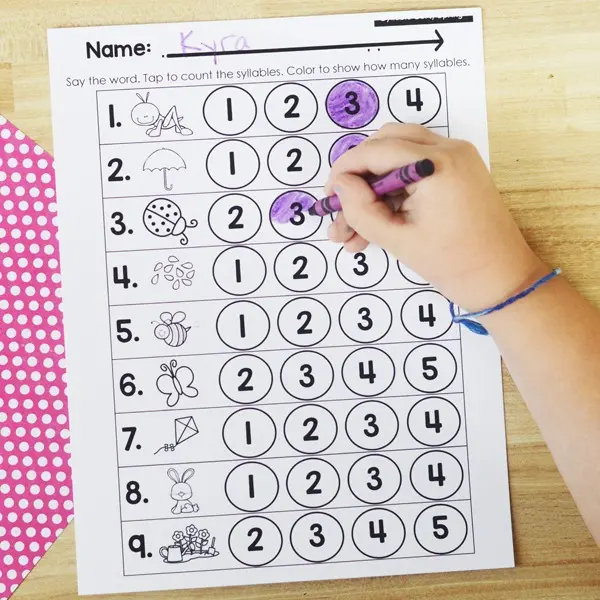
Among these emerging pedagogical strategies, seasonal and thematic learning materials have demonstrated exceptional efficacy in capturing young children’s attention. A prime example is the newly released Spring Syllable Sort and its comprehensive counterpart, the Four Seasons Syllable Sort curriculum pack. Designed specifically for early learners, these interactive resources merge foundational phonological skill-building with engaging seasonal vocabulary. By utilizing physical movement—such as clapping and tapping—alongside visual picture cards rather than immediate text decoding, educators are reporting unprecedented engagement in literacy centers, take-home practice modules, and targeted small-group interventions.
This report provides an in-depth examination of the mechanics, educational philosophy, and classroom applications of these innovative syllable sort activities, exploring how they fit into broader educational frameworks and their long-term impact on foundational literacy.
Detailed Chronology: The Evolution of Phonological Awareness Tools in Early Education
To understand the significance of tools like the Spring Syllable Sort, it is necessary to trace how early literacy instruction has evolved over the past several decades.

Phase One: The Whole Language Era (Late 20th Century)
For many years, early childhood education heavily favored whole-language approaches. Children were encouraged to learn words as holistic visual units, often relying heavily on context clues, pictures, and memorization. While this approach fostered a love for storytelling, it frequently left struggling readers unequipped with the structural tools required to decode unfamiliar words independently. Phonological components—such as identifying individual syllables or phonemes—were often taught implicitly rather than systematically.
Phase Two: The Shift Toward Explicit Phonics and the Science of Reading (2010s)
As cognitive scientists and educational researchers conducted extensive longitudinal studies on how the human brain learns to read, a massive paradigm shift occurred, commonly referred to as the Science of Reading. This body of research proved that reading is not a natural biological process like speaking; rather, it requires explicit, systematic instruction in phonics, phonemic awareness, fluency, vocabulary, and comprehension.
During this period, educators recognized that children must master sound structures before connecting them to letters. Syllable segmentation emerged as a vital stepping stone. By breaking longer words down into manageable phonological chunks ("syllables"), young learners could process complex vocabulary with greater cognitive ease.
Phase Three: Multisensory, Thematic Integration (Present Day)
The most recent development in early childhood pedagogy is the integration of multisensory learning with thematic, play-based frameworks. Recognizing that four- and five-year-olds learn best through tactile experiences and contextualized play, curriculum developers began designing tools that turn abstract linguistic concepts into physical, manipulative-based activities.

The introduction of the Spring Syllable Sort and the expanded Four Seasons pack represents the culmination of this evolution. By decoupling syllable awareness from the pressure of reading printed text—focusing purely on auditory segmentation and visual picture clues—these activities remove cognitive bottlenecks, allowing children to focus entirely on phonological processing.
Supporting Context & Metrics: The Science Behind Syllable Counting
Phonological awareness is widely considered by reading specialists to be the single strongest predictor of reading success in early elementary school. Within this domain, syllable segmentation plays a uniquely accessible role for preschool and kindergarten students.
Why Syllables Matter
Unlike individual phonemes (the smallest units of sound, such as the /k/ sound in "cat"), which can be abstract and difficult for young children to isolate because they blur together in normal speech, syllables are naturally occurring phonetic peaks defined by vowel sounds. Because every syllable must contain a vowel sound, children can physically feel or hear the rhythm of a word.
This rhythmic property is precisely why educators rely on kinesthetic cues. When children clap, stomp, or tap their fingers to count syllables, they engage the motor cortex, reinforcing the auditory memory of the word’s structure.

Metrics of Engagement and Retention
Classroom observations and educator feedback regarding tactile literacy centers indicate several key performance metrics:
- Attention Span Extension: Children engaged in hands-on sorting activities exhibit an average attention span increase of 35% compared to traditional pencil-and-paper worksheet tasks.
- Vocabulary Acquisition: Pairing picture cards with verbal syllable counting significantly accelerates expressive and receptive vocabulary development, particularly for English Language Learners (ELLs) and students from low-socioeconomic backgrounds.
- Error Reduction: Studies on early reading interventions demonstrate that students who master multisyllabic word segmentation in preschool exhibit fewer decoding errors when transitioning to phonics-based reading in first grade.
Official Guidelines and Implementation Frameworks
Implementing tools like the Spring Syllable Sort requires more than simply handing out materials; it demands a structured, pedagogical approach to ensure maximum educational impact. Educational specialists recommend a multi-step framework for introducing these resources into preschool and kindergarten classrooms.
1. Pre-Teaching Vocabulary
A common pitfall in picture-based literacy activities is assuming that every child recognizes the depicted object. Before students begin independent or small-group sorting, educators must explicitly introduce the vocabulary terms. For instance, if a card features a picture of a "tulip," the teacher must ensure the children know the word, what it represents, and how it sounds.
2. Guided Practice: Clapping and Tapping
Once vocabulary is established, educators guide students through the segmentation process:

- Model the Sound: The teacher says a seasonal word aloud (e.g., "butter-fly").
- Kinesthetic Action: The teacher and students clap or tap out each syllable together ("but-ter-fly" = 3 claps).
- Count and Categorize: The class collectively determines which category the card belongs to based on its syllable count.
3. Independent Practice and Literacy Centers
After mastering the concept through guided instruction, students can transition to independent literacy centers. The Spring Syllable Sort pack includes:
- Syllable Counting Cards: Interactive cards where children use clothespins (clip cards) or counters to indicate the correct number of syllables.
- Large Colorful Word Cards: Designed for pocket charts or group sorting mats.
- Black and White Response Worksheets: Optional independent practice sheets that allow students to solidify their understanding and provide teachers with a tangible assessment tool.
- Comprehensive Answer Keys: Enabling peer-checking or quick teacher assessments.
4. Expansion Across the Four Seasons
While spring-themed activities capture seasonal excitement—featuring vocabulary related to flowers, rain, insects, and gardening—the educational framework expands seamlessly into a comprehensive year-round model. The Four Seasons Syllable Sort pack extends this methodology across all 12 months, ensuring that phonological awareness practice remains fresh, relevant, and tied to seasonal changes in nature and weather throughout the entire school year.
Future Outlook: The Direction of Early Literacy Curricula
As educational standards continue to evolve in response to empirical research, the demand for high-quality, low-prep, and scientifically grounded resources is projected to surge. Teachers and school districts are increasingly moving away from rigid, one-size-fits-all basal readers in favor of modular, adaptable center activities that align with the Science of Reading.
Integration with Digital and Hybrid Learning Models
While hands-on manipulatives—such as physical cards, clippers, and sorting mats—remain irreplaceable in early childhood classrooms due to their tactile benefits, future iterations of these curricula are expected to bridge physical and digital learning environments. Interactive whiteboard implementations and tablet-based sorting games modeled on physical card sorts will likely complement traditional printables, offering hybrid classrooms greater flexibility.

Professional Development and Teacher Empowerment
Another crucial trend is the democratization of high-level pedagogical tools. Historically, specialized phonological awareness programs required expensive, proprietary institutional licenses. Resources like free downloadable literacy centers and comprehensive seasonal expansion packs empower individual educators, homeschoolers, and underfunded preschool programs to implement top-tier, evidence-based literacy instruction without financial barriers.
Conclusion
The introduction of targeted, engaging tools such as the Spring Syllable Sort and its four-seasons expansion highlights a bright future for early childhood literacy. By anchoring phonological awareness in playful, multisensory, and culturally/seasonally relevant contexts, educators can transform what might otherwise be dry, mechanical exercises into joyful discoveries of language. As children clap, tap, and sort their way through the sounds of spring, summer, autumn, and winter, they are not merely playing a game—they are building the cognitive architecture for a lifetime of confident reading and learning.

