
Executive Overview
Every educator is familiar with the fleeting illusion of classroom success. A lesson concludes, students successfully answer a flurry of exit-ticket prompts, and the instructor walks away feeling confident that the material has landed. But how much of that knowledge survives the overnight transition, let alone a two-week break? In the relentless race to cover curriculum standards, long-term retention remains the ultimate educational bottleneck.
A groundbreaking empirical study conducted by researchers Boulahnane, Ismaili, and Haddi (2026) directly addresses this foundational challenge. Investigating the efficacy of game-based learning platforms within a real-world middle school environment, the researchers tracked two ninth-grade classes over a rigorous three-week period. While both cohorts were taught identical core content—spanning English grammar, English vocabulary, and Life and Earth Science—they experienced fundamentally divergent pedagogical delivery. One class utilized the interactive digital learning platform Kahoot!, while the control group relied exclusively on conventional instructional methodologies, such as direct teacher-led explanations, textbook exercises, and traditional pair-work drills.
The findings, published in early 2026, offer a compelling narrative for the power of interactive education. Students instructed using Kahoot! not only achieved roughly twice the learning gains of their peers immediately following the instructional units, but they also successfully maintained significantly higher scores during delayed retention testing administered two weeks later. Furthermore, student-reported metrics revealed a dramatic disparity in classroom engagement, positioning gamified learning not merely as a superficial distraction, but as a cognitive catalyst that fundamentally transforms how adolescents process, retain, and value academic content.
This in-depth investigative report examines the methodology, quantitative metrics, pedagogical mechanisms, and broader implications of the Boulahnane, Ismaili, and Haddi (2026) study, providing educators, administrators, and EdTech developers with a comprehensive blueprint for modern instructional design.
Detailed Chronology and Methodological Framework
To understand the weight of the Boulahnane et al. (2026) findings, one must examine the meticulous parameters of the research design. Conducted in a public Moroccan middle school, the study sought to eliminate confounding variables by tightly controlling the instructional environment, time-on-task, and educator proficiency.
Phase 1: Pre-Instructional Baseline and Cohort Parity
The study engaged two distinct ninth-grade classes, comprising a total of 60 students aged 14 to 15 years old (30 students per cohort). Prior to the introduction of any new instructional materials, researchers established a baseline using standardized, 20-item diagnostic tests tailored specifically to the three target domains: English grammar, English vocabulary, and Life and Earth Science.
Statistical analysis of the pre-instructional baseline confirmed that both cohorts possessed comparable baseline knowledge across all three subjects. There were no statistically significant variances in prior attainment between the class designated for the experimental treatment (Kahoot!) and the class designated for the conventional control group.
Phase 2: The Three-Week Instructional Window
Over the subsequent three weeks, both classes covered the exact same curriculum content. The pacing was synchronized to ensure that time-on-task remained identical, neutralizing instructional duration as a variable.
- The Control Group Experience: Students in the conventional instruction cohort experienced traditional pedagogical structures. Lessons were anchored by direct teacher explanations, chalkboard diagrams, completion of static textbook exercises, and collaborative pair-work drills. Formative checks relied on traditional questioning, where teachers called on individual raised hands.
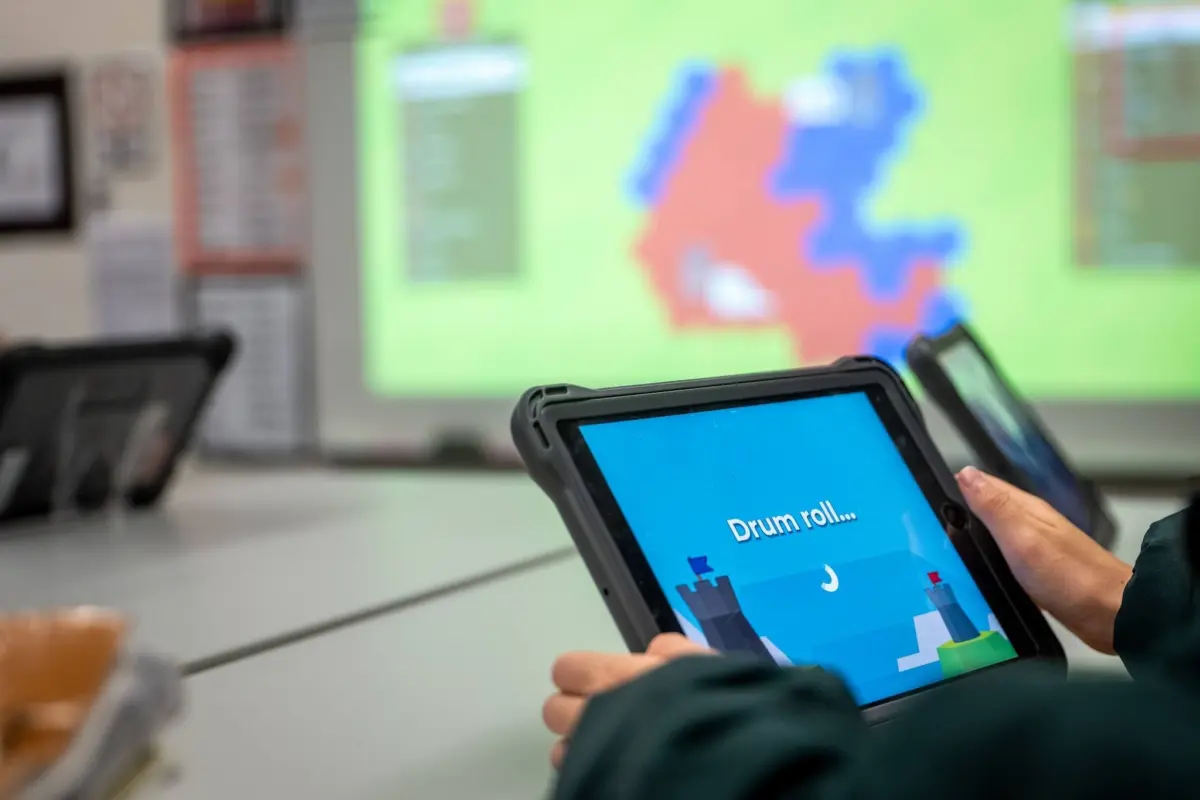
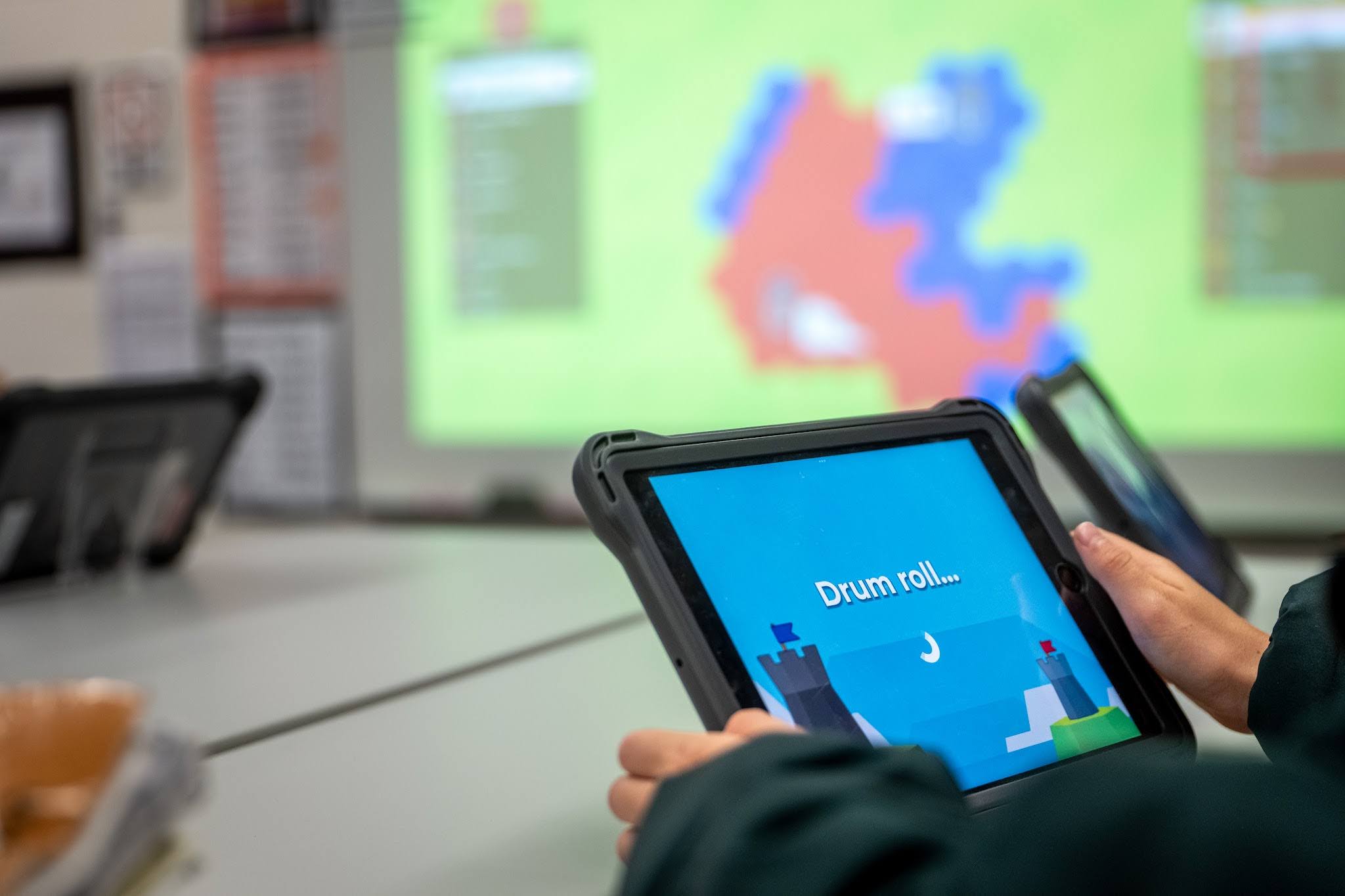
- The Experimental Group Experience: Students in the Kahoot! cohort engaged with the identical curriculum delivered via game-based digital quizzes. During these sessions, educators projected quiz questions onto a shared central classroom screen, while individual students responded in real-time utilizing personal mobile devices or classroom tablets.
Crucially, the integration of Kahoot! was not deployed as an isolated, isolated reward mechanism at the end of a week, but was woven into the fabric of daily instruction. The pedagogical loop adhered to a strict iterative cycle: question presentation, individual digital response, visual display of aggregate class performance distribution, immediate reveal of the correct answer, and—most importantly—targeted teacher-led remediation for widely misunderstood concepts.
Phase 3: Immediate Post-Instructional Testing
Immediately following the conclusion of the three-week instructional window, researchers administered a second battery of 20-item achievement tests. These evaluations were identical in format and rigor to the pre-instructional baseline assessments.
The divergence in performance was immediate and stark. While both groups demonstrated expected growth from the pretest baseline—validating that teaching had occurred in both classrooms—the magnitude of improvement heavily favored the Kahoot! cohort. Across English grammar, English vocabulary, and Life and Earth Science, the students utilizing the gamified platform exhibited roughly double the learning gains observed in the conventional instruction group.
Phase 4: The Two-Week Delayed Retention Assessment
The true test of educational efficacy, however, is not what a student knows on Friday afternoon, but what they can retrieve two weeks later without intervening study sessions.
To measure this, Boulahnane and her colleagues administered a third, identical 20-item assessment exactly fourteen days after the conclusion of the instructional unit. The results provided critical insight into the decay curve of human memory. While both classes experienced a modest decline in scores over the two-week hiatus—underscoring the psychological reality of the forgetting curve—the Kahoot! class maintained a commanding statistical advantage. At the follow-up assessment, students in the gamified cohort sustained an average advantage of 3.3 to 3.7 points over the comparison class across the evaluated subjects, proving that interactive quizzing creates deeper, more resilient memory traces.
Supporting Context and Quantitative Metrics
A deeper examination of the quantitative data gathered by Boulahnane, Ismaili, and Haddi (2026) reveals precise performance metrics that illuminate the distinct cognitive advantages conferred by game-based learning environments.
Subject-Specific Achievement Gains
The study evaluated academic progression across three discrete cognitive domains, each presenting unique instructional challenges:
- English Grammar: Structural rules and syntactical frameworks often prove challenging to adolescent learners due to their abstract nature. Pretest to posttest improvements were significantly steeper in the Kahoot! group, with students demonstrating superior command over sentence structuring and tense application during the delayed retention test.
- English Vocabulary: Retention of lexical items traditionally relies heavily on rote memorization and flashcard drills. The rapid-fire, competitive retrieval practice demanded by the game format accelerated vocabulary acquisition, resulting in higher retention rates for word definitions and contextual applications two weeks post-instruction.
- Life and Earth Science: Containing complex conceptual terminology and systemic processes (such as ecological cycles and cellular biology), science content benefited immensely from the visual data distributions provided by the platform. Teachers were able to immediately identify systemic misunderstandings across the classroom and pivot instructional strategies in real time.
Student Engagement Metrics
Beyond academic achievement, the researchers sought to quantify the psychological and emotional state of students during the instructional units. Utilizing a validated psychometric survey administered at the conclusion of the study, researchers measured student-reported engagement on a 25-point scale.
The findings in this domain were unprecedentedly lopsided:
- Kahoot! Cohort Average Engagement Score: 23.6 out of 25.
- Conventional Instruction Cohort Average Engagement Score: 17.0 out of 25.
This delta of 6.6 points represents a massive variance in student disposition. Qualitative feedback gathered alongside the survey indicated that students associated the gamified environment with lower anxiety, higher intrinsic motivation, and a sense of playful competition that converted passive listening into active mental participation.
The Cognitive Mechanisms of Gamified Learning
Why did students using Kahoot! outperform their peers so decisively? While the Boulahnane et al. (2026) study did not attempt to isolate every individual cognitive variable, cognitive psychology and learning sciences offer robust explanations for the observed phenomena. The success of the intervention can be attributed to the intersection of several established learning principles:
1. The Testing Effect (Retrieval Practice)
In traditional educational paradigms, testing is viewed primarily as an assessment of learning (summative). However, cognitive scientists have long advocated for assessment as learning, leveraging the "testing effect"—the psychological finding that long-term memory is increased when a significant portion of the learning period is devoted to retrieving information from memory. When students interact with a rapid-response digital quiz, they are forced to actively drag information out of long-term storage, strengthening neural pathways far more effectively than passive rereading or listening to a lecture.
2. Immediate Feedback Loops
In a conventional classroom, student assignments (such as homework worksheets or chapter tests) are collected, graded, and returned days or even weeks later. By the time the student receives feedback, the psychological context of the learning moment has dissolved. Kahoot! provides instant feedback. The exact millisecond a student inputs an answer, the platform informs them of correctness, while the classroom display reveals aggregate class performance. This immediacy allows for real-time error correction, preventing misconceptions from solidifying into permanent cognitive errors.
3. Responsive Pedagogical Pivots
The technology alone is not a silver bullet; rather, it acts as a diagnostic mirror for the educator. During the study, teachers did not simply advance blindly through the quiz slide deck. When response distribution graphs indicated that a significant percentage of the class missed a specific question, educators paused the game. They used that exact data point to launch a targeted mini-lecture, clarifying misconceptions while the cognitive iron was hot. This transformed a digital quiz into an interactive feedback loop between teacher and student.
4. Reduced Cognitive Load and Gamified Motivation
Adolescent attention spans are notoriously fragile, easily fragmented by competing external stimuli. By wrapping formative assessment in game mechanics—such as timed countdowns, point multipliers for streak accuracy, and dynamic leaderboards—the platform hijacks the brain’s dopaminergic reward pathways. This elevates focus, drives active participation among traditionally disengaged learners, and reduces the psychological friction often associated with academic testing.
Official Insights and Expert Perspectives
While the study was conducted within a specific educational ecosystem in Morocco, its underlying principles resonate with global trends in educational technology and pedagogical research.
Educational researchers analyzing the trial have emphasized that the study’s value lies in its ecological validity. Rather than taking place in a sterile, artificial laboratory setting, the research was conducted within an authentic middle school classroom over a sustained three-week period. This mirrors the chaotic, time-constrained reality faced by teachers worldwide.
Furthermore, learning scientists note that the research addresses a critical blind spot in EdTech literature: the obsession with immediate post-test metrics. Too many software developers market products based solely on short-term engagement spikes or immediate post-lesson quizzes. By tracking student retention across a 14-day delayed window, Boulahnane, Ismaili, and Haddi (2026) provide rare empirical evidence that gamified tools can contribute to enduring, long-term memory consolidation.
Educators who have transitioned to integrated gamified formative assessments report parallel observations. Teachers frequently note that students who freeze up during traditional pop quizzes or written exams approach digital polling platforms with lowered affective filters. Because the interface feels playful and anonymous to the broader public eye (leaderboards often display top scores rather than individual failures, or can be configured to emphasize personal growth), students feel psychologically safe to take risks, guess, and—crucially—fail forward.
Future Outlook: Implications for Modern Pedagogy
As educational institutions globally grapple with post-pandemic learning recovery, the demand for evidence-based instructional strategies has never been more urgent. The findings of Boulahnane, Ismaili, and Haddi (2026) suggest several actionable pathways for the future of middle school instruction and curriculum design.
1. Shifting from Summative Anxiety to Formative Play
The traditional paradigm of education has long relied on high-stakes, low-frequency testing that breeds test anxiety and focuses on performance metrics rather than genuine understanding. The success of the Kahoot! cohort suggests that embedding low-stakes, high-frequency interactive retrieval practices into daily lesson plans can alleviate anxiety while simultaneously supercharging retention. Future curriculum frameworks should prioritize continuous, gamified formative checkpoints over monolithic unit exams.
2. Teacher Training and Data-Literate Pedagogy
Technology is only as effective as the pedagogy driving it. The success observed in the 2026 study was not merely a byproduct of flashing lights and digital leaderboards; it hinged entirely on the teacher’s ability to interpret real-time data distributions and execute immediate, responsive instructional pivots. Teacher training programs must increasingly focus on data-literate pedagogy—training educators how to read live formative analytics and adjust their instructional trajectory on the fly.
3. Hybridizing EdTech with Human-Led Discussion
There is an ongoing cultural anxiety regarding the digitization of classrooms, with critics warning of screen fatigue and the erosion of human interaction. However, the Boulahnane study highlights a collaborative, human-centric model of technology integration. The digital platform served as a catalyst for collective class discussion, peer interaction, and targeted teacher intervention. The technology did not replace the teacher; it empowered the teacher to be more responsive, targeted, and effective.
4. Expanding Longitudinal Research
While the 2026 study represents a significant step forward, researchers and EdTech developers must continue to build upon its foundation. Future investigations should expand the sample size across multiple districts, track retention over extended windows (such as three months or a full academic year), and explore how gamified retrieval practice impacts diverse student populations, including English Language Learners (ELL) and students with exceptional learning needs.
Conclusion
The empirical work of Boulahnane, Ismaili, and Haddi (2026) cuts through the noise of EdTech marketing hype, offering rigorous, classroom-tested data on what actually works in middle school education. By demonstrating that students using Kahoot! achieved double the learning gains and maintained superior long-term retention over a two-week period, the study validates the strategic integration of gamified learning platforms.
For middle school educators navigating the daily challenge of ensuring that knowledge survives beyond the classroom bell, the prescription is clear: combine the power of active retrieval practice with immediate feedback, leverage live data to address misconceptions in real time, and harness the motivational power of play. In doing so, educators can transform fleeting instructional moments into enduring academic success.

