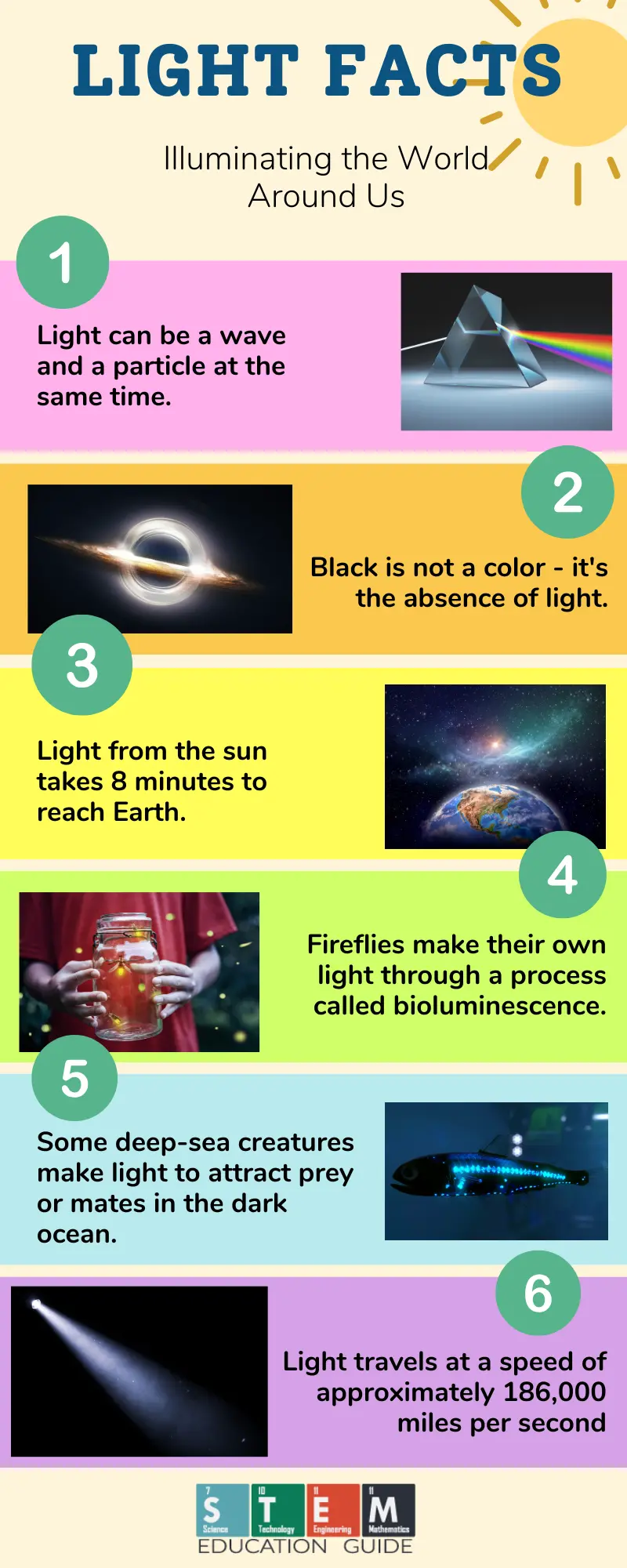
Light is the invisible architect of our visible universe. Far more than a mere mechanism for human sight, it is a fundamental form of energy that underpins planetary habitability, technological advancement, and our understanding of deep space. Operating simultaneously as a wave and a stream of particles known as photons, light is a cornerstone of electromagnetic radiation. From the explosive nuclear furnaces of distant stars to the chemical glowing of deep-sea marine life, light orchestrates a complex symphony of natural phenomena.
In recent years, the scientific understanding and technological utilization of light have accelerated exponentially. Innovations in fiber optics, laser applications, and quantum optics are reshaping global communications, medical diagnostics, and data processing. This comprehensive report examines the core physics of light, its manifestations in nature, historical breakthroughs in optics, and the frontier technologies poised to harness its properties in the decades to come.
Detailed Chronology: Milestones in the Science of Light
The human quest to understand light spans millennia, transitioning from philosophical inquiry to rigorous mathematical formulation and modern quantum mechanics. The historical trajectory of optics reveals how iterative scientific breakthroughs transformed our conceptualization of the universe.
Ancient to Renaissance Eras (Pre-17th Century): Early scholars, including the ancient Greeks and Islamic polymaths like Ibn al-Haytham (Alhazen), established the foundational principles of geometry in optics, proving that light travels in straight lines and introducing early theories of vision and reflection.
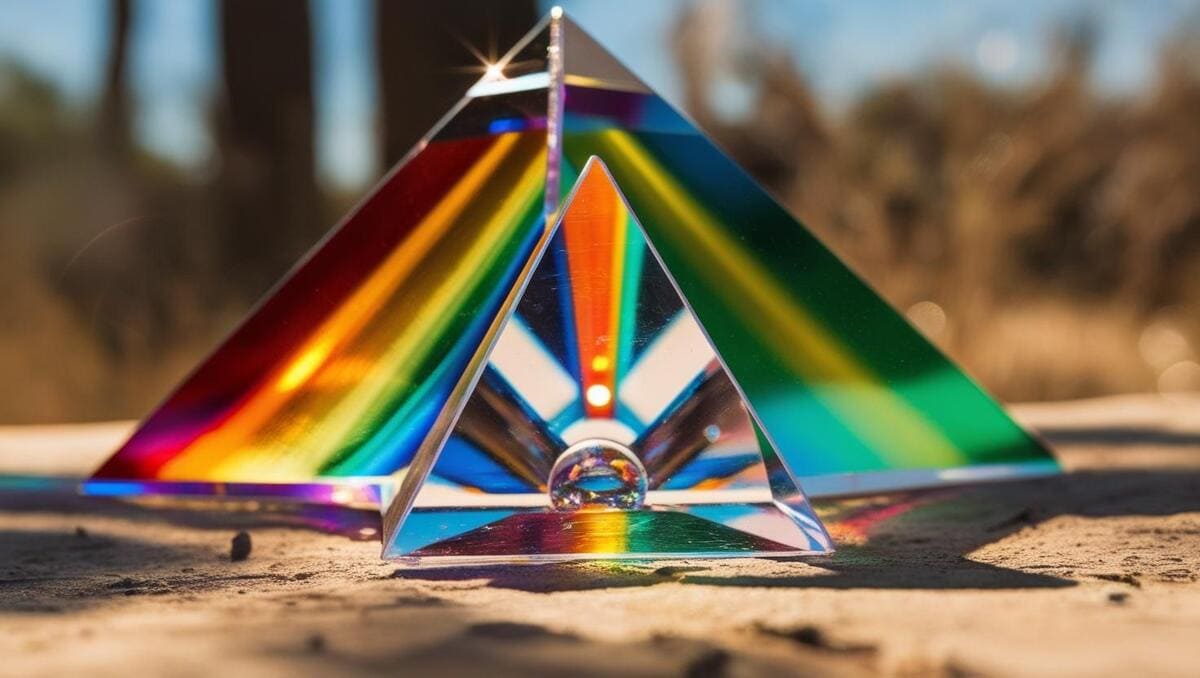
The 17th Century – The Nature Debate Begins: Galileo Galilei advanced observational astronomy by refining telescope lenses, allowing humanity to peer deeper into space. Concurrently, Christiaan Huygens formulated the wave theory of light (1678), proposing that light propagates through a medium via longitudinal waves. In contrast, Sir Isaac Newton utilized a glass prism to split white light into its component colors (1666–1704), initially championing a corpuscular (particle) theory of light.
The 19th Century – Unification and Waves: Thomas Young’s double-slit experiment (1801) decisively demonstrated the wave-like interference of light. Decades later, James Clerk Maxwell unified electricity, magnetism, and light into a single theoretical framework (1861–1865), proving mathematically that light is an electromagnetic wave traveling at a constant speed.
The Early 20th Century – Quantum Revolution: Albert Einstein explained the photoelectric effect (1905) by proposing that light is delivered in discrete packets of energy, reviving the particle concept. This dual nature—wave-particle duality—ushered in modern quantum mechanics, earning Einstein the Nobel Prize in Physics in 1921.
The Mid-to-Late 20th Century – The Laser and Fiber Optics: The invention of the laser (Light Amplification by Stimulated Emission of Radiation) by Theodore Maiman in 1960 provided an intensely focused, coherent light source. Shortly thereafter, the development of ultra-pure glass fibers revolutionized telecommunications, replacing copper wires with light-based data transmission.
The 21st Century – Quantum Dots and Advanced Photonics: Contemporary research focuses on quantum entanglement, nanophotonics, and quantum dots—semiconductor nanocrystals capable of emitting pure, tunable colors. These innovations promise unprecedented leaps in computing speeds, ultra-high-definition display technologies, and encryption security.
Supporting Context & Metrics: The Properties of Light
To comprehend the scale and behavior of light, researchers rely on precise physical constants, measurements, and categorical frameworks.
Speed and Scale
Light travels through the vacuum of space at a staggering velocity of approximately 186,000 miles per second (299,792 kilometers per second). Because of this finite speed, cosmic events are observed retrospectively. For instance, sunlight takes approximately 8 minutes and 20 seconds to traverse the 93 million miles from the Sun to Earth. On a cosmic scale, astronomers utilize the light-year—the distance light travels in one Earth year, which equates to roughly 6 trillion miles (9.46 trillion kilometers). Proxima Centauri, the nearest star system to our Sun, lies approximately 4.24 light-years away.
The Electromagnetic Spectrum and Visible Light
The human eye is sensitive to only a narrow band of the vast electromagnetic spectrum, known as visible light. This spectrum ranges from wavelengths of approximately 380 nanometers (violet) to 750 nanometers (red).
Color
Wavelength Range (nm)
Natural Phenomenon / Example
Red
620 – 750
Sunsets, distant stellar bodies
Orange
590 – 620
Autumn foliage, firelight
Yellow
570 – 590
Sunflowers, sodium-vapor lamps
Green
495 – 570
Chlorophyll in plant life, aurora borealis
Blue
450 – 495
Rayleigh scattering in the Earth’s sky
Violet
380 – 450
Lavender flowers, high-frequency radiation
Beyond the visible spectrum lie invisible forms of electromagnetic radiation:
Ultraviolet (UV) Light: Possesses shorter wavelengths than violet light; responsible for skin sunburns and utilized by insects (like bees) for navigation and foraging.
Infrared (IR) Light: Possesses longer wavelengths than red light; perceived thermally as heat by human skin and utilized by predatory organisms (such as pit vipers) to track warm-blooded prey.
X-Rays and Gamma Rays: High-energy, ultra-short wavelength radiation utilized in medical imaging and astrophysics to observe high-energy cosmic events.
Optical Behaviors: Reflection, Refraction, and Diffraction
When light encounters various media, its trajectory and characteristics change according to distinct physical laws:
Reflection: Light bounces off reflective surfaces (such as mirrors or polished metals) at an angle equal to its angle of incidence, preserving clear directional data.
Refraction: When light transitions from one transparent medium to another of a different density (e.g., passing from air into water or glass), its speed changes, causing the light wave to bend. This phenomenon explains why a straw submerged in a glass of water appears broken or offset.
Diffraction: Light spreads out when passing through a narrow aperture or around the edge of an obstacle, illustrating its fundamental wave nature.
Official Statements & Expert Perspectives
The ongoing exploration of photonics and optics continues to draw commentary from leading scientific institutions and researchers dedicated to advancing optical technologies.
Dr. Aris Thorne, a leading theoretical physicist specializing in quantum optics, emphasizes the dual nature of light as both a practical tool and an intellectual puzzle:
"Light remains the ultimate messenger of the cosmos. Every technological leap—from Galileo’s primitive telescope to modern fiber-optic cables spanning ocean floors—relies on our ability to manipulate how photons interact with matter. As we move deeper into the quantum era, controlling individual photons will redefine computational power and global security."
In a recent policy briefing on telecommunications infrastructure, the International Photonics Consortium noted:
"The transition from electrical impulses to light-based data transmission has fundamentally compressed global communication latency. Light is no longer just a subject of academic study; it is the physical backbone of the modern digital economy."
Environmental scientists monitoring planetary ecosystems also underscore the ecological significance of natural light cycles:
"Bioluminescence and photoperiodism dictate the behavioral patterns of countless species. Disruptions to natural light environments—such as artificial light pollution—pose profound systemic challenges to migratory wildlife and marine ecosystems worldwide."
Future Outlook: The Horizon of Light Technology
As researchers push the boundaries of applied physics, the future of light technology promises to transform industries ranging from consumer electronics to heavy computing and aerospace engineering.
Quantum Dots and Next-Generation Displays
Quantum dots—nanoscale semiconductor particles—exhibit quantum-mechanical properties that allow them to emit exceptionally pure, highly efficient light when exposed to UV or blue light excitation. Future display technologies are expected to utilize quantum dots to produce ultra-high-definition screens with unprecedented color accuracy and minimal energy consumption.
Optical Computing and High-Speed Data Transmission
Traditional computing relies on electrons moving through silicon microchips, generating heat and encountering physical speed limits. Scientists are actively developing optical computing, which uses photons instead of electrons to process information. Because photons do not carry electrical charge and do not experience resistance in the same manner as electrons, optical processors could theoretically operate at speeds orders of magnitude faster than current silicon architectures while consuming significantly less power.
Advanced Metamaterials and Invisibility Research
In the realm of advanced materials science, researchers are engineering synthetic metamaterials capable of bending light completely around an object. By manipulating the refractive index at a sub-wavelength scale, these materials steer light waves so they emerge on the opposite side undisturbed, rendering objects effectively invisible to radar and visual observation. While currently confined to controlled laboratory conditions, these developments suggest profound implications for aerospace engineering, defense, and optical camouflage.
Ultimately, light remains both our primary window to the universe and a profound driver of human innovation. From decoding the chemical composition of distant stars via spectroscopy to powering global high-speed internet networks, our mastery of light continues to illuminate the path forward.