
Executive Overview
The modern global supply chain is a marvel of scale, complexity, and computational power. Yet, a fundamental paradox has persisted at the heart of the logistics industry: while corporate ERP systems and automated sorting belts operate at lightning speed, the fundamental task of verifying what is actually sitting on a warehouse shelf has remained remarkably primitive. For decades, multi-million-dollar distribution centers have relied on cyclical manual inventory counts—a process prone to human error, safety hazards, and catastrophic latency.
Enter Dexory, a UK-based robotics and artificial intelligence pioneer transforming how enterprises interact with their physical inventory. By marrying autonomous mobile robotics (AMRs) with computer vision, spatial AI, and digital twin technology, Dexory has built an intelligence layer that continuously captures, maps, and analyzes warehouse operations in real time.
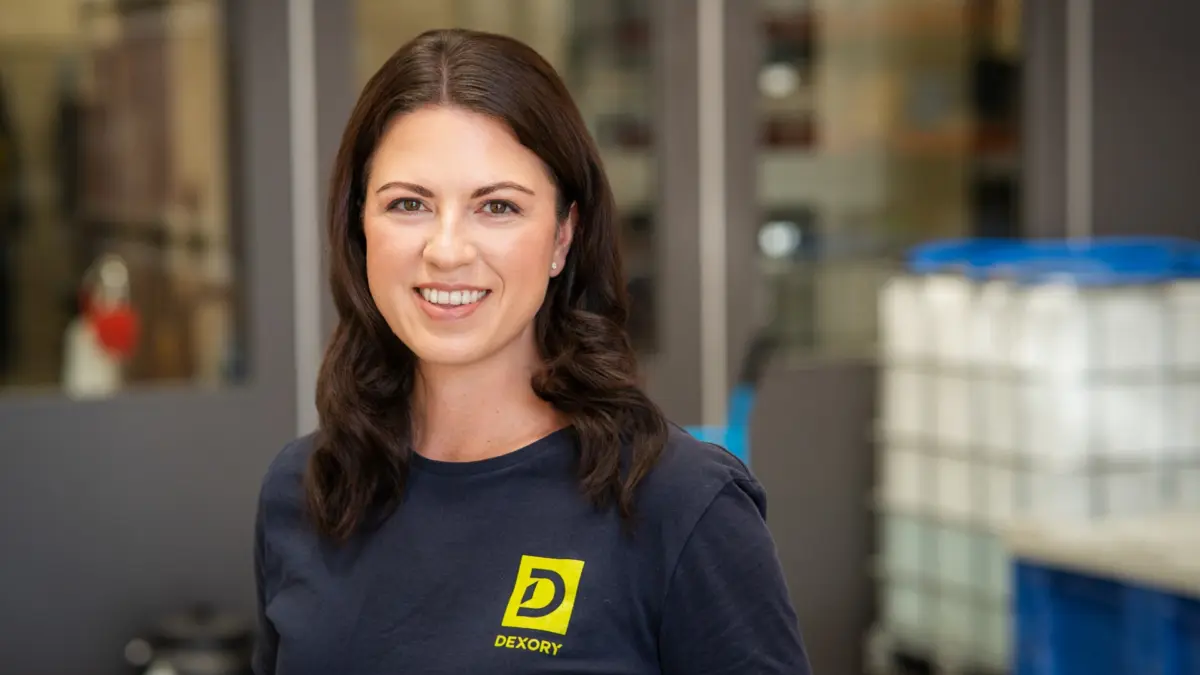
At the helm of this operational evolution is Oana Jinga, Co-Founder, Chief Commercial and Product Officer. A seasoned technology leader whose pedigree spans Google and O2 (Telefónica UK), Jinga co-founded the business—originally known as BotsAndUs—in 2015. Under her commercial and product leadership, Dexory has expanded its footprint across Europe, Asia, and the United States, scanning over one billion warehouse locations globally.
This in-depth feature explores the genesis of Dexory, the engineering triumphs behind scanning 18-meter-high industrial racking, the strategic necessity of task-specific robotics over speculative humanoid designs, and Jinga’s vision for the future of physical AI and workforce diversity in deep tech.
Detailed Chronology: From BotsAndUs to Dexory
The 2015 Genesis: Spotting the Blind Spot
The journey of Dexory began nearly a decade ago. Before launching the company, Jinga spent over six years at Google leading retail partnerships in the UK and overseeing strategic partnerships across the retail sector in EMEA. Combined with her commercial and business development background at Telefónica UK, Jinga developed a deep-seated understanding of retail ecosystems and supply chain friction points.
When Jinga and her co-founders established BotsAndUs in 2015, they weren’t initially looking to build warehouse robots; they were observing broader market movements in automation and retail customer engagement. However, deep-dive interactions with industrial operators quickly illuminated a glaring, industry-wide vulnerability.
"We saw that warehouses were becoming increasingly complex and automated, yet many operators still lacked an accurate, real-time view of what was physically happening on the warehouse floor," Jinga explains.
Inventory checks were anchored to legacy methodologies: clipboard-toting workers conducting spot-checks, scissor lifts navigating towering racking, and cyclical audits that ground operations to a halt. These practices were entirely disconnected from the digital warehouse management systems (WMS) making critical inventory routing decisions. Recognizing that robotics could bridge this physical-digital gap, the founding team pivoted decisively toward logistics, ultimately rebranding to Dexory to reflect their expanding, data-centric focus on the entire fulfillment ecosystem.
Scaling the Technology Stack: The Birth of DexoryView
As the company evolved, hardware alone was never going to be enough. The true moat was found in software integration and real-time data visualization. This realization led to the creation of DexoryView, an end-to-end platform designed to ingest raw spatial data from autonomous robots and synthesize it into actionable operational insights.
Over successive years of iterative deployment, Dexory refined its robots to navigate sprawling distribution centers without disrupting human workers or requiring infrastructure overhauls. Today, the company’s AMRs are deployed across major industrial hubs globally, acting as the ground-truth engine for some of the world’s largest logistics providers.
Supporting Context & Metrics: Engineering the Autonomous Warehouse
The Anatomy of a Rapid Deployment
For logistics executives hesitant to adopt disruptive automation, implementation friction is a primary barrier. Dexory engineered its deployment model to bypass this hesitation entirely.
According to Jinga, a typical site deployment takes a mere two to five days. A specialized team of just one to two Dexory deployment engineers map the facility, establishing the spatial framework necessary to build a digital twin. Once mapped, the autonomous robots navigate the space seamlessly.
"The robots then start running scheduled missions with an instant ROI of the solution, capturing data across the facility, which is processed and visualised in DexoryView," Jinga notes.
Defying Gravity: Scanning at 18 Meters
One of the most formidable engineering feats achieved by Dexory is the ability of its autonomous mobile robots to scan full-height warehouse racking up to 18 meters (nearly 60 feet) in the air.
Operating at that scale introduces intense engineering and algorithmic hurdles. It is not merely a matter of building a tall mast; it requires capturing precise, consistent data while navigating bustling, dynamic environments filled with forklifts, human operators, and shifting pallets.
- Sensing and Localization: The robots must maintain millimeter-precision localization across vast concrete floors without relying on GPS.
- Computer Vision Adaptation: Cameras and LiDAR arrays must perform reliably regardless of shifting lighting conditions, uneven warehouse illumination, deep shadows, and diverse packaging types or rack configurations.
- Safety Protocols: In an industrial environment, safety is non-negotiable. Dexory’s hardware and software are engineered to anticipate and react to human and vehicular movement, ensuring predictable navigation alongside existing warehouse assets.
The Power of One Billion Scored Locations
Data is the lifeblood of modern artificial intelligence. Having scanned over one billion warehouse locations worldwide, Dexory sits atop an unprecedented repository of physical warehouse data.
"Scale matters because every warehouse introduces different layouts, products, packaging and operating conditions, creating an incredibly diverse real-world dataset," Jinga explains.
This sheer volume of data enables the platform’s computer vision and anomaly detection engines to differentiate between standard operational noise and meaningful discrepancies—such as damaged goods, misplaced inventory, or empty slots. Over time, this historical dataset shifts the technology from reactive monitoring to true predictive intelligence, allowing supply chain managers to foresee inventory bottlenecks before they materialize.
Official Statements & Insights: Oana Jinga on the Future of Logistics
Reconciling Physical Reality with Digital Records
A recurring headache for warehouse managers is "ghost inventory"—items that exist within the WMS or ERP platforms but are physically missing from their assigned rack, or vice versa.
Dexory solves this by functioning as an independent auditor of physical reality.
"Dexory provides an independent view of physical reality and compares that against what existing warehouse systems believe should be there. By integrating with systems such as WMS and ERP platforms, DexoryView can surface discrepancies between digital records and the physical warehouse so teams can investigate and resolve them quickly. We are not replacing those core systems but giving them a much more accurate and timelier source of real-world intelligence while also coordinating them."
Task-Specific Robotics vs. The Humanoid Hype Cycle
In contemporary technology discourse, general-purpose humanoid robots dominate headlines. However, Jinga advocates for a pragmatic, task-optimized approach within industrial logistics.
"In logistics, reliability, safety and measurable ROI matter more than building a robot that can do everything, which is why task-specific systems are so powerful today. Purpose-built robots can be optimised for a particular environment, making them more robust to the demands of real-world warehouse operations and better able to perform consistently under changing conditions. They can deliver value at scale without requiring warehouses to redesign their operations around the technology."
Unlocking Operational Value
Beyond accelerated inventory audits, Dexory’s real-time visibility unlocks multi-layered efficiencies across the supply chain. Operators utilize the platform to optimize slotting strategies, maximize vertical space utilization, accelerate replenishment cycles, and enhance workplace safety compliance. By grounding operational decisions in real-time truth rather than outdated spreadsheets, facilities achieve heightened resilience against market shocks.
Future Outlook: The Evolution of Physical AI and Workforce Dynamics
From Visibility to Autonomous Action
Looking toward the next decade, Jinga envisions a clear developmental trajectory for warehouse intelligence: moving from visibility to recommendation, and ultimately to autonomous decision-making.
The foundational phase—establishing an accurate digital twin—is already well underway. The next frontier involves contextualizing data from disparate enterprise systems to generate prescriptive recommendations. Eventually, as trust and algorithmic maturity scale, systems will autonomously initiate corrective actions for routine inventory adjustments, reserving human oversight for complex operational exceptions.
Cultivating Human Capital and Driving Diversity in Robotics
As automation reshapes the warehouse floor, the nature of human labor must evolve accordingly. Jinga emphasizes that automation should eliminate monotonous, physically punishing tasks, elevating workers into roles centered on critical thinking, exception management, and system optimization. Enterprises must invest proactively in digital upskilling to prepare their workforces for human-robot collaboration.
Beyond workforce adaptation within logistics facilities, Jinga is an outspoken advocate for broadening female participation in deep tech and robotics. As a former UK Co-Lead for Xoogler.co—a community supporting Google alumni, founders, and investors—she understands the structural shifts required to foster inclusivity.
"We need to broaden both the routes into robotics and the perception of what a career in the industry looks like. The sector now spans engineering, software, data science, product design, operations, UX, commercial strategy, deployment and customer success, and this breadth needs to be communicated more clearly. Greater visibility of women and people from diverse backgrounds through case studies, speaking opportunities and public examples can help future talent see the many different career paths available."
Jinga stresses that entry-level recruitment is only half the battle. Sustainable progress requires cultivating inclusive organizational cultures where female technologists can ascend unhindered into senior leadership and executive boardrooms.
Conclusion
Under the strategic leadership of pioneers like Oana Jinga, Dexory has evolved far beyond its origins as a nascent robotics startup. By bridging the physical gap between inventory on a dusty high rack and the digital ledger of a corporate ERP system, Dexory is establishing the operational baseline for the autonomous warehouses of tomorrow. As physical AI matures and the logistics sector demands ever-greater resilience, platforms that turn physical reality into real-time intelligence will no longer be a competitive advantage—they will be the foundational infrastructure of global trade.
To learn more about Dexory’s autonomous intelligence platform, visit Dexory.

