
Executive Overview
For millions of parents navigating the complex world of pediatric food allergies, the annual arrival of Girl Scout Cookie season has long been a bittersweet occasion. While the cultural phenomenon brings communities together over boxes of Thin Mints and Samoas, it has simultaneously excluded children with severe dietary restrictions. Traditional baked goods are frequently manufactured in facilities that process major allergens, turning a simple childhood treat into a potential medical hazard. For families managing multiple restrictions, finding safe, commercially available sweets is an exhausting daily endeavor.
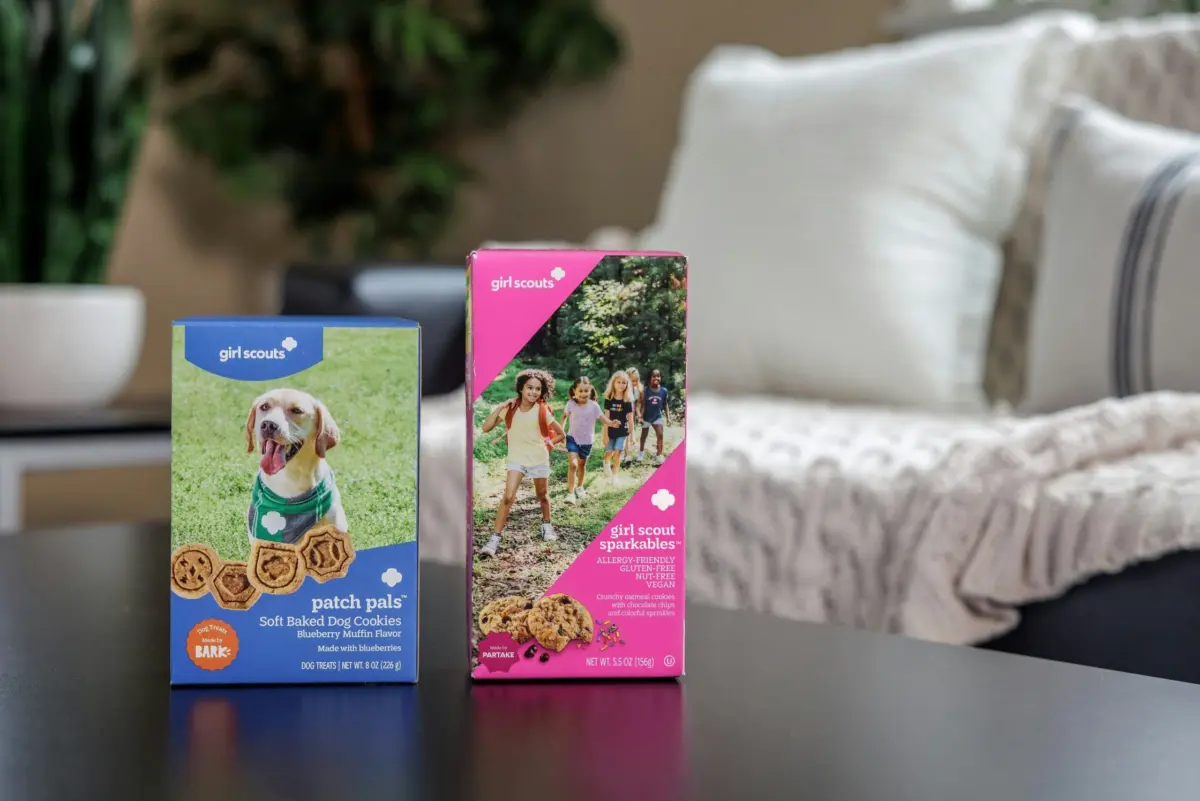
That dynamic is poised for a historic shift. In a major announcement, Girl Scouts of the USA (GSUSA) unveiled two groundbreaking additions to its upcoming 2027 national product lineup: Girl Scout Sparkables, the organization’s first-ever allergy-friendly cookie, and Patch Pals, a dedicated gourmet treat crafted specifically for dogs.
Developed in strategic partnership with Partake—a trusted leader in allergen-free baking—Sparkables are engineered to safely bypass the nine major food allergens, offering an inclusive experience for children who have traditionally been left out of the cookie-sharing tradition. Meanwhile, the organization is casting its net wider into the pet-economy sector via a collaboration with BARK, introducing soft-baked, blueberry-muffin-flavored treats stamped with iconic Girl Scout insignia.
However, this major leap toward culinary inclusivity arrives with significant logistical caveats. Mirroring the rollout strategy of the short-lived Raspberry Rally, both Sparkables and Patch Pals will be sold exclusively online via direct-ship channels beginning January 12, 2027. This distribution model immediately revives memories of the 2023 supply chain and scalper-market controversies, raising urgent questions about whether GSUSA has adequately fortified its inventory infrastructure to meet what is expected to be unprecedented demand. For allergy families, the stakes are profoundly personal: missing out on a box of Raspberry Rally is a minor consumer grievance, but failing to secure a genuinely safe treat for an allergen-affected child carries an emotional toll.
Detailed Chronology: How the 2027 Lineup Came to Be
The path to the 2027 menu expansion was not forged overnight; it represents the culmination of years of internal advocacy, evolving consumer safety expectations, and high-level corporate partnerships.
The Grassroots Push for Inclusivity
For decades, the standard Girl Scout Cookie lineup remained tethered to its most profitable legacy items. However, as pediatric food allergies rose sharply over the last fifteen years—affecting an estimated 8% of children in the United States—local troops increasingly heard from parents and scouts alike regarding the lack of safe options.
Internal GSUSA member surveys conducted over recent cycles revealed a persistent desire for product line modernization. Scouts themselves began advocating for treats that could be shared equitably within local classrooms, troop meetings, and neighborhood gatherings. Young members expressed frustration that certain peers were consistently sidelined during traditional cookie-sharing milestones. This grassroots pressure served as the catalyst for the research and development phase that began in earnest during the post-pandemic recovery years.
The Partake Partnership and Formulation
Recognizing that standard commercial bakeries could not guarantee the rigorous cross-contamination controls required for an allergen-friendly product, GSUSA leadership turned to Partake. Founded by Denise Woodward after her daughter was diagnosed with multiple severe food allergies, Partake has built a stellar reputation within the health-conscious consumer packaged goods (CPG) sector.
Formulating Sparkables required navigating a restrictive matrix of safety parameters. The cookie had to deliver the nostalgic, indulgent flavor profile expected of a Girl Scout product—featuring a crunchy oatmeal base, rich chocolate chips, and colorful sprinkles—while adhering to strict manufacturing protocols. The resulting product is manufactured in a specialized, dedicated facility completely free from the "Big Nine" food allergens:
- Wheat (Gluten)
- Tree Nuts
- Peanuts
- Milk (Dairy)
- Eggs
- Soy
- Fish
- Crustacean Shellfish
- Sesame
The Canine Collaboration with BARK
Simultaneously, GSUSA explored avenues to tap into the booming pet-care market, recognizing the deep emotional bond between scouts and their household pets. Collaborating with BARK—the innovative minds behind BarkBox—the organization developed Patch Pals. Inspired by the genuine affection scouts hold for their dogs, the product line marries the visual identity of the Girl Scouts with canine nutritional safety, resulting in a soft-baked treat infused with natural blueberry muffin flavors and embossed with four distinct patch designs.
Supporting Context & Metrics: The Scale of the Allergy Economy and Distribution Challenges
To fully understand the significance of the Sparkables launch, one must examine the intersection of public health data and retail distribution dynamics.
The Pediatric Food Allergy Landscape
According to clinical data compiled by organizations such as Food Allergy Research & Education (FARE), roughly 5.6 million children in the U.S. currently live with food allergies. This translates to roughly two students in every classroom. The economic burden on families—spanning specialized grocery items, medical consultations, and emergency epinephrine auto-injectors—is substantial.
When legacy food brands introduce allergen-friendly alternatives, they tap into an intensely loyal consumer base that frequently rewards inclusive brands with high retention rates. By removing wheat, dairy, eggs, nuts, and sesame from Sparkables, GSUSA has transformed its product line from an exclusionary seasonal tradition into a medically accessible offering.
The Ghost of Raspberry Rally Past
Despite the positive public health implications, the operational framework chosen for Sparkables and Patch Pals has triggered immediate anxiety among seasoned cookie buyers. By restricting sales exclusively to direct-ship online channels starting January 12, 2027, GSUSA is replicating the exact deployment model used for the Raspberry Rally in 2023.
The Raspberry Rally rollout remains a cautionary tale in modern retail logistics:
- Instant Depletion: Online inventories vanished within hours of launch across numerous regional councils.
- Secondary Market Exploitation: Within 24 hours of the sellout, third-party platforms like eBay were flooded with listings offering single boxes of Raspberry Rally at markups exceeding 500% to 1,000% of the retail price.
- Consumer Frustration: Parents and loyal supporters expressed vocal dismay on social media platforms, criticizing the organization for failing to accurately forecast demand or implement purchase caps.
- Quiet Discontinuation: Facing logistical friction and public relations strain, GSUSA quietly retired the Raspberry Rally ahead of subsequent seasons, prioritizing classic inventory stability.
With Sparkables, the emotional stakes are vastly elevated. When a limited-edition chocolate-raspberry cookie sells out, disappointed consumers miss out on a novelty flavor. When an allergy-friendly cookie sells out before a working-class mother can secure an allotment for her food-allergic child, the failure carries a heavier psychological weight.
Official Statements and Industry Insights
In official press announcements released on Tuesday, GSUSA executives emphasized that listening to girl members was paramount in shaping the 2027 collection.
"Our members have consistently challenged us to look at our traditions through a lens of modern empathy and inclusivity," stated a representative from Girl Scouts of the USA. "Sparkables represent a major milestone in our organizational history. By partnering with Partake, we are ensuring that more families can participate in the joy of the Girl Scout Cookie season without compromising on safety."
Denise Woodward, founder and CEO of Partake, echoed these sentiments regarding the collaborative manufacturing process:
"We know firsthand how isolating food allergies can be for children and their families. Collaborating with an institution as historic as Girl Scouts to produce a safe, delicious treat that honors the dietary safety needs of millions is a dream realized. Sparkables prove that inclusion and great taste do not have to be mutually exclusive."
Retail analysts tracking the CPG space note that this move reflects a broader industry trend toward targeted functional foods. By simultaneously addressing the pet-humanization trend via BARK and the allergy-conscious demographic via Partake, GSUSA is expanding its total addressable market far beyond traditional foot-traffic troop booths.
Future Outlook: What Parents and Troops Can Expect Ahead of January 2027
As the countdown to January 12, 2027, begins, stakeholders across the Girl Scouts ecosystem are preparing for a high-demand launch cycle.
Key Recommendations for Consumers
- Mark Your Calendars Early: Given the expected high demand and historical precedents set by online-only releases, families are advised to log on immediately when sales open at midnight on January 12.
- Monitor Purchase Limits: Consumers should check regional council guidelines regarding per-customer maximum order quantities designed to curb scalping activity.
- Verify Ingredient Labeling: While Partake’s facilities maintain rigorous allergen-free standards, parents of children with ultra-rare or atypical sensitivities should review full chemical and facility disclosure sheets upon release.
Long-Term Implications for the Girl Scout Cookie Program
The success or failure of Sparkables will likely dictate how GSUSA approaches product innovation for the next decade. If the online-only direct-ship model functions smoothly—supported by robust server capacity and scalable manufacturing partnerships—it could pave the way for additional functional, dietary-specific product lines (such as certified gluten-free or plant-based vegan staples) integrated into the core physical catalog.
Conversely, if logistical bottlenecks, website crashes, and secondary-market price gouging mar the 2027 rollout, GSUSA may face renewed pressure to transition online exclusives into local troop inventories, ensuring equitable access for all communities regardless of digital connectivity or income level.
Ultimately, the 2027 cookie season represents a bold stride toward universal participation. Whether that vision is fully realized will depend entirely on how effectively the organization manages the bridge between compassionate product development and resilient modern supply chain execution.

