
Executive Overview
July 14, 2026—Against the backdrop of an escalating youth mental health crisis, Active Minds, the nation’s premier nonprofit organization supporting mental health awareness and education for students and young adults, has launched its annual flagship conference with a historic and urgent focus: direct legislative advocacy.
This year, over 200 youth and young adult advocates from across the United States have descended upon Washington, D.C., taking their boots-on-the-ground mobilization directly to Capitol Hill. Their primary legislative objective is to champion the Campus Lifeline Act, a landmark bipartisan bill designed to overhaul and strengthen mental health infrastructure for students and young adults. Developed and led by youth voices, the legislation targets two critical imperatives: expanding accessible campus mental health resources and establishing resilient peer-to-peer support networks.
By pairing direct lobbying with interactive community-building, digital brand activations alongside partners like ENOUGH, and dynamic evening panels featuring prominent Gen Z advocates, this year’s conference marks a definitive shift. It transitions young people from passive recipients of mental health services to active architects of national policy.

Detailed Chronology of the Mobilization
Day One: From the Halls of Congress to Evening Celebration
The 2026 Active Minds Conference kicked off with an unprecedented fusion of grassroots activism and high-level political engagement.
- Morning to Afternoon – Capitol Hill Advocacy Day: More than 200 young advocates spent hours in direct conversations with federal legislators and congressional staffers. Armed with personal narratives and institutional data, the cohort lobbied for the swift passage of the Campus Lifeline Act, demanding that lawmakers address the structural gaps plaguing adolescent and collegiate mental health systems.
- Late Afternoon – The Social Hour & Mobilization Stations: Following their direct interactions on the Hill, advocates transitioned to an evening social hour designed to reinforce digital and community mobilization. Attendees gathered to experience several interactive, purpose-driven stations:
- Resource & Information Tables: Providing A.S.K. program postcards, informational stickers, and collateral designed to promote proactive mental health interventions.
- Cause + Career Headshots: Offering professional photography on-site to help young advocates elevate their LinkedIn profiles as they build professional networks.
- Send Silence Packing (SSP) Share Your Story Booth: A reimagined iteration of Active Minds’ flagship exhibit, inviting participants to engage with the display and record their personal mental health journeys.
- Advocacy Photo Booth: Dedicated stations capturing photos and mini-videos tailored for personal social media channels and upcoming national advocacy campaigns.
- Student Advisory Committee Reflection & Connection Wall: A collaborative installation where participants utilized writing, drawing, and photo-printing to weave their narratives into a unified visual statement on mental health resilience.
Evening Programming and Keynote Highlights
The evening program featured a mix of artistic expression, thought leadership, and structural analysis of the advocacy pipeline:
- Live Podcast Recording: The evening commenced with a live recording of the She Persisted Podcast, hosted by Sadie Sutton alongside prominent Gen Z mental health advocate Hailey Hardcastle.
- Musical Performances: D.C. native Be Steadwell delivered a powerful musical performance, grounding the evening’s themes in community and artistic resilience.
- Signature Panel Discussion: Entitled Built for This: The Advocacy Pipeline from School Passion to National Impact, the central panel explored how local initiatives scale into federal movements.
Supporting Context & Metrics: The Imperative for Action
The urgency of the Campus Lifeline Act cannot be overstated. Modern youth and young adults navigate an unprecedented landscape of systemic stressors, ranging from academic pressures and economic uncertainty to the lingering psychological impacts of isolation and digital hyper-connectivity.
According to public health data and organizational assessments from groups like Active Minds and Garrett’s Space, traditional clinical settings are overwhelmed, leading to critical treatment gaps—particularly among marginalized communities, young men of color, and rural student populations.
Legislative frameworks like the Campus Lifeline Act seek to bridge these disparities by funding non-clinical, peer-led, and culturally competent interventions directly within educational institutions. By embedding support systems where young people live, learn, and socialize, the legislation aims to dismantle the stigma that historically discourages individuals from seeking help.
Official Voices & Panel Perspectives
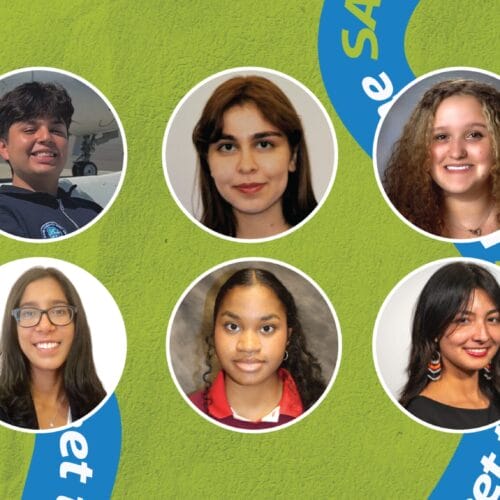
The Built for This panel brought together a cross-section of exceptional young leaders whose work exemplifies the journey from localized grassroots passion to national impact. Moderated by Brandon Bond, Director of People & Organizational Well-Being at Garrett’s Space, the panel featured four distinguished youth leaders:

Moderator: Brandon Bond
A public health advocate and social worker, Brandon focuses on multicultural wellness, nonclinical therapeutic support, and public advocacy. As an alumnus of the Active Minds Emerging Scholars Fellowship, he created an integrative wellness pop-up barbershop. He has served on the Active Minds x MTV Entertainment Youth Advisory Board—which launched the A.S.K. (Acknowledge, Support, Keep-in-Touch) campaign—and as an inaugural Youth Advocate in Mental Health America’s Youth Policy Accelerator. Notably, he was appointed as one of the youngest Human Rights Commissioners in Ann Arbor’s history.
Panelist: Bria Murph
Serving as Miss Celina within the Miss America Opportunity, Bria utilizes her platform to champion her community service initiative, “Do More, Be More,” which empowers youth to transcend societal limitations. As the host of the podcast Chai with Bria and an alumna of the Active Minds Advocacy Institute, she developed “Project Zen UH” to transform underutilized campus spaces into relaxing, accessible environments for culturally diverse students.
Panelist: Rohan Sajita
Co-Founder & CEO of the Let’s Learn Foundation, a 501(c)(3) nonprofit that has distributed over 75,000 books and 5,000 mental health kits to more than 13,000 underserved students across Texas. Through the Mental Health Advocacy Academy, Rohan scaled the Vibrant Voices Project—a program utilizing mental health monologue-writing workshops to support youth in juvenile detention facilities across five Texas counties.
Panelist: Jodi Johnson
An alumnus of the Active Minds Emerging Scholars Fellowship (class of January 2024), Jodi developed “Brother, You’re Not Alone,” an initiative addressing preventative mental health treatment gaps among Black, African, and Caribbean American men. Merging his advocacy with endurance athletics through Team Active Minds, Jodi has raised over $3,500 while completing the Philadelphia Marathon twice and the Berlin Marathon.
Panelist: Varsha Penumalee
A student leader at Virginia Commonwealth University and a member of the Active Minds Student Advisory Committee, Varsha works to de-stigmatize mental health and drive systemic change through public speaking and policy advocacy. In addition to serving as President of NAMI Virginia NextGen and Secretary of Youth MOVE National, her advocacy focuses heavily on addressing health inequities in marginalized communities.
Future Outlook
As the 2026 Active Minds Conference concludes its D.C. mobilization, the ripple effects of this week’s advocacy on Capitol Hill are expected to resonate through upcoming legislative cycles.

By unifying digital mobilization challenges—such as partnerships with brands like ENOUGH—with face-to-face congressional lobbying, Active Minds is redefining modern advocacy. The organization is proving that when youth and young adults are provided with structural support, institutional platforms, and community solidarity, they do not merely ask for change—they author it.
The momentum generated by the 200+ advocates in Washington serves as a clear signal to policymakers: the future of mental health care in America must be built by, with, and for the generation living it.

