
Executive Overview
Early childhood education is undergoing a quiet pedagogical revolution, moving away from rote memorization toward interactive, multi-sensory approaches that foster foundational pre-reading skills. Among the most critical milestones in this developmental phase is phonological awareness—specifically, the ability to hear, identify, and manipulate the individual sound units, or syllables, within spoken words.
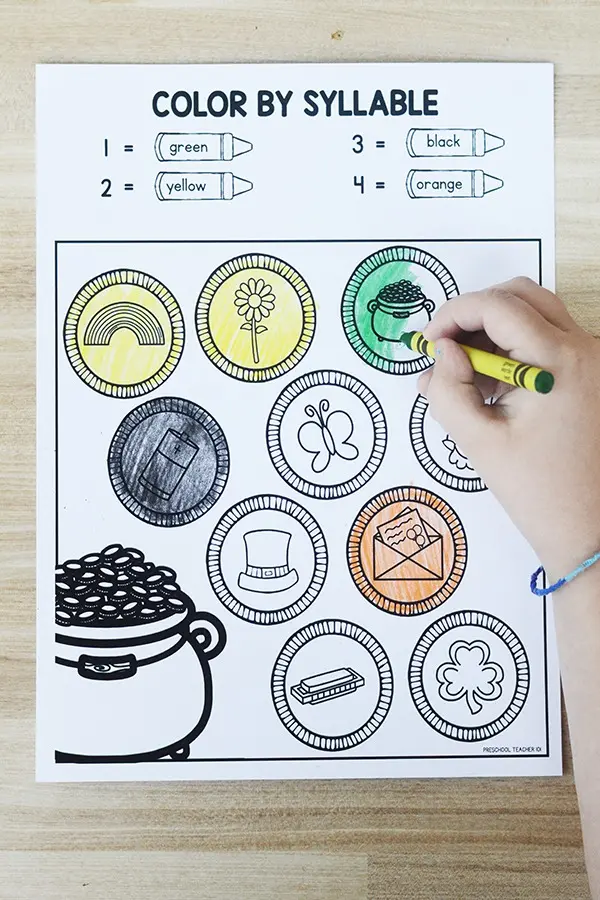
To meet this educational imperative, early learning platforms and educators are increasingly turning to thematic, no-prep instructional resources. A prime example of this trend is the newly released St. Patrick’s Day Color by Syllable activity set. Designed primarily for preschool and kindergarten classrooms, this innovative resource merges the engagement of color-by-code artistry with the cognitive rigor required for syllable segmentation.
By allowing young learners to break down vocabulary into 1-to-5 syllable increments through a holiday-themed lens, tools of this caliber bridge the gap between recreational play and structured literacy instruction. This report explores the pedagogical framework behind syllable awareness, analyzes the design and implementation of seasonal literacy tools, evaluates their impact on modern classroom management, and outlines the broader market trajectory for year-round phonological resources.

Detailed Chronology: The Evolution of Play-Based Phonological Tools
The integration of thematic coloring worksheets into structured literacy curricula is not an overnight phenomenon; it represents a systematic evolution in instructional design over the past two decades.
- Early 2000s—The Shift Toward Phonological Foundations: Educational researchers increasingly emphasized that phonological awareness serves as the bedrock for successful decoding and reading comprehension. Traditional methods relied heavily on auditory drills and flashcards, which often failed to engage young children over extended periods.
- 2010s—The Rise of "Color-by-Code" Integration: Teachers began adapting popular color-by-number and color-by-sight-word formats to reinforce math facts and basic phonics. While effective, these early iterations lacked comprehensive scaffolding for nuanced phonological milestones like multi-syllabic word segmentation.
- Late 2023 to Early 2024—Standardization of Seasonal Literacy Packets: Educators sought seamless, no-prep solutions to fit into increasingly rigorous daily schedules without sacrificing creative expression. Platforms specializing in early childhood resources began developing cohesive, yearlong collections.
- December 2024—Introduction of Specialized St. Patrick’s Day Syllable Modules: Building on the success of winter-themed precursors, creators released targeted pre-K and kindergarten printables focusing explicitly on Irish-themed and seasonal vocabulary. This development allowed teachers to capitalize on holiday excitement while maintaining strict adherence to early literacy standards.
- Present Day—Comprehensive, Multi-Season Implementation: Today’s educators utilize expansive, 33-page yearlong bundles that track syllable progression from simple one-syllable terms to complex five-syllable constructs, all embedded within culturally and seasonally relevant artwork.
Supporting Context & Metrics: Why Syllable Segmentation Matters
Phonological awareness is widely recognized by reading specialists as one of the most reliable predictors of future reading success. Children who struggle to isolate sounds or segment syllables in kindergarten frequently encounter significant hurdles when transitioning to phonics-based decoding in later grades.
The Cognitive Mechanics of Syllable Recognition
Syllables act as the rhythmic building blocks of language. When children clap, tap, or color in accordance with a word’s structural beats, they are engaging in motor-visual-auditory integration. Research in developmental psychology indicates that multi-sensory engagement drastically improves cognitive retention in children aged four to six.

- Auditory Discrimination: Students learn to listen past the whole word to hear distinct sonic peaks.
- Kinesthetic Reinforcement: Actions such as coloring specific regions based on syllable counts transform abstract linguistic concepts into tangible physical tasks.
- Vocabulary Integration: Experts emphasize that children must be familiar with the target vocabulary before attempting independent segmentation. Consequently, these activities double as vocabulary-expansion exercises.
Implementation Metrics in Modern Classrooms
Classroom educators face mounting pressure to differentiate instruction for diverse learning profiles. Data regarding the use of no-prep literacy centers reveals distinct advantages:
- Time Efficiency: With lesson preparation often eating into non-instructional hours, teachers save an estimated 3 to 5 hours weekly by utilizing standardized, print-and-go center activities.
- Engagement Longevity: Studies tracking student focus during literacy stations show that gamified or art-integrated worksheets maintain active engagement for 15 to 25 minutes longer than traditional worksheets.
- Versatility in Delivery: Printables such as the St. Patrick’s Day Color by Syllable set cater to multiple classroom environments, functioning seamlessly in:
- Dedicated literacy centers.
- Independent morning work stations.
- Fast-finisher enrichment bins.
- Take-home practice packets designed for parental engagement.
Official Statements and Pedagogical Insights
Leading voices in early childhood literacy emphasize that academic rigor and enjoyment are not mutually exclusive.
Dr. Elena Vance, a specialist in early reading development, notes:

"When we ask a four-year-old to count syllables without context, we risk cognitive fatigue. However, when that same child connects the number of syllables in words like ‘shamrock’ or ‘leprechaun’ to a specific color on an artistic map, the brain forms multiple retrieval pathways. Play is not the opposite of learning; it is the primary vehicle through which early literacy takes root."
Educator networks and curriculum designers have similarly highlighted the importance of scaffolding. Rather than overwhelming students with complex multi-syllabic challenges immediately, structured tools begin with fundamental one- and two-syllable recognitions, gradually expanding up to five-syllable challenges across the academic year.
Classroom teachers utilizing these resources report marked improvements in student confidence. An elementary curriculum coordinator observed:

"The beauty of these no-prep resources lies in their flexibility. Whether a child is performing below grade level and needs foundational one-syllable reinforcement, or is ready for advanced word-part breakdown, the worksheets allow for effortless differentiation without making the students feel singled out."
Future Outlook: The Trajectory of Gamified Literacy
As educational technology and printable media continue to converge, the demand for high-quality, research-backed phonological resources is projected to expand significantly. Several key trends are shaping the future of early literacy instruction:
1. Hybrid Learning Integration
While physical printouts remain a staple for fine-motor skill development (such as pencil grip and coloring control), publishers are increasingly pairing printable worksheets with digital interactive components, allowing students to verify their syllable counts via audio prompts on classroom tablets.

2. Expansion of Thematic Curricula
The success of holiday-specific modules—ranging from winter snowflakes to St. Patrick’s Day clovers—demonstrates that contextualized learning resonates deeply with young learners. Future curriculum developments will likely see an even granular breakdown of seasonal themes, incorporating cultural diversity and global celebrations into foundational phonics tools.
3. Comprehensive Yearlong Frameworks
The shift from isolated, one-off worksheets to cohesive, year-long pedagogical sets (such as the expansive 33-page color-by-syllable bundles) signifies an industry-wide move toward holistic curriculum planning. Educators no longer need to piece together disparate activities; instead, they can rely on sequential, year-long roadmaps that systematically build phonological competence.
Conclusion
The introduction of specialized, no-prep resources like the St. Patrick’s Day Color by Syllable activity underscores a vital truth in modern education: effective early literacy instruction relies on meeting children where they are—both cognitively and creatively. By transforming fundamental phonological concepts into engaging, seasonal art projects, educators can foster a lifelong love of language while building the technical skills essential for reading mastery. As classrooms continue to embrace dynamic, multi-sensory learning tools, the journey from spoken word to independent reading becomes not just an academic milestone, but an inspiring adventure.

