
Executive Overview
In an era dominated by screens and complex digital interfaces, the fundamental mechanical principles governing the physical world often recede into the background. Yet, simple machines—the ancient, elegant tools with few or no moving parts—remain the invisible foundation of modern engineering. Comprising the lever, inclined plane, wedge, screw, wheel and axle, and pulley, these six archetypes are the building blocks of virtually every complex mechanical system in existence.
Educators, parents, and curriculum developers are increasingly turning to hands-on STEM (Science, Technology, Engineering, and Math) projects to reintroduce these foundational concepts to young learners. By transforming abstract physics equations into tangible classroom and home-based workshops, students bridge the gap between theoretical knowledge and practical application.
This report explores the pedagogical importance of simple machines, unpacks the physics of "work" and mechanical advantage, provides a curated guide to six interactive projects, and debunks common conceptual misconceptions. Ultimately, mastering these foundational concepts equips the next generation of engineers and problem-solvers with the cognitive tools necessary to design tomorrow’s innovations.
Detailed Chronology & Pedagogical Evolution
The history of simple machines dates back to the ancient world, where visionary thinkers first codified the mechanical advantages that allowed humanity to construct monumental architecture.
- c. 3rd Century BCE: The Greek mathematician Archimedes famously established the foundational principles of the lever, famously declaring, "Give me a place to stand, and I shall move the earth." Ancient civilizations utilized inclined planes, wedges, and levers to build the pyramids of Egypt, the Parthenon of Greece, and aqueducts across the Roman Empire.
- Renaissance Era: Polymaths like Leonardo da Vinci extensively documented combinations of gears, pulleys, and screws, recognizing that complex machines were merely compound iterations of simple mechanical devices.
- The Industrial Revolution: The formalization of classical mechanics in the 18th and 19th centuries led to the mathematical definition of work and energy. Mechanical engineering emerged as a formal discipline, treating simple machines as the core vocabulary of industrial design.
- Late 20th Century to Present: Modern educational theory shifted from rote memorization toward constructivism—the philosophy that learners construct knowledge actively rather than passively taking in information. This paved the way for modern STEM education frameworks, which emphasize experiential, project-based learning. Educators began integrating craft-based physics projects into curricula, allowing children to physically experience mechanical advantage through pulleys, levers, and recycled materials.
Supporting Context & Metrics: Defining Work and Mechanical Advantage
To understand why simple machines are indispensable, one must first examine the physics definition of "work." In everyday language, work can mean writing a report, cleaning a room, or typing on a computer. In physics, however, work has a strict, quantitative definition: it is the amount of force (or effort) required to move an object over a specific distance.
The mathematical equation for work is elegantly concise:
$$textW = textF times textd$$
Where:
- $textW$ = Work
- $textF$ = Force (effort)
- $textd$ = Distance
The Reality of Mechanical Advantage
A common misconception is that simple machines reduce the total amount of work required to accomplish a task. They do not. According to the law of conservation of energy, the total amount of work ($W$) remains constant.
Instead, simple machines provide a mechanical advantage. They make work easier by trading force for distance. By spreading out the effort over a longer distance or extended period, a machine allows a human to apply a smaller force to move a heavy object.
Consider an extreme example: attempting to manually lift a heavy freight elevator to the top of a multi-story building. Without mechanical assistance, this task is humanly impossible because the required force exceeds our physical capacity. However, by integrating a system of pulleys, the necessary input force is drastically reduced, making the impossible task achievable.
6 Fun, Hands-On Simple Machine Projects for the Classroom and Home
Bringing mechanical physics to life requires active experimentation. Whether utilized in collaborative group settings, formal classroom demonstrations, or weekend home-building sessions, these six projects offer a practical, creative pathway to understanding the six simple machines.
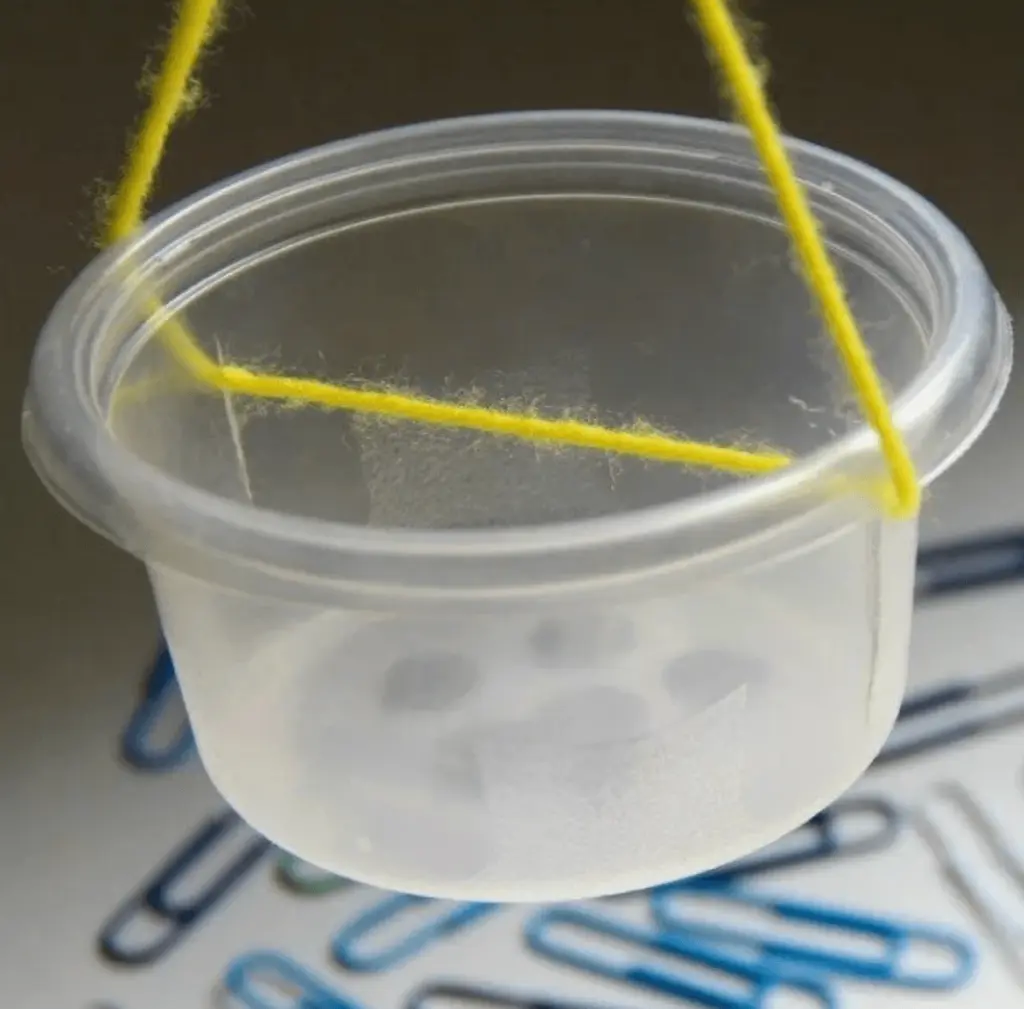
1. Make Your Own Pulley
- Target Machine: Pulley
- Project Overview: Utilizing everyday materials—such as small wheels, spools, string, and lightweight hooks—students construct a functional block-and-tackle system. Inspired by DIY curricula from platforms like Carrots are Orange, learners can expand the project into a gamified challenge to test lifting capacity.
- Educational Takeaway: Students observe how redirecting the axis of force through a grooved wheel alters the direction of effort and reduces the perceived weight of suspended objects.
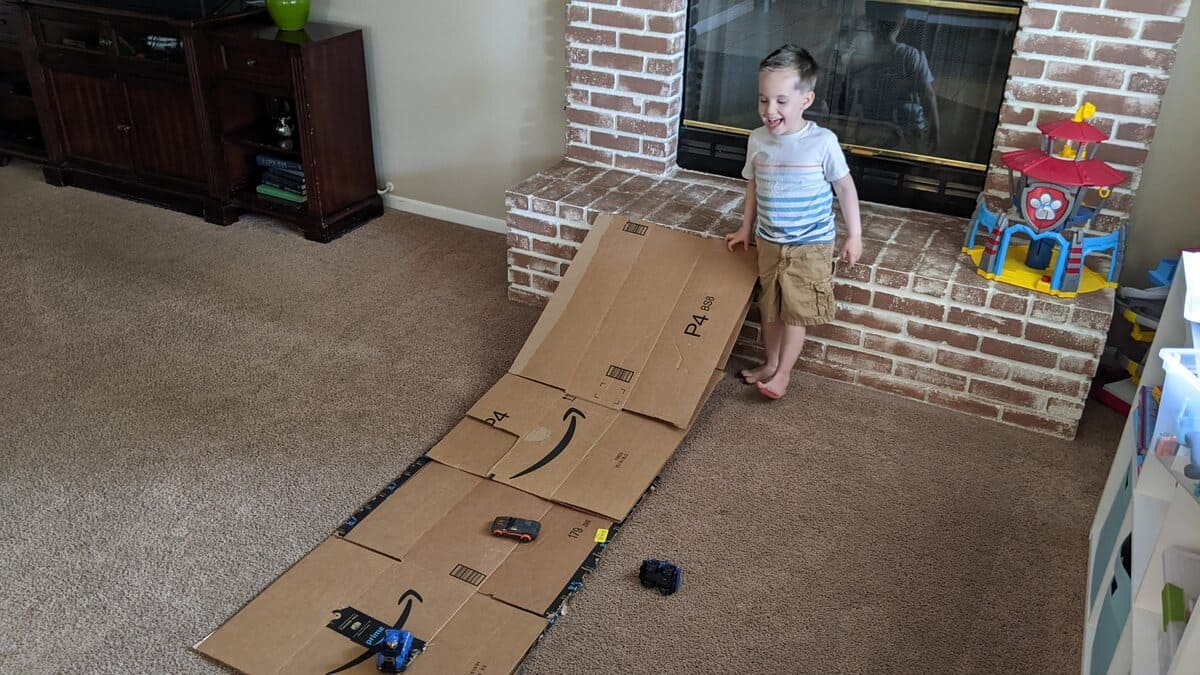
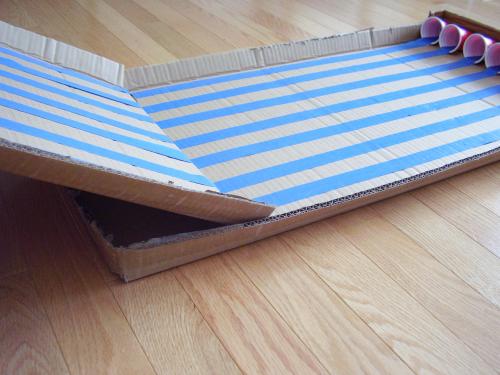
2. Marble Run Inclined Plane
- Target Machine: Inclined Plane
- Project Overview: Transforming cardboard tubes, wooden planks, and foam channels into an intricate racecourse for marbles or toy cars.
- Educational Takeaway: By altering the angle (slope) of the plane, students visually measure how a gradual incline decreases the force required to elevate an object compared to vertical lifting.
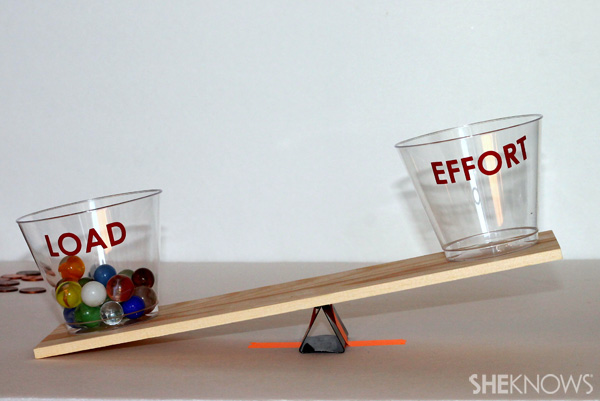
3. Make a Lever with a Binder Clip
- Target Machine: Lever
- Project Overview: Using a standard office binder clip as a fulcrum and a small ruler or craft stick as the beam, students build a miniature seesaw capable of launching small payloads (such as cotton balls or erasers).
- Educational Takeaway: This tactile model clearly delineates the three components of a lever: the fulcrum, the load, and the effort. By shifting the binder clip position, students immediately experience changes in mechanical advantage.
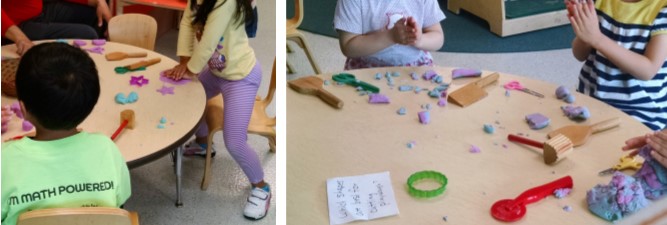
4. Splitting Play Dough with a Wedge
- Target Machine: Wedge
- Project Overview: Because children cannot safely handle industrial axes or splitters, tactile experimentation with play dough serves as an ideal proxy. Students roll play dough into miniature "logs" and attempt to split them using flat hands versus triangular wedge blocks.
- Educational Takeaway: Students physically feel how a wedge concentrates force across a sharp, inclined edge to redirect a downward push into outward splitting forces.
5. Demonstrating Screws
- Target Machine: Screw
- Project Overview: Educators present a solid block of wood, inviting students to attempt pushing a smooth nail into the wood using only hand pressure. Naturally, this fails. Next, the instructor demonstrates how a threaded screw easily penetrates the dense material with rotational force.
- Educational Takeaway: The screw is essentially an inclined plane wrapped around a cylinder. This demonstration highlights how rotational distance is traded for immense linear holding power.
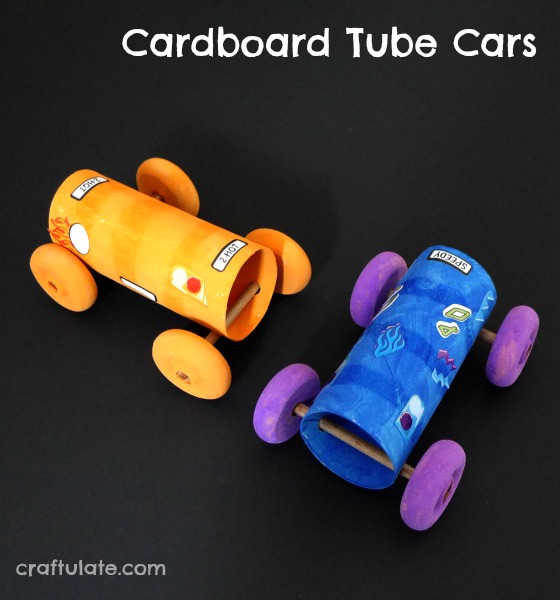
6. Wheel and Axle Recycled Cars
- Target Machine: Wheel and Axle
- Project Overview: Utilizing cardboard tubes, plastic bottles, wooden chopsticks or straws for axles, and bottle caps for wheels, students design and construct custom recycled vehicles.
- Educational Takeaway: Students test pushing a heavy, valueless tube across the floor versus rolling it on a wheel-and-axle assembly. They discover how rolling friction drastically outperforms sliding friction, enabling heavy loads to move smoothly.
Expert Perspectives & Official Statements
Educational researchers and mechanical engineers frequently emphasize the critical nature of early-childhood STEM exposure.
"When children manipulate physical levers, pulleys, and inclined planes, they are not merely crafting toys; they are internalizing spatial reasoning and physics heuristics that form the bedrock of advanced engineering," notes Dr. Aris Thorne, a professor of mechanical pedagogy at the Institute for Applied Sciences. "The tactile feedback of a jammed pulley or a poorly balanced lever teaches iterative problem-solving far more effectively than any textbook diagram."
Furthermore, industry associations advocate for early integration of foundational mechanics to combat projected technical skills gaps. By framing STEM activities as creative, imaginative play—such as building intricate Rube Goldberg machines—educators successfully demystify physical science, fostering lifelong curiosity in technical fields.
Common Misconceptions About Simple Machines
Even though simple machines are conceptually straightforward, several persistent misconceptions can hinder deep comprehension.
Misconception 1: All Levers Operate Identically
A common belief is that all levers function the same way. In reality, levers are separated into three distinct classes based on the relative positions of the fulcrum, load, and effort:
- First-Class Levers: The fulcrum is positioned between the effort and the load (e.g., a seesaw, crowbar).
- Second-Class Levers: The load is positioned between the fulcrum and the effort (e.g., a wheelbarrow, nutcracker).
- Third-Class Levers: The effort is applied between the fulcrum and the load (e.g., tweezers, a baseball bat, human forearm).
Misconception 2: Friction is Always an Adversary
In many engineering contexts, friction is viewed as an energy loss to be minimized. However, simple machines frequently rely on friction to function. A doorstop (wedge) relies entirely on friction to remain in place, and a wheel and axle requires tractional friction between the tire and the ground to propel a vehicle forward. Friction is not merely an obstacle; it is an active design parameter.
Misconception 3: Simple Machines Decrease Total Work
As established by energy conservation laws, machines do not lessen the total quantum of work performed. They redistribute the effort over distance or time, yielding a mechanical advantage that makes arduous tasks humanly manageable.
Future Outlook: The Intersection of Classic Mechanics and Modern STEM
Looking ahead, the relevance of simple machines is expanding rather than diminishing. As modern robotics, automation, and aerospace engineering push boundaries, the core mechanical principles remain unchanged. Micro-robotics utilizes miniature levers and flexures; spacecraft landing gear employs advanced linkages and mechanical advantages derived from classical machines.
For parents and educators seeking structured guidance, exploring comprehensive educational resources—such as curated STEM subscription boxes for kids or specialized building kits for future engineers—provides continuous opportunities for growth.
By encouraging young learners to observe their surroundings, question how everyday devices operate, and construct their own mechanical models, we lay the groundwork for the next generation of innovators. Simple machines may be ancient in origin, but they remain our most powerful tools for engineering the future.

