
Executive Overview
For educators navigating the economic realities of the mid-2020s, the monthly gap between a standard educator’s paycheck and the escalating cost of living is a familiar, if frustrating, dilemma. While public perception often romanticizes the educator’s schedule—citing summers off and shorter workdays—the reality involves hours of unpaid grading, administrative duties, continuous professional development, and out-of-pocket classroom expenses.
With national median annual wages hovering around $63,970 for elementary educators, $64,370 for middle school teachers, and $72,040 for high school teachers as of mid-2025, many professionals find themselves looking beyond the traditional classroom for financial stability. Enter the modern educator side hustle: a strategic venture designed to leverage deep subject-matter expertise, pedagogical training, and organizational skills during hours and seasons when schools are out of session.
However, choosing the wrong secondary income stream can quickly accelerate burnout. The most successful side ventures are those thoughtfully aligned with an educator’s specific skill set, geographical constraints, and actual free time. This comprehensive report explores the current economic landscape of teaching, analyzes the top ten vetted side hustles for educators, and provides an authoritative framework for balancing supplemental work without sacrificing personal well-being.
Detailed Chronology: The Evolution of Educator Compensation and the Rise of the Gig Economy
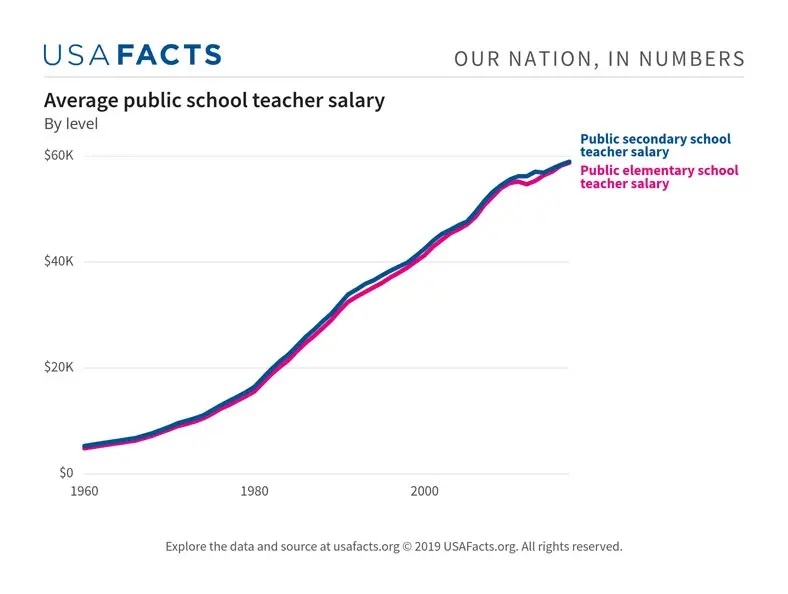
The financial strain experienced by modern educators is not a sudden anomaly; it is the culmination of decades of wage stagnation relative to inflation and the expanding scope of educational responsibilities.

The Historical Pay Disparity
Historically, teacher compensation has been tethered to rigid salary schedules determined by localized tax bases, state legislative budgets, and collective bargaining agreements. While advanced degrees, National Board Certification, and decades of classroom tenure can eventually push educators higher up the pay scale, starting salaries in many regions fail to compete with other entry-level positions requiring a bachelor’s or master’s degree.
The Post-Pandemic Pivot to Remote Flexibility
Prior to 2020, educator moonlighting typically meant evening tutoring at a local learning center, coaching high school athletics, or taking on retail work during the summer months. The rapid acceleration and normalization of remote learning during the early 2020s permanently shifted this paradigm.
Digital infrastructure transformed how educators package and monetize their expertise. Virtual tutoring platforms, asynchronous online course builders, global ESL platforms, and digital marketplaces for curriculum design (such as Teachers Pay Teachers) dissolved geographical boundaries. Teachers were no longer constrained by local demand; they could market their lesson plans, consulting services, and academic coaching to a global audience from their home offices.
Supporting Context & Metrics: Educator Salaries and Job Outlook
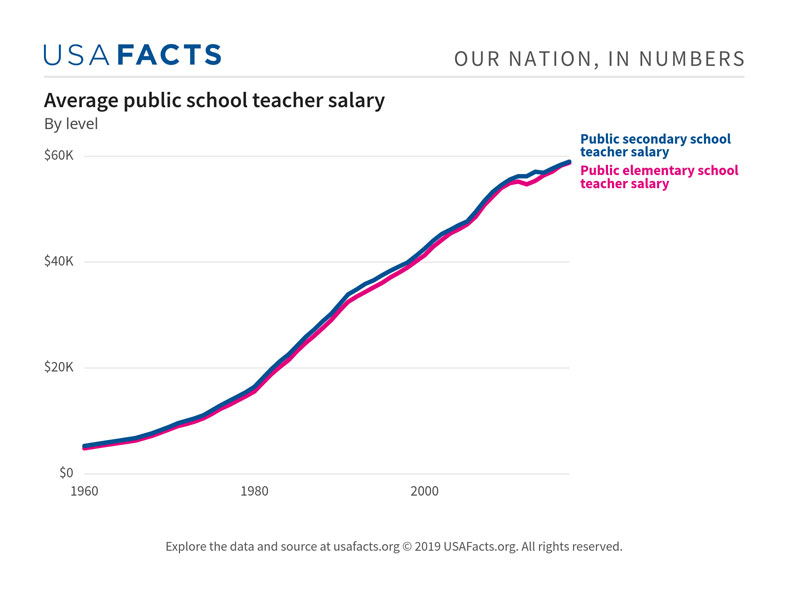
Understanding the economic pressures driving educators toward secondary income requires examining official labor statistics and employment projections. According to data from the U.S. Bureau of Labor Statistics (BLS) and employment forecasts from Projections Central, the macroeconomic picture for public and private school teachers presents a complex landscape of steady demand paired with modest base compensation.
National Median Annual Wages (BLS Data)
- Elementary School Teachers: $63,970
- Middle School Teachers: $64,370
- High School Teachers: $72,040
While high school teachers positioned at the 90th percentile earned approximately $107,600, wage-percentile metrics do not account for the years of classroom experience required to reach those tiers.
Job Outlook and Workforce Dynamics (2024–2034)
Projections Central forecasts a slight contraction in traditional employment growth across certain grade levels over the decade leading to 2034:
- Elementary School Teachers: -2.0% projected growth
- Middle School Teachers: -2.0% projected growth
- High School Teachers: -1.6% projected growth
Despite these minor percentage declines, the teaching profession will not experience a talent shortage of openings. High rates of career turnover, mid-career burnouts, and mass retirements ensure hundreds of thousands of replacement opportunities. For instance, the BLS projects roughly 91,000 annual openings for elementary school teachers alone (excluding special education).
Nevertheless, health insurance packages, state-managed pensions, and paid leave provisions tied to school districts cannot be easily replaced by gig work. Consequently, side hustles remain a targeted tool for covering immediate lifestyle expenses—such as mortgages, childcare, and student loans—rather than a complete substitute for primary employment benefits.

The 10 Best Side Hustles for Educators
Working educators have rigorously tested a wide array of secondary income opportunities. The following ten side hustles are ranked from the fastest to establish to those requiring long-term strategic development.
1. Tutoring and Academic Coaching
- Setup Time: Immediate (Days)
- Income Potential: Moderate to High (Hourly)
Tutoring represents the most direct translation of classroom skills into private enterprise. Whether conducted in-person, via virtual video conferencing, or through specialized test-prep organizations, private academic coaching commands strong hourly rates. English as a Second Language (ESL) tutoring also allows educators to connect with international students during evening or early morning hours. Most online platforms require little more than proof of subject expertise, a verified rate, and an open calendar.
2. Curriculum Development and Lesson Planning
- Setup Time: Medium (Weeks to Months)
- Income Potential: Scalable Passive Income
- Primary Platforms: Teachers Pay Teachers (TpT), Etsy, Personal Websites
Educators spend countless hours crafting innovative worksheets, unit plans, and assessments. Platforms like Teachers Pay Teachers allow teachers to upload these digital assets once and sell them repeatedly to a global educator marketplace. While building a digital storefront requires initial effort and search engine optimization (SEO), successful creators generate continuous passive income long after the initial creation phase.
3. Online Teaching and Asynchronous Course Creation
- Setup Time: High (Months)
- Income Potential: High (Passive/Residual)
- Primary Platforms: Udemy, Teachable, Skillshare
For teachers looking to scale beyond one-on-one tutoring, packaging specialized knowledge into recorded video courses offers a sustainable alternative. Educators can structure deep dives into advanced placement prep, specific study skills, or artistic hobbies. Once recorded and structured, these asynchronous courses require zero live teaching hours, making them ideal summer projects that yield dividends throughout the school year.

4. Freelance Writing and Content Creation
- Setup Time: Low to Medium
- Income Potential: Flexible per-project fees
Writing, editing, and content creation leverage the advanced communication and analytical skills inherent to the teaching profession. Educational technology companies, parenting blogs, and corporate marketing departments frequently hire educators as freelance writers to draft accurate, engaging curriculum summaries, blog posts, and study guides. For those less inclined toward writing, stock photography, graphic design via Canva, and social media management offer alternative digital content streams.
5. Educational Consulting for Homeschooling Families
- Setup Time: Medium
- Income Potential: Steady Retainer Fees
The steady growth of alternative education and homeschooling networks has created a distinct market for private educational consulting. Families transitioning children out of traditional classrooms often struggle with pacing, state compliance, and scope-and-sequence planning. Licensed teachers possess the precise pedagogical framework required to design customized home school curriculums, track student benchmarks, and organize social cooperatives, securing reliable monthly retainer clients.
6. Arts, Crafts, and Handmade Goods
- Setup Time: Low
- Income Potential: Variable
- Primary Platforms: Etsy, Local Craft Fairs
Many educators possess exceptional artistic and organizational talents. Platforms like Etsy provide a low-barrier digital storefront (with nominal listing fees starting around $0.20 per item) to sell handmade classroom decor, personalized gifts, custom jewelry, or printable party supplies. This is a low-risk option to test consumer demand before committing heavy capital or time.
7. Coaching, Athletics, and Extracurricular Direction
- Setup Time: Immediate to Seasonal
- Income Potential: Hourly or Stipend-Based
School districts, municipal recreation departments, and private athletic clubs continuously hire certified coaches, swimming instructors, and camp directors. Educators who already manage school sports teams or clubs during the academic year can easily extend their expertise into summer leagues, private clinics, or community center programs, turning seasonal hobbies into profitable enterprises.

8. Summer School and Camp Directing
- Setup Time: Seasonal
- Income Potential: Predictable Block Pay
For teachers seeking guaranteed summer income without the friction of building a new business, working summer school within one’s own district is a seamless transition. Alternatively, residential and day camps hire educators to direct academic enrichment programs, arts camps, or leadership initiatives, offering a refreshing change of pace from the standard classroom routine.
9. Short-Term Rentals and Property Management
- Setup Time: High
- Income Potential: Substantial
- Primary Platforms: Airbnb, Vrbo
Educators who own spare rooms, accessory dwelling units (ADUs), or properties left vacant during extended summer travels frequently utilize short-term rental platforms. While property management involves guest communications, cleaning logistics, and liability insurance, organizations such as the National Education Association (NEA) have historically offered member benefit partnerships to help educators navigate the initial hosting setup.
10. Delivery, Rideshare, and On-Demand Gig Work
- Setup Time: Immediate
- Income Potential: Highly Flexible
Delivery and rideshare driving represent the ultimate flexible side hustles. Requiring little more than a reliable vehicle, personal auto insurance, and a smartphone, these services allow educators to log in and accept rides or food delivery orders during brief lunch breaks, weekend gaps, or late afternoons. While wear and tear on the vehicle must be factored into earnings, the total absence of scheduling friction makes it an immediate fallback option.
Official Statements and Industry Insights
Balancing a rigorous professional career in education with supplemental enterprise requires careful boundary setting. Educational career experts emphasize that the greatest hazard of moonlining is not legal or contractual, but personal: severe physical and mental exhaustion.

According to career strategist and former educator Amanda R. Castillo, M.Ed.:
"Working teachers have already mapped out which side hustles are worth a colleague’s limited time and which ones just eat into a weekend for a little cash. Most teachers who take on a side hustle manage to fit it in without it swallowing the rest of their week—the ones who burn out are usually the ones who never set a limit in the first place."
Furthermore, experts urge caution regarding ethical conflicts of interest. Tutoring one’s own current classroom students for private financial gain, for instance, violates professional ethics codes in many districts, regardless of whether a formal policy explicitly forbids it. Maintaining professional distance between primary employment and secondary ventures protects both professional reputation and licensure.
Future Outlook: Strategic Recommendations for Educators
As the educational landscape continues to evolve through 2030 and beyond, the definition of an educator’s career trajectory is expanding. While side hustles provide essential financial relief in the short term, career advancement inside the school system offers more sustainable, long-term fiscal rewards.

Educators weighing their financial options should consider a dual-track strategy:
- Immediate Relief: Utilize low-barrier, high-flexibility side hustles (such as virtual tutoring or freelance writing) to bridge immediate cash flow gaps during the academic year.
- Long-Term Scaling: Invest in asynchronous digital assets (such as online courses or curriculum stores) that generate residual income without demanding continuous hourly labor.
- Professional Upskilling: Direct a portion of supplemental earnings toward advanced degrees, specialized certifications, or leadership credentials. Over time, these academic investments yield permanent base salary increases, pension growth, and institutional upward mobility that outpace any temporary gig economy job.
By approaching supplemental income with clear boundaries, realistic expectations, and strategic foresight, educators can successfully protect their well-being while achieving long-term financial security.

