
Executive Overview
When artificial intelligence first breached the doors of the modern classroom, the predominant reaction among educators was one of profound apprehension. The capability of generative AI models to instantly draft multi-page essays, solve complex mathematical proofs, and pass standardized tests with high marks sparked immediate fears of unprecedented academic dishonesty. Overnight, the specter of automated cheating loomed large over educational institutions worldwide.
However, as the dust has settled on the initial wave of panic, a paradigm shift has begun to take shape. Educators and administrators are increasingly recognizing that artificial intelligence holds far greater potential for legitimate, constructive educational enhancement than it does for illicit shortcuts. The central challenge facing the educational sector today is no longer whether to ban or embrace AI, but rather how to precisely identify its most advantageous applications and integrate the right tools to empower both teachers and students.
From streamlining arduous administrative tasks like lesson planning and seating charts to driving highly personalized differentiated instruction and breaking down language barriers, AI is steadily weaving itself into the fabric of 21st-century schooling. Yet, this technological revolution is not without its complications. Issues surrounding student data privacy, the reliability of AI detectors, the risk of over-automation, and the proliferation of "AI-washed" ed-tech products demand a cautious, informed approach. This comprehensive report explores how artificial intelligence is reshaping the educational landscape, the specific tools making an impact, and what the future holds for the classroom of tomorrow.
Detailed Chronology: From Initial Resistance to Integration
The integration of artificial intelligence into education has unfolded in rapid, distinct phases over a remarkably short period. Understanding this trajectory is crucial to grasping where the technology stands today.

- The Shock Phase (Late 2022 – Early 2023): The public release of advanced generative pre-trained transformers sent shockwaves through academic communities. Educators scrambled to update syllabi, revert to blue-book handwritten exams, and find reliable ways to catch students using chatbots for homework assignments.
- The Utility Recognition Phase (Mid 2023): As teachers tested the boundaries of these models themselves, a collective realization occurred. Educators discovered that generative AI could drastically reduce their own workloads by automating repetitive administrative and preparatory duties, shifting the narrative from threat to utility.
- The Specialized Tooling Phase (Late 2023 – 2024): The market responded to educators’ needs by moving away from generic chatbots toward purpose-built educational platforms. Companies developed AI-driven lesson plan generators, automated quiz creators, and specialized software tailored to specific subjects and special education requirements.
- The Systemic Adoption Phase (Present): Today, school districts and teacher preparation programs—including Master of Education (MEd) curricula—are beginning to formalize AI training. Rather than treating AI as an external enemy, institutions are working to codify ethical guidelines, establish best practices, and bundle AI capabilities directly into standard educational service packages like Google Classroom.
Supporting Context & Metrics: The State of AI in Education
To understand the urgency and scale of AI adoption in schools, one must examine the operational pressures currently facing educators. Teaching has long been characterized by high burnout rates, largely driven by administrative overhead and the relentless demand for individualized attention in overcrowded classrooms.
The Administrative Burden
According to various educational labor studies, teachers spend a significant portion of their non-teaching hours on repetitive tasks:

- Lesson Planning: Crafting daily and weekly curricula that align with state standards while keeping students engaged.
- Assessment Creation: Designing fresh, unique quizzes and tests that accurately measure comprehension without repeating past assessments.
- Grading and Feedback: Evaluating subjective assignments, homework, and essays to provide meaningful qualitative feedback.
Demographic and Resource Pressures
Compounding these daily tasks are broader systemic challenges within the American school system:
- Language Diversity: The U.S. Department of Education notes that students in American schools speak more than 400 different languages. Between 2010 and 2015, the population of English language learners grew in over 25 states, with some regions experiencing surges of over 40 percent.
- Special Education Shortages: Special education serves roughly 15 percent of the school-age population—spanning over 7 million students aged 3 to 21. Simultaneously, Department of Education data reveals that 40 percent of public schools report severe difficulties in hiring qualified special education teachers.
These metrics highlight a critical reality: human educators are stretched thin. Artificial intelligence is emerging not as a replacement for human empathy and instruction, but as a much-needed force multiplier designed to alleviate systemic burnout.

Official Statements and Institutional Perspectives
Educational authorities, researchers, and institutional leaders have adopted nuanced stances on the influx of artificial intelligence, balancing optimism regarding productivity with stringent warnings about ethics.
Leading ed-tech researchers emphasize that the true value of AI lies in its capacity for differentiated instruction. Because every student learns at a different pace and through unique modalities, traditional one-size-fits-all lecturing has inherent limitations. Institutional experiments—such as Seattle Public Schools’ pivot toward comprehensive differentiated learning—demonstrate a systemic push to tailor education to individual needs. Proponents argue that AI-powered platforms like Diffit and Magic School AI are essential catalysts for making large-scale classroom differentiation practically achievable.

Conversely, data privacy advocates and teacher unions have voiced sharp concerns. Institutional bodies caution that without rigorous regulatory standards, the commercial ed-tech market is vulnerable to exploitation. Many companies routinely rebrand legacy software as "AI-powered" to capitalize on current search trends, leaving educators to navigate a minefield of overhyped, underperforming tools. Furthermore, organizations monitoring student rights have stressed that feeding sensitive student data into third-party machine learning models creates severe vulnerabilities that districts must aggressively mitigate.
Practical AI Applications in the Modern Classroom
As generative AI matures, several key niches have emerged where technology directly supports the daily workflow of educators.
AI Lesson Plan and Rubric Generation
The drudgery of daily lesson planning is being fundamentally transformed. Using straightforward, plain-English prompts, educators can input specific daily goals, state standards, and timeframes into generative AI tools. Within seconds, platforms can produce comprehensive lesson plans complete with:
- Suggested classroom activities and discussion prompts.
- Resource lists and visual aids.
- Tailored grading rubrics generated via platforms like Magic School AI.
This allows teachers to spend less time formatting documents and more time refining the delivery of their curriculum.

Automated Quiz and Test Creation
Generating unique, relevant assessments is a mentally taxing process. AI-powered quiz generators utilize natural language processing (NLP) and image recognition to scan teacher-provided texts, lecture notes, or textbook chapters. They can instantly extract core concepts and construct multiple-choice, short-answer, or essay prompts at varying difficulty levels, ensuring assessments remain fresh and rigorously aligned with taught material.
Classroom Management and Administrative Automation
Beyond academics, AI streamlines logistical overhead. Tools capable of processing a classroom floor plan and a student roster can generate optimized seating arrangements in seconds. Furthermore, AI presentation tools (such as Slidesgo) quickly assemble visually engaging slide decks, freeing teachers from the burden of graphic design.

More broadly, administrative process automation handles scheduling, attendance tracking, and initial paperwork sorting at both the classroom and district levels, returning valuable hours to educators.
Specialized Educational AI Tools
While general-purpose chatbots have their place, specialized AI applications are addressing specific subject matters and unique student populations with remarkable precision.

Subject-Specific AI Integration
- Mathematics: AI platforms like igebra.ai incorporate creative coding and data thinking into math curriculums, helping students build critical thinking and numeracy skills through practical, real-world applications.
- English Language Arts: Tools such as twee.com allow English teachers to generate customized reading comprehension questions based on YouTube videos, create targeted vocabulary stories, and spark dynamic classroom discussions.
- Sciences: Computational engines like Wolfram Alpha and virtual laboratory simulations like Labster enable students to conduct complex biology, chemistry, and physics experiments in virtual environments, bridging the gap between theory and practical execution.
Special Education and Accessibility
Special education teachers face immense structural demands, making AI an invaluable ally in drafting Individualized Education Programs (IEPs). Platforms like IEP Copilot assist in rapidly formulating goals, targeted interventions, and behavioral plans.
Moreover, cutting-edge assistive technologies are breaking historical communication barriers. Bioengineered innovations, such as wearable throat patches developed at UCLA, utilize AI-driven computer vision and muscle movement interpretation to instantly translate thoughts into spoken words for students with speech impairments, fundamentally altering their classroom experience.

The Ongoing Battle Over Academic Integrity: AI Detectors and Counter-Measures
The rise of student-facing generative AI has created a perpetual arms race regarding academic integrity. While teachers utilize AI to grade and plan, students have increasingly leveraged chatbots to write essays and complete homework assignments.
To combat this, a robust market of AI detection tools—such as GPTZero—has emerged. These platforms attempt to identify machine-generated text using probabilistic analysis. However, AI detection remains inherently imperfect. Unlike clear-cut plagiarism, natural language processing models can easily be prompted to mimic specific human writing styles, rendering many detection tools susceptible to false positives and clever circumvention (such as humanizer plugins like Undetectable.ai).
In response, forward-thinking educators are shifting their evaluation strategies. Rather than relying on imperfect detection software, many are designing "AI-resistant" assignments that require in-class presentations, interactive discourse, and personal reflections that standard chatbots cannot authentically replicate. As pedagogical experts note, the most reliable AI detector for any teacher remains a deep, holistic understanding of a student’s true capabilities demonstrated through consistent classroom interaction.
Future Outlook
Looking toward the horizon, the trajectory of artificial intelligence in education is irreversible. Academic research into educational psychology and cognitive development is poised to undergo a profound transformation as machine learning models analyze observational data drawn from millions of students across thousands of hours of classroom engagement.
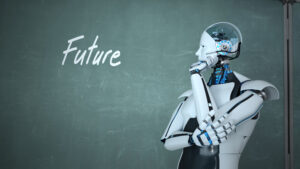
This data-driven evolution will undoubtedly yield entirely new teaching methodologies that are currently unimaginable. Teacher preparation programs are already adapting, ensuring that candidates pursuing Master of Education degrees and professional certifications are fluent in digital tool management and algorithmic literacy.
However, realizing this utopian vision requires a steadfast commitment to safeguarding human values. The future classroom must strike a delicate balance: leveraging the computational power, efficiency, and personalization of artificial intelligence while fiercely preserving the irreplaceable warmth, emotional intelligence, and mentorship provided by human educators. By maintaining rigorous ethical standards, critically vetting ed-tech products, and prioritizing student privacy, the educational community can successfully navigate the algorithmic classroom and forge a more efficient, inclusive future for learning.

