In an era dominated by hyper-connectivity, digital screens, and increasingly structured academic environments, educators, psychologists, and parents are facing a silent crisis. Children and adolescents are experiencing unprecedented challenges with self-regulation, attention span, task initiation, and emotional flexibility. At the core of these difficulties lies a deficiency in executive functioning skills—the foundational, brain-based management system housed within the prefrontal cortex.
While traditional interventions for executive dysfunction often rely heavily on classroom drills, behavioral charts, and therapeutic workspaces, a growing body of neuroscientific and educational research points to an age-old remedy: the great outdoors. Nature, acting as the original and most intuitive classroom, offers an unrivaled landscape for cognitive restoration.
Recent studies emphasize that even brief excursions into green spaces can profoundly alter brain chemistry, lowering stress hormones, sharpening cognitive focus, and enhancing behavioral flexibility. This comprehensive report explores the neurological mechanics behind executive functioning, reviews the empirical metrics linking green time to cognitive health, and details over a dozen practical, nature-based strategies designed to help educators and parents cultivate these vital life skills in children and teens.
Detailed Chronology: The Evolution of Nature-Based Cognitive Interventions
The intersection of environmental psychology and cognitive development is not a novel concept, but its application to executive functioning has evolved significantly over the past half-century.
The 1980s (The Birth of Attention Restoration): Environmental psychologists Rachel and Stephen Kaplan developed Attention Restoration Theory (ART). They posited that urban environments and digital stimuli demand "directed attention," which quickly depletes cognitive resources and leads to mental fatigue. Conversely, nature engages "soft fascination"—effortless attention that allows the brain’s inhibitory control centers to rest and recover.
The Late 1990s to Early 2000s (The Rise of Green Spaces in Schools): Researchers began investigating the correlation between schoolyard vegetation and academic performance. Early observational studies noted that children with ADHD displayed significantly milder symptoms after playing in green, natural settings compared to built or indoor environments.
The 2010s (Empirical Validation and Neuroimaging): With advancements in neuroimaging, scientists began mapping how natural environments physically alter stress response loops. Landmark studies from institutions like Harvard Medical School confirmed that short nature breaks measurably reduce cortisol levels and down-regulate the sympathetic nervous system.
The 2020s (Post-Pandemic Integration and Digital Fatigue): Following widespread remote learning and unprecedented screen-time spikes during the COVID-19 pandemic, educators faced a dramatic surge in executive dysfunction among students. This catalyzed a modern movement toward outdoor education, somatic learning, and nature-integrated social-emotional learning (SEL) curricula, moving nature from an extracurricular luxury to a core cognitive intervention tool.
Supporting Context & Metrics: Why Nature Resets the Brain
To understand why nature is so effective at building executive functioning skills—such as working memory, cognitive flexibility, and inhibitory control—one must examine what happens inside the human brain when it interacts with the natural world.
The Neurological Blueprint of Executive Functioning
Executive functioning refers to the high-level cognitive processes controlled primarily by the prefrontal cortex. These skills allow individuals to:
Plan and prioritize complex tasks.
Organize materials, thoughts, and time.
Initiate tasks without prolonged procrastination.
Exercise self-control and regulate impulses.
Adapt dynamically when plans or environments change (cognitive flexibility).
When these systems are strained by modern stressors, academic pressure, and cognitive overload, behavioral breakdowns occur.
What the Data Shows
The therapeutic and cognitive benefits of green spaces are backed by staggering empirical metrics:
The 20-Minute Stress Reduction Window: Research published in health journals demonstrates that spending just 20 minutes outside actively connecting with nature triggers a statistically significant drop in stress hormones (cortisol).
The Two-Hour Well-Being Threshold: A landmark population study involving over 20,000 participants revealed that individuals who spent a minimum of two hours a week outdoors reported substantially higher levels of psychological well-being and vitality than those who fell short of this benchmark.
Cognitive and Sleep Enhancements: Extensive systemic reviews indicate robust causal links between regular nature exposure and improved mental health outcomes, deeper restorative sleep cycles, elevated cognitive processing speeds, and sustained attention spans.
Official Statements and Expert Perspectives
Educational leaders and developmental specialists emphasize that the cognitive gains of outdoor activities cannot be replicated entirely within four walls.
"Nature is not merely a backdrop for recreation; it is an active participant in cognitive architecture. When we take children outside, we are bypassing the hyper-stimulated pathways of digital media and tapping into an evolutionary blueprint designed for sensory integration, patience, and problem-solving."
— Dr. Elena Vance, Environmental Psychologist & Child Development Researcher
Clinical educators echo this sentiment, noting that the unstructured nature of green spaces forces children to become agents of their own learning.
"Executive dysfunction makes it difficult for a child to bridge the gap between planning and action. In nature, the feedback loop is immediate and tangible. If you don’t water a seed, it doesn’t grow. If you aren’t flexible when a hiking trail is blocked, you have to pivot. Nature teaches these abstract executive functions through concrete, physical realities."
— Marcus Holloway, Special Education Director and SEL Curriculum Specialist
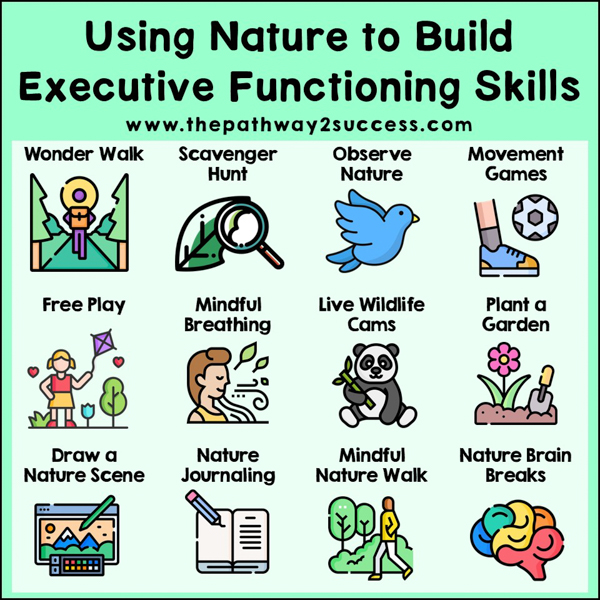
Practical Applications: 15+ Nature Activities to Build Executive Functioning Skills
Any green space will suffice for these interventions—whether it is a sprawling national park, a neighborhood pocket park, or a patch of grass just outside a school building.
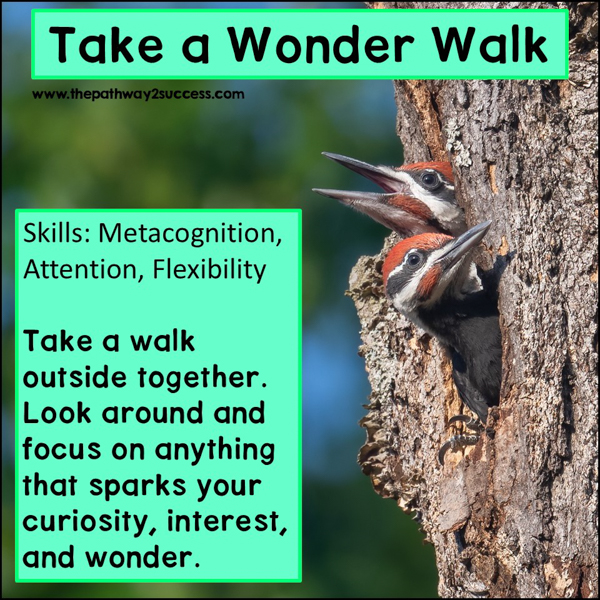
Implementation: Lead a walk where the explicit goal is to seek out anomalies, textures, or sights that spark genuine curiosity. Maintain a "wonder list" of unanswered questions (e.g., Why do pinecones open and close? How do ants communicate underground?). Later, channel this curiosity into active research, bridging observation with task completion.
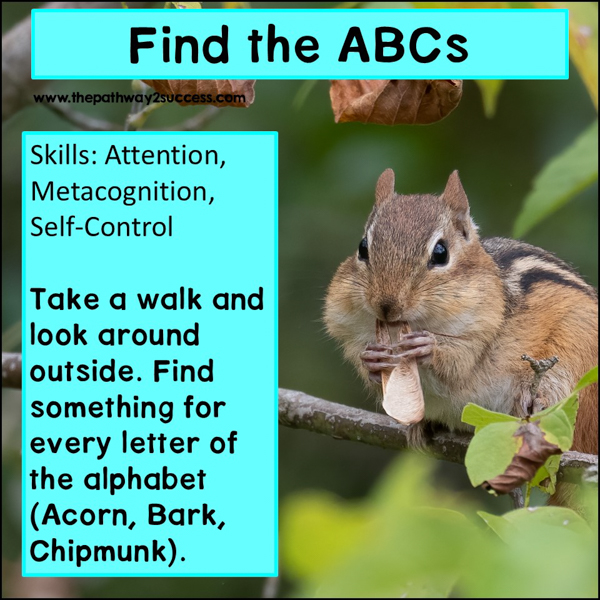
Implementation: Challenge learners to find an object in nature starting with each letter of the alphabet, sequentially from A to Z (e.g., Acorn, Bark, Cloud). This structured hunt forces children to regulate their visual focus, push past environmental distractions, and demonstrate inhibitory control.
3. Outdoor Mindful Breathing
Target Skills: Self-control, attention.
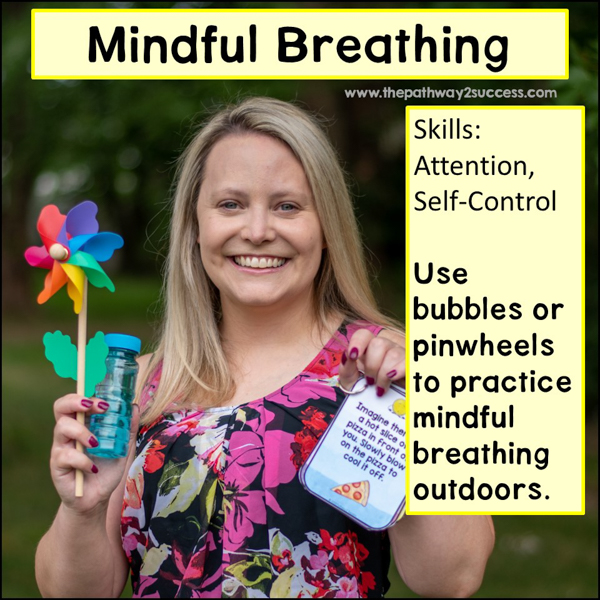
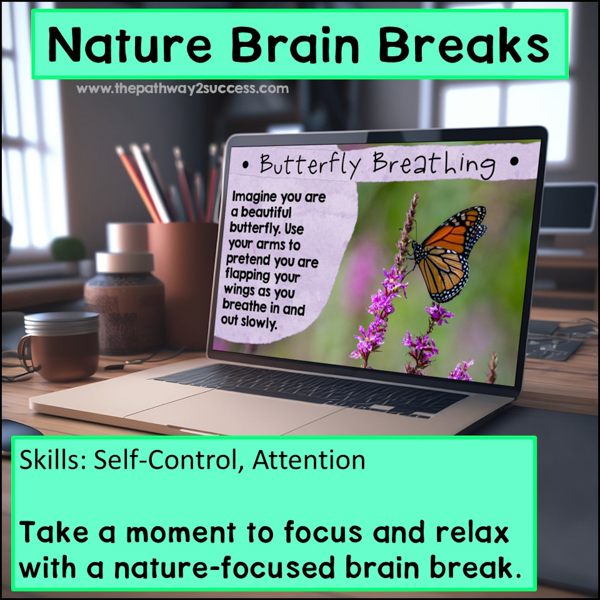
Implementation: Pair deep-breathing exercises with tactile outdoor elements. Use physical props like pinwheels or bubbles, or engage in seasonal somatic practices (such as "bear breathing" or "butterfly breathing"). These tactile strategies create a somatic anchor that children can recall indoors whenever anxiety or cognitive fatigue sets in.
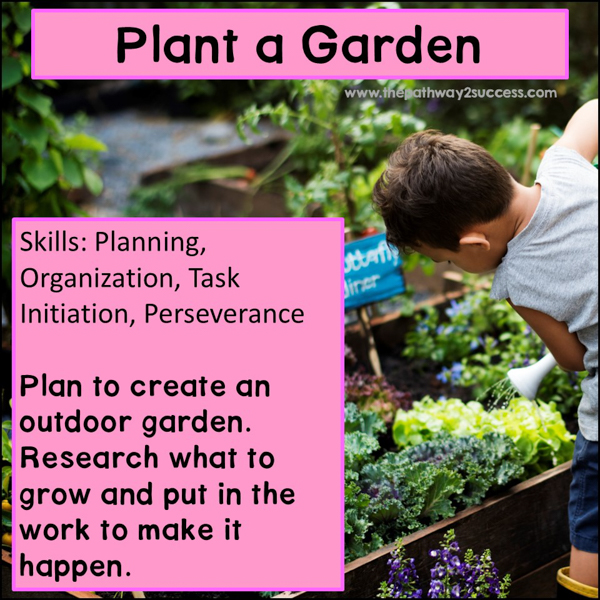
Implementation: Design a micro-garden from scratch. The process requires comprehensive pre-planning: researching regional plant viability, listing required materials (soil, seeds, trowels, water), and organizing a timeline. Once planted, the ongoing maintenance fosters perseverance and long-term time management.
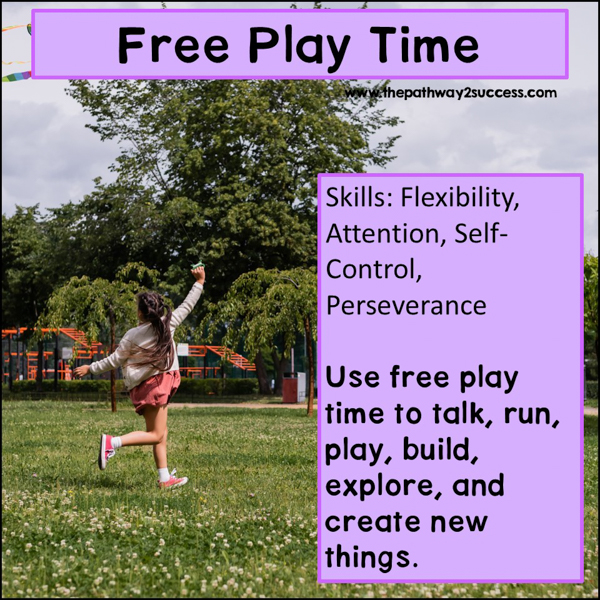
5. Unstructured Free Play
Target Skills: Flexibility, attention, self-control, perseverance, time management.
Implementation: Step back and allow children unscripted time in nature. Without adult-imposed rules, free play naturally requires children to negotiate social boundaries, invent games, resolve peer conflicts, and adapt to changing outdoor conditions.
6. Nature Brain Breaks
Target Skills: Self-control, attention.
Implementation: Integrate brief, nature-themed cognitive resets throughout the day. If outdoor access is restricted, use somatic imagery—such as standing with arms outstretched like a hawk scanning a valley, practicing slow inhales and exhales to reset the nervous system.
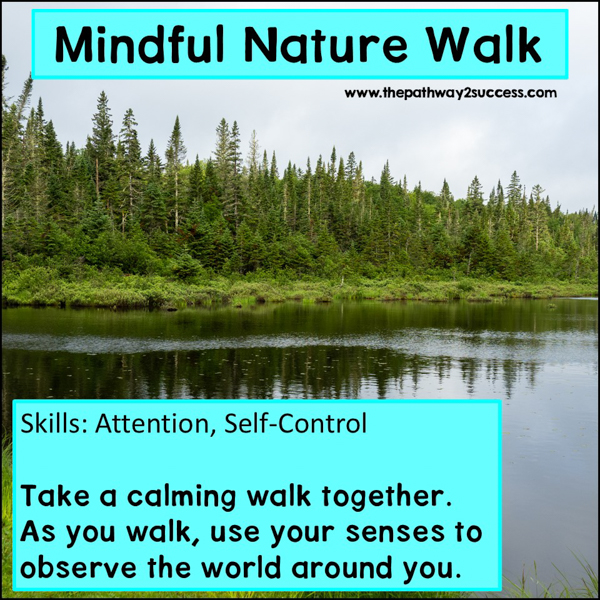
7. Mindful Nature Walks
Target Skills: Attention, self-control.
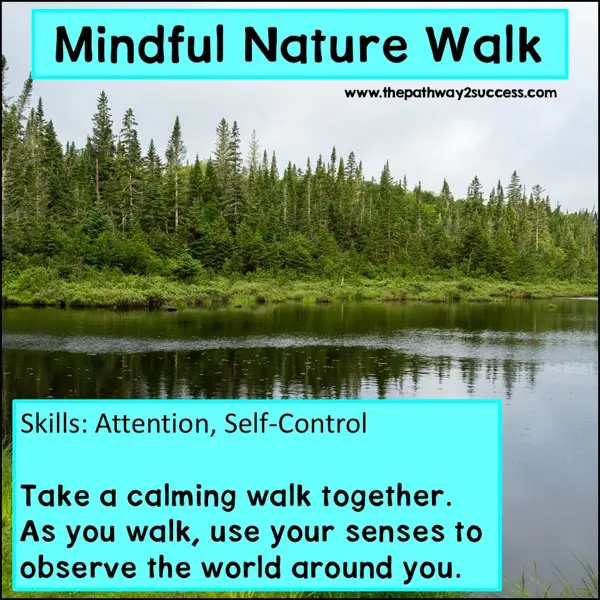
Implementation: Slow down the pace entirely. Move through a green space while systematically engaging all five senses. Conclude the walk by prompting learners to reflect and articulate at least three distinct observations they made during the silence.
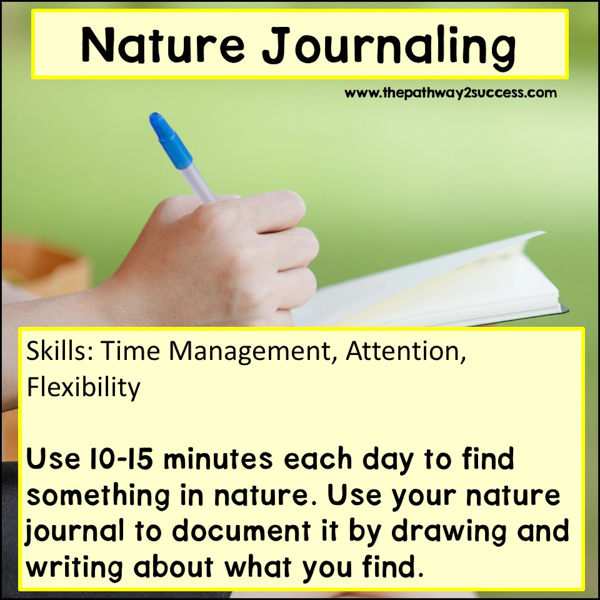
8. Start a Nature Journal
Target Skills: Time management, attention, flexibility.
Implementation: Dedicate 10 minutes a day to outdoor journaling. Students select one natural specimen to sketch and write about, transforming visual observation into structured, reflective literacy.
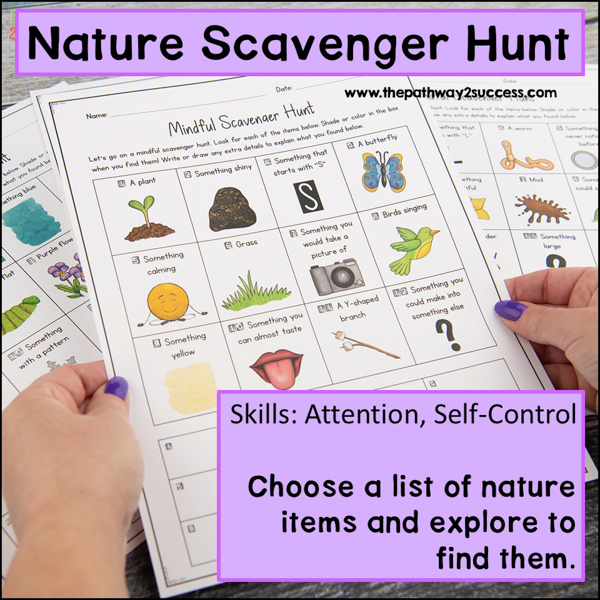
Implementation: Create a collaborative checklist of items to locate (e.g., feathers, moss, smooth stones, water droplets). This activity activates background knowledge while requiring impulse control to search methodically rather than haphazardly.
10. Play Movement Games
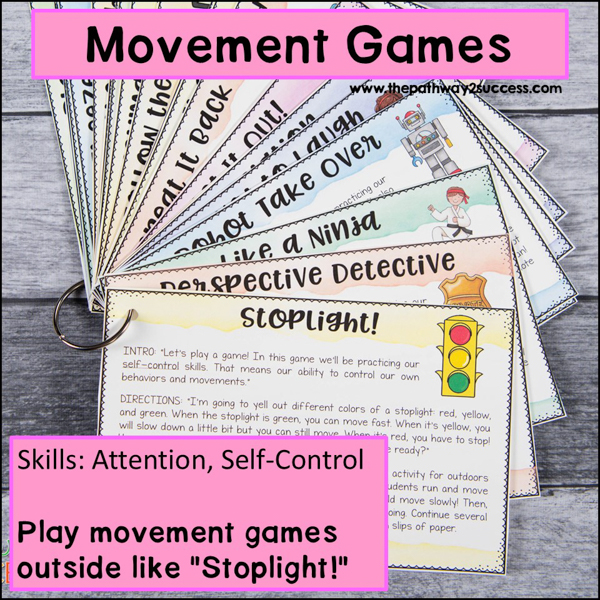
Target Skills: Attention, self-control, working memory.
Implementation: Combine physical movement with cognitive rules. Games like "Follow the Beat" (repeating rhythmic claps or foot-stomps), "Stoplight," and "Simon Says" build working memory and inhibitory control in an energetic outdoor setting.
11. Shades of Nature
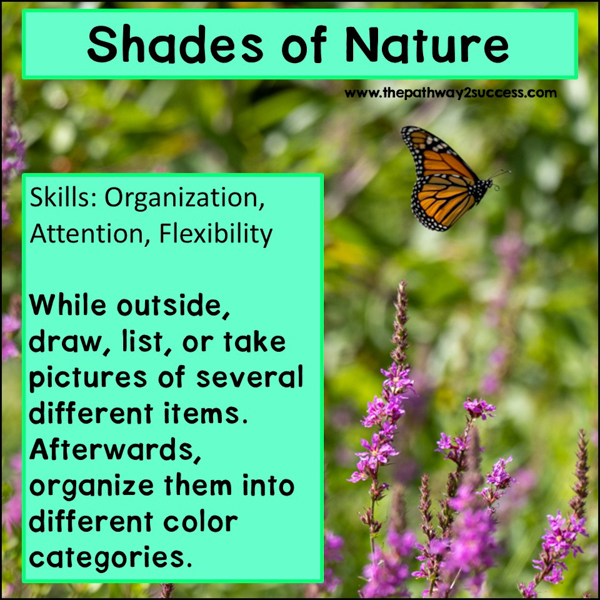
Target Skills: Organization, attention.
Implementation: Equip students with clipboards and challenge them to collect or photograph natural items representing specific points on a color spectrum (e.g., finding five distinct shades of green or earthy browns), organizing their findings systematically.
12. Observe Nature (The Art of Waiting)
Target Skills: Attention, self-control.
Implementation: Find a stationary point of interest—such as an ant trail or a budding flower—and simply wait and watch. This radical stillness trains the brain to tolerate boredom, resist the urge for instant digital gratification, and strengthen sustained attention.
13. Positive Affirmations with a Nature Theme
Target Skills: Attention, self-control.
Implementation: Utilize positive self-talk scripts paired with wildlife motifs. Grounding internal dialogue in statements of resilience helps children push through academic frustration and emotional dysregulation.
14. Utilize Live Wildlife Cams
Target Skills: Attention, flexibility.
Implementation: When physical outdoor access is impossible, bridge the gap with live environmental streaming. Monitoring nesting ospreys, eagles, or sanctuary habitats (such as the San Diego Zoo live feeds) builds long-term observational discipline and scientific curiosity.
15. Community Clean-Up Projects
Target Skills: Organization, task initiation, time management.
Implementation: Organize a litter sweep or habitat restoration project in a local park. This transforms executive functioning skill-building into an act of civic responsibility, fostering empathy, community stewardship, and structured teamwork.
16. Art in Nature
Target Skills: Attention, planning, organization.
Implementation: Task students with committing a landscape feature to memory—such as a winding forest path or a riverbank—before translating that mental image onto paper through drawing or painting.
Implementation: Select a dynamic environmental subject (such as a changing sapling, a receding puddle, or a bird’s nest) and return to it across several weeks, recording structural transformations to develop long-term tracking and analytical patience.
Future Outlook: Reclaiming Cognition Through Green Infrastructure
As educational institutions increasingly recognize that cognitive health cannot be separated from physical and environmental well-being, the integration of nature into developmental frameworks must shift from an optional enrichment activity to a structural imperative.
The integration of outdoor learning into school curricula and daily parenting routines offers a cost-effective, scalable antidote to the modern epidemic of executive dysfunction. By intentionally moving brain-training exercises out of sterile classrooms and into living ecosystems, we provide children and adolescents with the cognitive tools they need not only to succeed academically, but to navigate the complexities of life with resilience, focus, and emotional equilibrium.