
Executive Overview
Artificial intelligence has rapidly transitioned from speculative science fiction to a pervasive global force, reshaping industries across the professional spectrum. Education is no exception. As generative artificial intelligence tools—most notably OpenAI’s ChatGPT—permeate classrooms worldwide, educators, administrators, and policymakers find themselves at a historic crossroads. The integration of advanced machine learning into the academic sphere presents a profound paradox: it offers unprecedented opportunities for personalized learning and administrative efficiency, yet it simultaneously threatens established paradigms of academic integrity, assessment, and critical thinking.
Rather than dismissing these technologies through blanket bans or succumbing to uncritical adoption, forward-thinking educators are actively examining how to integrate AI responsibly. Industry leaders, such as OpenAI CEO Sam Altman, draw parallels between the advent of generative AI and historical technological shifts, such as the introduction of the handheld calculator. Just as mathematics education evolved to test higher-order concepts rather than manual computation, modern education is poised to adapt. This comprehensive report explores the multifaceted impact of artificial intelligence in the classroom, evaluating its benefits, logistical challenges, practical lesson integration, and the future outlook for the teaching profession.
Detailed Chronology: The Rise of Generative AI in K-12 and Higher Education
The sudden ubiquity of large language models has accelerated pedagogical debates at an unprecedented pace. Understanding this paradigm shift requires tracing the trajectory of AI’s integration into formal learning environments:
- The Pre-Generative Era: For decades, educational technology primarily consisted of static learning management systems, digitized textbooks, and basic algorithmic software designed to track student attendance and grades. While helpful, these systems lacked adaptive, generative capabilities.
- The Arrival of ChatGPT (Late 2022): The public release of OpenAI’s ChatGPT in November 2022 marked a watershed moment. For the first time, students and teachers had free access to a conversational agent capable of producing coherent essays, solving complex mathematical equations, and synthesizing historical data within seconds.
- Initial Backlash and Bans (Early 2023): Facing immediate concerns regarding rampant plagiarism, academic dishonesty, and the degradation of foundational writing skills, numerous school districts and university systems enacted strict bans on AI tools, blocking access on institutional networks.
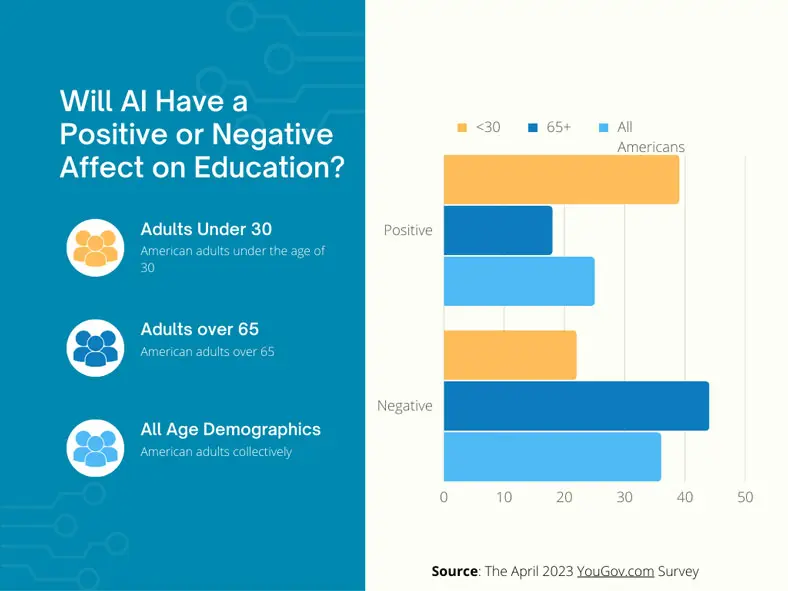
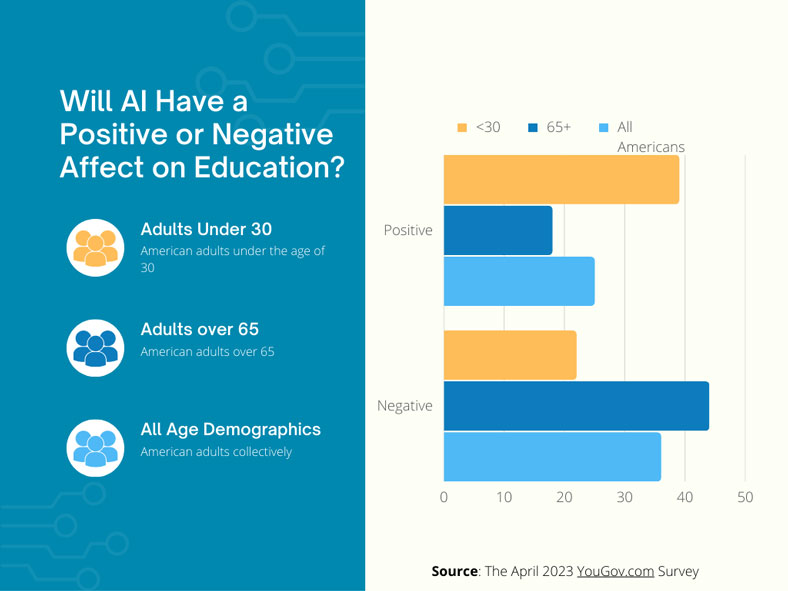
- The Paradigm Shift Toward Integration (Mid-to-Late 2023): As institutional leaders recognized the futility of permanent bans, the educational discourse shifted from prohibition to adaptation. Surveys, such as those conducted by YouGov, began reflecting a broader public openness to the constructive challenges posed by AI. Educational bodies, including the U.S. Department of Education, initiated formal guidance on balancing the risks and rewards of educational technology.
- Current Landscape (Present Day): Today, educators are moving past the initial shockwave. Schools are increasingly utilizing AI not merely as a novelty, but as a dual-purpose tool: an assistant to streamline teacher workloads and a personalized tutor to enhance student engagement.
Supporting Context & Metrics: The Dual Nature of AI in Schools
Integrating artificial intelligence into schoolwork generates fierce debate among stakeholders. Proponents highlight efficiency and personalization, while skeptics point to ethical dilemmas and systemic limitations.

The Benefits: Efficiency and Personalized Learning
For educators bogged down by administrative overhead, AI functions as a virtual teaching assistant. Tasks that historically consumed hours—such as drafting detailed lesson plans, designing interactive classroom activities, and generating differentiated reading prompts—can be dramatically expedited using prompt engineering.
For students, AI acts as an available one-on-one tutor. An English teacher, for instance, can leverage ChatGPT to construct targeted prompts that guide students through the deconstruction of complex literary passages. If a student struggles to comprehend a dense philosophical excerpt, the AI can rephrase, simplify, or provide contemporary analogies tailored to the student’s reading level. This facilitates higher-level problem-solving and exposes learners to alternative perspectives on traditional topics.
The Difficulties: Accuracy, Knowledge Cutoffs, and Plagiarism
Despite its transformative potential, generative AI comes with distinct limitations:
- Fact-Checking and Hallucinations: Artificial intelligence models generate text based on probabilistic patterns rather than conscious understanding. When prompted beyond common knowledge, these systems can produce fabricated data, inaccurate citations, and logical inconsistencies. Far from being a flaw, resourceful educators use these inaccuracies as teachable moments, training students in rigorous fact-checking and media literacy.
- Knowledge Cutoffs: Many standard AI models operate with specific training data limits (e.g., historical cutoffs up to September 2021, though newer iterations possess web-browsing capabilities). This lag poses challenges when teaching current events or rapidly evolving scientific fields.
- The Ethics of Plagiarism: Detecting AI-generated prose remains a significant hurdle for instructors. While specialized detection software (such as Winston AI or GPT-4 detectors) exists, determined students can easily circumvent restrictions. This fuels ongoing debates regarding accountability, ethics, and the temptation of instant gratification in the digital age.
Official Statements and Industry Perspectives
The discourse surrounding educational AI is heavily influenced by technology developers and institutional researchers. Sam Altman, CEO of OpenAI, addressed the technological friction in an interview with StrictlyVC, comparing the current wave of anxiety to historical technological adaptations:
"We adapted to calculators and changed what we tested for in math class, I imagine. This is a more extreme version of that, no doubt, but also the benefits of it are more extreme, as well."
Altman also acknowledged the cat-and-mouse game between AI generation and detection, noting during discussions on institutional policing that while detection tools may offer temporary guardrails, a determined user will inevitably bypass them. This reality underscores why educational experts advocate for systemic pedagogical redesigns over reliance on detection software alone.
Public sentiment mirrors this pragmatic view. Data from YouGov surveys indicate that a majority of Americans recognize that technological disruptions, while challenging, ultimately force educational systems to modernize and improve.
Practical Application: The AI-Integrated Lesson Plan
Rather than fighting the inevitable tide of technology, innovative educators are designing curricula that require AI utilization to demonstrate why human ingenuity remains irreplaceable.

Case Study: Teaching Essay Organization and Fact-Checking
High school students are frequent users of AI writing tools, often relying on them to generate entire essays. A progressive lesson plan flips this dynamic by instructing students to use ChatGPT to generate a preliminary essay on a historical or literary topic, followed by a rigorous classroom audit.
- Step One (Generation): Students prompt an AI tool to write an argumentative essay on a designated topic.
- Step Two (Critique): Students analyze the generated text for logical fallacies, structural weaknesses, and unsupported assertions.
- Step Three (Verification): Students independently research and fact-check every citation and historical claim produced by the AI, correcting errors and replacing weak sources with peer-reviewed literature.
- Step Four (Synthesis): Students rewrite the essay using their own critical thinking, effectively using the AI output as a flawed first draft rather than a finished product.
This approach demystifies the technology, showing students that while AI can mimic human writing, it lacks the critical discernment required for authentic academic scholarship.
Future Outlook: Professional Security, Teacher Salaries, and Career Paths
As schools grapple with algorithmic integration, educators naturally question the long-term viability of their profession. Will artificial intelligence ultimately replace teachers?
Will AI Replace Teachers?
Current consensus confirms: Not anytime soon. While generative AI can produce text, images, and code, it lacks emotional intelligence, empathetic mentorship, and the capacity for long-term behavioral observation. The core of effective teaching relies on human connection—understanding a student’s personal background, adapting to dynamic classroom environments, and providing holistic support over years of development.
Furthermore, empirical data supports the long-term stability of the education sector. According to the U.S. Bureau of Labor Statistics (BLS), employment for educators is projected to grow steadily, aligning with the national average for all occupations. Teaching remains a secure, highly resilient career path.
Compensation Landscape
Understanding the financial realities of the profession is vital for current and prospective educators. Median salaries across various educational tiers reflect comparable compensation structures, though local cost of living, institutional funding, and years of experience heavily influence final earnings:
- Elementary School Teachers: Stable median earnings with steady local demand.
- Middle School Teachers: Comparable to elementary brackets, emphasizing specialized subject mastery.
- High School Teachers: Reflects specialized disciplinary instruction and advanced degree incentives.
Note: For exact, up-to-date median salary figures and localized pay scales, professionals are encouraged to consult official Bureau of Labor Statistics reports or utilize educational career resources provided by organizations like Teacher.org.
Embracing the Future
To stay ahead of the learning curve, educators are strongly encouraged to participate in professional development workshops focused on AI integration. By mastering prompt engineering, teachers can reduce time spent on lesson planning from hours to minutes, freeing up valuable bandwidth for direct student engagement.

Ultimately, artificial intelligence is here to stay. By maintaining an open mind, enforcing ethical standards, and leveraging modern technological tools responsibly, educators and students alike will not only survive the algorithmic frontier—they will thrive within it.

