
Executive Overview
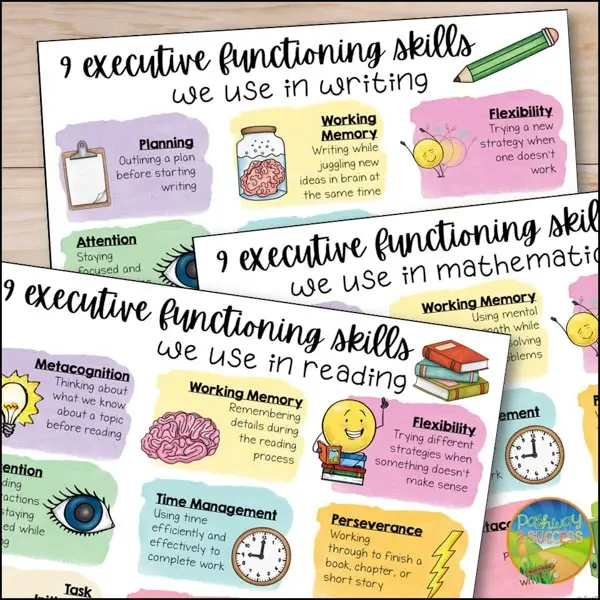
In the modern educational landscape, a quiet shift is taking place in how academic success is defined. For decades, standard metrics heavily emphasized content mastery—how well a student memorized historical dates, solved algebraic equations, or parsed complex grammatical structures. However, educators and cognitive scientists increasingly recognize that academic achievement is inextricably linked to a separate, foundational suite of mental processes known as executive functioning (EF) skills.
Defined as the brain-based abilities that allow individuals to plan, focus attention, remember instructions, and juggle multiple tasks successfully, executive functioning is no longer viewed as a peripheral concern reserved for special education or remedial interventions. Instead, a growing movement posits a simple yet profound pedagogical reality: every teacher is, inherently, a teacher of executive functioning.

Whether an educator is guiding a fourth-grade class through a complex multi-step math word problem, managing an eighth-grade literature circle, or supervising a high school science lab, executive functioning skills are the invisible scaffolding of learning. When students struggle academically, the root cause is frequently not a lack of intelligence or a failure of content delivery, but a deficit in these core cognitive processes.
This article explores the rising tide of executive functioning integration in schools. By examining the structural necessity of EF skills, outlining actionable classroom strategies across core cognitive domains, and analyzing methods for explicit skill-building, this report provides a comprehensive blueprint for modern educators seeking to foster independence, resilience, and long-term student success.

Detailed Chronology: The Evolution of Executive Functioning in Modern Pedagogy
To understand why executive functioning has taken center stage in contemporary educational strategy, it is helpful to trace its evolution from clinical neuropsychology into mainstream classrooms.
- Late 20th Century (The Clinical Era): Historically, executive functioning was a concept primarily utilized by neuropsychologists, psychiatrists, and occupational therapists working with individuals who had sustained traumatic brain injuries or presented with neurodevelopmental conditions such as Attention-Deficit/Hyperactivity Disorder (ADHD). The prefrontal cortex—the command center for these cognitive operations—was understood to develop slowly, continuing maturation well into a person’s mid-twenties, but its direct application to everyday schooling remained largely siloed in specialized support plans.
- Early 2000s (The Cognitive-Academic Convergence): As educational research expanded, neuroscientists and educational psychologists began establishing clear empirical links between classroom performance and self-regulation. Researchers realized that working memory, inhibitory control, and cognitive flexibility were better predictors of early academic success than traditional IQ measures. The realization dawned that schools were demanding high-level executive functioning from students without explicitly teaching how those cognitive muscles should be flexed.
- 2010s (The Rise of Social-Emotional Learning [SEL]): The widespread integration of Social-Emotional Learning frameworks created a natural bridge for executive functioning. Educators began recognizing that emotional regulation, perseverance, and social problem-solving could not be decoupled from cognitive planning and attention management. Professional development circles began introducing teachers to the terminology of metacognition and self-monitoring.
- The Post-Pandemic Educational Landscape (Current Movement): The disruption of formal schooling during the COVID-19 pandemic exposed profound vulnerabilities in student independence, time management, and emotional resilience. With remote and hybrid learning putting the onus of organization heavily on students, educators witnessed firsthand the steep academic cost of underdeveloped executive functioning skills. This realization catalyzed a shift from reactive remediation to proactive, school-wide integration. Today, teaching executive functioning is recognized not as an “extra” task, but as the core engine driving curriculum delivery.
Supporting Context & Metrics: The Anatomy of Classroom Cognition
Executive functioning is governed primarily by the prefrontal cortex and comprises a triad of core pillars—working memory, mental flexibility, and self-control—which branch out into a wide array of practical, everyday skills. To appreciate why integrating these skills into daily lessons is vital, one must examine how they manifest across subjects.
The Core Components of Executive Functioning in School
- Planning and Prioritization: The ability to look ahead, establish goals, and map out the sequential steps required to achieve them. In a classroom, this translates to outlining a research paper, breaking down a science project into manageable milestones, or organizing study steps for a midterm exam.
- Organization: The systematic arrangement of physical materials, digital spaces, and mental information. Disorganized notebooks, chaotic digital desktop folders, and scattered thoughts directly impede academic throughput.
- Task Initiation: The capacity to overcome procrastination and begin a task in a timely manner. Students lacking this skill often sit staring at a blank page, paralyzed by the enormity of the assignment.
- Working Memory and Attention: The ability to retain, manipulate, and focus on information over short periods while resisting distractions. In lectures, students must hold verbal instructions in mind while simultaneously taking notes.
- Time Management: Estimating how long tasks will take and pacing oneself accordingly. This is crucial during timed assessments, multi-part projects, and daily transitions.
- Self-Monitoring and Metacognition: "Thinking about thinking." Self-monitoring involves checking in on one’s own progress against a goal, recognizing when understanding breaks down, and applying mid-course corrections.
- Inhibition and Self-Control: The ability to pause, weigh consequences, and resist impulsive reactions or immediate gratification in favor of long-term academic goals.
- Perseverance and Problem-Solving: The grit to work through academic friction, troubleshoot errors, and adapt strategies when initial attempts fail.
- Flexible Thinking: The capacity to pivot when circumstances change, accept alternative viewpoints, and approach a difficult problem from a different angle.
The Cost of Ignoring Cognitive Scaffolding
Data from educational psychology journals underscore the urgency of addressing these skills. Studies consistently indicate that executive functioning deficits are among the primary contributors to underachievement among otherwise capable students. When classrooms rely entirely on implicit expectations—assuming students "just know" how to study, organize notes, or manage their time—marginalized learners, students with neurodivergent profiles, and younger children suffer disproportionately.
Conversely, explicit integration of executive functioning strategies levels the playing field. When teachers embed planning prompts, time-estimation exercises, and self-reflection loops directly into existing mathematics, humanities, and STEM curricula, overall academic engagement rises, behavioral disruptions decline, and students develop long-lasting independence.

Integrating Executive Functioning Strategies Into Existing Lessons
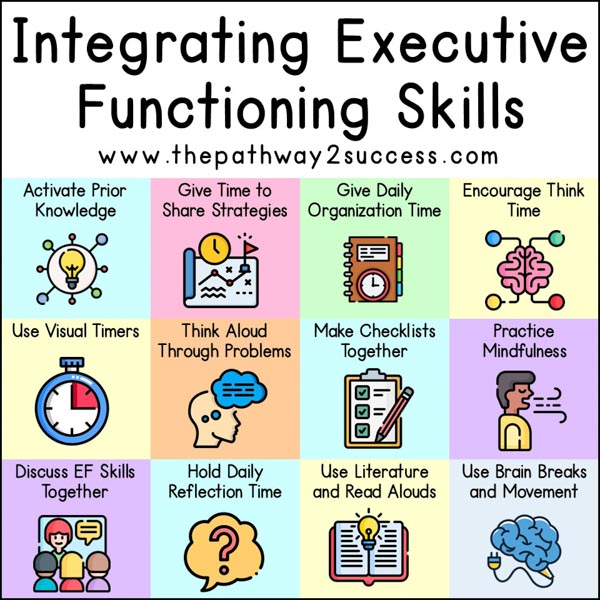
One of the most common misconceptions among educators is that teaching executive functioning requires purchasing an entirely new curriculum, carving out separate instructional hours, or abandoning core academic standards. In reality, the most effective approach is integration. Teachers can seamlessly weave executive functioning strategies into the math, science, history, and art lessons they are already required to teach.
1. Enhancing Planning and Prioritization
- Deconstruct Assignments: Before launching a major writing assignment or lab report, have the class work backward. Together, map out every milestone on the calendar, assigning micro-deadlines to prevent the panic of last-minute cramming.
- Visual Roadmaps: Use graphic organizers to help students visually outline the steps needed to solve a complex multi-step word problem before they begin calculating.
2. Cultivating Metacognition (Thinking About Thinking)
- Think-Aloud Protocols: Model your own internal monologue when solving a difficult problem. Explicitly state: "I’m stuck on this part, so I am going to reread the prompt and check my previous assumptions."
- Error Analysis: Instead of merely marking an incorrect test answer with a red pen, require students to complete a brief reflection form identifying why the error occurred (e.g., misread the question, calculation error, conceptual misunderstanding).
3. Fostering Structural Organization
- Digital and Physical Audits: Build five-minute organization checks into the weekly routine where students clean out physical binders, color-code digital folders, and archive completed units.
- Color-Coded Schematics: Use consistent color schemes across subjects (e.g., blue for English, green for Science) to help students instantly categorize materials and reduce cognitive load during transitions.
4. Overcoming Task Initiation Barriers
- The "Micro-Step" Rule: Teach students that if they feel overwhelmed by a task, their only obligation is to complete the first two-minute micro-step (e.g., writing the title and opening sentence). Once inertia is broken, continuation becomes significantly easier.
- Visual Timers: Utilize visual countdown clocks during independent work periods to make the abstract concept of time concrete and manageable.
5. Strengthening Attention and Focus
- Structured Brain Breaks: Implement short, purposeful cognitive resets between rigorous instructional blocks to restore attentional stamina.
- Positive Self-Talk Anchors: Provide students with self-talk scripts and coloring pages or desk reminders that reinforce focus, replacing anxious thoughts with goal-directed statements.
6. Advancing Time Management and Self-Monitoring
- Pacing Checkpoints: During extended assessments, pause the room at predetermined intervals to offer pacing cues (e.g., "You should be wrapping up section two by now"), teaching students how to monitor their own speed.
- Exit Tickets: Use brief, reflective closing prompts asking students to rate their understanding of the day’s objective and identify one specific strategy they used when they hit a roadblock.
7. Promoting Perseverance and Flexible Thinking
- Mistake Celebrations: Cultivate a classroom culture where encountering a difficult problem is celebrated as an opportunity for neuroplastic growth. Normalize revising wrong answers as a core part of learning.
- Perspective-Shifting Prompts: In humanities or social studies discussions, regularly ask students to analyze historical events or literary conflicts from multiple viewpoints, sharpening cognitive flexibility.
Explicit Skill-Building: Beyond Curriculum Integration
While embedding strategies into daily academic content is vital, supplementing these efforts with brief, explicit stand-alone activities can supercharge student comprehension. These interventions do not need to consume vast amounts of instructional time; short, targeted mini-lessons can yield remarkable dividends.

Implementing an Executive Functioning "Word of the Day"
Starting class with an executive functioning-focused bell-ringer sets an intentional tone. Words such as neuroplasticity, momentum, routine, adapt, grit, impulse, and strategy can be introduced through daily slides. Each word is paired with a brief definition and a guided discussion question, challenging students to connect the vocabulary word to their current academic tasks or personal lives.
Leveraging Literature Through Guided Read-Alouds
Storybooks and novels serve as natural laboratories for observing executive functioning in action. Teachers across grade levels can pause during read-alouds to examine character behavior through a cognitive lens:

- "What problem is the character facing right now, and what steps are they taking to plan a solution?"
- "How did the protagonist show self-control when faced with a frustrating situation?"
- "In what ways did the character have to adapt their thinking when their original plan failed?"
Discussion Cards and Motivational Quotes
Utilizing task cards featuring open-ended executive functioning questions—such as "How does making a checklist help prioritize your goals?" or "Why is pausing before reacting critical to making good decisions?"—promotes metacognitive dialogue. Similarly, starting the week with motivational quotes centered on perseverance, focus, and problem-solving provides students with philosophical anchors they can draw upon during challenging academic tasks.
Future Outlook: The Paradigm Shift in Educational Equity
As educational institutions look toward the future, the integration of executive functioning skills stands out as a critical lever for advancing educational equity and academic excellence. For generations, traditional schooling has inadvertently penalized students who entered the classroom with underdeveloped self-regulation or organizational capacities, often mislabeling them as unmotivated or undisciplined.

When schools explicitly teach executive functioning as part of the standard instructional diet, the paradigm changes. Students are no longer expected to navigate the hidden curriculum of school on their own; instead, they are provided with the neurological tools and metacognitive maps required to steer their own intellectual growth.
Looking ahead, teacher preparation programs, professional development frameworks, and administrative policy guidelines are increasingly prioritizing neuro-education and self-regulation training. By equipping educators with the resources to foster planning, attention, flexibility, and perseverance within every lesson, schools are preparing students not merely to pass standardized tests, but to navigate the complexities of modern life with independence, resilience, and confidence. The classroom of tomorrow is one where content and cognition walk hand in hand, ensuring that every learner is empowered to reach their highest potential.

