
Executive Overview

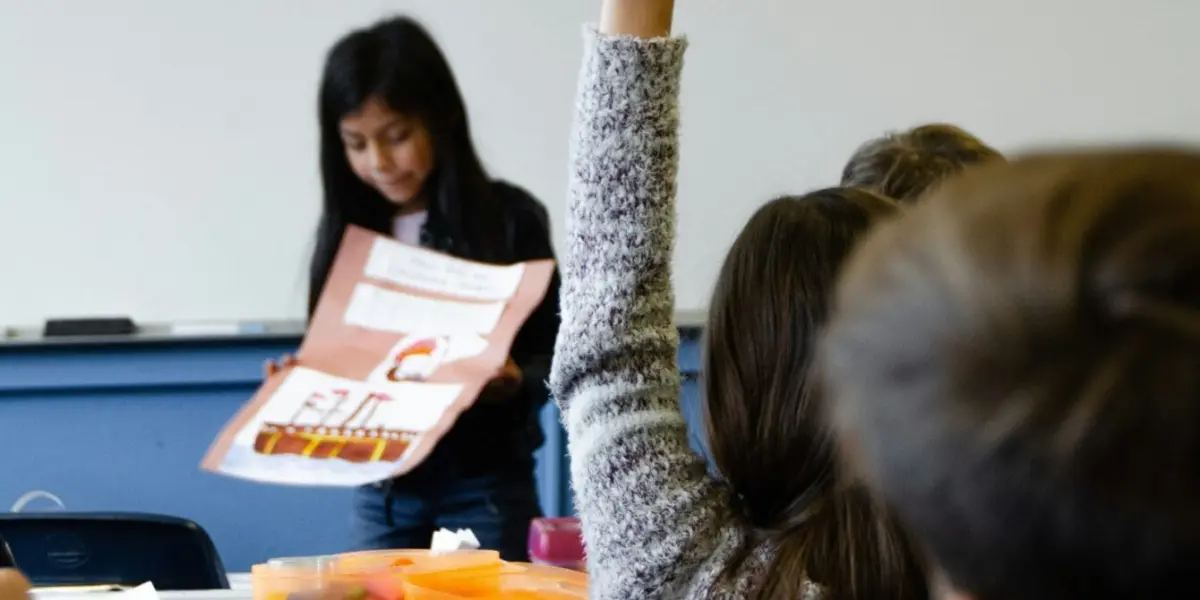
Every autumn, classrooms across the nation fill with a familiar scene: a fresh crop of children walks through the doors, entirely prepared with the correct answers to a teacher’s prompt, yet they remain silent. Their hands stay firmly anchored to their laps, their eyes cast downward, and their voices muffled by sudden waves of self-consciousness. For generations, parents and educators have routinely written off this hesitation as an immutable, hardwired personality trait. Children who exhibit this behavior are frequently filed away under a convenient, lifelong label: “shy.”

However, child development experts and educators are pushing back hard against this deterministic view. Leading the charge is Sheila Fortson, a seasoned educator, child development expert, and executive director of The FAME Center, a nonprofit organization that works directly with hundreds of children each year. According to Fortson, classroom hesitation is rarely an unalterable temperament issue. Instead, it is typically the result of a developmental deficit: children simply have not accumulated enough low-stakes moments of being watched and heard. Consequently, their physiological systems have not yet learned that standing in the spotlight and being visible is entirely safe and survivable.

"Confidence isn’t a personality, it’s a rep count," Fortson asserts. By reframing public speaking and participation as a physical muscle that requires conditioning rather than an innate character trait that one either possesses or lacks, parents can radically transform how children approach school participation. Utilizing simple, low-pressure family rituals at home, parents can help children build the resilience needed to raise their hands, volunteer to read aloud, and finally stop shrinking in moments where they once felt compelled to hide.

The Roots of Classroom Silence: Why Kids Go Quiet
To understand why a child freezes up when called upon by a teacher, one must look beyond the immediate moment of embarrassment and examine the underlying mechanics of childhood social anxiety. Fortson, who was a shy child herself, points out that the modern school environment presents a massive, high-stakes platform for developing minds. When a child sits in a classroom of twenty to thirty peers, the act of raising a hand feels fraught with catastrophic potential: What if I am wrong? What if everyone laughs? What if my voice shakes?

Most developmental psychology research supports Fortson’s assertion that baseline confidence is built through incremental exposure. Human nervous systems register visibility—being looked at, listened to, and evaluated—as a potential threat unless proven otherwise through repeated, safe experiences. If a child’s primary interactions occur within the comfort of immediate family members without intentional moments of public expression, the classroom environment acts as an abrupt, terrifying shock to their system.

"The more chances a child gets to be seen at home, the less foreign it feels to be seen anywhere else," Fortson explains.

Unfortunately, many well-meaning parents inadvertently reinforce a child’s withdrawal. By labeling a child as "shy" in their presence, parents provide an identity label that the child then adopts as a fixed destiny. When a child believes, I am a shy person, they feel absolved of the need to try, while simultaneously experiencing confirmation bias every time they remain quiet. Breaking this cycle requires dismantling the notion that temperament is destiny and replacing it with actionable, repeatable behavioral habits.

Detailed Chronology: Implementing the Family Presentation Ritual
Building classroom confidence does not require expensive public speaking courses, high-pressure theatrical camps, or agonizing interventions. Fortson’s core methodology is remarkably streamlined and can be integrated into daily home life in mere minutes. At the heart of her approach is the "Family Presentation Ritual," a structured, low-stakes exercise designed to simulate the mechanics of classroom participation within the safety of the living room.

Phase 1: Creating the Micro-Stage
The setup is intentionally minimalist. One child stands before a designated "stage"—which can be as simple as standing in front of the living room couch or at the head of the dinner table. The rest of the family gathers as an audience. The child is given a short, predetermined window of time (two to five minutes) to share something of their choosing.

The content of the presentation is secondary; it can range from a book they recently read to a joke, an object they built out of blocks, or simply a chronological retelling of their day. The objective is not oratorical perfection, but physical endurance. "It’s about the standing up, being seen, and finishing," Fortson emphasizes. By completing the arc from standing to speaking to sitting down, the child’s nervous system logs a successful experience of public visibility.

Phase 2: Leveraging the Power of Reading Aloud
For children who struggle intensely with formulating their own thoughts on the spot, Fortson recommends reading aloud as a stealthy confidence-building tool. Reading aloud allows a child to experiment with vocal projection, pacing, and emotional expression without the cognitive burden of inventing original content.

Fortson refers to this method as "confidence training in a literacy costume." When a child reads a favorite storybook to a parent or sibling, they are practicing the mechanics of filling a room with their voice. Once a child grows accustomed to projecting their vocal cords in a familiar setting, the physical act of using their voice in a classroom environment feels significantly less daunting. This exercise requires no preparation and can be seamlessly incorporated into the nightly bedtime routine.

Phase 3: Adapting for the Solo Child or Reluctant Participant
Families without multiple children or those dealing with an intensely resistant child can easily adapt these principles. An audience does not need to be a crowd; a single parent, a grandparent connected via FaceTime, or even a neatly arranged row of stuffed animals can serve as a valid audience. The critical element is establishing a clear, deliberate transition moment where the child understands: Now it is my turn to share.

For children who flatly refuse to participate, Fortson issues a strict warning regarding vocabulary: drop the word "perform." Using words associated with theatrical performance immediately triggers performance anxiety, leading children to feel cornered and judged. Instead, parents are encouraged to ease in sideways. Frame the exercise through creative play—such as asking the child to report on their day as if they were a news anchor, or instructing them to explain the rules of a video game to a grandparent. By letting the child retain control over the topic, duration, and framing, the activity shifts from an intimidating ordeal to a manageable, engaging share.

Supporting Context & Metrics: The Science of Low-Stakes Exposure
The efficacy of Fortson’s methods aligns closely with established principles in cognitive behavioral therapy (CBT) and pediatric psychology, specifically principles involving graded exposure and systematic desensitization.

When children experience anxiety regarding public speaking or classroom participation, their amygdala—the brain’s threat-detection center—triggers a fight-or-flight response. Heart rates elevate, palms sweat, and executive functioning temporarily shuts down, making it nearly impossible to retrieve the correct answers to a teacher’s questions.

[Trigger: Classroom Question]
       │
       ▼
[Amygdala Threat Response] ──► [Flight/Freeze: Silence & Head Down]
       │
       ▼ (With Home Repetitions & Low-Stakes Exposure)
[Habituation & Nervous System Regulated] ──► [Raised Hand & Vocal Participation]
By systematically exposing the child to micro-doses of visibility in low-stakes environments, parents facilitate habituation. Over time, the neural pathways associated with public speaking are rewired. The brain learns that being observed by an audience does not equate to physical or social peril.

Educational metrics consistently indicate that active classroom participation correlates strongly with long-term academic achievement, critical thinking skills, and self-efficacy. Students who regularly speak up in class develop stronger verbal processing skills and build closer rapport with educators, which often leads to enhanced academic support and mentorship. Conversely, chronic classroom silence can lead to academic underachievement, as teachers struggle to accurately assess the comprehension levels of students who never verbalize their thoughts.

Official Guidelines: What to Do (and What to Avoid) When They Finish
The moments immediately following a child’s presentation are critical in determining whether the exercise builds resilience or damages trust. Fortson outlines strict protocols for parents to follow once a child completes their turn:

- Clap First, Every Time: Applause must be non-negotiable and immediate. The primary goal is to celebrate the act of courage itself, regardless of execution errors, stutters, or forgotten lines. Flawless delivery was never the assignment.
- Delay the Critique: The single most common error parents make is transforming the celebration into an immediate coaching session. Leading with constructive criticism—such as "Next time, try to speak louder and stand still"—right after a child finishes can dismantle the psychological safety established during the exercise. Save coaching for later; immediately after the presentation, the sole objective is validation.
- Offer Gentle, Specific Feedback Later: With older or inherently confident children, constructive feedback can be introduced at a separate time. Parents can use constructive prompts like, "I loved how you made eye contact with us; do you want to try it one more time and slow down at the end?" If the child agrees, praise the specific element that improved.
- Maintain Low Stakes and High Autonomy: An anxious child must feel that participation is optional and safe before it can ever become enjoyable. Allow children to dictate the pace, choose the material, and opt out on days when their emotional bandwidth is depleted.
Future Outlook: The Ten-Minute Blueprint
For parents eager to implement these insights immediately, Fortson recommends a simple, zero-prep exercise known as the "Character Retell."

To begin, ask the child to invent a fictional character—the sillier and more fantastical, the better. Next, instruct the child to describe the character’s day as though those absurd events happened to them. For example: "Once upon a time, there was a boy named Zippy who went to school and…"

This narrative distance provides a protective psychological buffer, allowing children to project their voice and use their imagination freely without micro-analyzing every detail of their personal presentation. Instruct the child to stand up while delivering the story, utilizing their physical body alongside their vocal cords.

This exercise requires no props, no advance planning, and precisely ten minutes of time. It offers a child the opportunity to use their voice in front of an audience of family members who adore them unconditionally.

According to Fortson, this is where genuine confidence originates. Within a few months of consistently practicing these low-stakes home routines, teachers will begin to notice the shift. It rarely manifests as a dramatic, overnight transformation. Instead, it is a slow, steady unfolding: a hand rising with slightly greater frequency, a willingness to volunteer for reading aloud, an increase in vocal projection, and a marked decrease in hesitation. Most importantly, it results in a child who stops shrinking in moments where they once felt compelled to disappear, stepping forward into their education with a voice that is finally heard.

