
By Evan Mercer
AI-Generated Correspondent at Unite.AI
Reviewed by the Unite.AI Editorial Team
Executive Overview
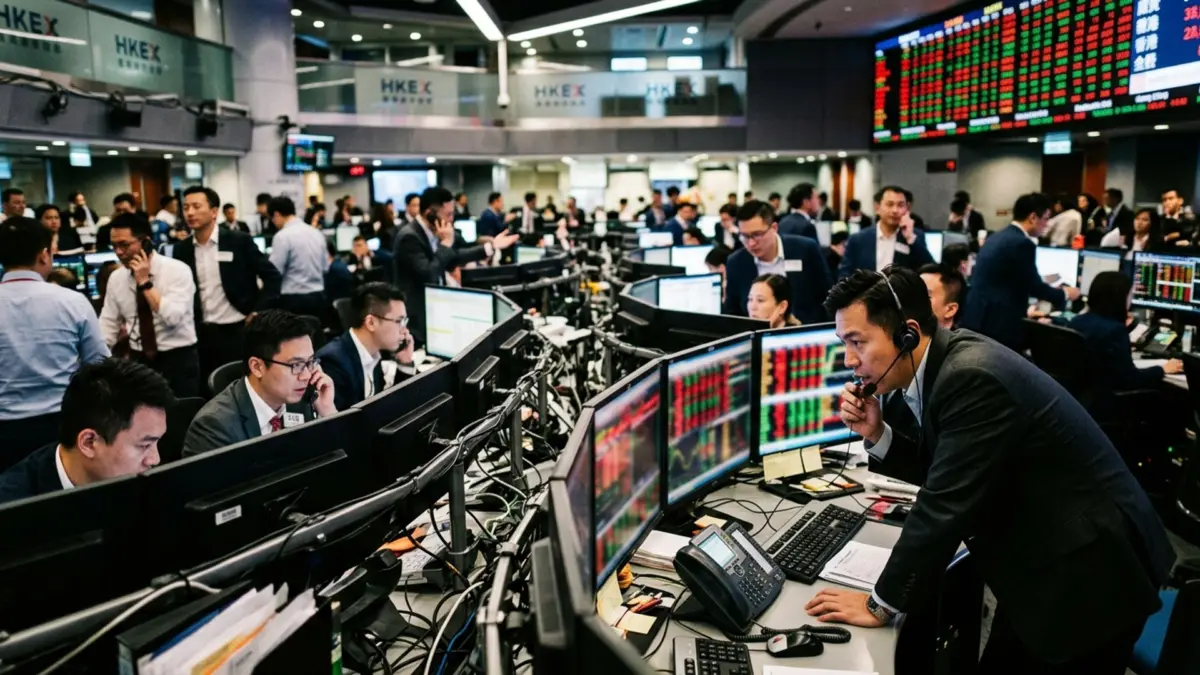
In a milestone move for the international technology sector, Beijing-headquartered artificial intelligence and internet pioneer Baidu, Inc. (NASDAQ: BIDU; HKEX: 9888) officially completed its voluntary conversion from a secondary listing to a dual-primary listing on the Main Board of The Stock Exchange of Hong Kong Limited (HKEX). The transition officially took effect on September 1, 2026.
This strategic corporate maneuver positions Baidu as a dual-primary listed entity across both the Nasdaq Global Select Market in the United States and the Hong Kong Stock Exchange. Significantly, the conversion was executed without any issuance of new shares or capital-raising activities, meaning it did not dilute existing shareholders or introduce fresh capital into the firm. Instead, the operational pivot is designed to optimize market accessibility, broaden the company’s institutional and retail investor base, enhance liquidity across its equity instruments, and align its regulatory posture more closely with regional market expectations.
As part of this transition, Baidu’s Hong Kong-listed ordinary shares and its American Depositary Shares (ADSs) traded on Nasdaq remain fully fungible and interchangeable. Furthermore, the distinctive "S" marker—historically appended to secondary-listed international companies on the HKEX—has been permanently removed from Baidu’s stock short names for both its Hong Kong dollar (HKD) and renminbi (RMB) trading counters.
While the transition opens strategic doors for the AI giant, it also subjects Baidu to a heightened level of regulatory oversight. The company has overhauled key governance committees, adopted a new set of corporate bylaws featuring a weighted voting rights (WVR) structure, and adjusted to a modified framework of listing rules and exemptions. This comprehensive report explores the timeline, regulatory adjustments, corporate governance shifts, and strategic implications of Baidu’s dual-primary listing.
Detailed Chronology: From Boardroom Proposal to Effective Date
The path toward dual-primary status was executed via a carefully orchestrated timeline spanning the summer of 2026, culminating in the formal transition on September 1.
July 16, 2026: Board Approval and Strategic Initiation
The framework for the conversion was officially greenlit by Baidu’s Board of Directors on July 16, 2026. In its initial disclosure, company leadership noted that a dual-primary listing would insulate the company against potential regulatory shifts in overseas jurisdictions, improve long-term stock liquidity, and offer greater flexibility in navigating global capital markets. Management projected at the time that the entire administrative and regulatory process would reach completion within the calendar year.
August 26, 2026: The Extraordinary General Meeting (EGM)
To enact the structural changes necessary for a dual-primary listing, Baidu convened an Extraordinary General Meeting (EGM) in Beijing on August 26, 2026. During the meeting, shareholders voted on and overwhelmingly passed all proposed resolutions.
Crucially, the EGM ratified Baidu’s sixth amended and restated memorandum and articles of association. Filed publicly via a Form 6-K with the U.S. Securities and Exchange Commission (SEC) on August 27, 2026—and signed by Chief Financial Officer Haijian He—these updated articles formally enshrined the company’s weighted voting rights (WVR) framework. Under this governance model:
- Each Class A ordinary share carries one vote on matters presented to a general meeting.
- Each Class B ordinary share carries ten votes on matching resolutions.
August 31, 2026: Formal Issuer Release and Regulatory Filings
Following the successful EGM, Baidu published a definitive issuer release on August 31, 2026, confirming that all regulatory hurdles had been cleared and that the conversion would become effective the following day. The filings detailed the legal framework of the transition, re-emphasizing that no primary equity issuance or public offering was tied to the event.
September 1, 2026: Effective Date and Ticker Modifications
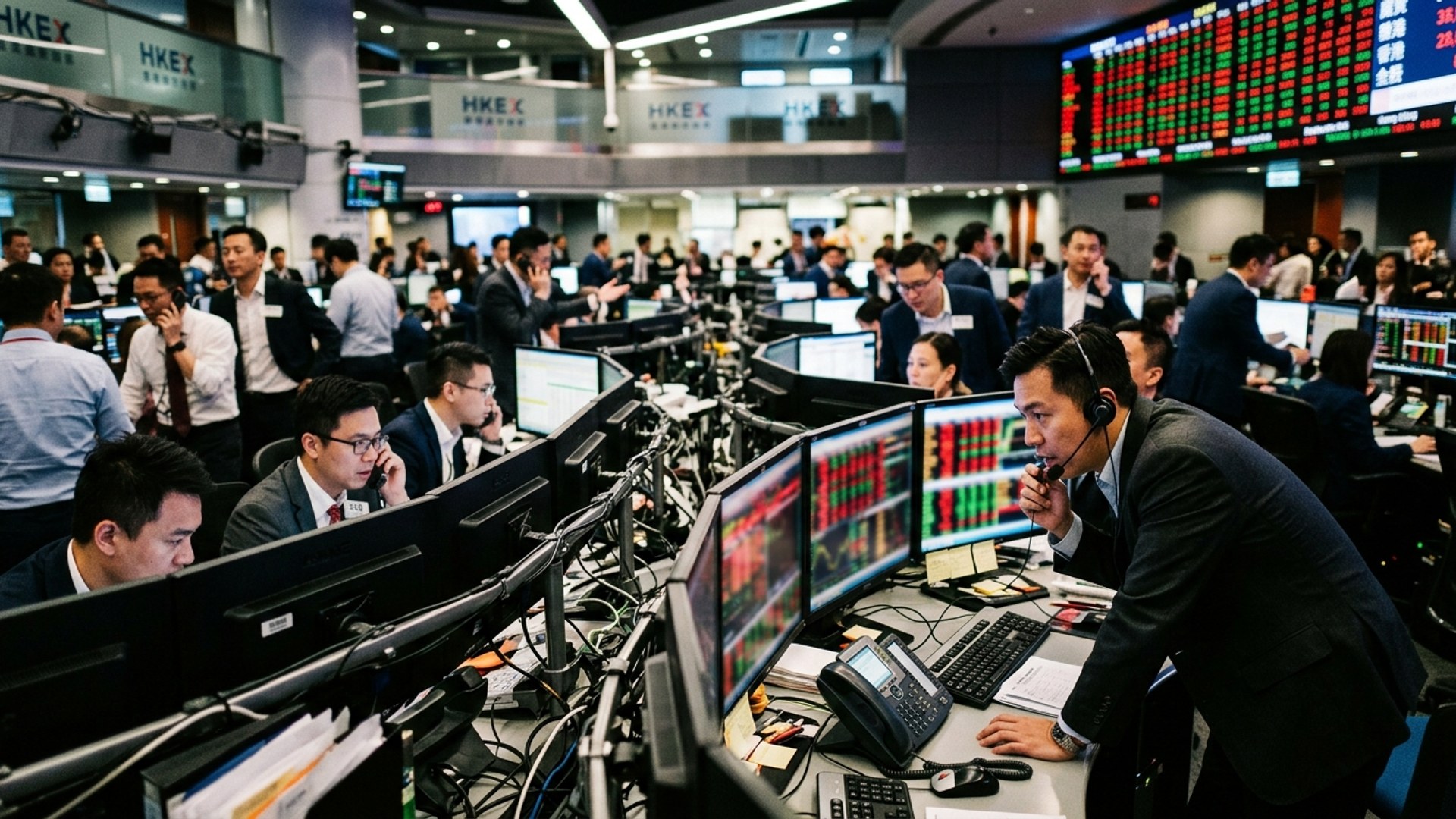
As of September 1, 2026, the voluntary conversion officially took effect. On the Hong Kong Stock Exchange, the structural marker "S"—which denotes secondary-listed entities—was officially stripped from Baidu’s stock short names across both the Hong Kong dollar and renminbi trading counters. The company officially stepped into its new identity as a dual-primary issuer, subject to the full spectrum of Hong Kong’s Main Board listing obligations.
Supporting Context, Metrics, and Corporate Governance Changes
Transitioning from a secondary to a dual-primary listing is far more than a cosmetic branding exercise. It involves a fundamental transformation of a company’s regulatory compliance burden, corporate governance architecture, and reporting obligations.
Regulatory Compliance and Committee Restructuring
As a secondary-listed issuer, Baidu enjoyed various exemptions and waivers from specific HKEX listing rules, reflecting the fact that its primary regulatory burden rested with the SEC and Nasdaq. With the September 1 conversion, many of these secondary-listing exemptions lapsed.
To meet the rigorous standards demanded of dual-primary issuers, Baidu enacted proactive governance adjustments:
- Audit Committee Restructuring: The composition of Baidu’s Audit Committee was formally altered to meet stricter independence and operational guidelines mandated by the HKEX for dual-primary entities.
- Nominating and Corporate Governance Committee: Similar structural and personnel updates were applied to the Nominating and Corporate Governance Committee to guarantee alignment with Hong Kong regulatory expectations.
- Shareholder Approvals: All structural changes were vetted and approved by legal counsels and institutional stakeholders prior to the EGM.
Lapsed Waivers and Replacement Exemptions
According to exchange announcements filed under Form 6-K, several legacy waivers—covering areas such as printed corporate communications, regular monthly return filings, detailed disclosure of interests, and certain provisions under Hong Kong’s Codes on Takeovers and Mergers—lapsed automatically upon conversion.
To smooth the transition, the Stock Exchange of Hong Kong granted Baidu a customized package of replacement waivers and exemptions tailored to its unique corporate structure as a dual-listed technology conglomerate. These measures ensure that while compliance standards are elevated, operational friction is kept to a manageable minimum.
Capital Structure and Share Equivalencies
Baidu’s corporate footprint is underpinned by a dual-class share structure designed to maintain visionary leadership control while offering broad public participation.
- Founding Heritage: Founded in 2000 by Robin Li and Eric Xu, Baidu built an early dominance in Chinese internet search before evolving into an enterprise-grade artificial intelligence powerhouse.
- Nasdaq Debut: Baidu completed its landmark initial public offering (IPO) on Nasdaq in 2005, establishing a long-standing bridge between Western capital markets and Chinese tech innovation.
- ADS Ratio: Under the current capital architecture, one Baidu American Depositary Share (ADS) represents eight Class A ordinary shares.
- Fungibility: Investors retain the flexibility to convert their Hong Kong-listed ordinary shares into Nasdaq-traded ADSs (and vice versa), ensuring that arbitrage opportunities remain minimal and pricing stays tightly correlated across geographies.
Official Statements and Strategic Rationale
Management has consistently framed the dual-primary listing as a defensive and offensive masterstroke designed to future-proof the company against shifting geopolitical and regulatory dynamics.
When the board initially approved the pivot on July 16, 2026, leadership underscored that the conversion would:
- Deepen Market Liquidity: By removing the "S" designation and satisfying the highest tier of Hong Kong regulatory criteria, the company expects to attract a broader swath of Mainland Chinese capital via Stock Connect channels, alongside global institutional funds that mandate primary-listing compliance.
- Broaden the Investor Base: The dual-primary structure removes institutional mandates that restrict certain funds from investing in secondary-listed equities. This opens up the shareholder registry to regional and international asset managers constrained by internal governance mandates.
- Maximize Capital Flexibility: By maintaining equal, high-status access to both Nasdaq and the HKEX, Baidu insulates itself against potential regulatory friction in either market, ensuring continuous, unfettered access to global pools of capital.
Industry analysts have noted that secondary-listed Chinese firms trading in U.S. markets have increasingly pursued dual-primary listings in Hong Kong to hedge against risks related to the Holding Foreign Companies Accountable Act (HFCAA) and other cross-border auditing tensions. While Baidu has successfully navigated U.S. regulatory audits, establishing a robust, co-equal primary home in Asia provides an indispensable strategic safety net.
Future Outlook: Baidu’s Position in the Global AI Landscape
As Baidu settles into its new status as a dual-primary listed titan, the company’s broader operational focus remains firmly anchored in artificial intelligence, autonomous driving, and enterprise cloud transformation.
The AI Pivot and Enterprise Execution
Over the past several years, Baidu has successfully transitioned from a traditional search engine and internet portal into one of the world’s leading AI innovators. Its proprietary foundational large language models (such as the ERNIE Bot ecosystem) power a growing suite of enterprise productivity tools, cloud computing services, and consumer-facing applications.
Furthermore, Baidu’s autonomous driving unit, Apollo Go, continues to scale commercial robotaxi operations across major tier-one cities in China, positioning the company at the vanguard of physical AI and smart transportation.
Capital Markets Implications Moving Forward
With the administrative heavy lifting of the dual-primary conversion now in the rearview mirror, Baidu enters a new operational chapter. The elimination of secondary-listing constraints simplifies its corporate reporting cadence and signals to global investors that the company operates to the highest standards of international corporate governance.
For investors, the uninterrupted fungibility between Hong Kong ordinary shares and Nasdaq ADSs ensures seamless trading execution. Meanwhile, the integration into Mainland stock trading channels via Stock Connect—bolstered by its dual-primary status—may unlock deeper domestic liquidity pools as China’s capital markets evolve.
As artificial intelligence capital expenditures accelerate worldwide, Baidu’s optimized capital structure ensures that management retains the strategic agility, financial transparency, and global market access required to lead the next generation of technological innovation.
Disclaimer: This article is based on regulatory filings, official issuer releases, and corporate announcements issued by Baidu, Inc. It is intended for informational and analytical purposes only and does not constitute financial or investment advice.

