
By Investigative Education Desk
Published: October 2023
Executive Overview
In an era defined by the rapid consumption of synthesized information and digital summaries, educators face a formidable challenge: how to cultivate genuine critical thinking, historical empathy, and rigorous analytical skills in students. A transformative nationwide initiative is now addressing this gap head-on. The National Council of Teachers of English (NCTE) has deepened its ongoing collaboration with the Library of Congress as an active member of the Teaching with Primary Sources (TPS) Partner Program Consortium.
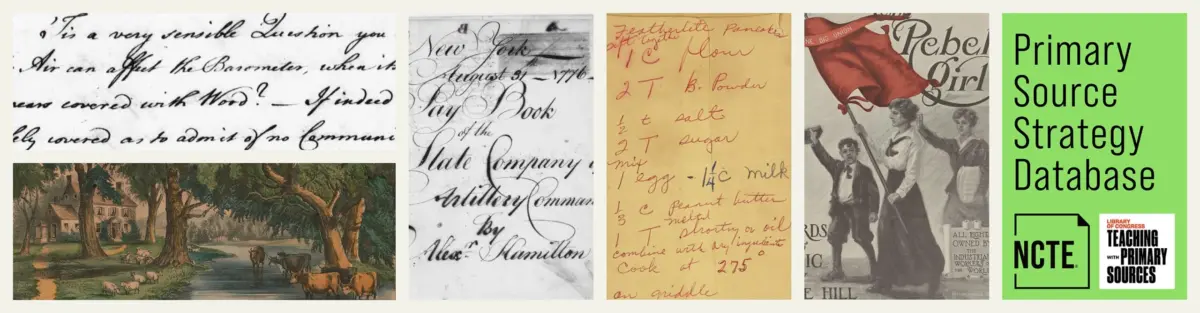
This ambitious partnership is designed to fundamentally shift how literacy teachers and students interact with history. At its core is a newly launched, searchable digital database housing instructional strategies for over 150 specific artifacts drawn directly from the Library of Congress’s vast, digitized primary source collections. Curated by more than two dozen distinguished English language arts (ELA) educators and curriculum leaders, the repository bridges the often-siloed worlds of history, economics, literature, and civic education.
Far from being a static archive, the database provides educators with actionable pedagogical roadmaps. It outlines the specific literacy value of each item, suggests interdisciplinary themes and thematic units, and aligns content with state educational standards. Among the crown jewels of this collection is a deep dive into the Frederick Douglass Papers: Financial Papers, 1847–1928; Bank books. By examining the personal financial records of one of America’s most celebrated abolitionists, educators can now teach students how economic self-reliance, civil rights, and systemic resilience intersect.
This report investigates the architecture of this initiative, examines the pedagogical significance of artifacts like the Frederick Douglass financial papers, outlines state-level standard alignments, and evaluates the long-term impact of integrating raw historical evidence into modern classrooms.
Detailed Chronology: Bridging the Library of Congress and Modern Classrooms
The journey toward embedding primary sources into everyday language arts curricula has evolved over decades, marked by a deliberate shift away from passive textbook learning toward active, inquiry-based investigation.
- Foundation of the TPS Consortium: Recognizing that historical documents, manuscripts, photographs, and audio recordings hold immense untapped potential for K-12 education, the Library of Congress established the Teaching with Primary Sources program. The initiative sought to connect educational institutions and universities nationwide to help teachers use the Library’s unparalleled digital holdings effectively.
- The NCTE Partnership Genesis: To scale these efforts specifically within literacy and English language arts classrooms, the National Council of Teachers of English forged a strategic alliance with the Library of Congress. NCTE recognized that reading comprehension extends far beyond traditional fiction and contemporary essays; it demands the cognitive stamina required to decode historical manuscripts, visual media, and archival records.
- The Educator Cohort Phase: Over the course of multiple development cycles, NCTE mobilized more than two dozen elite ELA teachers, instructional coaches, and curriculum leaders. This working group was tasked with reviewing digitized Library of Congress items and crafting rigorous, classroom-ready teaching strategies.
- Launch of the Searchable Database: The culmination of this collaborative effort is a dynamic, user-friendly digital portal. Content within the database is meticulously tagged using searchable parameters such as picturebook, argument, manuscripts, and specific historical eras. This architecture allows K-12 educators to seamlessly integrate primary sources into existing instructional units, targeting exact writing and reading benchmarks.
Supporting Context & Metrics: The Case of Frederick Douglass’s Financial Papers
To understand the transformative pedagogical power of the NCTE-Library of Congress database, one must examine the specific instructional assets it houses. A prime example is the inclusion of the Frederick Douglass Papers: Financial Papers, 1847–1928; Bank books.
The Artifacts and Their Historical Significance
Spanning over eight decades—covering both the antebellum period and the post-Reconstruction era—these manuscripts document the monetary stability, banking habits, and financial transactions of Frederick Douglass. The records detail deposits, withdrawals, and outlays, offering an intimate look at how Douglass navigated a society structured by institutionalized racial prejudice.
Interdisciplinary Learning: Where History Meets Economics
Traditionally, the study of Frederick Douglass has been confined to literature and history classrooms, focusing primarily on his autobiographical masterpiece, Narrative of the Life of Frederick Douglass, an American Slave, and his legendary oratory. However, the introduction of his bank books into the curriculum expands his legacy into the realms of economics and civic duty.
These primary sources provide a tangible connection between Douglass’s activism and his hands-on approach to economic resilience. They demonstrate how financial independence served as a critical pillar supporting his writing, public speaking, and political organizing. By analyzing these documents, students confront complex historical realities:
- The structural hurdles African Americans encountered when attempting to secure fair economic opportunities, open bank accounts, and accumulate generational wealth.
- The role of financial literacy as a tool for personal and collective empowerment.
- The symbiotic relationship between personal financial management and broader socio-political liberation movements.
Official Statements and Educational Frameworks
The integration of such profound historical artifacts requires robust methodological backing. The NCTE-Library of Congress initiative equips teachers with frameworks that foster critical thinking without shying away from America’s complex racial history.
The Pedagogy of Primary Source Literacy
According to curriculum design leads within the TPS Consortium, primary sources act as powerful catalysts for inquiry because they present history without a narrative filter. Unlike secondary textbook summaries, raw manuscripts, photographs, and financial ledgers force students to become active historians. They must ask:
- Who created this document, and under what circumstances?
- What do the omissions and inclusions in this record tell us about the power structures of the era?
- How does this artifact corroborate, complicate, or contradict standard historical narratives?
Standards Connections: Meeting Rigorous State Benchmarks
To ensure that these instructional strategies are practical for everyday classroom implementation, the database aligns its resources with rigorous state educational standards. For instance, lessons derived from the Frederick Douglass financial papers directly address advanced language arts and world history benchmarks, such as those established by Louisiana State Standards:
- W.11-12.1(a): Students are guided to introduce precise, knowledgeable claims, establish the significance of those claims, distinguish them from alternate or opposing claims, and create an organizational structure that logically sequences claims, counterclaims, reasons, and evidence. By examining Douglass’s financial survival strategies, students construct argumentative essays rooted in concrete archival evidence.
- WH.1: Students analyze ideas and events in world history from 1300 to 2010, tracking how economic systems and civil rights progressions evolved, transformed, or remained stagnant over centuries.
- WH.4: Students utilize a diverse array of primary and secondary sources to conduct historical inquiries, shifting from passive consumption of facts to active archival research.
Future Outlook: The Evolution of ELA and Historical Inquiry
As the NCTE and the Library of Congress continue to expand the Teaching with Primary Sources Consortium, the implications for the future of American education are profound.
Scaling Digital Archives in the Classroom
The searchable database currently features strategies for more than 150 specific items, but the potential for expansion is virtually limitless given the scale of the Library of Congress’s digitized holdings. Future phases of the initiative aim to incorporate automated recommendation engines, peer-reviewed teacher lesson plans, and multimedia integration that allows students to view high-resolution scans of manuscripts alongside audio recordings and historical maps.
Preparing Students for an Information-Dense Future
In an age where misinformation spreads rapidly, the skills cultivated through primary source analysis are more critical than ever. When students spend time decoding Frederick Douglass’s 19th-century bank books or analyzing abolitionist broadsides, they are doing much more than learning history. They are developing an acute awareness of source credibility, bias, and evidentiary weight.
By marrying the literary expertise of the National Council of Teachers of English with the unmatched archival wealth of the Library of Congress, this initiative ensures that the next generation of students will not merely read about history—they will interrogate, understand, and learn to shape it.
For educators, curriculum directors, and researchers wishing to explore the searchable database, access professional development modules, and review additional teaching strategies, visit the official NCTE Teaching with Primary Sources portal and the Library of Congress TPS Consortium.

