
Executive Overview
The first day of school serves as a universal, high-stakes crucible for modern childhood. It represents a dramatic intersection of trepidation and hope: the young child stepping hesitantly across a classroom threshold; the parent grappling with a complex mixture of anxiety, pride, and letting go; and the educator assuming the immense responsibility of cultivating another generation of inquisitive, vulnerable minds. Few contemporary authors capture this emotional precipice with the grace, precision, and emotional resonance of Jacqueline Woodson. A National Book Award winner and literary icon celebrated for masterworks such as Brown Girl Dreaming and Each Kindness, Woodson understands that this milestone marks a foundational moment in a family’s collective trajectory.
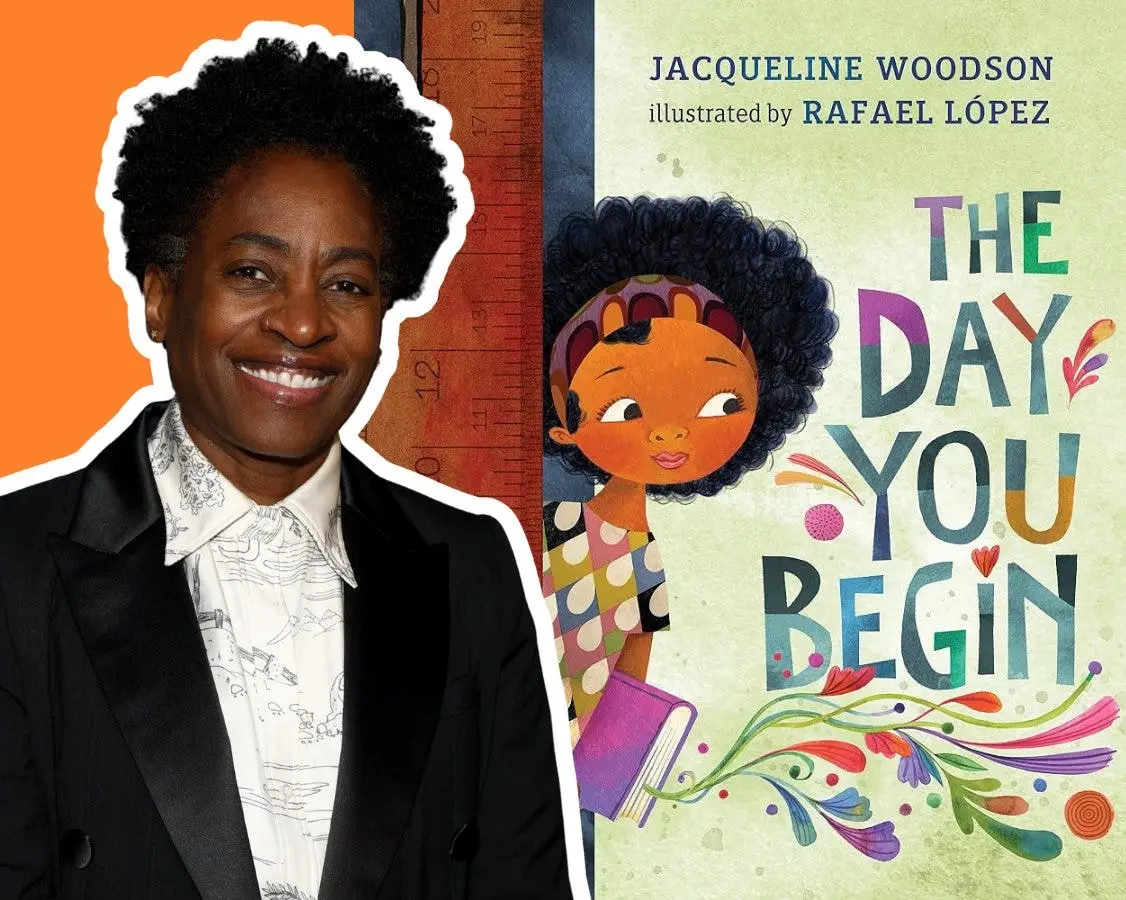
Now, Woodson has partnered with PBS to translate her beloved picture book, The Day You Begin, into a vibrant, deeply resonant one-hour animated special. Debuting as part of the public broadcaster’s robust back-to-school programming slate, the adaptation follows four distinct children—each navigating profound feelings of displacement and isolation—as they embark on a journey of self-discovery. Through their experiences, the narrative champions a transformative thesis: that the very characteristics that make an individual feel alienated are often their most profound assets, uniquely worthy of celebration and sharing.
In an exclusive, wide-ranging discussion, Woodson unpacks the emotional architecture of the new special, explores the psychological needs of children who feel perpetually out of place, and reflects on how her own journey as a parent has revolutionized her artistic output. Furthermore, Woodson addresses the critical cultural urgency of instilling empathy and kindness in young audiences amidst an increasingly polarized socio-political landscape characterized by book bans, attacks on diversity, equity, and inclusion (DEI) initiatives, and a systematic erosion of multicultural literary frameworks.
Detailed Chronology
The journey from Woodson’s celebrated literary text to a major animated television special represents a deliberate, multi-year evolution rooted in collaborative storytelling, meticulous cultural consultation, and a shared dedication to public media’s foundational mission.
From Page to Screen: The Genesis of the Adaptation
The Day You Begin began as a critically acclaimed picture book featuring evocative illustrations by Rafael López. Its lyrical text struck a chord with educators, parents, and children worldwide by addressing the universal anxieties of feeling like an outsider—whether due to differences in background, appearance, language, or life experience. Recognizing the text’s cinematic and emotional potential, producers at PBS Kids initiated discussions with Woodson to adapt the story for a broader, screen-based platform.
Unlike standard commercial children’s programming driven by fast-paced merchandising and superficial comedic gags, the development of the PBS special prioritized emotional authenticity and character depth. Woodson notes that working within the PBS ecosystem stood in stark contrast to the aggressive, commercialized culture of mainstream Hollywood production pipelines. Where commercial entities frequently inquire about star power and monetization strategies, the creative teams at PBS remained singularly focused on universal accessibility, inclusivity, and emotional resonance.
Cultivating Authentic Representation
A pivotal phase in the production chronology involved rigorous script and character development. Rather than relying on monolithic portrayals of "outsiders," the creative team—under Woodson’s guidance—constructed a diverse ensemble cast designed to reflect the nuanced realities of contemporary childhood in America and beyond.
The animated special centers on four distinct children, including:
- A young Korean character navigating the intricacies of cultural identity and linguistic transition.
- A child on the autism spectrum, depicted with careful attention to sensory processing and behavioral realities.
- Rigoberto, a young immigrant hailing from Venezuela who is trying to find his footing in a new linguistic and social landscape.
To ensure absolute fidelity to these lived experiences, producers integrated specialized cultural and developmental consultants into every phase of production. Specialists evaluated everything from linguistic phrasing and regional colloquialisms to postural nuances, dress, and dietary traditions. This meticulous dedication to authenticity aimed to eliminate superficial tropes, ensuring that no young viewer feels misrepresented or erased upon seeing themselves on screen.
Supporting Context & Metrics
To fully appreciate the cultural impact of The Day You Begin on television, one must examine the broader socio-educational landscape surrounding children’s literature, media consumption, and the rising tide of censorship targeting educational equity.
The Power of Mirrors and Windows
The thematic core of Woodson’s work relies heavily on a foundational concept established by Dr. Rudine Sims Bishop, widely recognized as the matriarch of multicultural literature. Dr. Bishop asserted that young readers require both "mirrors" and "windows" in the narratives they consume.
- Mirrors allow children to see accurate, respectful reflections of their own identities, validating their existence within a broader societal tapestry and reassuring them that they are not alone.
- Windows grant children a safe, empathetic portal into the lived experiences of others, fostering cross-cultural understanding and laying the groundwork for lifelong empathy.
In an era marked by unprecedented attempts to restrict access to multicultural narratives, educational programs, and comprehensive diversity frameworks, these literary tools face systemic threats. According to data compiled by organizations tracking intellectual freedom, school and public libraries across the United States have faced a historic surge in book challenges and bans, disproportionately targeting stories featuring characters of color, LGBTQ+ individuals, and neurodivergent youth.
Woodson argues that efforts to suppress these narratives represent a direct assault on the development of children’s empathy. By attempting to sanitize children’s literature of complex emotional realities, society risks raising generations ill-equipped to navigate a diverse, interconnected global community.
The Economic and Social Case for Communities of Care
Beyond individual emotional development, the sociological framework of Woodson’s work emphasizes the necessity of building "communities of care." Empirical research in developmental psychology consistently demonstrates that children embedded in supportive, inclusive educational environments exhibit:
- Higher academic engagement and retention rates.
- Decreased incidents of behavioral disruption and bullying.
- Enhanced emotional regulation and conflict-resolution skills.
- Long-term improvements in civic participation and social cohesion.
Woodson points out that these positive outcomes extend far beyond the classroom walls, positively influencing local food systems, environmental stewardship, and parental mental health by combating the pervasive isolation frequently experienced by modern families.
Official Statements and Insights
In her interview with Scary Mommy, Jacqueline Woodson offered profound insights into the psychological architecture of childhood, the evolution of her writing craft, and the broader cultural implications of her partnership with PBS.
Addressing the Fear of the Unknown
When discussing the emotional weight carried by both children and parents on the first day of school, Woodson emphasized that effective media must address the concerns of both demographics simultaneously.
"It’s funny because it’s so scary for young people—the unknown. And it’s also very scary for parents. So, I think with good shows that are speaking to young people, they also need to speak to the parent. There is that sense of when we let our young people go off into this unknown, we have to first guard our own trepidation so that they don’t see it, but also know that they’re these little human beings who are going to have their own fears and experiences. So it felt important to me. It felt like such a milestone."
Beyond "You Belong": Re-framing Validation
Challenging the conventional, often hollow reassurance of simply telling an alienated child that "they belong," Woodson articulated a much more proactive and empowering standard of validation:
"I think they need to hear how amazing they are. I think they need to know that every time their body enters a space, that space is better because of it. That they’re a gift to that space, that each young person is a gift to wherever they are, and that they’re bringing something amazing and different and powerful and beautiful into that space. So yeah, they belong there and also the space should be grateful to have them in it."
The Evolution of Joy in Literary Craft
Woodson reflected on how raising her own children—Toshi (now 24) and Jackson (18)—fundamentally shifted the tonal quality and emotional landscape of her writing over the decades. Moving away from the melancholy characteristic of some of her earlier works, her children taught her to recognize the intrinsic resilience and joy embedded in youth:
"And here we are as adults dooming and glooming it and seeing the woe because we’re on the other side of that young joy. So they’ve definitely taught me to remember joy and to remember that, even when they’re deeply insecure and manifesting all that, they also have a very strong sense of themselves that I don’t say is because of me and my beloved’s mothering. I think it’s because of what they come into the world with."
The Urgent Necessity of Empathy in Modern Culture
Addressing the current cultural climate, marked by systematic efforts to dismantle programs that foster understanding and inclusion, Woodson underscored the timeless relevance of kindness:
"I always cite Dr. Rudine Sims Bishop… who said that kids need both mirrors and windows in their literature… I think now more than ever, kids need to know that they’re not alone. I also think empathy is innate, and there is this way in which books and shows allow kids to understand it and to strengthen it. A show like The Day You Begin… is a tool for helping them articulate it. And as we watch in the actions of people, as we watch in the banning of books and the banning of the tools and the banning of DEI… this is timely. This is so timely."
Future Outlook
As The Day You Begin makes its broadcast and streaming debut across PBS platforms, its long-term trajectory signals a vital blueprint for the future of educational children’s media. The special arrives at a critical juncture in cultural history, demonstrating that commercial viability and deep artistic integrity are not mutually exclusive.
Educational Integration and Community Outreach
Moving forward, educational advocates and public media specialists plan to leverage the animated special alongside Woodson’s printed texts to develop comprehensive curricula for early childhood educators. These toolkits will provide teachers with actionable frameworks for facilitating classroom discussions around neurodiversity, immigration, cultural differences, and social-emotional learning. By equipping educators with validated resources, the initiative seeks to counteract broader cultural regression and foster inclusive, empathetic classroom micro-cultures.
Sustaining the Tapestry of Public Media
The success of Woodson’s collaboration with PBS reinforces the enduring power of publicly funded, mission-driven media. In an era dominated by algorithmic content generation and commercial fragmentation, projects rooted in human empathy, meticulous cultural consultation, and universal emotional truth offer a vital counterweight.
Ultimately, Woodson’s message to both children and adults remains steadfastly optimistic. Whether navigating the daunting threshold of a new classroom or confronting systemic resistance to inclusion, the foundational truth remains unchanged: every individual brings an irreplaceable gift to the spaces they inhabit, and through deliberate acts of care, communities can build a future where every child not only survives, but thrives.

