
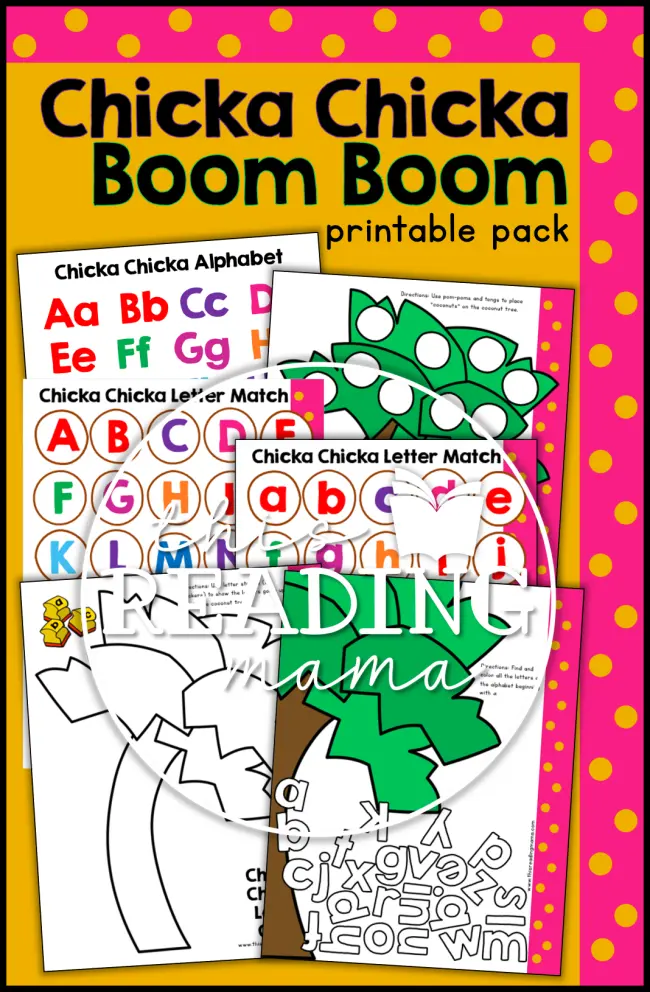
Early childhood education continues to undergo a quiet revolution, driven by research emphasizing hands-on, play-based literacy frameworks. Among the myriad pedagogical tools available to educators, alphabet literature remains a cornerstone for foundational language acquisition. Recently, educator and literacy specialist Becky—known widely through her educational platform This Reading Mama—introduced a new, comprehensive educational resource designed to complement one of the most beloved modern classics of children’s literature: Chicka Chicka Boom Boom by Bill Martin Jr. and John Archambault.
The newly released Chicka Chicka Boom Boom Printable Pack bridges the gap between passive reading and active, tactile learning. Developed out of practical necessity from inside a local homeschool co-op preschool literacy classroom, this resource targets two critical domains of early childhood development: letter recognition and fine motor skills. By leveraging the rhythmic, engaging narrative of the coconut tree-scaling alphabet, the printable pack provides educators, parents, and homeschoolers with a structured yet playful methodology to reinforce foundational literacy.
This report provides an in-depth examination of the pedagogical framework supporting the printable pack, explores the intersection of fine motor skill development and early alphabet mastery, contextualizes the release within broader trends in early childhood education, and outlines the practical utility of these resources for modern educators.
Detailed Chronology: From Classroom Inspiration to Digital Resource
The genesis of the Chicka Chicka Boom Boom Printable Pack traces back to the everyday realities of early childhood instruction. Re-entering the formal classroom setting to teach a preschool literacy class at a local homeschool co-op, Becky encountered the perennial challenge of keeping young learners engaged while systematically addressing foundational literacy standards.

Phase 1: The Read-Aloud Integration
Instructional planning for the co-op centered heavily on interactive read-alouds. Chicka Chicka Boom Boom, with its syncopated rhythm and vibrant personification of the alphabet, emerged as the focal point of the curriculum. In this phase, children were introduced to the narrative structure, chanting along as lowercase letters raced up the coconut tree, inevitably colliding and tumbling down.
Phase 2: Identifying the Pedagogical Gap
While reading aloud builds listening comprehension and phonological awareness, early childhood educators recognize that children require multi-sensory reinforcement to solidify letter-sound correspondence and visual discrimination. Recognizing the need for supplemental materials that matched the energy of the book, the creator began designing custom worksheets and manipulative activities tailored specifically to the themes of the story.
Phase 3: Digital Curation and Resource Expansion
What began as isolated classroom worksheets evolved into a cohesive, downloadable instructional package. The rollout involved categorizing activities into distinct developmental buckets—primarily focusing on visual letter identification and foundational hand muscle control. To make the resources accessible to a broader audience of parents and educators, the materials were integrated into This Reading Mama’s digital ecosystem, complemented by specialized collections housed within "The Library," an expansive repository of blackline printables and alphabet book read-aloud activities.
Supporting Context & Metrics: The Science of Early Literacy and Motor Skills
To fully appreciate the utility of the Chicka Chicka Boom Boom Printable Pack, one must examine the neurological and developmental ties connecting fine motor skills to early literacy acquisition.

The Cognitive-Motor Connection
Contemporary educational research underscores a profound correlation between fine motor dexterity and cognitive academic performance, particularly in reading and writing. When a child manipulates pencils, traces curves, cuts along lines, or places small objects onto specific visual targets, the brain activates sensory-motor networks that reinforce spatial awareness and visual-orthographic processing.
- Letter Recognition: Before a child can decode words, they must reliably differentiate between visually similar graphemes (e.g., b and d, or p and q). Letter recognition activities require children to isolate shapes, lines, and curves, mapping visual forms to auditory phonemes.
- Fine Motor Integration: Activities that build intrinsic hand strength, pincer grasp, and bilateral coordination directly prepare children for the physical act of handwriting. Without these foundational motor skills, the cognitive burden of letter formation can overwhelm a young child’s working memory, detracting from comprehension and creative expression.
The Enduring Appeal of Chicka Chicka Boom Boom
Published in 1989, Chicka Chicka Boom Boom remains a staple in preschool and kindergarten classrooms worldwide. Its enduring relevance stems from its alignment with natural childhood learning patterns:
- Auditory Engagement: Rhyme, rhythm, and repetition stimulate auditory processing pathways.
- Visual Personification: Giving the alphabet a narrative journey (climbing a tree, getting hurt, being comforted by uppercase "mama" and "papa" letters) helps children form emotional and narrative connections to abstract symbols.
- Kinesthetic Potential: The book naturally lends itself to dramatic play, physical movement, and hands-on manipulative matching games.
The new printable pack capitalizes on these exact modalities, transitioning children from passive listeners of a story to active participants in alphabet mastery.
Official Statements and Pedagogical Insights
In discussing the philosophy behind her literacy resources, Becky emphasizes accessibility, flexibility, and the integration of play into structured learning environments.

"No matter what time of year it is, it’s ALWAYS a good time to review all the letters of the alphabet," notes the creator in her instructional overview. "When children are having fun—singing, chanting, and engaging their hands—learning letters stops feeling like a chore and starts feeling like an adventure."
Structure of the Instructional Pack
The pedagogical design of the printable pack is bifurcated into two primary developmental pillars:
-
Letter Activities & Reference Charts:
- Designed to enhance visual discrimination.
- Includes charts that map out the full alphabet, allowing children to cross-reference uppercase and lowercase forms.
- Provides targeted practice identifying specific letters out of context.
-
Fine Motor Skill Enhancements:

- Incorporate tracing, coloring, cutting, and manipulative placement.
- Target the small muscles of the hands, fingers, and wrists.
- Bridge the gap between reading readiness and pre-writing proficiency.
Furthermore, the integration of extended resources—such as the blackline printables available via The Library membership tier and comprehensive alphabet printables indexes—ensures that educators can easily scale the activities to meet diverse learning needs within multi-age settings like homeschool co-ops, preschools, and kindergarten classrooms.
Future Outlook: The Evolution of Digital Literacy Resources in Homeschooling and Early Education
As educational landscapes shift toward flexible, hybrid, and home-based learning models, the demand for high-quality, professionally vetted digital printables continues to surge. Educators and parents increasingly seek out curriculum supplements that are both grounded in sound pedagogical theory and immediately usable in low-resource environments.
Trends Shaping Early Literacy Resources:
- Democratization of Teaching Materials: Platforms that offer free, high-tier educational content empower parents and micro-school educators to deliver rigorous, literature-based instruction without prohibitive costs.
- Multi-Modal Learning Integration: Future resources are expected to increasingly blend physical printables with digital storytelling, interactive read-aloud guides, and multi-sensory manipulative play.
- Community-Driven Development: Resources born directly from real classroom experiences—such as the homeschool co-op environment that inspired the Chicka Chicka Boom Boom pack—tend to enjoy higher adoption rates and efficacy because they address genuine, practical pain points faced by instructors.
Ultimately, tools like the Chicka Chicka Boom Boom Printable Pack demonstrate that foundational literacy instruction does not require complex, expensive technology. By combining a timeless piece of children’s literature with intentional, hands-on printables, educators can create rich, memorable learning experiences that foster a lifelong love of reading and writing in young children.

