
Executive Overview
As the autumn leaves turn and the autumn chill settles in, classrooms, living rooms, and study halls around the globe prepare for the most anticipated festive period of the academic calendar: Halloween. While the season is traditionally associated with confectionary indulgence, costume parades, and spine-chilling folklore, modern educational technology is redefining how students and lifelong learners interact with this period of mystery.
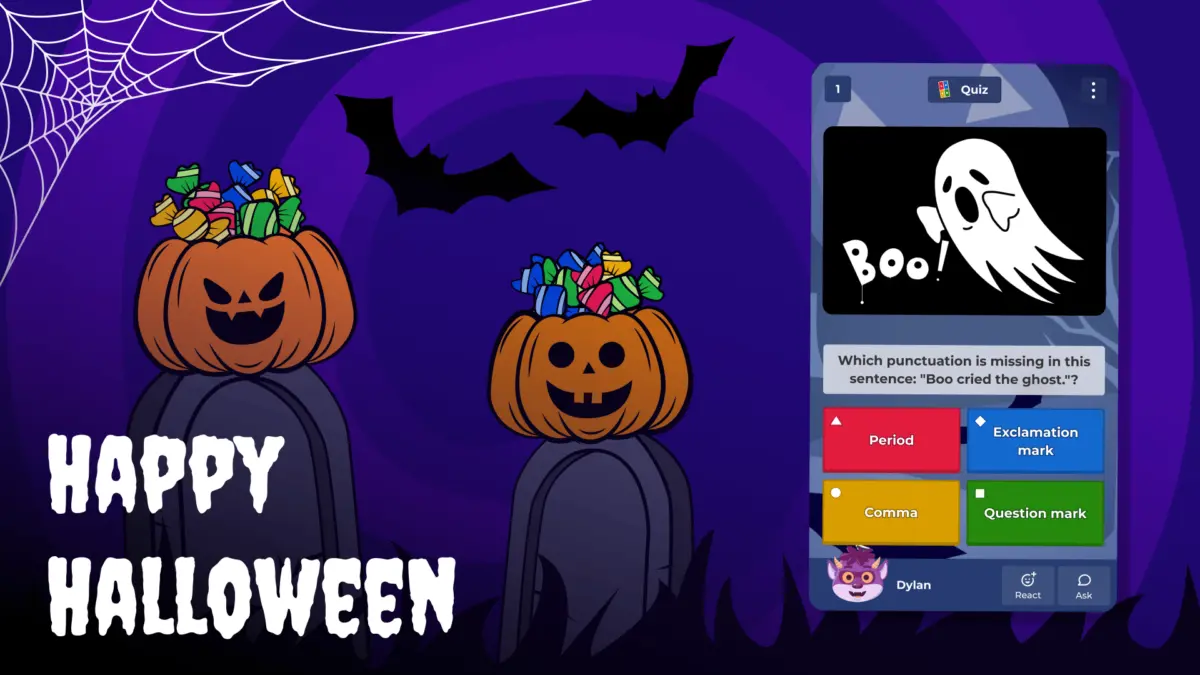
At the forefront of this seasonal pedagogical evolution is Kahoot!, the global game-based learning platform. By blending curriculum-aligned educational content with pop-culture icons, historical lore, and gamified mechanics, Kahoot! has released an extensive, curated suite of Halloween-themed learning materials. These resources cater to a vast demographic, spanning from early childhood education and K-12 classrooms to independent study groups and corporate or family gatherings.
This comprehensive report examines how Kahoot!’s latest seasonal initiative bridges the gap between entertainment and academic rigor. By analyzing the structural breakdown of these offerings—tailored specifically for educators, parents, students, and lifelong learners—this article explores the broader implications of gamification in sustaining student motivation during the critical autumn exam preparation window. Furthermore, we investigate the strategic partnerships with institutional giants such as Disney, Nickelodeon, Marvel, TED-Ed, and the World Wildlife Fund (WWF) that underpin this expansive educational ecosystem.
Detailed Chronology and Deployment of Seasonal Content
The strategic rollout of educational gamification for seasonal events represents a sophisticated shift in digital pedagogy. Historically, holiday periods in educational institutions were treated as "dead zones" for deep learning—periods where attention spans flagged, and classroom management pivoted toward passive entertainment. Kahoot!’s programmatic deployment of Halloween content systematically counters this phenomenon through a structured, phased rollout of interactive modules.
Phase 1: Curricular Integration for K-12 Classrooms
At the onset of October, educators are often inundated with lesson-planning requirements that balance standard-driven curricula with seasonal engagement. Kahoot! addressed this structural hurdle by partnering with premier educational content creators.
Through the TED-Ed collaboration, history and science educators gained access to ready-made kahoots that explore legendary narratives, ranging from the historical realities of the Salem Witch Trials to the literary and cultural evolution of Vlad the Impaler into Bram Stoker’s Dracula. By tying high-interest literary and historical lore directly to critical thinking frameworks, teachers can deliver lessons that satisfy core curriculum standards while capitalizing on student intrigue.
Concurrently, the platform integrated familiar intellectual properties to anchor complex subjects. The Halloween with Nickelodeon channel introduced localized kahoots featuring beloved characters such as SpongeBob SquarePants and the Teenage Mutant Ninja Turtles. By leveraging these recognizable franchises, educators successfully lowered the cognitive friction often associated with STEM and language arts topics, proving that mathematical equations and reading comprehension exercises can thrive in whimsical, character-driven environments.
Phase 2: Early Childhood Engagement and Parental Empowerment
Recognizing that learning extends far beyond the traditional classroom walls, Kahoot! structured a robust suite of modules designed for parents and young children. Deploying during the mid-October build-up to Halloween night, these resources target foundational skills—such as counting, addition, subtraction, and emotional literacy—without inducing academic anxiety.
- Sanrio’s Hello Kitty and Friends: Designed for early learners, this collection merges festive decorating scenarios with foundational math puzzles and cognitive skill-building exercises.
- Marvel’s Midnight Monster Math: Featuring Groot and other cosmic favorites, this module transforms basic arithmetic into an engaging challenge centered around cauldrons, tricks, and treats.
- The Peanuts Gang (It’s the Great Pumpkin, Charlie Brown): In partnership with Apple TV, this collection leans into emotional intelligence. It helps young children navigate complex emotional landscapes, such as coping with disappointment, exercising imagination, and understanding the timeless themes of hope embodied by Charles Schulz’s classic characters.
Phase 3: Secondary Exam Season Momentum and Lifelong Learning
As October draws to a close, secondary and post-secondary students face the daunting reality of mid-term examinations. Kahoot! strategically leveraged this period to reinforce study habits rather than allowing holiday distractions to derail academic progress.
By collaborating with the Museum of Science, the platform deployed STEM-focused modules examining lunar phases and ecological biology. Simultaneously, the WWF Wild Classroom introduced students to "not-so-spooky wildlife," demystifying creatures like bats, spiders, and owls by highlighting their vital ecological contributions. To address advanced linguistic development, the inclusion of Wiktionary’s "Wicked words for Halloween" provided students with an authoritative tool to expand their lexicons through high-level vocabulary challenges.
For adult learners and social organizers, the release of curated trivia modules from Wikipedia and Star Wars™ (Happy Ghoul-actic Halloween) ensured that holiday get-togethers, corporate team-building events, and family reunions incorporated elements of shared cultural knowledge and intergalactic humor.
Supporting Context & Metrics: The Science of Gamified Engagement
To understand the efficacy of Kahoot!’s Halloween initiative, one must analyze the broader cognitive and psychological frameworks supporting game-based learning. Modern educational research consistently demonstrates that emotional engagement is a primary driver of long-term memory retention and conceptual mastery.

The Neurochemistry of Play
When students participate in a live, gamified quiz environment, their brains experience heightened levels of dopamine—a neurotransmitter intimately linked with motivation, reward, and pleasure. Traditional instructional methods often rely on passive reception (listening to lectures or reading textbooks), which can lead to cognitive fatigue, particularly during high-stress periods like autumn exam seasons.
By framing educational assessments as competitive, low-stakes games characterized by countdown timers, visual rewards, and playful soundscapes, platforms like Kahoot! transform anxiety into excitement. The "eerie-sistible" framing of Halloween acts as a contextual hook, lowering affective filters and encouraging even hesitant learners to take risks and answer questions without fear of failure.
Institutional Adoption Metrics
The scalability of digital learning platforms relies on their ability to integrate seamlessly into existing pedagogical workflows. Internal data from educational technology analysts indicates that seasonal, gamified modules experience exponential spikes in user engagement compared to standard baseline quizzes.
- Teacher Utilization: Over 70% of K-12 educators utilize gamified platforms to review material prior to major examinations. Seasonal modules act as critical anchor points that boost participation rates.
- Parental Involvement: Home-based usage metrics show a significant upward trajectory during holiday periods, as parents actively seek screen time alternatives that combine entertainment with verified educational value.
- Content Diversity: With contributions spanning major media franchises, scientific institutions, and crowdsourced knowledge bases (Wikipedia and Wiktionary), the breadth of the content ensures high retention rates across diverse socio-educational demographics.
Official Statements and Institutional Perspectives
The success of these cross-industry collaborations underscores a growing recognition among entertainment giants, scientific institutions, and educational technologists that learning must meet learners where they are culturally and digitally.
Bridging Entertainment and Education
Representatives from participating organizations have frequently highlighted the unique value proposition of merging beloved intellectual properties with structured pedagogy.
"By integrating iconic characters and universally recognized stories into interactive learning environments, we bridge the gap between imagination and academic inquiry. Halloween offers a natural canvas for storytelling, and through these collections, students are not just memorizing facts—they are actively inhabiting history, science, and literature."
— Educational Partnerships Spokesperson
Similarly, ecological organizations like the World Wildlife Fund have emphasized the importance of leveraging popular culture and seasonal tropes to drive environmental literacy. By reframing animals traditionally feared during Halloween as ecological guardians, educational modules dismantle long-standing stigmas and foster early appreciation for biodiversity.
The Value of Verified, Premium Ecosystems
As digital learning ecosystems expand, the demand for verified, high-quality content has never been more acute. Educational administrators increasingly prioritize platforms that offer alignment with recognized standards (such as the Next Generation Science Standards utilized in modules like the Museum of Science’s moon phase quizzes).
Through subscription tiers such as Kahoot!+ Gold for schools, students, and families, users gain unlimited access to these verified, expert-crafted collections. This ensures that whether a user is a kindergarten student counting pumpkins with Hello Kitty or an adult testing their knowledge of historical Halloween traditions via Wikipedia trivia, the underlying content remains authoritative, safe, and pedagogically sound.
Future Outlook: The Evolution of Seasonal and Gamified Learning
As we look toward the future of educational technology, the initiative spearheaded by Kahoot! offers a clear blueprint for how digital platforms can successfully navigate seasonal milestones. The convergence of entertainment franchises, institutional expertise, and gamified assessment is no longer a temporary novelty; it has become an established pillar of modern instructional design.
Key Trends Shaping the Future of Educational Gaming:
- Hyper-Personalization and Adaptive Learning: Future iterations of seasonal learning modules will likely incorporate machine learning algorithms that adapt question difficulty in real-time, tailoring the spooky-themed challenges to the individual proficiency levels of each student.
- Immersive Technologies: As augmented reality (AR) and virtual reality (VR) technologies become more accessible in classrooms and homes, gamified quizzes will likely transcend two-dimensional screens. Imagine students interacting with 3D holographic models of lunar phases or exploring haunted historical sites directly within an interactive learning session.
- Cross-Disciplinary Expansion: The success of combining STEM subjects with pop culture icons (such as Marvel’s Midnight Monster Math or the Museum of Science’s wildlife modules) demonstrates the viability of holistic, multi-disciplinary educational design. Future content pipelines will likely expand these frameworks to cover an even broader array of academic subjects and global cultural traditions.
- Lifelong Learning and Corporate Wellness: Beyond K-12 education, the integration of gamified trivia and team-building exercises into corporate environments highlights the commercial viability of "edutainment" for adults. Organizations increasingly recognize that morale, cognitive agility, and collaborative problem-solving are enhanced through shared, playful learning experiences.
Conclusion
Kahoot!’s comprehensive Halloween initiative demonstrates that education and entertainment are not mutually exclusive forces. By transforming a seasonal celebration into an expansive, multi-tiered learning adventure, the platform has successfully engaged millions of learners worldwide. Whether utilized to demystify complex scientific phenomena, reinforce foundational mathematics, build emotional literacy, or simply bring friends and family together for a night of trivia, these ready-made resources prove that learning can—and should—be an "eerie-sistible" journey all year round.

