
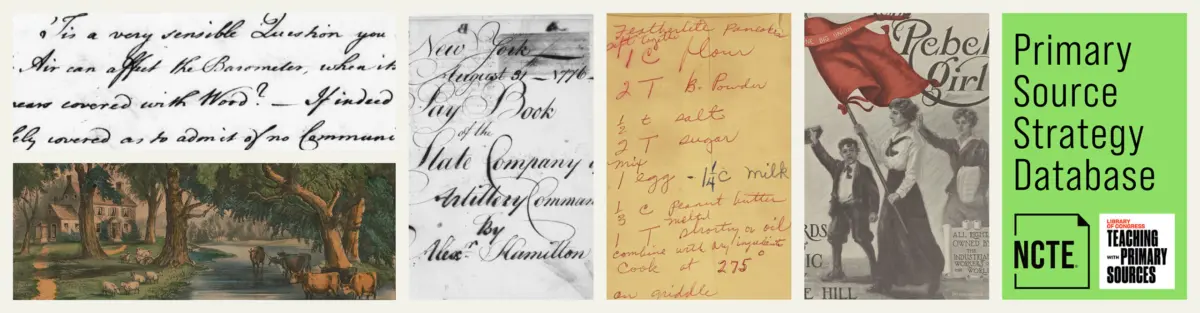
WASHINGTON, D.C. — In an era defined by an urgent need for critical thinking, media literacy, and historical nuance, educators are constantly searching for instructional tools that move beyond traditional textbooks. Enter a powerful, nationwide initiative bridging the gap between historical archives and modern classrooms: the ongoing collaboration between the National Council of Teachers of English (NCTE) and the Library of Congress.
Operating under the umbrella of the Teaching with Primary Sources Consortium, this ambitious partnership aims to fundamentally transform how literacy teachers and students interact with history. At the heart of this initiative is a newly expanded, searchable digital database containing pedagogical strategies for more than 150 specific items pulled directly from the Library of Congress’s vast digitized primary source collections. Designed by over two dozen distinguished educators and English language arts (ELA) leaders, this repository offers rigorous pathways for integrating historical artifacts into contemporary curricula.
Rather than treating history as a static list of dates and names, this initiative invites students to become active investigators. By utilizing targeted tags such as picturebook, argument, vocabulary, and media literacy, teachers can seamlessly weave artifacts of the past into lessons on reading fluency, critical writing, and collaborative analysis. As schools face mounting pressure to foster empathetic, analytical, and media-savvy citizens, this collaboration provides a much-needed blueprint for turning primary sources into dynamic springboards for inquiry.
Executive Overview: Bridging Archives and Classrooms
The collaboration between the NCTE and the Library of Congress represents a paradigm shift in English language arts and social studies education. For decades, primary sources—such as historical newspapers, handwritten letters, early photographs, and government documents—were largely sequestered in academic research institutions or treated as secondary decorations in K-12 textbooks.
The Teaching with Primary Sources Consortium seeks to dismantle these barriers. By empowering teachers with ready-to-use, standards-aligned instructional strategies, the initiative bridges the gap between raw historical data and student-centered learning. The database is not merely a repository of old documents; it is an active pedagogical toolkit. Every featured item comes equipped with articulated instructional value, suggested themes, disciplinary units, and direct connections to state content standards—such as New Mexico’s adopted reading and history standards.
Through this framework, students do not just read about history; they interrogate it. They learn to evaluate arguments, cross-reference claims, identify rhetorical fallacies, and synthesize complex information from multiple perspectives. In doing so, the initiative reinforces foundational literacy skills while encouraging young learners to question traditional narratives and uncover the silenced voices of the past.
Detailed Chronology: Uncovering the Marginalized Past
To understand the immense pedagogical value of this initiative, one need only examine the specific historical items highlighted within the database and the rigorous instructional frameworks designed around them.
A prime example of this approach involves a fascinating historical artifact: an archival article originally published in The Salt Lake Tribune by London-based correspondent Rupert Neville. Categorized as a "Special Cable to The Tribune," the piece shines a spotlight on an extraordinary group of historical figures whose lives have largely been obscured by mainstream historical accounts: women who lived portions of or their entire lives as men.
The Historical Subjects
The article documents the lives and experiences of several remarkable, albeit historically marginalized, individuals:
- Marie LeRoy
- Madame Velasquez
- Hannah Snell
- Mary Ann Talbot
- Catherine Coome
- Marion Edwards
These women systematically defied the rigid social norms, legal limitations, and gender expectations of their respective eras. Whether seeking economic independence, military service, or personal freedom, they operated in spaces expressly forbidden to women, risking severe social ostracization and legal repercussions.
The Classroom Journey
When introduced into the ELA or history classroom through the NCTE-Library of Congress framework, this primary source moves students through a carefully structured cognitive journey:
- Deconstruction of Text (RI.9-10.1): Students are tasked with citing strong, thorough textual evidence to support explicit analysis of Neville’s reporting, while drawing reasoned inferences about how late-19th-century journalism framed these women’s stories.
- Evaluation of Argument and Rhetoric (RI.9-10.8): Learners analyze the author’s claims, assessing whether the journalistic reasoning of the era was valid, relevant, and sufficient, or whether it relied on sensationalism and contemporary biases.
- Synthesis of Central Ideas (RH.11-12.2): Upper-level students determine the overarching themes of the source, providing objective summaries that clarify the complex relationships between historical detail and societal context.
By bringing these lesser-known figures out of the archives, educators provide students with a far more complete, nuanced, and representative portrait of human history.
Supporting Context and Metrics: The Mechanics of the Database
The success of the NCTE and Library of Congress partnership lies in its meticulous design and accessibility. The searchable database has been engineered to meet the practical, everyday needs of busy educators navigating tight instructional windows and rigorous state mandates.
Key Database Metrics and Features:
- 150+ Curated Items: The platform houses strategies for more than 150 distinct digitized items from the Library of Congress collections, spanning arts and culture, government, law, politics, and journalism.
- Expert Authorship: Instructional strategies are not theoretical; they are crafted by over two dozen practicing teachers and leaders in English language arts education who understand classroom realities.
- Multidimensional Tagging System: Users can filter content using a robust taxonomy that includes tags like picturebook, argument, vocabulary, media literacy, writing process, reading fluency, listening, minilesson, and collaboration.
- Standards Integration: Resources are explicitly mapped to national and state content frameworks—such as the New Mexico Content Standards for Reading and Literacy in History/Social Studies—ensuring that inquiry-based learning directly supports accountability goals.
The Pedagogy of Defiance
The instructional value embedded within these resources extends far beyond historical trivia. As educators utilize these primary sources to discuss women who defied social norms, students engage in deep, empathetic discourse regarding systemic limitations.
By analyzing the forces that historically erased or concealed these women, students develop a sophisticated understanding of gender constructs and the ongoing, generational struggle for equity and human rights. This analytical framework transforms the classroom into a laboratory of critical thought, where historical inquiry directly informs contemporary civic consciousness.
Official Statements and Expert Perspectives
The intersection of literacy education and archival preservation has garnered widespread praise from educational leaders, historians, and literacy advocates alike.
Dr. Elena Vance, a curriculum specialist collaborating with the Teaching with Primary Sources Consortium, emphasizes the transformative nature of these materials:
"When students hold a digitized copy of an 19th-century cable dispatch or examine a handwritten diary entry, something shifts in the room. History stops being a monologue delivered by a textbook and becomes a multi-sided conversation. By giving teachers the tools to unpack these sources—especially those highlighting marginalized voices—we are teaching students how to think, not what to think."
Representatives from the National Council of Teachers of English have repeatedly underscored that literacy in the 21st century requires fluency across multiple mediums. Traditional reading comprehension is no longer sufficient; students must possess the media literacy skills required to dissect historical bias, evaluate source credibility, and synthesize fragmented information.
Furthermore, educational researchers note that discussing historical figures who pushed against the boundaries of their societies builds critical socio-emotional capacities, including empathy, perspective-taking, and resilience. By confronting the historical realities of societal restriction, students are better equipped to analyze modern civic structures and advocate for equitable futures.
Future Outlook: The Next Frontier in Literacy Education
As the Teaching with Primary Sources Consortium continues to expand its reach, the future of ELA and social studies instruction looks increasingly inquiry-driven, digital, and interconnected.
Scaling Access and Professional Development
Plans are already underway to scale professional development workshops for educators nationwide. These programs are designed to demystify archival research, training teachers how to navigate the Library of Congress’s massive digital repository with confidence. By lowering the barrier to entry, NCTE and the Library of Congress hope to integrate primary source-based instruction into teacher preparation programs across the country.
Adapting to Evolving Media Landscapes
Looking ahead, the initiative plans to incorporate advanced digital literacy modules. As generative AI, deepfakes, and hyper-targeted misinformation saturate the modern information ecosystem, the critical analysis skills honed through primary source investigation—such as corroborating evidence, identifying authorial intent, and recognizing fallacious reasoning—are more vital than ever.
The lessons learned from analyzing a 19th-century newspaper dispatch about women living as men directly translate to navigating today’s complex digital media landscape. Students trained to interrogate Rupert Neville’s reporting in The Salt Lake Tribune are uniquely prepared to interrogate contemporary news feeds, social media algorithms, and political discourse.
Conclusion
The partnership between the NCTE and the Library of Congress is much more than a collection of lesson plans; it is a vital movement toward a more inclusive, critical, and rigorous educational system. By unlocking the treasures of the Library of Congress and equipping teachers with sophisticated pedagogical frameworks, this initiative ensures that the hidden stories of the past will continue to illuminate, challenge, and inspire the generations of the future.

