
Executive Overview
In the landscape of modern educational technology, digital tools are frequently evaluated on their ability to scale general education classrooms, drive standardized testing performance, or gamify rote memorization. However, a quieter, more profound revolution is taking place on the front lines of special education. Educators nationwide are taking mainstream platforms and radically repurposing them to tear down the systemic barriers that have long marginalized students with moderate to severe disabilities.
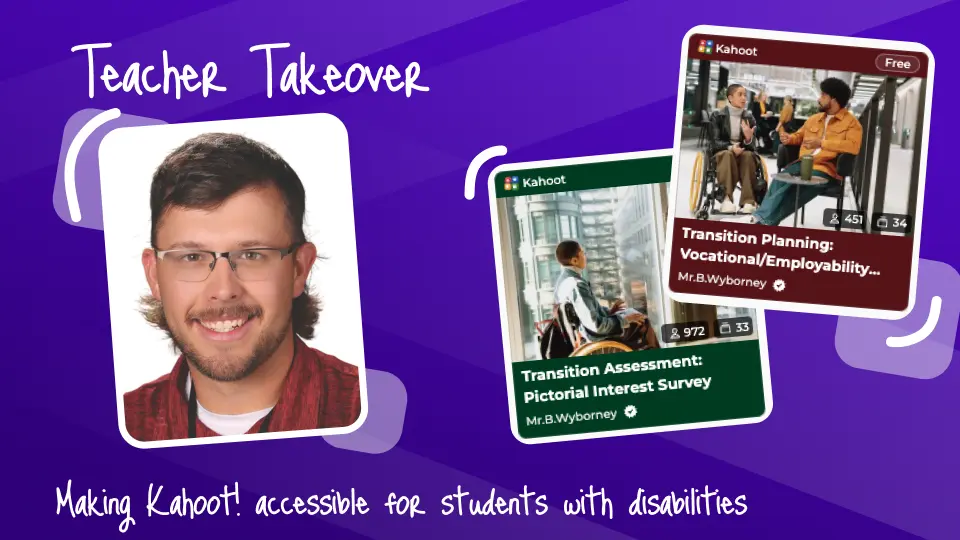
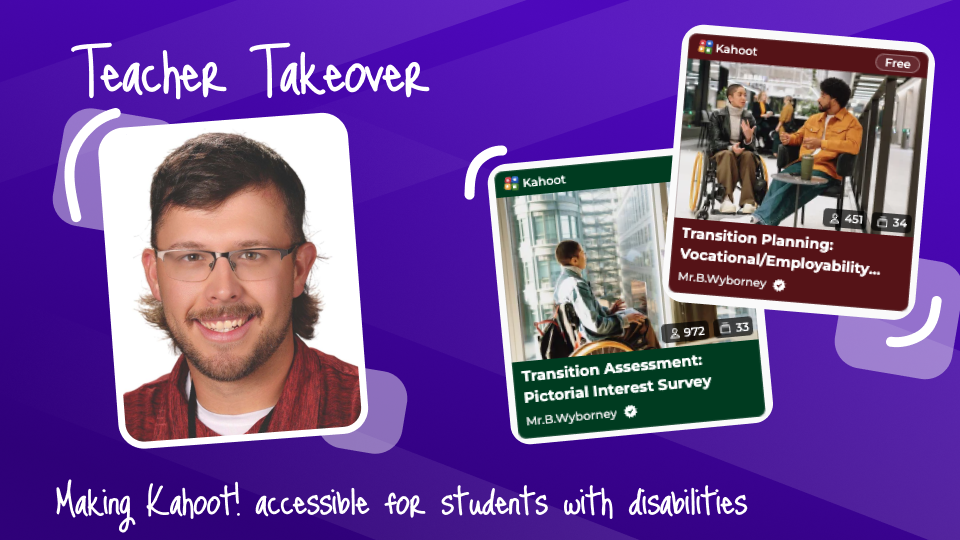
At the vanguard of this movement is Brett Wyborney, an eight-year teaching veteran whose career spans Alaska and Washington state. Over nearly a decade in the classroom, Wyborney has navigated diverse instructional terrains—serving as a functional academics teacher for students aged 14 to 22 with significant disabilities, a resource-room specialist for students with Specific Learning Disabilities (SLD) and Other Health Impairments (OHI), a general education instructor, and an educator for advanced gifted learners.
Through this multifaceted lens, Wyborney identified a glaring equity gap in the educational marketplace: a severe lack of age-appropriate, accessible digital materials for functional academics and secondary transition planning. Rather than accepting the limitations of conventional curriculum, Wyborney turned to Kahoot!, a platform traditionally known for fast-paced trivia and general education engagement. By adapting its core mechanics—leveraging picture-based answers, reducing cognitive overload through choice-trimming, utilizing multiple correct answers for preference-based learning, and automating data collection for Individualized Education Programs (IEPs)—he has successfully transformed the platform into a powerful, student-driven accessibility engine.
This report examines Wyborney’s pedagogical framework, the structural strategies he employs to dismantle barriers in special education classrooms, the profound implications of using gamified tools for secondary transition assessments, and the broader future outlook for inclusive educational technology.
Detailed Chronology: An Educator’s Journey Toward Inclusive Design
To understand the evolution of Wyborney’s methodology, one must trace his pedagogical trajectory across different educational settings and institutional expectations.
Phase 1: Recognizing the Gap in Functional Academics (Years 1–3)
Early in his career, Wyborney stepped into a functional academics classroom catering to adolescents and young adults aged 14 through 22 with significant developmental and cognitive disabilities. Like many special educators, he immediately confronted a scarcity of resources that struck the delicate balance between chronological age appropriateness and cognitive accessibility.
- Materials designed for younger children patronized his high-school-aged students.
- Materials designed for typical adolescents demanded reading, writing, and fine-motor literacy levels that many of his students had not yet attained.
Faced with these structural limitations, Wyborney began experimenting with digital tools that could be molded to fit individual student profiles. He observed that while his students struggled with text-heavy interfaces, they engaged intensely with visual media, vibrant colors, and gamified reward systems. This realization marked the genesis of his work adapting mainstream interactive quiz software into a tailored instructional medium.
Phase 2: Building the Inclusive Classroom Ecosystem (Years 4–6)
As Wyborney transitioned through various roles—including resource-room teaching and general education settings—the complexity of his student demographics expanded. A typical functional academics or resource room under his care featured starkly diverse profiles:
- Class sizes averaging 6 to 8 students with vastly different support needs.
- Heavy reliance on 1:1 para-educator support.
- A mix of nonreaders and nonspeaking individuals.
- Students with severe visual impairments or physical fine-motor challenges.
- English Language Learners (ELL) from multilingual households.
In these environments, traditional direct instruction often failed to engage every learner simultaneously. Wyborney systematically began redesigning his digital lessons, testing various structural modifications to ensure that a nonreading, nonspeaking student with cerebral palsy could participate with the same autonomy as a verbal peer.
Phase 3: Innovating Secondary Transition Assessments (Years 7–8)
In his most recent professional chapters, Wyborney turned his attention to one of the most critical milestones in special education: secondary transition planning. Developing High School and Beyond Plans and drafting IEP transition goals require deep insight into a student’s true vocational preferences, lifestyle goals, and personal interests.
Historically, these transition assessments have relied heavily on lengthy questionnaires, reading comprehension, writing stamina, or spoken interviews. For students with significant cognitive or communication impairments, these formats created an invisible glass ceiling, often forcing teachers to rely on parental proxy or subjective para-educator interpretation.
By applying his refined accessibility framework to the platform, Wyborney developed pioneering assessment tools—most notably the “Transition Assessment: Pictorial Interest Survey”—which allowed nonreading students to articulate their preferences independently via touchscreen devices. This innovation bridged the gap between statutory transition requirements and genuine student self-determination.
Supporting Context & Metrics: Dismantling Classroom Barriers
Wyborney’s framework relies on specific, highly deliberate mechanical adjustments to digital software. By analyzing the intersection of cognitive load theory, assistive technology, and gamification, his methodologies offer a blueprint for accessible digital design.
1. Transitioning from Text to Picture-Based Answer Options
For students who are nonreaders, text-heavy multiple-choice questions create an immediate barrier to participation. Wyborney leveraged the platform’s image capabilities to replace text entirely with visual stimuli.
- Visual Equivalency: Questions are paired with photographs, icons, or symbols drawn from familiar communication frameworks such as the Picture Exchange Communication System (PECS).
- Tactile Independence: Paired with touchscreen tablets, these visual answer options bypassed the fine-motor hurdles associated with traditional computer mice and trackpads. Students with cerebral palsy or muscular dystrophies could tap an image independently, reclaiming agency over their learning paths.
- Facilitated Pacing: To ensure cognitive processing time, Wyborney incorporated strategic pedagogical scaffolding: educators or para-educators read questions aloud while adjusting or entirely disabling the platform’s on-screen countdown timers.
2. Scaffolding Cognitive Load by Reducing Answer Choices
Standard quiz formats traditionally present four distinct answer options. Wyborney observed that for many students with cognitive or processing differences, four choices introduced unnecessary cognitive clutter, making it difficult to isolate what the student actually knew.
- The Two-Choice Scaffold: Wyborney frequently reduced questions to a binary choice (e.g., distinguishing mammals with options like Dog vs. Fish).
- Enlarged Visual Real Estate: By cutting the number of choices in half, the visual buttons on screen grew substantially larger. This geometric scaling drastically reduced visual searching time and minimized accidental mis-taps for students with motor control variations.
- Graduated Complexity: The pedagogical goal was never to “dumber down” the curriculum, but rather to strip away extrinsic cognitive load—such as excessive visual clutter or reading demands—so that the intrinsic subject matter could be authentically assessed.
3. Harnessing Multiple Correct Answers for Preference-Based Learning
Traditional assessment models rely on binary grading: an answer is either right or wrong. However, in functional academics and transition planning, eliciting authentic personal preferences requires a different metric.
- The Multi-Correct Strategy: Wyborney designed questions where all provided options were marked as correct (e.g., asking students to identify preferred recreational activities among choices like Basketball, Art, Music, and Reading).
- Emotional Safety & Gamification: Because every selected choice registered as correct, students could express their authentic likes and dislikes without the psychological discouragement of being told their preference was “wrong.” Crucially, this formatting allowed them to experience the thrill of accumulating points and seeing their names on the interactive leaderboard.
- Pacing Academic Rigor: These preference-based questions served as strategic palate cleansers, breaking up heavier academic queries and ensuring sustained emotional engagement throughout the session.
4. Automating Data Collection and IEP Compliance
Special education teachers face a staggering administrative burden regarding data collection, progress monitoring, and IEP compliance. Wyborney discovered that shifting assessments to a digital platform fundamentally streamlined this workflow.
- Automated Logging: Student responses were systematically captured in the platform’s backend analytics and reporting tools, instantly generating audit trails and developmental progress logs.
- Longitudinal Repeatability: Unlike paper-based 1:1 interview protocols that required massive prep time to readminister, digital modules could be deployed repeatedly across individual or whole-group settings. This enabled educators to track longitudinal consistency in student preferences over weeks, months, or academic years.
Official Perspectives & Expert Insights
The framework developed by Wyborney resonates deeply within the broader special education community, highlighting a paradigm shift in how mainstream educational technology is conceptualized.
Reflecting on his core philosophy, Wyborney emphasizes that technology should never dictate the boundaries of student capability:
"I realized that Kahoot! could be the perfect platform for creating materials that were appropriate for my students’ unique needs."
— Brett W., Special Education Educator, Washington, USA
Addressing the balance between automated tools and professional clinical judgment, Wyborney notes that digital metrics serve to augment, rather than replace, human expertise:
"Kahoot! wasn’t replacing professional judgment or other transition assessment methods. Instead, it became one additional tool for collecting meaningful student data in a way that was accessible to my students."
— Brett W., Special Education Educator, Washington, USA
Educational technology analysts point out that Wyborney’s work exposes a critical blind spot in software development: the historical failure of edtech companies to build accessibility features natively into their foundational design loops. When teachers are forced to creatively hack general education software to accommodate moderate-to-severe disabilities, it demonstrates both the ingenuity of frontline educators and the structural lag of the tech sector.
However, practitioners argue that Wyborney’s methodology provides a scalable roadmap. By demonstrating that high-engagement gaming mechanics can be successfully decoupled from textual literacy demands, his work proves that inclusion does not require abandoning engaging tools; rather, it requires thoughtful, intentional instructional design.
Future Outlook: The Next Frontier of Inclusive EdTech
As school districts nationwide grapple with post-pandemic learning recovery, equity mandates, and severe shortages of special education personnel, the demand for accessible, scalable instructional tools has never been higher. The framework pioneered by Wyborney points toward several vital trajectories for the future of education:
1. Mainstream Software as Universal Design for Learning (UDL) Hubs
The future of educational software lies in native adherence to Universal Design for Learning (UDL) principles. Platforms are increasingly recognizing that features originally built for special education—such as robust picture-to-text integration, flexible timer controls, and touch-optimized large targets—ultimately benefit all learners, including English language learners, early readers, and neurodivergent students.
2. Redefining Secondary Transition with Assistive Data Systems
As state and federal mandates place heightened emphasis on post-secondary outcomes for students with disabilities, digitized, student-driven transition assessments will likely become standard operating procedure. By eliminating reliance on proxy reporters and empowering nonreading, nonspeaking youth to self-report their vocational and lifestyle interests directly, schools can construct significantly more accurate, dignifying, and effective High School and Beyond Plans.
3. AI-Driven Personalization and Automated Scaffolding
Looking further ahead, the integration of generative artificial intelligence into educational platforms promises to automate the precise adaptations Wyborney crafted manually. Future iterations of classroom software may dynamically parse standard academic text, instantly pairing vocabulary with contextual PECS symbols, automatically reducing multiple-choice arrays based on real-time student telemetry, and offering seamless multimodal response modes.
Conclusion
Brett Wyborney’s journey from an Alaska classroom to Washington state illustrates the profound impact a single dedicated educator can have when refusing to let institutional barriers dictate student potential. By transforming a mainstream gamified quiz platform into an accessible arena for functional academics and secondary transition assessment, Wyborney has not only elevated his own students’ autonomy but has also provided a masterclass for educators globally. His work stands as an authoritative testament to a central pedagogical truth: when technology is engineered with radical accessibility in mind, learning truly becomes borderless.

