
Executive Overview
In early childhood education, the transition from spoken language to foundational literacy is one of the most critical milestones a child will achieve. As educators and curriculum developers increasingly align early instruction with the rigorous standards of the Science of Reading, phonological awareness has emerged as a cornerstone of cognitive development. Among the various sub-skills that build this foundation, syllable segmentation—the ability to hear, isolate, and count the individual parts of a spoken word—serves as an essential stepping stone.
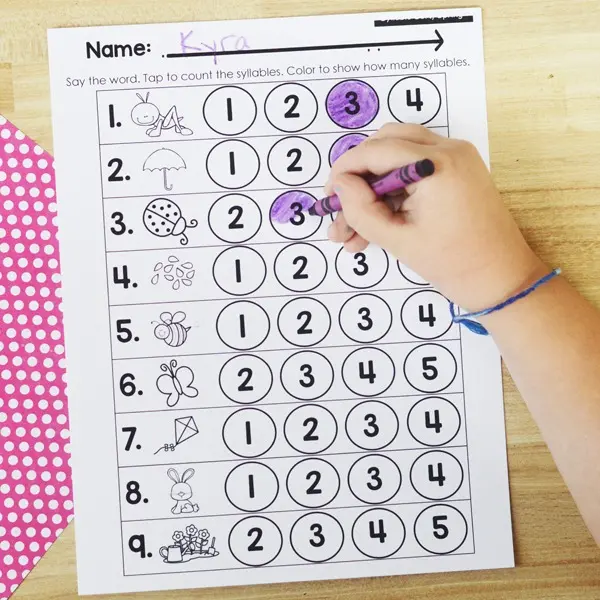
Enter the Spring Syllable Sort, a newly released, hands-on educational resource designed specifically for preschool, pre-K, and kindergarten classrooms. Developed to seamlessly integrate seasonal themes into daily instruction, this literacy tool shifts the focus of early reading away from rote memorization and toward active, auditory-motor engagement. By leveraging tactile methods such as clapping and tapping alongside vibrant picture-based vocabulary cards, the activity addresses a vital gap in early childhood pedagogy: making abstract linguistic concepts tangible for young learners.
Beyond the immediate excitement of seasonal classroom activities, this release highlights a broader evolution in educational design. Educators are increasingly demanding tools that are both scientifically grounded and adaptable to diverse learning environments, ranging from traditional centers to take-home literacy packets. This article provides a comprehensive examination of the Spring Syllable Sort, exploring its pedagogical foundations, its structured implementation in classrooms, its alignment with comprehensive seasonal curricula, and its long-term implications for early childhood literacy outcomes.

Detailed Chronology of the Initiative
The creation and dissemination of the Spring Syllable Sort did not happen in a vacuum; it represents the culmination of years of refinement in early reading instruction and digital resource sharing.
Phase 1: Identifying the Pedagogical Need (Pre-2024)
For decades, early childhood educators recognized that children struggled with the transition from whole words to segmented sounds. While phonics deals with written letters and their corresponding sounds, phonological awareness operates strictly in the auditory domain. Educators observed that students who engaged in kinesthetic learning—such as clapping, jumping, or tapping out beats—retained phonetic structures much longer than those relying purely on auditory instruction. However, a significant scarcity of cohesive, visually appealing, and seasonally relevant materials persisted, often forcing teachers to spend valuable evening hours crafting makeshift sorting activities.
Phase 2: Conceptualization and Design (Late 2024)
Recognizing the demand for structured Science of Reading-aligned activities, curriculum designers set out to build a comprehensive, low-prep system. The goal was to develop an intuitive framework where children could explore seasonal vocabulary without the cognitive overload of decoding written text prematurely. The design phase focused heavily on picture-based identification, ensuring that cognitive energy was dedicated entirely to auditory segmentation rather than visual word recognition. Prototypes were tested across multiple preschool and kindergarten classrooms to evaluate student engagement, fine-motor usability of the sorting cards, and clarity of the accompanying worksheets.

Phase 3: Official Digital Launch and Resource Rollout (January 2025)
In January 2025, the digital assets for the Spring Syllable Sort officially went live, accompanied by complementary downloadable content such as large word cards, response sheets, and definitive answer keys. Simultaneously, developers expanded the concept into a broader ecosystem of learning tools, culminating in the announcement of the comprehensive 42-Page Four Seasons Syllable Sort Pack. This expanded release broadened the scope from spring-specific milestones to a year-round phonological framework, making the methodology available across major teacher-support networks, including specialized platforms like Teachers Pay Teachers.
Supporting Context & Metrics: The Science of Reading in Early Education
To understand the impact of the Spring Syllable Sort, one must examine the empirical data driving modern early childhood literacy. The "Science of Reading"—a vast, interdisciplinary body of scientifically-based research about reading and issues related to reading and writing—has fundamentally reshaped how educators approach pre-K and kindergarten instruction.
The Role of Phonological Awareness
Phonological awareness encompasses a continuum of skills that develop over time, moving from larger units of sound (like words in a sentence and syllables) to smaller units (onsets, rimes, and individual phonemes). Research consistently demonstrates that phonological awareness is one of the single best predictors of later reading success.

- Syllable Segmentation as a Bridge: Syllables are naturally easier for young children to isolate than individual phonemes because they typically contain a vowel sound that creates an audible "beat" or peak of loudness.
- Kinesthetic Integration: Integrating physical movements (clapping, tapping, or using manipulatives like clothespins on clip cards) engages the motor cortex, reinforcing auditory processing through tactile feedback. Studies in cognitive neuroscience indicate that dual-coding information—pairing auditory input with physical movement—significantly enhances working memory retention in children aged 4 to 6.
Resource Composition and Structural Metrics
The newly released educational packs are designed with operational efficiency for teachers in mind:
- The Free Spring Syllable Sort: Includes targeted syllable counting cards, large colorful visual word cards, a black-and-white independent practice response sheet, and a complete answer key to facilitate rapid grading or peer review.
- The Comprehensive Four Seasons Pack: Spans an extensive 42 pages, offering clip cards and sorting matrices categorized across all four environmental seasons. This allows educators to maintain a consistent instructional routine while rotating thematic vocabulary throughout the academic year.
- Implementation Versatility: The materials are optimized for multiple instructional settings, including small-group literacy centers, independent morning work, one-on-one intervention sessions, and take-home packets designed to foster parent-child academic engagement.
Official Statements and Pedagogical Guidelines
Curriculum specialists and early childhood educators have emphasized the intentional design behind picture-based phonological sorting.
Dr. Elena Vance, a prominent early literacy specialist and curriculum advisor, noted during a recent roundtable on foundational reading skills:

"When we introduce literacy concepts to pre-K and kindergarten students, we must be careful not to introduce cognitive bottlenecks. By utilizing picture clues rather than written text for these sorting activities, we allow children to focus entirely on the auditory and rhythmic structure of the language. They aren’t trying to decode a word they haven’t learned yet; instead, they are listening to the music of the language—clapping out ‘rain-bow’ or ‘flow-er’—which builds the neural pathways necessary for future decoding."
Furthermore, developers of the program have issued strict implementation guidelines for educators looking to maximize student success. Chief among these recommendations is the Vocabulary-First Approach:
- “Always introduce and explore the vocabulary depicted on the picture cards before expecting students to perform the sorting task independently,” advises the curriculum release notes.
- “If a child does not recognize that a picture represents a ‘caterpillar’ or a ‘tulip,’ they cannot accurately isolate its syllables. Pre-teaching vocabulary bridges oral language comprehension with phonological execution.”
Additionally, publishers of the companion preschool lesson plans highlight the flexibility of the activities, noting that the transition from guided group sorting to independent worksheet completion gives educators an immediate, reliable formative assessment tool to gauge individual student mastery.

Future Outlook: The Evolution of Seasonal Literacy Curricula
As educational standards continue to evolve, the demand for structured, high-engagement, low-prep materials is projected to accelerate. The success of the Spring Syllable Sort and its broader seasonal counterpart points toward several key trends in the future of early childhood education:
1. Seamless Integration of Play and Rigor
The false dichotomy between "play-based learning" and "academic rigor" is rapidly dissolving. Tools like the Spring Syllable Sort prove that children can master complex phonological concepts through games, tactile sorting, and artistic themes. Future curricula will likely double down on gamified literacy centers that meet rigorous state and national reading standards without sacrificing the joy of early childhood play.
2. Expansion of Cross-Curricular Thematic Units
By anchoring literacy instruction in real-world seasonal themes (spring blossoms, summer sun, autumn leaves, winter snow), educators can naturally bridge language arts with science and social studies. A child counting syllables in "butter-fly" is simultaneously engaging with life-science vocabulary, creating a multidisciplinary learning experience that enhances cognitive retention.

3. Accessibility and Home-School Connections
With the proliferation of digital distribution models—ranging from free direct-to-inbox printables to comprehensive marketplaces like Teachers Pay Teachers—high-quality educational interventions are more accessible to parents than ever before. The inclusion of take-home literacy practice formats in resources like the Spring Syllable Sort empowers parents to become active partners in their child’s reading journey, bridging the gap between the classroom and the living room.
Conclusion
The introduction of the Spring Syllable Sort and its comprehensive seasonal counterparts marks a significant step forward in pre-K and kindergarten literacy instruction. By combining the rigorous tenets of the Science of Reading with engaging, tactile, and seasonally vibrant materials, educators are equipped to guide young learners across the threshold of phonological awareness. As these tools continue to find homes in classrooms worldwide, they promise to build not just better readers, but confident, enthusiastic learners ready to decode the world around them.

