
Executive Overview
The landscape of artificial intelligence infrastructure is undergoing a radical decentralization, driven not just by raw compute capabilities, but by the complex geometries of national security, data sovereignty, and energy economics. On August 24, 2026, Australian sovereign AI infrastructure pioneer SCX.ai announced a landmark strategic partnership with global data intelligence vendor DDN.
The alliance aims to supercharge what the companies are billing as Australia’s largest sovereign AI inferencing cloud. By fusing SCX’s proprietary ASIC-accelerated architecture with DDN’s high-performance Infinia data platform, the partnership seeks to solve a critical trilemma facing modern enterprise AI: how to deliver ultra-low-latency, highly concurrent large language model (LLM) inference at scale while ensuring that sensitive workloads, proprietary data, and model weights never leave Australian jurisdiction.
Coming mere days after SCX’s blockbuster public debut on the Australian Securities Exchange (ASX) following a fully underwritten $40 million initial public offering (IPO), the deal underscores a broader global realignment. Enterprises, government departments, and research institutions are no longer content with simply renting capacity from foreign hyperscalers. Instead, they are demanding localized "AI factories" built to optimize the bottom-line metrics that matter most: cost per token, power efficiency, and absolute legal compliance.
This deep dive explores the mechanics of the SCX-DDN partnership, the deliberate departure from traditional GPU dependencies, the legal and geopolitical drivers of data sovereignty in the Pacific, and the strategic roadmap that lies ahead for Australia’s burgeoning public AI infrastructure titan.
Detailed Chronology of Events
To understand the weight of the SCX-DDN partnership, one must trace the rapid, calculated sequence of corporate milestones that brought SCX to the forefront of the Southern Hemisphere’s technology sector.
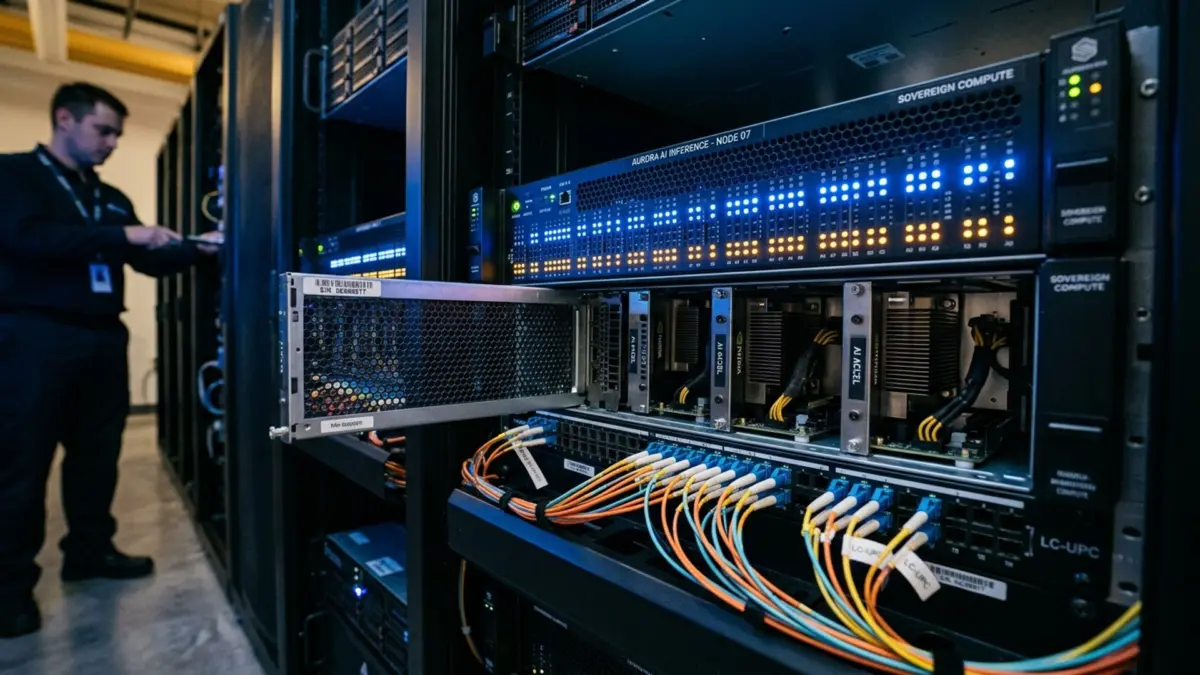
- Early 2026: SCX brings its inaugural sovereign AI inferencing node live at the Equinix SY5 data center in Sydney. Tailed as a national first, the deployment establishes a domestic blueprint for high-density, onshore AI compute.
- May to July 2026: Commercial traction accelerates rapidly. SCX reports its contracted annual recurring revenue (ARR) climbing to $6.5 million by the end of July—a robust 20.9% increase over a two-month span—bolstered by a growing roster of over 400 active enterprise and institutional users.
- August 21, 2026: SCX makes history on the Australian Securities Exchange (ASX: SCX), becoming the country’s first pure-play, publicly traded sovereign AI inference infrastructure company. Founder and CEO David Keane successfully executes a fully underwritten $40 million IPO, ear-marking capital specifically for aggressive node expansion, talent acquisition, and hardware procurement.
- August 24, 2026: Just 72 hours after ringing the bell on the ASX, SCX announces its enterprise-grade partnership with DDN. The integration pairs SCX’s application-specific integrated circuit (ASIC) infrastructure with DDN’s Infinia data platform, effectively removing the input/output (I/O) bottlenecks that threaten to choke high-concurrency agentic workloads.
The Hardware Underneath: Betting on ASICs and Air-Cooling Over GPUs
The most technically provocative element of SCX’s market thesis is its deliberate rejection of the ubiquitous Graphics Processing Unit (GPU) hegemony led by companies like NVIDIA. Rather than stacking racks of power-hungry, water-cooled GPUs, SCX’s architecture runs on purpose-built SambaNova SN40L AI processors.
The Efficiency Advantage of Custom Silicon
SambaNova’s dataflow architecture uses ASICs designed specifically to optimize deep learning inference. By routing data through reconfigurable functional units rather than traditional von Neumann processing loops, the system minimizes memory movement—the primary culprit behind latency and high energy consumption in transformer-based models.
SCX’s pre-listing testing data reveals striking efficiency metrics. Across selected stable inference workloads, the company’s SambaNova-based systems delivered roughly 2.5 to 5.6 times the performance per watt of comparable GPU-based configurations, depending on the specific model architecture and hardware setup.
While these are vendor-disclosed figures from an enterprise championing its own hardware stack, the engineering logic aligns with the realities of modern data centers. Australia—like much of the developed world—faces tightening constraints on grid power availability and water consumption. Traditional AI clusters demand massive liquid-cooling loops and megawatt-scale power supplies that can overwhelm legacy commercial facilities. SCX’s infrastructure is entirely air-cooled, allowing it to extract dramatically more usable AI compute out of the physical footprint and power envelopes available within existing commercial data centers like Equinix SY5.
Eliminating I/O Bottlenecks with DDN Infinia
Raw compute is only half the equation. As LLMs evolve from simple text-in, text-out query engines into complex, multi-step "agentic" systems that process massive context windows, the data layer quickly becomes the primary system bottleneck.
To prevent these high-throughput workloads from stalling, SCX integrated DDN’s Infinia data platform. According to DDN, Infinia delivers sub-millisecond latency and enables up to 27-times faster KV (Key-Value) cache loading.
In transformer models, the KV cache stores the intermediate calculations of previous tokens so the model doesn’t have to recompute them for every new word generated. By drastically accelerating KV cache retrieval, DDN’s architecture ensures that memory starvation never compromises the raw processing power of the SambaNova ASICs. The result is a seamless pipeline that drives up hardware utilization, slashes latency, and fundamentally lowers the cost per token served to the end user.
Supporting Context, Metrics, and Strategic Intent
The timing and architecture of the SCX-DDN joint offering are calibrated to meet specific market demands in Australia, where enterprise adoption of generative AI has outpaced local infrastructure maturity.
Financial and Operational Snapshot
- IPO Capital Raised: $40 million (fully underwritten, finalized August 21, 2026).
- Contracted ARR: $6.5 million as of July 31, 2026 (representing a 20.9% jump since May).
- Active User Base: 400+ enterprise, government, and research entities.
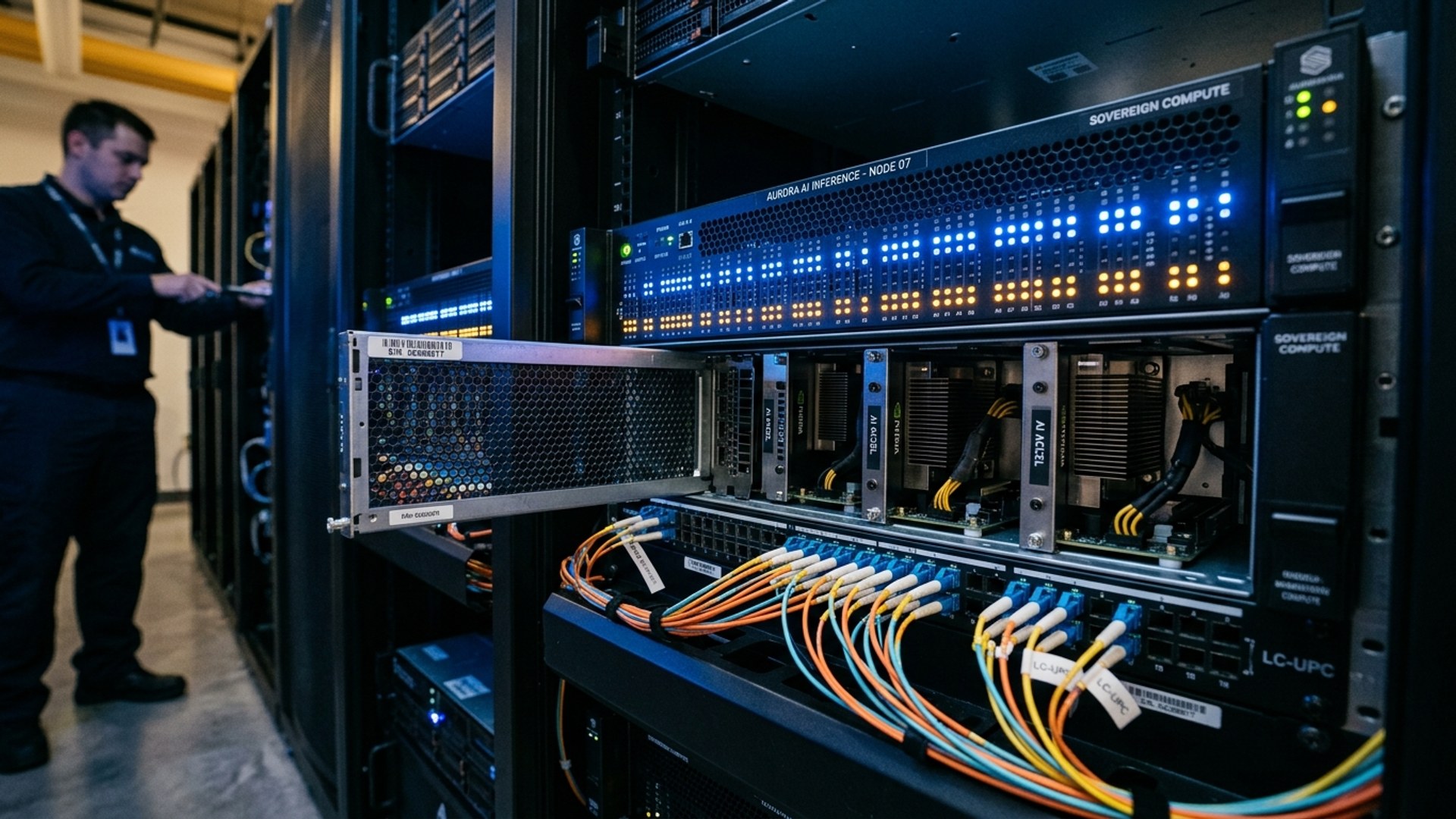
- Flagship Deployment: Equinix SY5 Data Center, Sydney (Node 1 operational; Node 2 targeted for late 2026).
- Core Technology Stack: SambaNova SN40L ASICs + DDN Infinia Data Platform.
Project MAGPiE and Cultural Context
Beyond generic enterprise workloads, SCX’s expanded capacity is foundational to Project MAGPiE. This initiative is dedicated to developing and fine-tuning sovereign large language models tailored explicitly to the linguistic, legal, cultural, and commercial nuances of the Australian market. Foreign-trained foundational models often struggle with domestic idioms, regulatory frameworks, and Indigenous or regional contexts. A localized model trained on onshore infrastructure ensures cultural fidelity alongside data safety.
Official Statements and Industry Perspectives
The leadership teams from both SCX and DDN emphasized that this partnership is not merely a technical integration, but an economic and strategic turning point for the region.
"For the first time, Australian organisations have access to a fully domestic, enterprise-grade AI cloud that scales effortlessly," stated David Keane, Founder and CEO of SCX. "By integrating DDN’s world-class data platforms into our architecture, we are ensuring that our infrastructure can handle the most data-intensive workloads on the planet without compromising on speed or security."
Echoing this sentiment, Sven Oehme, CTO of DDN, highlighted the economic implications of solving data-layer latency:
"By eliminating I/O bottlenecks and enabling extreme concurrency with sub-millisecond latency, we’re fundamentally changing the economics of inference—delivering higher utilization, lower cost per token, and true enterprise-grade sovereignty."
Why Sovereignty is the Ultimate Selling Point
To view the SCX-DDN alliance strictly through a lens of hardware efficiency is to miss half the picture. The most powerful driver behind SCX’s business model is legal sovereignty.
Unlike the European Union, which operates under stringent, comprehensive privacy frameworks like GDPR, Australia lacks a unified, all-encompassing domestic data residency statute. More critically, foreign legal frameworks—most notably the United States CLOUD Act (Clarifying Lawful Overseas Use of Data Act)—allow American law enforcement and intelligence agencies to compel US-headquartered technology providers to hand over data stored on servers anywhere in the world, including physical nodes located inside Sydney.
For Australian federal departments, defense agencies, major financial institutions, and healthcare providers handling patient records, this extraterritorial legal exposure represents an unacceptable operational risk. Simply relying on foreign hyperscalers that happen to operate regional data centers in Australia does not insulate local entities from foreign subpoenas.
SCX positions itself directly in this compliance gap. By operating as a locally owned, independent entity utilizing sovereign infrastructure, SCX establishes an unassailable legal and operational boundary. This mirrors global sovereign AI movements seen in regions like the Middle East—such as partnerships formed by Mistral and HUMAIN in Saudi Arabia—where governments are aggressively drawing new trust boundaries around where their national intelligence is processed and stored.
Future Outlook: The Road Ahead for SCX
With its first node fully operational at Equinix SY5 and its status as a publicly traded entity cemented, SCX is wasting no time converting its $40 million war chest into physical infrastructure.
The immediate corporate horizon focuses heavily on the deployment and activation of Node 2, which remains on schedule to go live by the end of 2026. This expansion will further distribute computational load across a national sovereign network, providing the high-availability redundancy required by mission-critical government and enterprise contracts.
As generative AI matures from an experimental novelty into an embedded operational utility, the economics of inference will dictate market winners and losers. By pairing energy-efficient SambaNova ASICs with DDN’s ultra-low-latency Infinia data platform—all wrapped in a legally secure, onshore operational model—SCX.ai has staked a formidable claim. For Australian enterprises seeking to scale their AI ambitions without sacrificing data integrity or blowing out their power budgets, the nation’s largest sovereign AI cloud is officially open for business.

