
Executive Overview
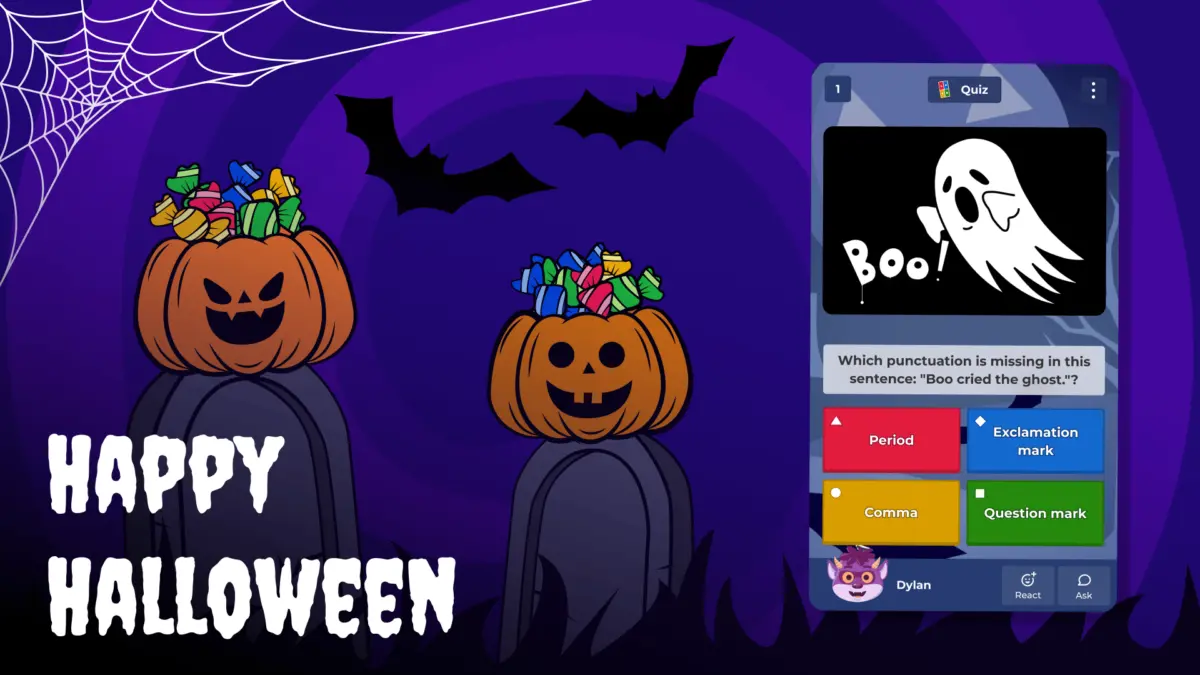
As the autumn leaves fall and the air turns crisp, schools, households, and workplaces around the globe brace themselves for the annual celebration of ghosts, ghouls, and goblins. Halloween has long been a cultural touchstone defined by costumes, candy, and community festivities. However, in the modern digital era, this seasonal celebration is undergoing a profound pedagogical transformation. Far from being a mere distraction from academic rigor, the weeks leading up to October 31st are increasingly being leveraged by educators, parents, and lifelong learners as a powerful catalyst for engagement.
At the forefront of this digital shift is Kahoot!, the global game-based learning platform. By blending high-stakes interactive trivia, curriculum-aligned content, and universally beloved pop-culture franchises—ranging from Star Wars and Marvel to Disney and Nickelodeon—Kahoot! has engineered a robust library of ready-made Halloween learning modules. This initiative addresses a perennial challenge faced by teachers and parents alike: maintaining student motivation and cognitive momentum during a period historically marked by restlessness and distraction.
This comprehensive report examines how Kahoot!’s curated Halloween collections are reshaping educational delivery across classrooms, living rooms, and study halls. By analyzing the strategic partnerships with institutional giants like TED-Ed, the Museum of Science, and the World Wildlife Fund (WWF), alongside entertainment powerhouses, we explore how gamified learning bridges the gap between entertainment and academic achievement. Furthermore, we evaluate the implications of these interactive interventions for student retention, emotional literacy, and community-building during the autumnal academic stretch.
Detailed Chronology and Evolution of Gamified Seasonal Learning
The integration of gamification into mainstream education is not an overnight phenomenon, but rather the culmination of decades of research into cognitive psychology, digital native behavior, and interactive media. To understand the significance of Kahoot!’s current seasonal initiatives, it is necessary to trace the developmental timeline of how digital platforms transformed holiday-themed education from static worksheets into dynamic, real-time multiplayer experiences.
The Era of Static Seasonal Printables (Pre-2010s)
For generations, seasonal teaching materials were largely uniform and paper-based. Teachers relied on photocopied activity sheets featuring pumpkin mazes, word searches derived from folklore vocabulary, and arithmetic problems decorated with cartoon witches. While these materials provided a festive atmosphere, they suffered from inherent limitations:
- Passive Engagement: Students interacted with the material individually, lacking the dynamic, competitive, and social adrenaline rush of modern multiplayer platforms.
- Delayed Feedback Loops: Teachers had to collect, grade, and return papers, delaying the moment of pedagogical reinforcement.
- Limited Accessibility: Customizing content for diverse learning needs required substantial manual labor and resource allocation from educators.
The Rise of Digital Interactivity and Gamification (2010–2018)
As interactive whiteboards, tablets, and BYOD (Bring Your Own Device) policies penetrated classrooms worldwide, educational software developers began exploring ways to digitize quiz formats. Kahoot!’s launch in 2013 marked a watershed moment, introducing game-based response systems that transformed classrooms into game arenas. During this period, Halloween content began shifting from static digital PDFs to basic, user-generated digital quizzes. However, these early digital quizzes were often fragmented, lacking alignment with specific national curriculum standards or high-production-value graphics.
The Institutional Partnership Era and Curated Collections (2019–Present)
The modern phase of seasonal learning is characterized by high-profile collaborations between tech platforms and globally recognized educational, scientific, and media institutions. Recognizing the immense potential of pop-culture synergy, Kahoot! began curating master collections in partnership with organizations such as:
- TED-Ed: Bringing narrative-driven historical inquiry (e.g., the Salem Witch Trials, Dracula) directly into gamified modules.
- The Museum of Science & SciShow Kids: Integrating rigorous STEM curricula—such as lunar phases and ecological studies—into visually compelling autumnal frameworks.
- WWF Wild Classroom: Humanizing and demystifying misunderstood wildlife (bats, spiders, owls) to foster ecological empathy disguised as seasonal frights.
- Major Entertainment Studios (Disney, Marvel, Sanrio, Nickelodeon, Lucasfilm): Leveraging universally recognized intellectual properties to lower the barrier to entry for foundational skills such as numeracy, literacy, and emotional regulation.
Today, this chronology culminates in an ecosystem where a student in Tokyo, Toronto, or Toledo can engage with identical, high-production-value pedagogical tools simultaneously, proving that seasonal celebrations can serve as uniform global classrooms.
Supporting Context & Metrics: Pedagogical Impact and User Demographics
To evaluate the true efficacy of Kahoot!’s Halloween educational offerings, one must examine the intersection of cognitive science, student engagement metrics, and institutional adoption rates. Gamified learning platforms derive their power from specific neurological mechanisms: dopamine release associated with point-scoring and leaderboards, social bonding through shared digital spaces, and low-stakes failure loops that encourage resilience.
For Teachers: Bridging Curiosity and Core Curricula
Classroom management during October is notoriously demanding. The anticipation of festivities often leads to fractured attention spans. Kahoot!’s strategy relies on weaponizing this heightened state of curiosity rather than fighting it.

- Multidisciplinary Reach: By embedding core concepts across science, math, history, and language arts into themed collections (such as the Halloween with Nickelodeon channel or TED-Ed’s historical deep-dives), teachers can cover mandated curricular objectives without sacrificing the festive mood.
- Formative Assessment: Educators utilize these sessions not merely as time-fillers, but as diagnostic tools. Instant analytics dashboards provide teachers with real-time insights into which concepts (e.g., fractions, historical dates, scientific hypotheses) require further review before upcoming mid-term examinations.
For Parents: Eradicating Math Anxiety at Home
For parents, the challenge often lies in convincing children to practice foundational skills—such as counting, addition, subtraction, and reading comprehension—outside of school hours. The integration of beloved characters fundamentally alters this dynamic:
- Cognitive Reinforcement via Familiarity: Utilizing platforms featuring Sanrio’s Hello Kitty and Friends or Marvel’s Groot transforms intimidating math puzzles into narrative-driven adventures. When young learners practice subtraction in the context of helping a favorite character solve a "monster math" challenge, the emotional resistance associated with homework diminishes.
- Emotional Literacy: Collections such as It’s the Great Pumpkin, Charlie Brown (developed in partnership with Peanuts and Apple TV) address psychological and emotional milestones. These modules guide children through complex emotional landscapes, such as coping with disappointment, embracing imagination, and navigating social expectations, thereby bolstering emotional intelligence alongside cognitive skills.
For Students and Lifelong Learners: Maintaining Momentum
Exam season frequently coincides with the late autumn months, making student burnout a critical risk factor.
- STEM Mastery Through Seasonal Science: Collections from the Museum of Science (such as Why Does the Moon Change?, produced in partnership with SciShow Kids) connect celestial mechanics to ancient folklore regarding wolves, the moon, and the night sky.
- Advanced Lexical Expansion: Platforms like Wiktionary contribute advanced linguistic challenges—such as Wicked words for Halloween (hard)—challenging high school and adult learners to master obscure, evocative English vocabulary. This proves that gamified learning is scalable across all developmental stages, extending well into corporate team-building events and adult social gatherings.
Official Statements and Institutional Perspectives
The convergence of entertainment IP and rigorous educational frameworks has attracted commentary from leading figures across the technology, education, and media sectors. While specific remarks vary across seasonal rollouts, the overarching corporate and educational philosophy emphasizes accessibility, engagement, and the democratization of high-quality learning resources.
Industry analysts note that platforms like Kahoot! have successfully redefined edtech by moving away from solitary, drill-and-practice software toward collaborative, social-first learning environments. By partnering with cultural institutions, these platforms lend academic credibility to digital play, reassuring skeptical school boards and parent-teacher associations that screen time can be both productive and intellectually stimulating.
Furthermore, representatives from institutional partners—including conservationists from the WWF and science communicators from the Museum of Science—have frequently highlighted the utility of seasonal hooks. By leveraging public fascination with the macabre, educators can correct persistent ecological misconceptions (for instance, highlighting that bats and spiders are critical components of healthy global ecosystems rather than mere movie monsters). This transforms popular culture into a vehicle for scientific literacy and environmental stewardship.
Future Outlook: The Trajectory of Seasonal Educational Technology
As we look toward the future of educational technology, several key trends are poised to shape how platforms like Kahoot! approach seasonal learning content:
1. Hyper-Personalization and Adaptive Learning Algorithms
Future iterations of seasonal educational games will likely incorporate advanced adaptive learning algorithms. Instead of a linear quiz experience, future Halloween modules will dynamically adjust difficulty levels in real-time based on an individual student’s performance metrics, ensuring that advanced learners are challenged while struggling learners receive targeted scaffolding.
2. Immersive and Mixed-Reality Integration
As augmented reality (AR) and virtual reality (VR) hardware becomes more prevalent in educational institutions, seasonal learning will transcend the two-dimensional screen. Imagine a classroom where students use AR devices to interact with 3D historical reconstructions of the Salem Witch Trials or manipulate lunar phases directly on their desks, merging gamified trivia with spatial computing.
3. Expansion of Lifelong and Corporate Learning Markets
While K-12 education remains the foundational anchor for gamified platforms, the corporate and adult social sectors represent rapidly expanding frontiers. Organizations increasingly utilize interactive trivia platforms for team-building, corporate wellness, and onboarding during cultural milestones. Seasonal modules—ranging from historical trivia via Wikipedia to intergalactic pop-culture challenges like Star Wars: Happy Ghoul-actic Halloween—demonstrate that play is a universal human driver across all stages of life.
Conclusion
Kahoot!’s comprehensive suite of Halloween learning resources exemplifies the modern evolution of educational media. By skillfully weaving together pop-culture icons, rigorous academic standards, and the universal appeal of seasonal festivity, the platform has proven that learning and fun are not mutually exclusive. Whether utilized by a burnt-out high schooler reviewing STEM concepts, a primary school teacher managing an energetic classroom, or a family gathered around a tablet on a crisp autumn evening, these digital interventions ensure that curiosity remains alive, well, and delightfully spooky all year long.

