
Executive Overview
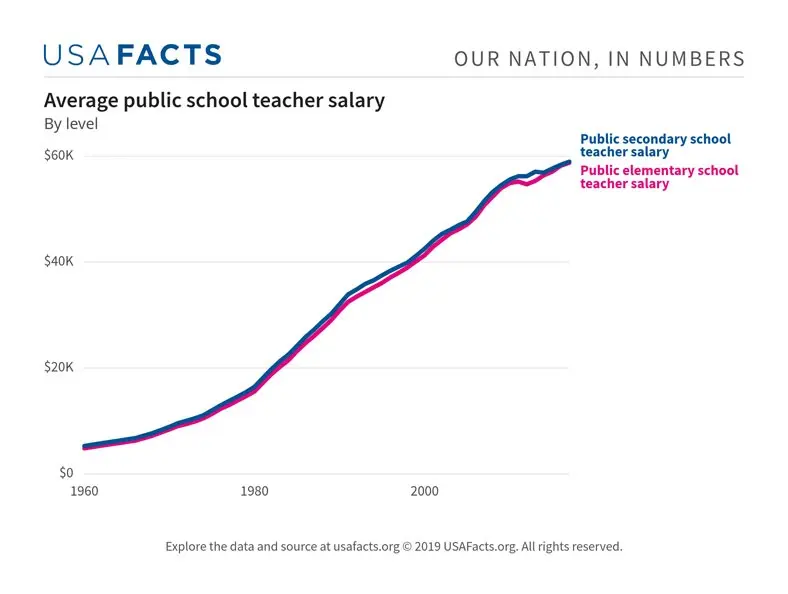
For decades, the public narrative surrounding the education sector has highlighted a persistent, systemic challenge: the widening chasm between the immense responsibilities demanded of K–12 educators and the compensation they receive. While base salaries are dictated by rigid state schedules, local district policies, and years of service, the rising cost of living—spanning housing, childcare, and everyday necessities—leaves many educators searching for supplementary revenue streams.
According to data from the U.S. Bureau of Labor Statistics (BLS) and employment projections, while teaching remains a cornerstone public service complete with health benefits, pensions, and paid leave, these structural perks often fall short of meeting immediate financial obligations. Consequently, a growing number of educators are turning to side hustles.
However, teacher burnout is a documented reality. The modern educator cannot simply take on any extra job; the chosen venture must respect the boundaries of a demanding school calendar, capitalize on preexisting pedagogical skills, and fit strategically into the rare pockets of free time afforded by evenings, weekends, and summer breaks. This report examines the economic realities of the modern teaching profession, details the ten most effective and sustainable side hustles for educators, and provides a strategic blueprint for balancing supplemental income with professional longevity.
Detailed Chronology: The Evolution of the Educator’s Economy
The economic landscape for American teachers has undergone a profound transformation over the last generation. Understanding how educators arrived at the current crossroads of needing secondary income requires examining the timeline of financial pressures and digital adaptation:

- The Pre-Digital Era (Late 20th Century): For decades, traditional summer and evening work for teachers was largely confined to localized, physical labor. Educators spent their summers working as camp counselors, community pool lifeguards, or local parks and recreation coaches. Evening work typically meant localized moonlighting, such as retail shifts or teaching night school classes for adult education programs.
- The Rise of the Digital Marketplace (Early 2010s): The advent and explosive growth of online marketplaces revolutionized supplemental income. Platforms like Teachers Pay Teachers (TpT) emerged, allowing educators to monetize their lesson plans, worksheets, and classroom assessments on a global scale. Concurrently, early online tutoring networks began shifting academic support from physical kitchen tables to virtual video calls.
- The Remote Learning Catalyst (2020–2022): The COVID-19 pandemic permanently altered the educational technology landscape. As school districts transitioned to remote learning, teachers rapidly mastered digital infrastructure, video conferencing software, and asynchronous content delivery. This technical upskilling inadvertently lowered the barrier to entry for digital side hustles, transforming virtual tutoring, course creation, and freelance educational content writing from niche ventures into mainstream opportunities.
- The Post-Pandemic Economic Reality (2024–Present): Today, educators face an economy defined by high inflation coupled with stagnant base salary growth in many regions. At the same time, the digital economy offers unprecedented flexibility. Teachers are no longer bound by geographic constraints when seeking extra income; they can leverage their expertise internationally via asynchronous courses, specialized consulting, and digital asset storefronts.
Supporting Context & Metrics: Analyzing Teacher Compensation
To understand why side hustles have evolved from casual hobbies into financial necessities for many, one must analyze the hard data regarding teacher compensation, job outlooks, and market realities.
National Wage and Employment Metrics (BLS Data)
National salary figures published by the U.S. Bureau of Labor Statistics illustrate the baseline financial landscape for educators:
| Occupation | Median Annual Wage (May 2025) | Job Growth Projections (2024–2034)* | Projected Annual Openings |
|---|---|---|---|
| Elementary School Teachers | $63,970 | -2.0% | ~91,000 |
| Middle School Teachers | $64,370 | -2.0% | Not specified |
| High School Teachers | $72,040 | -1.6% | ~66,200 |
*Note: Job growth projections are sourced from Projections Central (2024–2034 data).
While high school teachers at the 90th percentile earned approximately $107,600 as of May 2025, these figures rarely reflect early-to-mid career realities, nor do they account for geographic disparities where state funding formulas leave local districts struggling to pay competitive wages. Although employment across these categories is projected to decline slightly by roughly 1.6% to 2.0% over the decade, substantial structural turnover—driven by retirements and career transitions—will continue to generate tens of thousands of annual job openings.
The True Cost of Living Gap
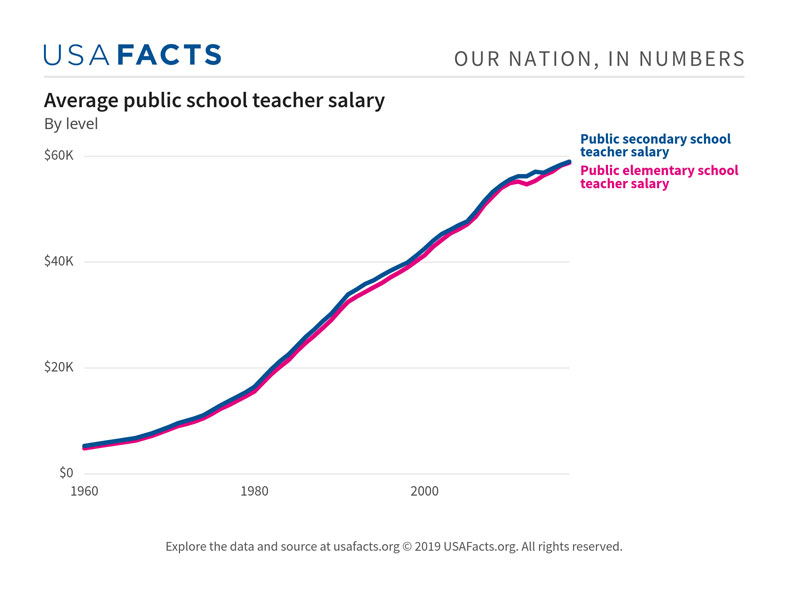
Salary data only tells part of the story. Most school districts offer vital benefits packages, including health insurance, retirement matches, and pensions, which cannot be easily replaced by freelance work. However, these benefits do not automatically cover immediate cash-flow deficits. When faced with mounting mortgage rates, vehicle financing, and exorbitant childcare expenses, teachers frequently find that base salaries leave little room for error. This financial squeeze is what drives educators to seek out side ventures carefully calibrated to their unique professional calendars.
The 10 Best Side Hustles for Teachers
When evaluating secondary income opportunities, educators must ask three foundational questions: What do I already know how to do? What time do I realistically have available? and Am I looking for immediate, transactional cash or a scalable asset that builds long-term passive income?
Here are the ten most viable side hustles mapped specifically to the skills and schedules of working teachers:
1. Tutoring and Academic Coaching
Tutoring remains the most direct bridge between classroom expertise and financial compensation. Whether executed in-person, through virtual platforms, or via high-stakes test prep, tutoring allows educators to dictate their hourly rates based on their specialized subject knowledge. Furthermore, English as a Second Language (ESL) tutoring opens global markets, allowing teachers to connect with international students during flexible evening or early morning hours. This is the fastest hustle to operationalize, often requiring nothing more than a subject profile, a set rate, and an open calendar slot.

2. Curriculum Development and Lesson Planning
For educators who pride themselves on crafting engaging classroom materials, digital storefronts like Teachers Pay Teachers (TpT), Etsy, or a personal website offer a compelling value proposition: build the asset once, and sell it repeatedly. While building a digital following takes time and consistent effort, this model generates passive income long after the initial creation phase is complete, making it ideal for teachers who want to monetize their existing lesson plans without trading active hours for dollars.
3. Online Teaching and Course Creation
Platforms such as Udemy and Teachable empower educators to package their pedagogical skills into comprehensive, asynchronous video courses. Creating a structured online course requires a significant upfront investment of time during summer break or weekends, as it involves scripting, recording, and editing educational modules. However, once published, these courses operate entirely on autopilot, removing the need for live, real-time hours and capitalizing on the ever-growing global demand for remote learning.
4. Freelance Writing and Content Creation
Writing and content creation offer rapid payouts and do not strictly require the author to focus on education. Job boards are constantly flooded with short-turnaround freelance gigs in copywriting, blogging, and technical writing. For teachers who possess strong communication skills but wish to step away from academic subject matter during their off-hours, avenues like stock photography, graphic design via Canva, or digital blogging provide creative outlets that yield steady supplementary income.
5. Educational Consulting for Homeschooling Families
The homeschooling movement has expanded exponentially, giving rise to a demographic of parents actively seeking professional guidance. Part-time educational consulting involves helping families track academic progress, design customized scopes and sequences, and coordinate social enrichment activities. This venture is a natural extension for experienced teachers who understand curriculum alignment and prefer steady, retainer-based client relationships over sporadic, one-off tutoring sessions.

6. Arts, Crafts, and Handmade Goods
For educators with a creative flair, physical crafts represent a low-risk commercial entry point. Platforms like Etsy charge minimal listing fees (such as $0.20 per listing), making it inexpensive to test whether handcrafted classroom decor, custom teacher accessories, or specialized printables have a viable market before investing substantial time and capital into inventory.
7. Coaching and Extracurricular Activities
School districts, local municipal recreation departments, and private athletic clubs perpetually seek qualified coaches and youth mentors. Teachers who already manage athletic teams or academic clubs during the academic year can easily extend their expertise into summer leagues, swimming instruction, or community camp programs. Once a local reputation is established, private coaching sessions can be scheduled at premium rates.
8. Summer School and Camp Counseling
For educators who prefer structured institutional environments, teaching summer school within their own district provides a seamless continuation of the school year—utilizing familiar curricula, trusted colleagues, and known students for enhanced pay. Alternatively, camp counseling offers a refreshing departure from academic rigors, providing an active, outdoor environment that serves as a genuine mental break from the traditional classroom routine.
9. Short-Term Rentals
For teachers who own property with a spare room, a guest house, or an empty apartment during extended travel or family moves, short-term rental platforms like Airbnb can transform idle square footage into consistent revenue. While managing a short-term rental requires operational overhead—including guest turnover, cleaning, and specialized insurance—it can produce substantially higher returns than traditional gig-economy jobs.

10. Delivery and Rideshare Driving
As the most flexible entry on this list, delivery and rideshare driving allow educators to monetize micro-windows of free time—such as a vacant afternoon planning period or a Friday evening. Requiring only a reliable vehicle, standard insurance, and an appetite for independent work, rideshare and food delivery apps impose zero scheduling constraints, letting drivers log on and off entirely at their own discretion.
Official Statements and Professional Insights
Navigating the delicate balance between a full-time teaching career and secondary employment requires professional foresight. According to Amanda R. Castillo, M.Ed., an education writer and former K–12 educator with over 12 years of classroom experience:
"Working teachers have already mapped out which side hustles are worth a colleague’s limited time and which ones just eat into a weekend for a little cash. Most teachers who take on a side hustle manage to fit it in without it swallowing the rest of their week—the ones who burn out are usually the ones who never set a limit in the first place."
Castillo emphasizes that while side hustles are effective stopgap solutions for short-term financial pressures, educators must remain cognizant of the broader trajectory of their careers:

"A side hustle helps in the short term, but a master’s degree, an added endorsement, or a leadership credential raises your base pay year after year instead. The programs built for working teachers offer online and evening formats designed to secure long-term financial growth without sacrificing immediate employment."
Future Outlook: Sustainability, Boundaries, and Long-Term Strategy
The modern side hustle economy for teachers is not a temporary fad; it is a permanent fixture shaped by digital connectivity, flexible remote learning models, and evolving economic pressures. However, entering this space requires careful risk management.
Avoiding Burnout and Navigating Conflicts of Interest
The most hazardous pitfall for an educator is professional burnout. A side hustle that drains the physical and emotional reserves required for the primary classroom is ultimately counterproductive. Furthermore, ethical considerations must be weighed: tutoring one’s own current students can present clear conflicts of interest, regardless of whether strict district policies prohibit it.
Strategic Recommendations for Educators
- Set Hard Time Boundaries: Allocate specific, non-negotiable hours for side work. If a tutoring session or freelance project begins encroaching on rest and family time, scale back immediately.
- Prioritize Long-Term Professional Development: Treat short-term side hustles as financial bridges, but prioritize acquiring advanced degrees, state endorsements, or administrative credentials that permanently elevate base teaching salaries.
- Leverage Professional Networks: Rely on trusted referrals through local teacher associations, colleague networks, and educational co-ops rather than engaging in cold outreach, ensuring higher-paying, pre-vetted opportunities.
Ultimately, a side hustle should serve as a practical tool to support a teacher’s livelihood, not a trap that eclipses the rewarding, foundational work of educating the next generation. By approaching supplemental income with clear boundaries, strategic planning, and professional discernment, educators can successfully bridge the economic gap while maintaining their passion for the classroom.

