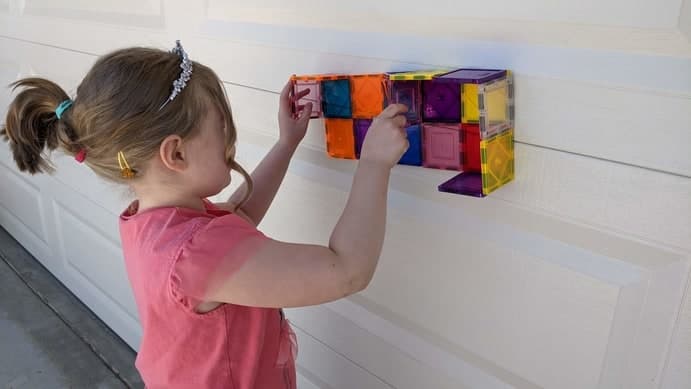
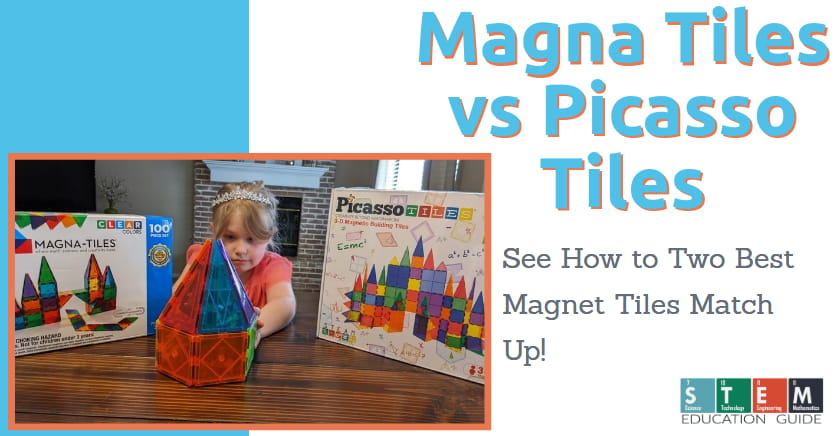
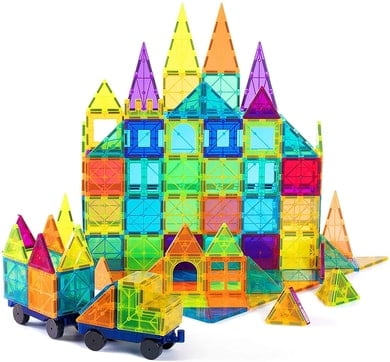
For decades, magnetic building tiles have reigned supreme as a staple of early childhood play and STEM (Science, Technology, Engineering, and Math) education. Coveted by parents, educators, and developmental psychologists alike, these toys offer an exceptional medium for open-ended, imaginative construction. At the forefront of this market has long been the brand-name pioneer: Magna-Tiles. Celebrated for their durability, simple geometric shapes, and intuitive design, Magna-Tiles provide endless opportunities for children to build everything from towering skyscrapers to intricate geometric sculptures.
However, a closer look at the toy industry reveals a significant barrier to entry for many families: cost. While parents are generally more than willing to invest in high-quality educational products, the price point of original Magna-Tiles can quickly become prohibitive, especially when children outgrow starter kits and express a desire to expand their creations. Because branded sets rarely go on sale—largely due to strict minimum advertised pricing (MAP) policies enforced by manufacturers—scaling up a collection can cost hundreds of dollars.
This financial friction has sparked a booming secondary market of high-grade alternatives, generic brands, and compatible knock-offs. Far from being cheap or unsafe imitations, many of these alternative brands—such as PicassoTiles, Cossy, Shapemags, and Magblock—meet stringent international safety standards, utilize durable food-grade ABS plastics, and offer seamless cross-brand compatibility.
This investigative review explores why original Magna-Tiles command such a steep price, examines how leading competitors stack up in rigorous side-by-side durability and design tests, and provides an authoritative breakdown of the best affordable magnetic tile alternatives available on the market today.
Detailed Chronology: The Evolution of Magnetic Building Toys
To understand the modern landscape of magnetic construction toys, one must trace their origins back to the late 20th century.
1997: The inception of the modern magnetic tile market began when the original Magna-Tile product was developed and brought to market. Invented as an innovative tool to introduce young children to spatial reasoning and basic geometry, these magnetic shapes quickly gained traction in progressive classrooms and specialty toy stores. Being first to market granted the brand an invaluable advantage, allowing it to establish itself as the gold standard of the industry.
The 2000s: As the patent landscape evolved and manufacturing techniques for ultrasonic welding of plastics became more widespread, competitor brands began to emerge. Early entrants recognized that the underlying mechanics—housing neodymium magnets securely inside translucent, colorful plastic shells—could be replicated safely by other toy manufacturers.
The 2010s: This decade saw an explosion of alternative brands entering the global marketplace, largely fueled by e-commerce platforms like Amazon. Competitors such as PicassoTiles and Cossy entered the fray, undercutting the market leader on price while offering innovative variations, such as higher transparency levels, vibrant color palettes, and specialized architectural elements like arched doorways, windows, and vehicle chassis.
Present Day: Today, the market for magnetic tiles represents a multi-million-dollar segment within the broader STEM toy industry. While brand loyalty to Magna-Tiles remains strong, consumer advocacy groups, parenting publications, and testing bodies like the Good Housekeeping Institute routinely highlight that budget-friendly alternatives match, and in some cases exceed, the versatility of the original brand.
Supporting Context & Metrics: Why Are Magna-Tiles So Expensive?
When consumers purchase a box of original Magna-Tiles, they are often paying a significant premium for brand equity. However, brand name is only part of the equation. Understanding the economics of these toys requires examining the manufacturing processes, safety certifications, and structural differences that define the category.
Material Composition and Safety Standards
Both branded and off-brand magnetic tiles are typically manufactured using Acrylonitrile Butadiene Styrene (ABS) plastic. ABS is chosen for its high impact resistance, toughness, and safety profile. However, to sell children’s toys in major markets, brands must comply with rigorous safety protocols, such as ASTM F963 (the U.S. standard for toy safety) and EN71 (the European equivalent).
These standards ensure that:
Magnet containment is secure: Neodymium magnets are powerful and, if swallowed, can cause severe internal injuries. High-quality tiles use industrial ultrasonic welding to seal the plastic edges, preventing magnets from dislodging even under heavy stress.
Materials are non-toxic: Plastics must be free of harmful plasticizers, lead, and phthalates.
Independent testing organizations, including the Good Housekeeping Institute, frequently note that while Magna-Tiles maintain exceptionally rigid structural integrity during stress tests (such as being dropped or stepped on), several generic and alternative brands utilize identical ABS formulations and ultrasonic sealing techniques, achieving comparable durability at a fraction of the cost.
The Pricing Paradox and Retail Restraints
Why do sales on original Magna-Tiles feel virtually non-existent? The answer lies in retail distribution strategies. Many premium toy manufacturers enforce strict pricing policies across authorized retailers. This means that third-party sellers cannot arbitrarily slash prices without risking their distribution rights. Consequently, consumers seeking relief from high costs are naturally funneled toward competitive brands that operate on lower profit margins, passing the savings directly to the buyer.
The Best Magna-Tile Alternatives: Tested & Reviewed
For families looking to expand their children’s play capabilities without breaking the bank, several standout brands offer exceptional quality, safety, and cross-compatibility.
1. PicassoTiles: The Ultimate Value Champion
PicassoTiles consistently ranks at the top of independent reviews for the best overall alternative to Magna-Tiles. In side-by-side comparative testing with both Magna-Tiles and Connetix, PicassoTiles demonstrate impressive resilience, withstanding daily drops, rigorous stacking, and heavy-handed play.
Cross-Compatibility: One of PicassoTiles’ greatest strengths is its dimension matching. They integrate seamlessly with existing Magna-Tile collections, allowing children to merge old and new sets into sprawling architectural masterpieces.
Variety: From large starter kits to specialized amusement park and race track add-ons, PicassoTiles offers diverse configurations that encourage real-world engineering concepts.
2. Cossy Kids Magnetic Tiles: Vibrant Transparency
For households that prioritize visual aesthetics, Cossy magnetic tiles are a standout choice. Recognized frequently in parenting guides as a premier budget-friendly option, Cossy tiles boast high optical transparency and saturated, vibrant color profiles.
Visual Appeal: When sunlight streams through a window where a Cossy structure has been built, the high-transparency plastic illuminates the room with rich, stained-glass-like hues.
Longevity: Long-term testing confirms that Cossy tiles resist scratching and clouding remarkably well over years of continuous use, maintaining their structural soundness and magnetic snap.
3. Shapemags: Bridging Play and Literacy
Shapemags introduces an innovative educational twist to traditional construction play by incorporating specialized accessory sets, such as "StileMags."
Multidisciplinary Learning: StileMags are magnetic slips featuring letters, numbers, or pictures that snap securely onto the faces of the tiles. This transforms a standard building session into an interactive spelling, sorting, and early literacy lesson.
Expansion Ready: Available in convenient 60-piece starter sets or smaller add-on packs, Shapemags make ideal gifts for children transitioning from simple stacking to more complex, concept-driven learning.
4. Magblock Magnetic Blocks: Architectural Versatility
While most standard magnetic tile sets focus heavily on basic triangles and squares, Magblock distinguishes itself by including complex structural components directly within its standard boxes.
Built-In Architectural Elements: Magblock sets frequently include pre-formed doors, archways, and fences. This allows young builders to replicate real-world buildings, houses, and castles immediately without requiring costly supplemental expansion packs.
Comparative Brand Analysis
Brand
Price Point
Material Quality
Standout Feature
Cross-Compatible?
Magna-Tiles
Premium
Excellent (Rigid ABS)
Industry pioneer, strict quality control
Yes
PicassoTiles
Budget-Friendly
High
Great overall value and massive kit variety
Yes
Cossy
Budget-Friendly
High
High transparency and vibrant colors
Yes
Shapemags
Moderate
Good
Includes literacy/numerical "StileMags"
Yes
Magblock
Budget-Friendly
Good
Includes built-in doors, fences, and arches
Yes
Official Industry Statements & Expert Insights
Industry analysts and educational experts emphasize that the true value of magnetic tiles lies not in the logo stamped on the plastic, but in the cognitive benefits derived from open-ended play.
Dr. Elizabeth Jenkins, a specialist in early childhood cognitive development, notes:
"When children engage with magnetic construction toys, they are subconsciously mastering principles of physics, gravity, and symmetry. The specific brand of the tile is entirely secondary to the child’s agency in manipulating the shapes, testing structural limits, and solving spatial puzzles. Parents should feel completely confident exploring safe, certified alternative brands."
Furthermore, consumer advocacy groups stress that safety certifications—such as ASTM and CPSIA compliance—are mandatory for all toys legally imported and sold in major markets, ensuring that budget-friendly alternatives do not compromise on child safety.
Future Outlook: What Lies Ahead for Magnetic Construction Toys?
As manufacturing technologies continue to advance, the gap between premium heritage brands and affordable alternatives is narrowing rapidly. We can anticipate several key trends shaping the future of the magnetic toy market:
Advanced Material Innovations: Manufacturers are increasingly exploring eco-friendly bioplastics and recycled ABS compounds to reduce the environmental footprint of plastic toy production without sacrificing durability.
Smart Integration: The integration of augmented reality (AR) and sensor-embedded tiles is on the horizon. Some modern STEM kits are beginning to experiment with conductive paths and LED-embedded tiles that light up when circuits are completed magnetically.
Expanded Educational Curricula: As schools increasingly adopt play-based STEM curriculums, toy manufacturers are partnering with educators to provide standardized lesson plans, building guides, and challenge cards free of charge to parents and teachers alike.
Ultimately, whether a family chooses to invest in original Magna-Tiles or opt for versatile, cost-effective alternatives like PicassoTiles or Cossy, the underlying mission remains unchanged: fostering creativity, spatial awareness, and a lifelong love of building. For parents navigating the vast market of educational toys, the abundance of safe, high-quality alternatives proves that imagination—thankfully—has no brand loyalty.