
Executive Overview
In the rapidly evolving landscape of modern education, digital literacy has shifted from an elective luxury to a foundational necessity. As school districts, independent educators, and parents worldwide grapple with how best to prepare students for a technology-driven future, traditional pedagogical methods—such as static textbooks and passive YouTube video tutorials—are increasingly falling short. Enter CodeMonkey, an award-winning, gamified online coding platform designed to bridge the gap between abstract computer science concepts and intuitive, interactive play.
Targeting demographics ranging from preschool-aged children to eighth-grade adolescents, CodeMonkey transforms the intimidating task of learning text-based programming languages into an engaging puzzle adventure. By directing a cartoon monkey to retrieve stolen bananas through structured lines of code, students organically absorb core programming principles—ranging from simple sequential commands to complex variables, arrays, loops, and functions.
This comprehensive review examines CodeMonkey’s pedagogical framework, structural progression, curriculum offerings, and technological infrastructure. Drawing on observations from educators, homeschool parents, and developmental milestones, we explore how this platform is redefining STEM education, addressing accessibility concerns, and establishing a robust baseline for youth digital fluency.
Detailed Chronology and Structural Progression
The architectural design of CodeMonkey’s curriculum follows a carefully calculated developmental arc. Recognizing that cognitive readiness shifts dramatically between early childhood and middle school, the platform utilizes a bifurcated entry point that transitions learners seamlessly from visual scaffolding to advanced syntax-based programming.
Early Foundations: CodeMonkey Jr. and Block-Based Logic
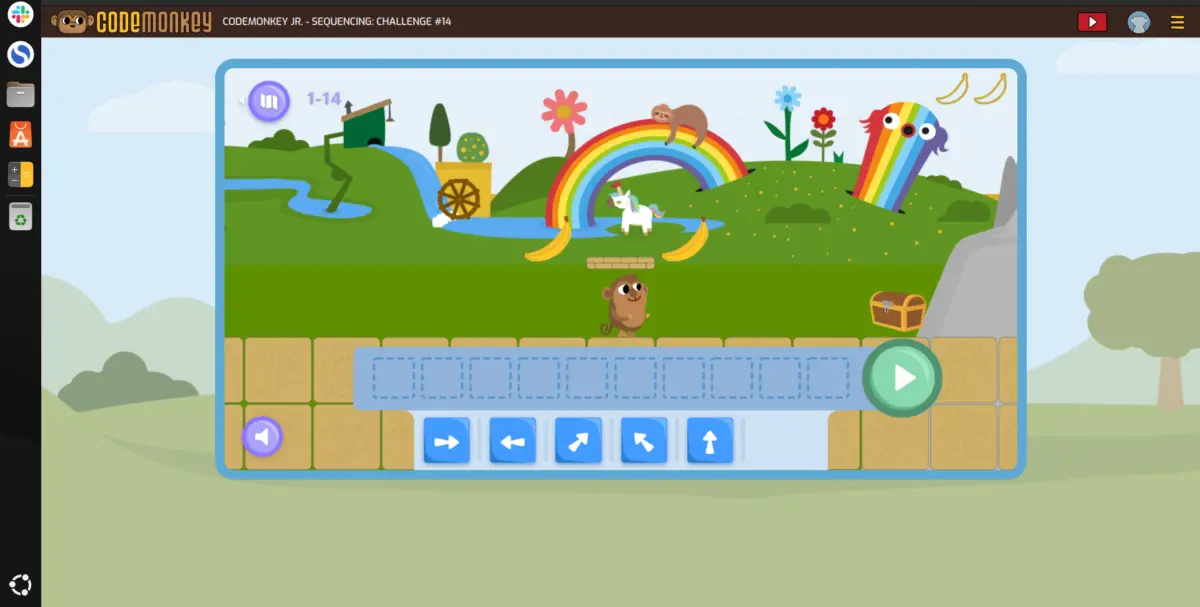
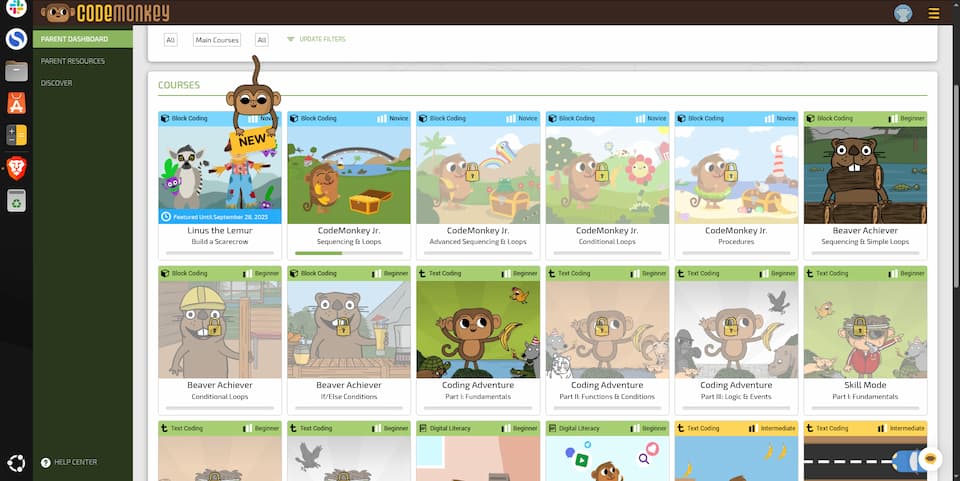
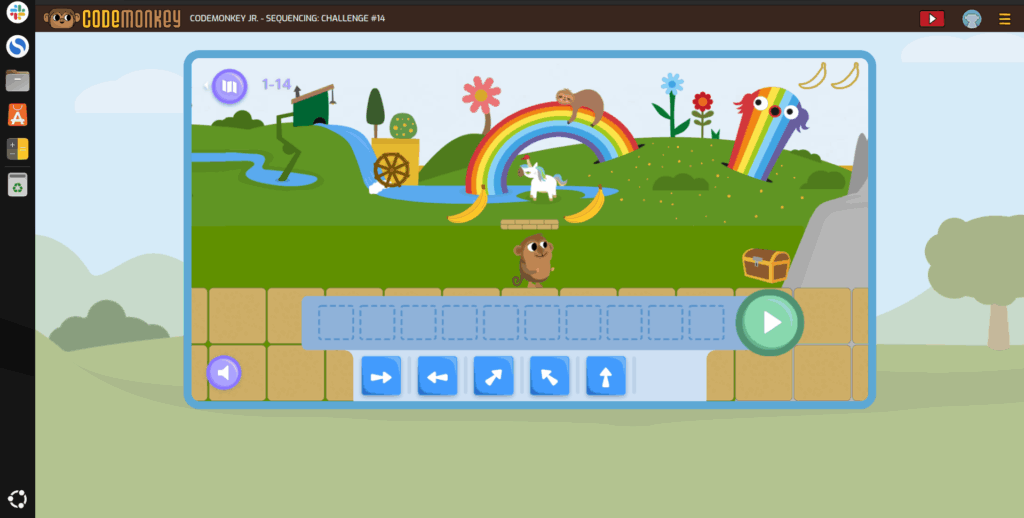
For the youngest learners—ranging from preschoolers to early elementary students—CodeMonkey introduces computational thinking through CodeMonkey Jr. Designed specifically for children who may not yet possess advanced reading comprehension skills, this module relies entirely on visual, block-based coding puzzles.
Rather than confronting raw code syntax, young children manipulate graphical blocks that represent directional commands and logical sequences. This approach cultivates early problem-solving strategies, spatial awareness, and algorithmic logic. By treating the screen like a physical grid, children internalize how instructions dictate outcomes without the cognitive overload of spelling errors or syntax strictures.
The Core Adventure: Transitioning to CoffeeScript, Python, and JavaScript
As students mature into elementary and middle school grades (extending upward through the eighth grade), they graduate to the platform’s flagship offering: Coding Adventure. This core curriculum introduces real programming languages, beginning with CoffeeScript—a streamlined language designed to compile cleanly into JavaScript—and ultimately expanding into industry-standard languages like Python and JavaScript.
Spanning nearly 400 distinct, sequential challenges, Coding Adventure gradually strips away training wheels. Students progress from writing single-line commands to constructing intricate algorithms. Each challenge requires precision: students write code, run it in real-time, and observe the monkey’s physical reaction on screen. Success is quantified through a three-star rating system, encouraging iterative refinement and debugging. If a solution is inefficient or incorrect, students are prompted to analyze their logic, rewrite their code, and test it again.
Beyond pre-made puzzles, advanced students gain access to the Game Builder tool. This environment liberates learners from structured problem sets, inviting them to apply their accumulated knowledge to build, customize, and share their own playable video games, thereby fostering creative expression alongside technical mastery.
Supporting Context & Core Programming Metrics
To evaluate CodeMonkey’s efficacy as an educational tool, one must analyze the specific computer science concepts embedded within its curriculum. Far from being a superficial "edutainment" game, the platform systematically addresses foundational pillars of software engineering.
1. Loops and Functions: Automating Efficiency
A central tenet of programming is reducing redundancy. CodeMonkey instills this principle early through the introduction of loops. Rather than forcing a student to write repetitive movement commands fifty times to cross a grid, the platform teaches them to encapsulate those actions inside a loop structure.
- The Real-World Analogy: As educators often explain, it is the computational equivalent of telling a child to clean up a room once using a repetitive command, rather than scripting every single motion individually.
Building upon loops, students encounter functions—reusable blocks of code that act like customized recipes. By defining a sequence once and calling upon it repeatedly throughout a program, students learn modular thinking, a vital skill for scalable software development.
2. Objects, Arrays, and Data Organization
As young programmers tackle more sophisticated challenges, managing data becomes paramount. CodeMonkey introduces objects and arrays to help students structure information logically.
- Arrays are taught using relatable mental models, such as a disciplined line of students waiting for school lunch, where elements can be dynamically added, removed, or reordered.
- Objects function as informational containers capable of holding varied data types, teaching students how complex digital systems organize assets under the hood.
3. Variables and Boolean Conditions
Decision-making logic is driven by variables and Boolean conditions. Variables act as dynamic storage boxes holding numerical or textual data that can be altered during execution. Meanwhile, Boolean conditions introduce binary logic—asking critical evaluation questions such as: "Is the player’s score greater than 100?" Through conditional if-else statements, students learn how software adapts dynamically to user inputs and environmental variables.
| Programming Concept | CodeMonkey Implementation | Real-World Software Equivalent |
|---|---|---|
| Sequencing | Directing monkey movements step-by-step | Basic script execution |
| Loops | Repeating actions to collect banana clusters | for and while loops |
| Functions | Creating reusable command bundles | Modular function definitions |
| Variables & Arrays | Storing scores, positions, and lists | Data structures & state management |
| Conditionals | Checking game states (if/else logic) |
Branching program logic |
Official Educational Frameworks, Gamification, and Accessibility
CodeMonkey’s widespread adoption across traditional public schools, private academies, and homeschool environments is underpinned by a carefully balanced pedagogical framework.
Gamification and Automated Progress Tracking
The platform leverages the psychology of video games—often termed gamification—to maintain student engagement. By transforming abstract computer science theories into gamified quests featuring instant feedback loops, CodeMonkey lowers the intimidation factor traditionally associated with coding.
For educators and parents, the platform offers deep administrative oversight via automated grading systems and a dedicated skill mode. Teachers and homeschool supervisors receive granular reports tracking individual student achievements, highlighting areas of mastery, and identifying concepts requiring remedial support. Furthermore, integrated hint systems and built-in coding chatbots provide contextual assistance when students hit developmental roadblocks, minimizing frustration without handing them the answers.
Data Privacy and Technical Infrastructure
Operating as a cloud-based educational service, CodeMonkey maintains strict technical standards to ensure a secure learning environment. The platform utilizes standard, session-based platform cookies strictly dedicated to fundamental functionalities—such as maintaining user login states and accurately recording academic progress. Distinct from third-party advertising trackers, these technical cookies prioritize user privacy, with robust opt-out pathways available via standard browser configurations.
Future Outlook: The Evolving Landscape of Youth Coding Education
As artificial intelligence, automation, and data analytics continue to reshape the global workforce, early computational literacy is no longer optional. Initiatives like the annual Hour of Code have proven that children are eager to engage with technology, but the challenge has always been sustaining that interest beyond a single afternoon workshop.
Platforms like CodeMonkey point the way toward a sustainable future for STEM education. By striking a delicate balance between rigorous, text-based programming languages (such as Python and JavaScript) and immersive, gamified environments, CodeMonkey demystifies software engineering for generations that will consume technology long before they learn to build it.

Whether integrated into structured middle school classrooms or utilized at the kitchen table by dedicated homeschooling parents, CodeMonkey provides an authoritative, scalable, and genuinely enjoyable pathway into the digital trades. For educators looking to ignite a lifelong passion for problem-solving, or parents hoping to grant their children a definitive academic head start, tools of this caliber represent the vanguard of twenty-first-century learning.
(Interested educators and parents looking to explore the platform firsthand can review available subscription models directly via CodeMonkey’s official portal.)

