
Executive Overview
The holiday shopping season has undergone a seismic shift, and the market for Science, Technology, Engineering, and Math (STEM) toys is leading the charge. No longer confined to the traditional post-Thanksgiving brick-and-mortar rush, major retailers are rolling out aggressive Black Friday and Cyber Monday discounts as early as mid-November. Driven by a permanent pivot toward digital-first shopping experiences and e-commerce optimization, parents and educators are finding unprecedented opportunities to secure high-value educational learning kits at a fraction of their retail cost.
This comprehensive guide investigates the shifting retail landscape, analyzes the economic factors driving online-only holiday strategies, and provides an authoritative curation of the top 15 STEM toys and learning kits to watch. Whether you are looking for introductory coding robots for young children, advanced mechanical engineering sets, or chemistry labs that make science explosive and engaging, this report breaks down everything you need to make informed, budget-conscious purchasing decisions this holiday season.
Detailed Chronology: The Evolution of the Holiday STEM Buying Window
Understanding when and why holiday discounts appear is critical to maximizing savings on high-ticket educational toys.
Mid-October to Early November: The Soft Launch
Retailers increasingly utilize this window to test market demand. Supply chain predictability has largely recovered compared to pandemic-era bottlenecks, but global logistics strategies now favor an elongated shopping season. Rather than compressing all consumer spending into a frantic 72-hour window between Thanksgiving and Cyber Monday, e-commerce giants initiate "Early Black Friday" rollouts. For educational items—which parents often prefer to purchase ahead of time to plan curricula or coordinate holiday wrapping—this extended runway is mutually beneficial.
Mid-November: The E-Commerce Pivot
By the second week of November, brick-and-mortar limitations take a backseat. Major distributors and independent online outlets shift their primary marketing and inventory efforts toward online-only purchases. Retail analytics consistently show that trying to manage high-demand, specialized electronics and learning kits in physical storefronts creates inventory imbalances. Consequently, brands concentrate their deepest discounts within their digital ecosystems.
Black Friday to Cyber Monday: Peak Discounts
While the official holiday starts the day after Thanksgiving, the absolute lowest price points on premium robotics (such as Sphero, Makeblock, and Wonder Workshop) typically materialize during this four-day sprint. Stock depletion on high-demand kits is common, making proactive price-tracking and early cart-loading essential for holiday shoppers.
Supporting Context & Metrics: Why STEM Toys Dominate Holiday Budgets
The explosive growth of the educational toy sector is not accidental. According to modern educational research and market data, parents are increasingly prioritizing play-based learning over passive entertainment.
- The Screen-Free vs. Digital Balance: Modern parents face a paradox—they want their children to be digitally literate and comfortable with coding, yet they worry about excessive screen time. This has created a massive market surge for "screen-free coding" tools (such as Botley) and hybrid mechanical-digital kits (such as LEGO Boost and Makey Makey).
- Closing the Gender Gap in STEM: Specialized chemistry and engineering kits marketed equally to all demographics—such as Yellow Scope’s chemistry sets—have seen exponential year-over-year sales increases. Educational experts emphasize that early, hands-on exposure to laboratory environments dismantles traditional career biases before middle school.
- Durability and Longevity: Unlike plastic novelty toys that lose appeal within days, modular systems like GraviTrax, Snap Circuits, and K’NEX offer infinite reconfiguration. This high replay value justifies a higher initial price point, making Black Friday discounts the ideal catalyst for hesitant buyers.
The Top 15 STEM Toys and Learning Kits to Watch This Season
Below is our curated selection of the premier STEM toys, ranked by educational value, build quality, and anticipated holiday discount depth.
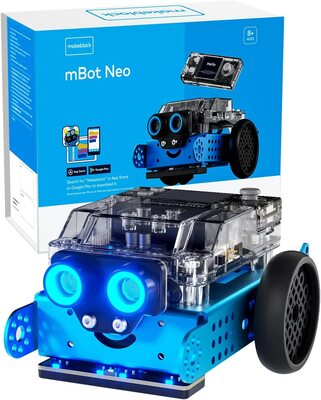
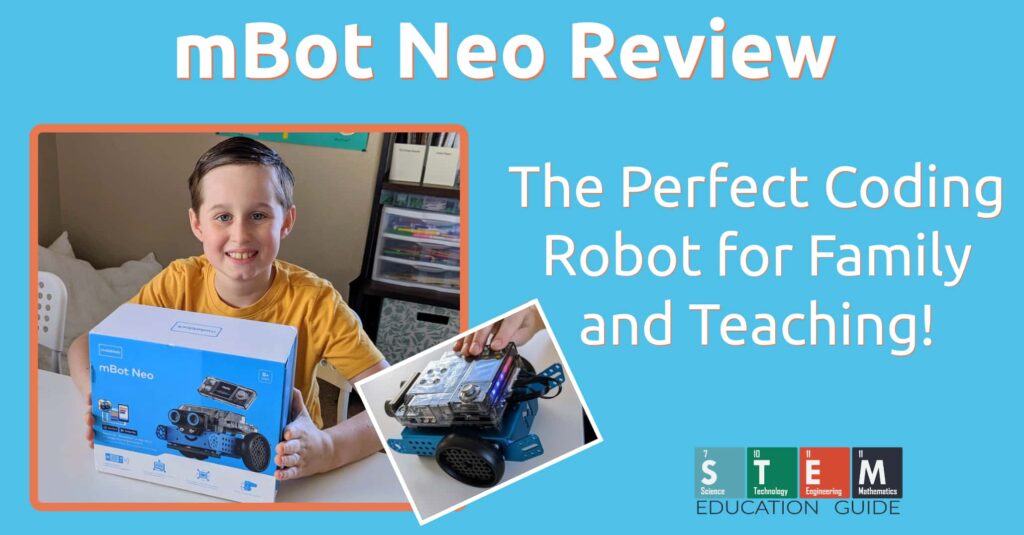
1. mBot Neo
- Target Audience: Ages 8+
- Core Disciplines: Robotics & Coding
The mBot Neo is a robust, DIY coding robot engineered from high-grade aluminum and thick, durable plastics. Children assemble the unit from the ground up, then transition to a companion app to learn programming languages. It allows kids to make the robot move, dance, light up, and sing. For families looking for out-of-the-box play, it also includes pre-programmed activities accessible via a dedicated controller. It stands as an exceptional entry point into physical computing.
2. Sphero BOLT
- Target Audience: Ages 8+
- Core Disciplines: Advanced Robotics & JavaScript Fundamentals
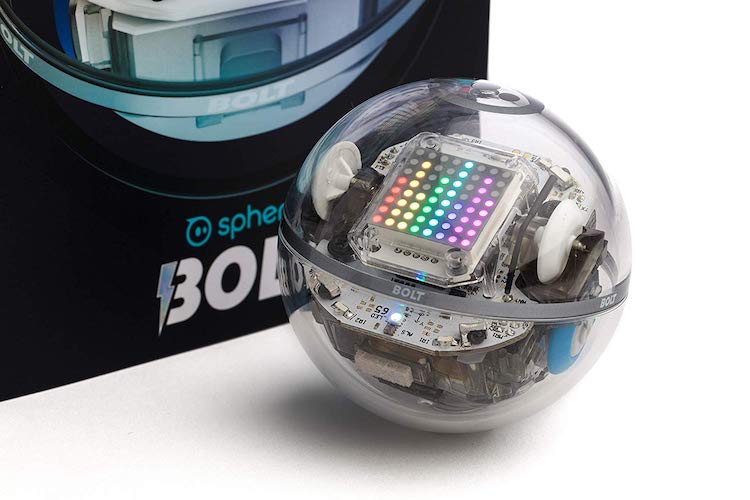
The Sphero Bolt is a shock-proof, waterproof, programmable robotic sphere equipped with an interactive LED matrix. Users write custom code to navigate the bot through complex obstacle courses, mathematical grids, and gaming environments. Endless classroom and home activities—ranging from beginner canvas block coding to advanced JavaScript—make this one of the most versatile programmable bots on the market.
3. Wonder Workshop Dash
- Target Audience: Ages 6+
- Core Disciplines: Early Coding & Interactive Play
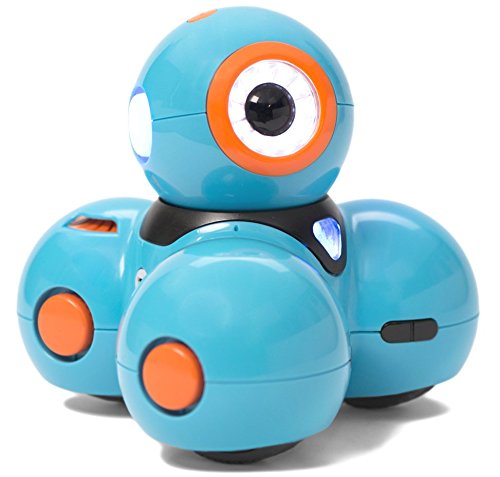
Dash is a responsive, fast-moving robot designed specifically for younger learners. Featuring built-in microphones for voice interaction and playback, Dash responds dynamically to environmental cues and can even interact with other Dash bots in the vicinity. Guided in-app challenges ensure that parents do not need prior coding experience to facilitate their child’s learning journey. Look out for holiday bundles that include complementary creativity packs.
4. Makey Makey
- Target Audience: Ages 8+
- Core Disciplines: Circuitry & Invention
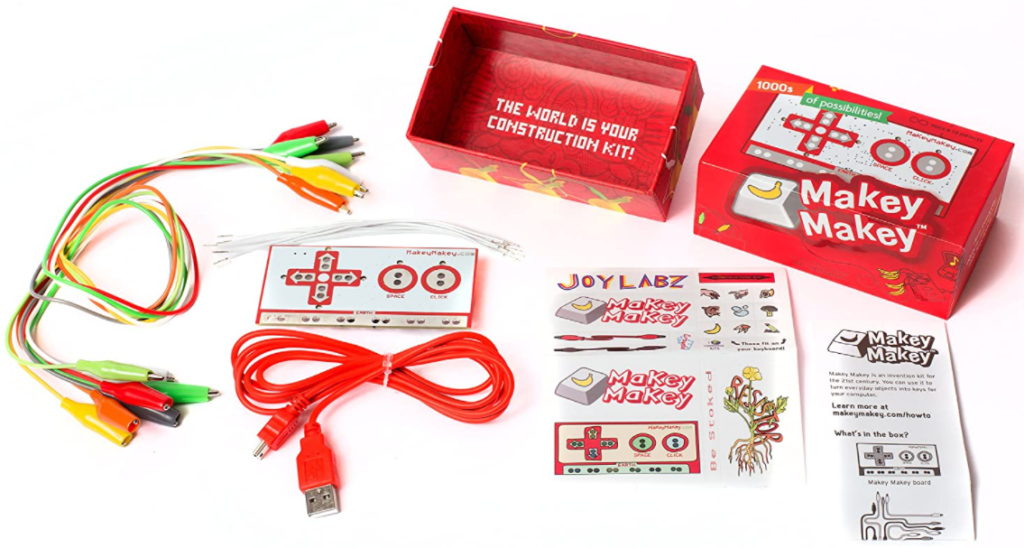
Makey Makey turns everyday, conductive objects—like bananas, graphite pencil drawings, or bowls of water—into computer keys. Using a simple control board, USB cable, and alligator clips, children learn the fundamentals of closed circuits and computer interfacing through pure, imaginative experimentation. Its simplicity and open-ended utility have made it a staple in both modern classrooms and homes.
5. Kaboom Explosive Science Lab Kit
- Target Audience: Age 8+ (with adult supervision)
- Core Disciplines: Chemistry & Physics
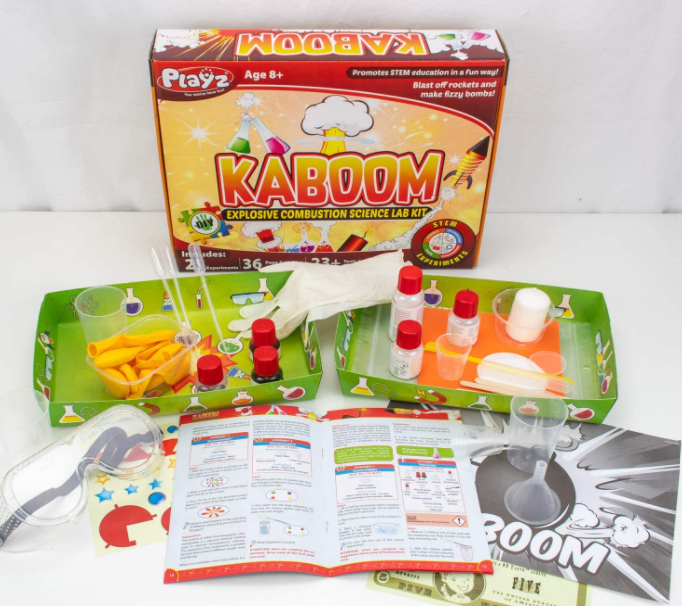
Transforming backyard exploration into a dynamic laboratory, this kit features over 25 experiments focusing on chemical reactions and combustion. From launching model rockets to engineering fireproof balloons, the kit emphasizes safety while making foundational chemistry visceral and exciting. Crucially, it includes educational guides that explain the "why" behind every explosion.
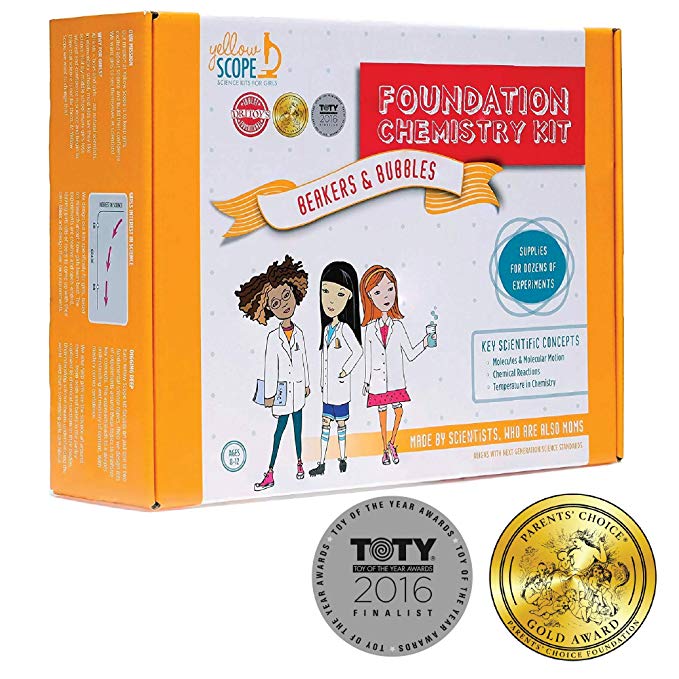
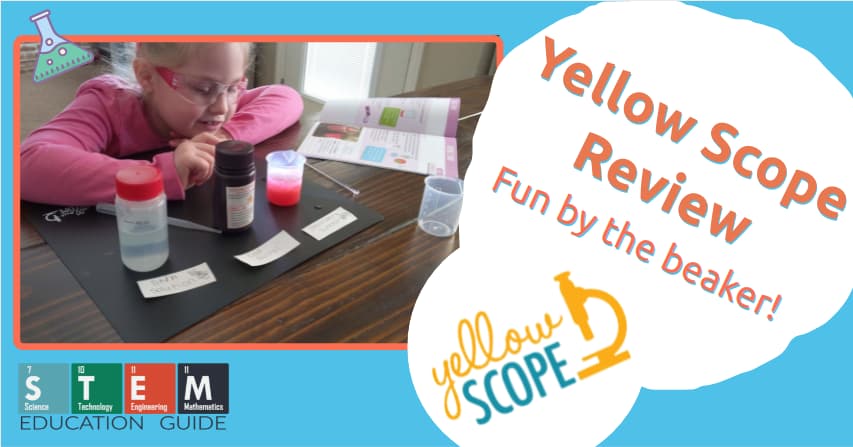
6. Yellow Scope Foundation Chemistry Kit (Beakers & Bubbles)
- Target Audience: Ages 8–12
- Core Disciplines: Chemistry & Real-World STEM Careers
Designed by female scientists with a mission to inspire girls in STEM, Yellow Scope kits offer rigorous, high-quality laboratory equipment (real glass beakers, professional chemical components) paired with engaging experiment manuals. This specific kit explores cosmetic science, teaching the complex chemistry behind everyday hair, body, and beauty products.
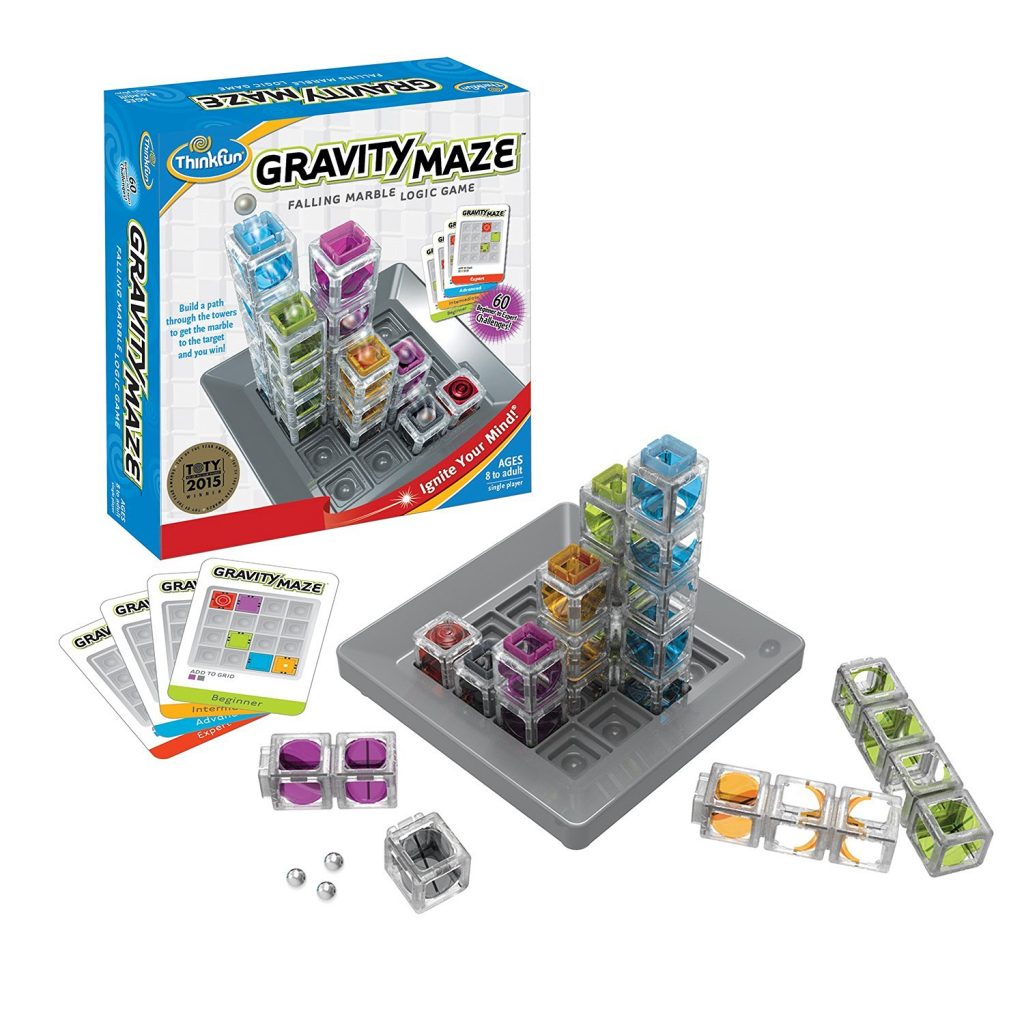
7. ThinkFun Gravity Maze Marble Run
- Target Audience: Ages 8+
- Core Disciplines: Spatial Reasoning & Logic
Merging a traditional marble run with a demanding puzzle game, Gravity Maze challenges players to arrange transparent towers according to specific challenge cards to guide a marble successfully to the target. It requires forward-thinking, gravity-physics calculations, and multi-step problem-solving.
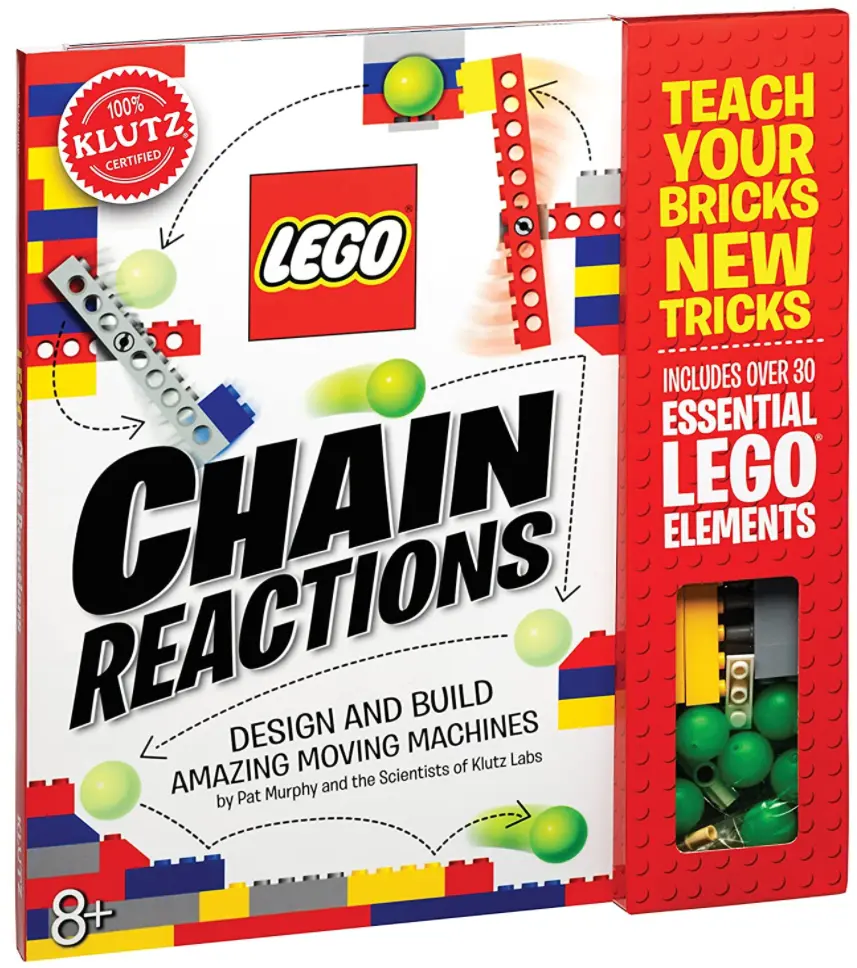
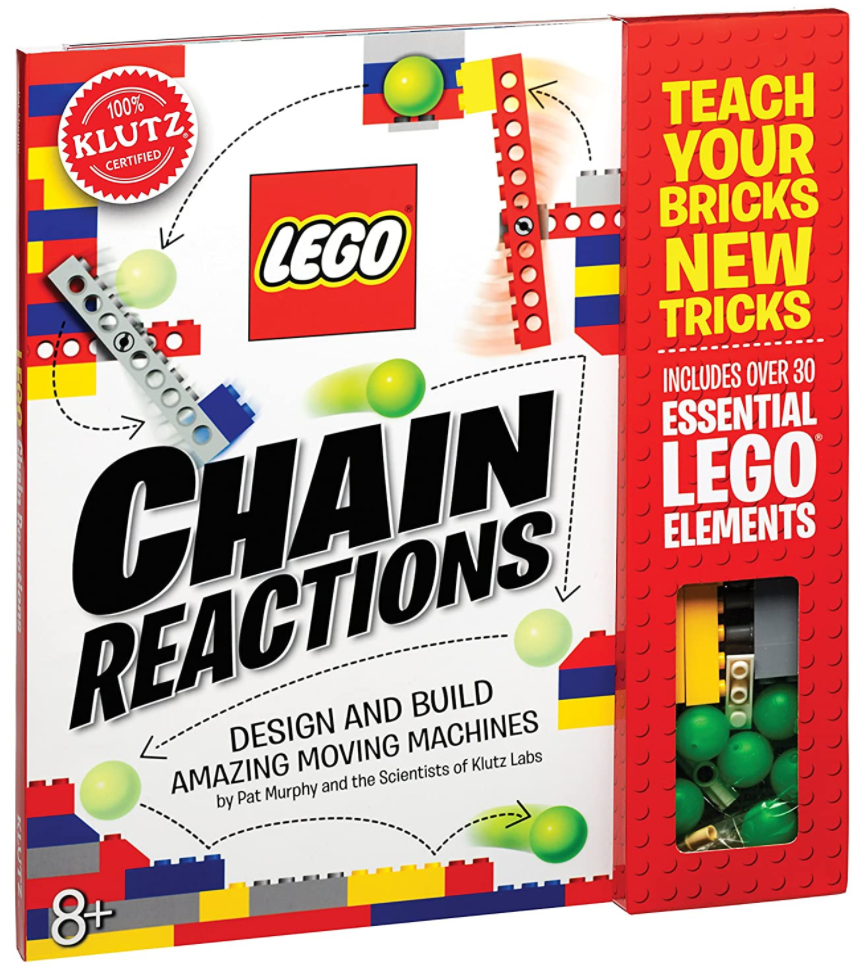
8. LEGO Chain Reactions
- Target Audience: Ages 8+
- Core Disciplines: Mechanical Engineering & Physics
This specialized building kit guides children through the creation of twelve different moving contraptions that interact in sequence. By utilizing standard LEGO bricks alongside specialized ramps, swing buckets, and motors, children develop a profound grasp of kinetic energy, momentum, and cause-and-effect engineering.
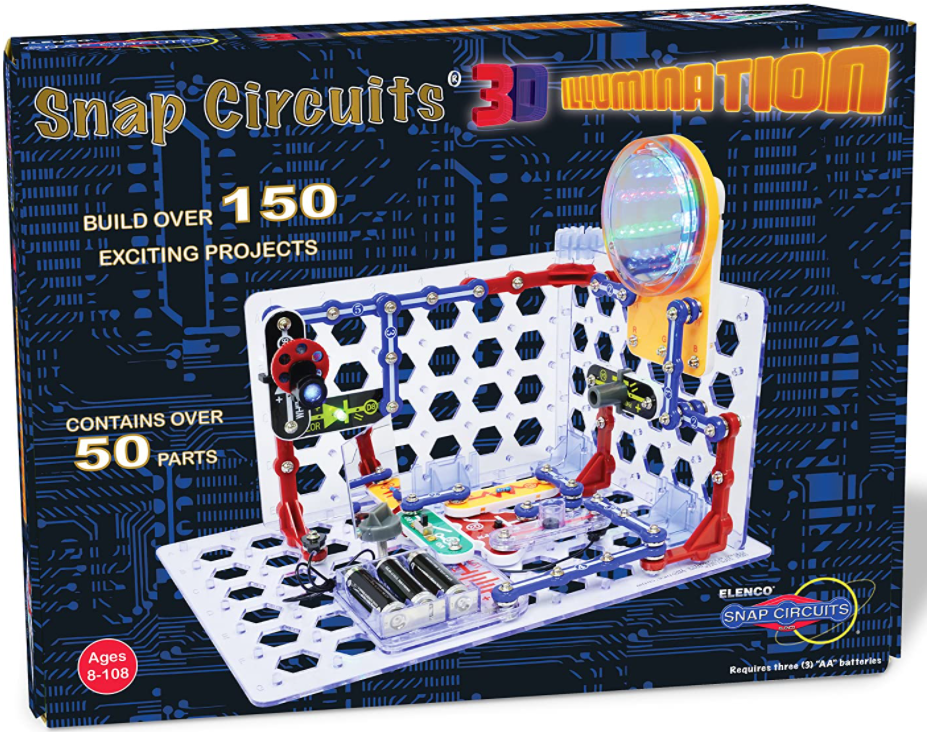
9. Snap Circuits 3D Illumination Electronics Exploration Kit
- Target Audience: Ages 8+
- Core Disciplines: Electrical Engineering
Snap Circuits revolutionized electronics learning by eliminating messy soldering in favor of secure, color-coded plastic snap-blocks. The 3D Illumination edition takes this a step further, allowing kids to build vertical, multi-layered circuit structures featuring fiber optics, mirrors, and multi-colored LED displays.
10. Elenco Teach Tech Hydraulic Kit (HydroBot Arm)
- Target Audience: Ages 10+
- Core Disciplines: Mechanical Engineering & Fluid Dynamics
The HydroBot Arm utilizes water-powered hydraulic plungers rather than motors or batteries to control its movements. Featuring a 270-degree rotation radius and multi-axis gripping capability, this build-it-yourself kit offers a masterclass in hydraulic pressure, mechanical leverage, and hands-on mechanical assembly.
11. Botley The Coding Robot Activity Set
- Target Audience: Ages 5–9
- Core Disciplines: Screen-Free Coding
Botley provides a rare commodity in modern tech toys: 100% screen-free programming. Using a remote control programmer, young children transmit directional sequences, loop commands, and obstacle-avoidance routines directly to the robot, laying deep cognitive foundations for algorithmic thinking without exposing them to digital tablets.
12. Elenco Teach Tech Mech-5 Robot Kit
- Target Audience: Ages 10+
- Core Disciplines: Mechanical Programming
The Mech-5 is a programmable mechanical robot that can kick, throw, draw, lift, and spin. Instead of utilizing digital screens or app software, children program the robot’s physical actions by snapping coding tiles directly onto an onboard coding wheel. It is an ingenious tactile approach to logic and machine programming.
13. littleBits Electronic Music Inventor Kit
- Target Audience: Ages 8+
- Core Disciplines: Sound Engineering & Circuitry
Combining music creation with modular electronics, this kit allows children to construct their own wearable or handheld electronic instruments. By snapping together magnetic littleBits components and syncing them with a mobile app, users manipulate sound waves, tempos, and frequencies.
14. Kid K’NEX Build-A-Bunch Set
- Target Audience: Ages 3–5
- Core Disciplines: Early Construction & Fine Motor Skills
Bridging the gap between toddler blocks and complex engineering sets, Kid K’NEX features chunky, soft, brightly colored plastic pieces and flexible connecting gears. It allows young children to construct animals, vehicles, and abstract structures while developing early spatial reasoning and fine motor coordination.
15. Ravensburger GraviTrax XXL Marble Run
- Target Audience: Ages 8+
- Core Disciplines: Gravitational Physics & Structural Design
Built around a unique hexagonal modular grid system, the GraviTrax XXL set challenges builders to construct intricate multi-tier tracks that utilize magnetism, kinetic energy, and gravity to propel marbles across complex landscapes. It operates entirely without electronics, encouraging trial-and-error spatial engineering.
Future Outlook: The Next Wave of Educational Play
As we look toward future holiday seasons, the convergence of artificial intelligence, augmented reality (AR), and tactile learning will continue to redefine the STEM toy category. Industry analysts project that physical toys integrated with adaptive AI software—software that adjusts puzzle difficulty or coding challenges in real-time based on the child’s learning pace—will dominate upcoming market cycles.
However, the enduring popularity of mechanical marble runs, snap-together circuits, and chemistry kits proves that hands-on, tactile experimentation remains irreplaceable. For holiday shoppers in 2024, taking advantage of early online Black Friday promotions is not merely a strategy for saving money—it is an investment in fostering the next generation of engineers, scientists, and critical thinkers.

