In the rapidly evolving landscape of modern education, computer science has shifted from an elective luxury to a fundamental literacy. Educators, policy makers, and parents are increasingly recognizing that computational thinking—the ability to break down complex problems, recognize patterns, and design systematic solutions—is vital for the modern workforce. Yet, traditional pedagogical methods, which often rely on dry syntax textbooks or passive video tutorials, routinely fail to capture or sustain the attention of young learners.
Enter the gamification of code. CodeMonkey, an award-winning, game-based educational technology platform, has emerged as a frontrunner in bridging the gap between recreational gaming and rigorous computer science instruction. Designed to accommodate students from preschool through the eighth grade, the platform trades tedious instructional formatting for an engaging narrative: guiding a digital monkey to collect bananas through the writing of real-world code.
By scaling instruction from visual, block-based interfaces for early learners to professional-grade text-based languages like CoffeeScript, Python, and JavaScript for older students, CodeMonkey provides a comprehensive scaffolding system. This exhaustive report investigates CodeMonkey’s architectural approach, curriculum structure, core programming concepts, pedagogical efficacy, and its broader implications for classrooms and homeschooling environments alike.
Detailed Chronology: The Evolution of CodeMonkey and Gamified STEM
To understand CodeMonkey’s current standing in the educational ecosystem, it is helpful to examine the broader timeline of how computer science education has transitioned into the digital, gamified sphere.
The Pre-Digital Era (Late 20th Century): For decades, computer science education was restricted to secondary schools or universities. Instruction was heavily theoretical, relying on command-line interfaces and esoteric syntax that alienated young minds.
The Rise of Visual Programming (Early 2010s): Platforms like Scratch popularized block-based programming, proving that children as young as kindergarten could grasp logic structures without needing to type complex syntax. However, a pedagogical gap persisted: how to transition students smoothly from blocks to real-world code.
The Inception of CodeMonkey: Recognizing this gap, developers engineered a platform that utilized a unified storyline—helping a monkey secure its bananas—to make text-based programming accessible. By integrating real languages such as CoffeeScript and Python into a puzzle-format game, CodeMonkey carved out a unique niche in the K-8 educational market.
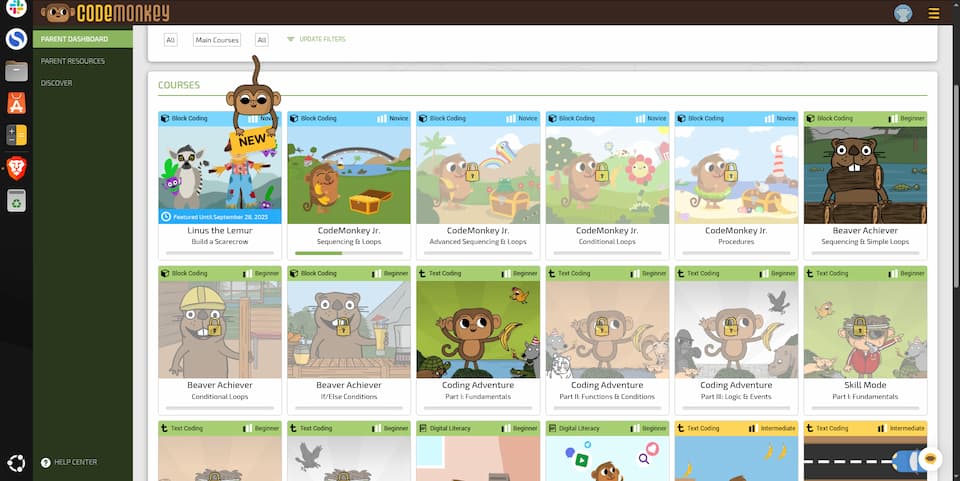
Expansion and Diversification: Over subsequent years, the platform expanded its offerings to include specialized subsets like CodeMonkey Jr. for preschoolers, Coding Adventure for foundational learners, and advanced modules like Game Builder. Simultaneously, developers integrated robust analytics dashboards for teachers and tailored homeschooling subscription models.
Current Standing: Today, CodeMonkey is utilized globally in thousands of classrooms and home environments. It frequently anchors national initiatives such as the "Hour of Code," cementing its role as a premier gateway into foundational computer science.
Supporting Context & Metrics: Breaking Down the Platform
CodeMonkey’s curriculum is not merely a collection of isolated mini-games; it is an organized framework of nearly 400 distinct challenges engineered to cultivate progressive cognitive development.
The Core Curriculum Tiers
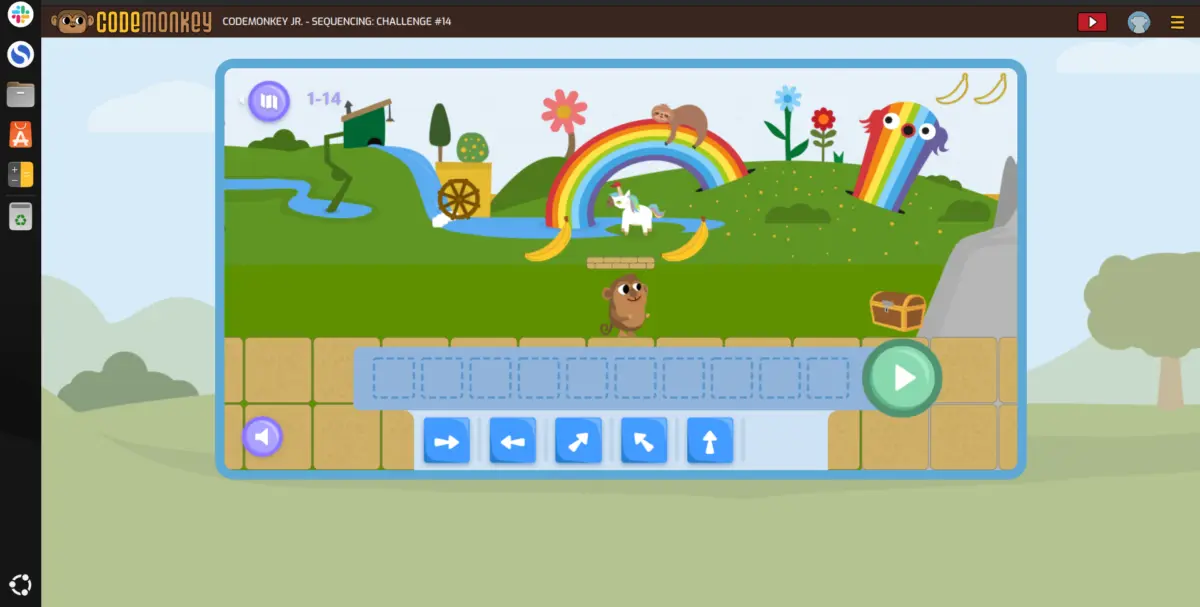
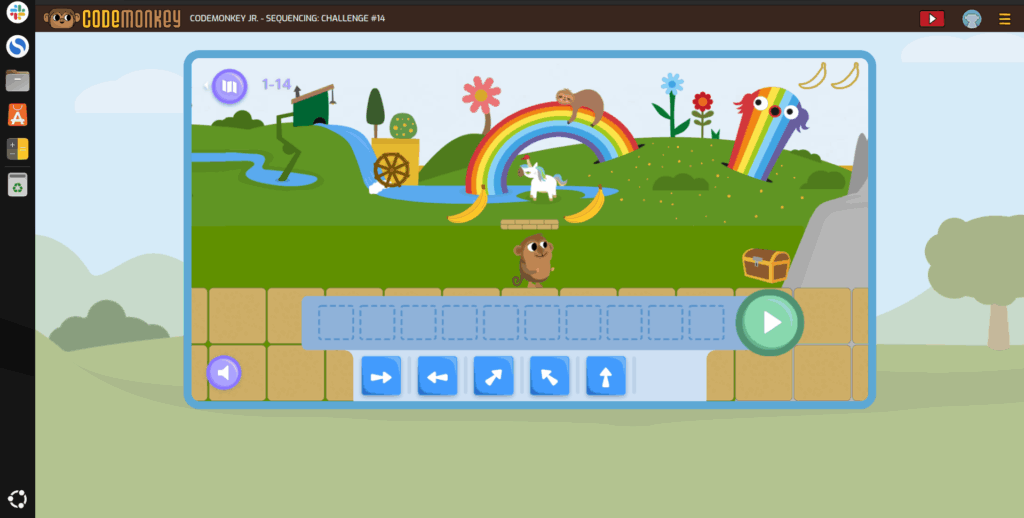
CodeMonkey Jr.: Tailored for preschoolers and early elementary students. This tier utilizes a block-based visual interface that requires no prior reading skills. Through intuitive puzzles, young minds grasp the foundational logic of sequencing and directionality.
Coding Adventure: The platform’s flagship module. Designed for elementary and middle school students (spanning up to 8th grade), this curriculum introduces text-based programming. Students write real lines of code to navigate the monkey through increasingly complex landscapes. Success is quantified through a three-star rating system, encouraging precision and optimization.
Game Builder: Once foundational mechanics are mastered, students graduate to creating their own playable games. This shifts the learner from a consumer of educational content to a creator, reinforcing concepts through applied project-based learning.
Structural Metrics and Features
Volume of Challenges: Over 400 interactive, puzzle-based levels that scale organically in difficulty.
Language Progression: Transitions fluidly from CoffeeScript (a lightweight language transpiling to JavaScript) to powerhouse languages like Python and JavaScript.
Assessment and Tracking: Automated grading systems instantly evaluate code correctness. A dedicated "skill mode" maps student achievements directly to core computational concepts, providing clear visibility for educators and parents.
Data Privacy & Technical Standards: Operating as a cloud-based service, CodeMonkey employs general-purpose session cookies solely for session management (keeping users logged in and tracking puzzle progress) rather than intrusive third-party advertising trackers. These can be managed directly via browser configurations.
Official Statements and Pedagogical Philosophy
The philosophy underpinning CodeMonkey relies heavily on constructivist learning theory—the idea that learners construct knowledge actively rather than passively taking in information. Educators and parents who have integrated the platform into their daily routines frequently emphasize its psychological impact on overcoming the fear of syntax errors.
"Kids don’t need prior experience or coding experience to start. Younger students can begin with block-based coding, while older ones transition into text-based languages, gaining confidence step by step."
Furthermore, experts highlight that the platform successfully reframes computational thinking as a creative outlet rather than a sterile mathematical drill. By framing programming commands as instructions for a physical avatar, abstract concepts take on tangible meaning.
"CodeMonkey doesn’t just teach programming—it introduces computer science concepts in a fun way. Younger students can see how coding connects to the real world, from building games to understanding how websites use cookies to run."
Parents and homeschoolers note that the integration of automated feedback loops transforms frustration into resilience. Instead of waiting for a human instructor to review an assignment, students receive instantaneous feedback, allowing them to iterate, debug, and solve problems independently.
Core Programming Concepts Explored
CodeMonkey’s curriculum is meticulously designed to mirror professional software engineering principles, breaking down dense computer science topics into digestible, age-appropriate lessons.
1. Loops and Functions
Repetition is the enemy of efficient engineering. CodeMonkey introduces loops early on to demonstrate how to automate recurring actions without redundancy.
Real-World Analogy: "It’s like telling a robot to pick up toys—you don’t want to write ‘pick up toy’ 100 times!" Functions are subsequently introduced as reusable blocks of logic—effectively functioning as modular recipes that simplify complex codebases.
2. Objects and Arrays
As programs grow, data organization becomes paramount.
Objects act as comprehensive containers holding various data types (numbers, strings, or nested objects).
Arrays function as ordered lists. Students learn to manipulate these structures—adding, removing, or reordering elements—much like managing a physical queue of items.
3. Variables and Boolean Conditions
Logic-based decision-making is central to software development.
Variables serve as dynamic storage boxes containing mutable data.
Boolean conditions introduce binary decision-making (True/False, Yes/No). By mastering if-else statements, students empower their programs to react dynamically to changing in-game states, such as evaluating whether a player’s score has surpassed a specific threshold.
Future Outlook: The Role of Gamified Coding in Modern STEM
As artificial intelligence, automation, and data analytics continue to reshape the global economy, early exposure to computer science is no longer optional for holistic childhood development. Platforms like CodeMonkey point the way toward the future of education: interactive, self-paced, and seamlessly gamified.
The trajectory of tools like CodeMonkey suggests several upcoming trends in STEM education:
Deeper AI Integration: Future iterations of educational coding platforms will likely incorporate intelligent tutoring systems—such as advanced coding chatbots—to provide hyper-personalized hints tailored to an individual student’s unique debugging errors.
Cross-Curricular Synthesis: Computer science will increasingly bleed into other disciplines, using platforms like CodeMonkey to teach geometry (through coordinate mapping), physics (through movement velocity calculations), and logic.
Equitable Access: With robust cloud architecture, web-based coding environments democratize access, allowing underfunded public schools and isolated homeschoolers to access world-class computer science curricula without requiring expensive hardware or specialized teacher training.
In conclusion, CodeMonkey transcends the definition of a mere children’s game. It represents a paradigm shift in how foundational technical skills are transmitted to the next generation. By transforming daunting syntax into an engaging narrative of monkeys, bananas, and logic puzzles, it equips young learners not just to use future technology, but to build it.