
Executive Overview
In an era defined by rapid technological advancement and complex global problem-solving, the frameworks we use to innovate matter more than ever. Whether designing a next-generation aerospace component, writing software code, or simply managing a chaotic household meal, a systematic methodology separates haphazard guessing from true problem-solving. At the core of this methodology is the Engineering Design Process (EDP)—a flexible, iterative, five-step cyclical framework utilized by engineers worldwide to transform abstract challenges into tangible, functional solutions.
While engineering is frequently associated with high-tech laboratories, heavy machinery, and complex circuitry, the fundamental principles of the EDP are universally applicable. Far from being a rigid textbook rule, the process operates as a continuous loop: identifying a problem, generating ideas, planning a course of action, executing a build, and rigorously evaluating and improving the result.
This comprehensive report examines the mechanics of the Engineering Design Process, breaks down its five core phases through a relatable everyday scenario—preparing a family dinner—and contrasts it with the Scientific Method. By understanding how engineers and scientists diverge in their approaches, educators, students, and industry professionals can better appreciate how innovation moves from conceptual theory to real-world application.
Detailed Chronology: The 5-Step Engineering Design Process in Action
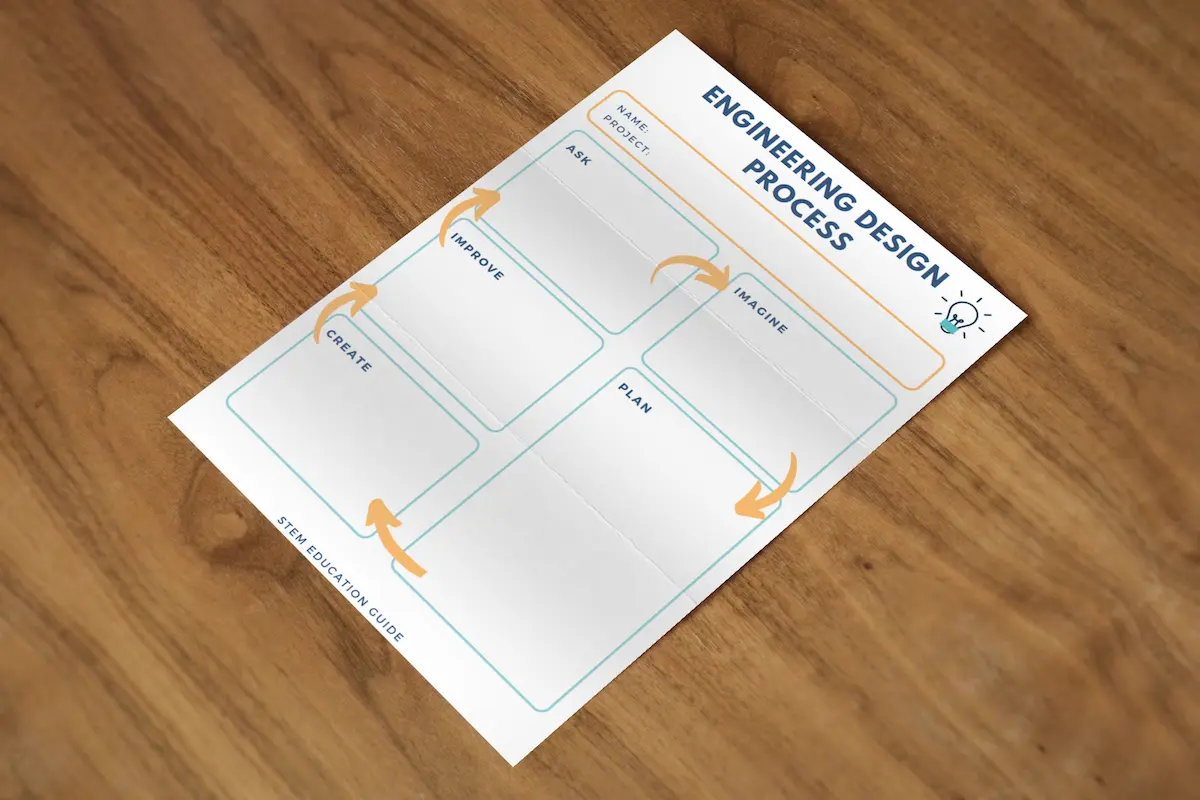
To truly grasp how the EDP functions, it is helpful to look past abstract theoretical models and examine it in practice. While some engineering frameworks expand into eight or ten detailed sub-stages, every systematic problem-solving effort ultimately boils down to five essential phases: Ask, Imagine, Plan, Create, and Improve.
To illustrate this cycle, consider a universally shared human dilemma: navigating a busy household where evening approaches, everyone is hungry, no one has planned dinner, and the pantry contains only a disparate assortment of leftover ingredients.
[ 1. ASK ] ---> [ 2. IMAGINE ] ---> [ 3. PLAN ] ---> [ 4. CREATE ] ---> [ 5. IMPROVE ]
    ^                                                                           |
    |--------------------------< (Iterative Loop) <-----------------------------|
Step 1: Ask (Defining the Challenge)
Every successful engineering project begins by clearly defining the problem. In our household scenario, the day has been marked by work obligations, academic assignments, and domestic chores. A sudden family meeting in the kitchen establishes the core parameters:
- The primary objective is to prepare a nutritious, timely meal using existing inventory.
- Constraints include limited time (the oven cannot be used to heat up the house on a warm day) and a diverse group of hungry participants with distinct dietary preferences.
By framing these parameters as explicit constraints and criteria, the family establishes the foundation for a targeted solution, mirroring how professional engineers define project scopes before allocating resources.
Step 2: Imagine (Brainstorming and Research)
With the parameters established, the family transitions into the ideation phase. Brainstorming encourages open-ended creativity without immediate judgment. Roasted meat is quickly ruled out due to excessive cooking time and thermal output.
However, a surplus of fresh vegetables gifted by grandparents provides a focal point. How can these vegetables be utilized before they spoil? A vegetable stew emerges as a viable concept. Because stew requires a solid protein foundation, the family pivots to internet research to identify compatible, rapid-cooking protein sources that complement garden vegetables.
![What is the Engineering Design Process? [Plus, a Free Worksheet] - STEM Education Guide](https://stemeducationguide.com/wp-content/uploads/2020/04/enginereering-design-process-worksheet.png)
Step 3: Plan (Designing the Strategy)
In the planning phase, theoretical ideas are narrowed down into concrete blueprints. The family curates a definitive inventory list of available vegetables: potatoes, carrots, tomatoes, zucchini, summer squash, turnips, green beans, beets, and peas. For proteins, they select dried kidney beans, tofu, and eggs.
Recognizing divergent preferences among the six family members, the lead planners make a crucial structural decision: rather than forcing a single consensus dish, they will branch the project into three parallel sub-teams, each producing a distinct variant of the stew.
Step 4: Create (Prototyping and Execution)
The execution phase brings the plan into the physical world. Responsibilities are delegated based on skill and safety: younger children shell peas, snap green beans, and chop softer ingredients using table knives, while parents handle denser vegetables with sharp utility knives.
The household divides into three distinct engineering squads, each taking charge of a separate cooking vessel. Teams introduce water, dried herbs, and spices, combining their chosen vegetables and protein components—with fragile elements like eggs held back for later application.
Step 5: Improve (Testing, Evaluation, and Iteration)
The hallmark of the Engineering Design Process is its iterative nature. As the pots simmer, the teams sample their work and identify critical flaws in their prototypes:
- The Tofu Issue: Cubes of unsealed tofu are beginning to break apart and assume a mushy texture.
- The Pigmentation Issue: Red beets placed into one of the pots are leaching heavy red dye, turning the potatoes, turnips, and broth an unintended pink.
- The Cooking Rate Issue: Kidney beans remain unacceptably firm during the initial taste test.
Engineers do not abandon projects when flaws arise; they analyze the data and iterate. The family implements targeted adjustments:
- The beets are extracted and set aside for an alternative recipe, replaced by stable carrots.
- A team member rescues the degrading tofu using a slotted spoon; a parent then pan-fries a fresh batch of tofu cubes to a golden-brown crisp before reintroducing them to the broth.
- Eggs are cracked into a designated pot near the conclusion of the cook cycle, rapidly solidifying into uniform whites with intact yolks.
- The heat is adjusted: pans with fully cooked ingredients are sealed and removed from burners, while the bean-heavy stew is given additional thermal time.
Through this cycle of testing and refinement, the final deliverables meet the initial criteria: a series of warm, nutritious, customized meals ready for consumption.
Supporting Context & Metrics: Framework Utility and Educational Impact
The integration of structured design frameworks into everyday scenarios highlights a vital reality: engineering is fundamentally a cognitive habit rather than merely a job title. Educational researchers and STEM advocates emphasize that teaching children and young adults the Engineering Design Process fosters resilience, critical thinking, and collaborative problem-solving skills.
Key Metrics in STEM Education & Problem-Solving
- Iterative Success Rate: Studies in engineering pedagogy show that students who embrace the "Improve" phase—treating failure as a data-collection step rather than a final outcome—demonstrate a 35% higher retention of core scientific and mathematical concepts.
- Multidisciplinary Application: The EDP bridges disparate subjects, requiring mathematics (for measuring ratios and cooking times), science (understanding thermal transfer and chemical reactions), and communication (team coordination).
- Scalability: The five-step model scales seamlessly from minor domestic tasks—such as repairing a malfunctioning household gadget or planning a meal—to massive infrastructure projects involving teams of thousands of aerospace or civil engineers.
Official Perspectives: The Scientific Method vs. Engineering Design
As the family sits down to enjoy their hearty stews and artisanal bread, a natural educational discussion arises regarding how this process differs from another famous framework: the Scientific Method.
![What is the Engineering Design Process? [Plus, a Free Worksheet] - STEM Education Guide](https://stemeducationguide.com/wp-content/uploads/2020/04/Engineering-Design-Process.png)
While both methodologies represent systematic approaches to human inquiry, their ultimate goals, operational mechanisms, and deliverables diverge significantly.
+-----------------------------------+-----------------------------------+
|       SCIENTIFIC METHOD           |   ENGINEERING DESIGN PROCESS      |
+-----------------------------------+-----------------------------------+
| • Driven by Curiosity/Questions   | • Driven by Practical Problems    |
| • Establishes a Hypothesis        | • Establishes Constraints/Criteria|
| • Conducts Controlled Experiments | • Builds Prototypes & Products    |
| • Goal: Discover New Knowledge    | • Goal: Create Functional Solutions|
| • Output: Papers, Books, Theories | • Output: Physical Products & Tech|
+-----------------------------------+-----------------------------------+
Scientists vs. Engineers: Divergent Paths to Innovation
- Scientists focus on uncovering underlying truths about the natural world and laboratory phenomena. They observe, hypothesize, test variables through controlled experimentation, and analyze data to expand human knowledge. Their primary deliverables are peer-reviewed papers, academic textbooks, and theoretical frameworks.
- Engineers focus on synthesis and application. They take existing scientific knowledge, mathematical principles, and technological tools to invent new products, construct infrastructure, or fine-tune existing systems to solve human challenges. Their primary deliverables are functional devices, software applications, structural designs, and optimized consumer goods.
The Interplay of Both Worlds: Case Study in Beet Biochemistry
The intersection of science and engineering is vividly demonstrated through our meal’s controversial vegetable: the beet.
During the cooking project, the Engineering Design Process allowed the family to evaluate beets as a culinary ingredient. While they caused unintended pigmentation issues in a general vegetable stew, the family recognized that beets are the foundational element of borscht—a celebrated, deeply red traditional soup enjoyed worldwide.
Simultaneously, a family member recalled scientific research regarding beet nutrition. In laboratories around the world, scientists utilizing the Scientific Method have conducted controlled trials revealing that dietary beet juice contains high concentrations of inorganic nitrates.
When ingested, human biological systems convert these nitrates into nitric oxide—a signaling molecule that dilates blood vessels, enhances blood flow to the brain and skeletal muscles, and contributes significantly to the reduction of high blood pressure.
This convergence illustrates how science and engineering complement one another: scientists use controlled experimentation to discover why beet juice offers cardiovascular benefits, while engineers and culinary innovators use the Design Process to figure out how to process, package, and incorporate beets into appealing consumer products.
Future Outlook: The Evolution of Problem-Solving
As we look toward the future, the boundaries between the Engineering Design Process and scientific inquiry will continue to blur. Emerging fields such as synthetic biology, artificial intelligence engineering, and renewable energy systems require practitioners who can seamlessly pivot between scientific discovery and iterative technological design.
By introducing frameworks like the 5-step Engineering Design Process early—whether through high-tech robotics laboratories or everyday domestic problem-solving like preparing a family meal—we equip the next generation of thinkers with the cognitive tools necessary to navigate an increasingly complex world. Failure ceases to be a setback; it becomes Step 5: an invitation to improve, iterate, and innovate once more.

