

Executive Overview
The modern educational landscape is locked in a high-stakes tug-of-war. On one side stands the ubiquitous smartphone—a marvel of modern engineering, a digital passport to global information, and an indispensable instrument for contemporary life. On the other side sits the traditional classroom, a space historically engineered for deep, collective contemplation, rigorous academic inquiry, and interpersonal socialization.
As smartphones have woven themselves into the fabric of daily existence, their unauthorized, unregulated presence inside schools has transitioned from a minor nuisance into a sweeping systemic crisis. Educators, school administrators, and policymakers across the globe are grappling with a generation of students whose attention spans, academic trajectories, and social-emotional developments are being fundamentally altered by the glowing screens in their pockets.
While proponents of unrestricted access often cite parental communication and emergency safety protocols as valid counter-arguments, an overwhelming body of psychological and educational research tells a different story. Simply having a smartphone within arm’s reach—even when silenced, inverted, or tucked away in a backpack—actively degrades cognitive performance, sabotages attention spans, and drains students’ finite self-regulation reserves.
Furthermore, the relentless onslaught of notifications, social media algorithms, and peer-to-peer messaging apps are expertly designed by tech conglomerates to capture and hold human attention. Expecting developing adolescent brains to independently resist these engineered distractions during school hours is not only unrealistic; it is setting them up to fail. Consequently, a growing movement of schools is pivoting toward comprehensive, bell-to-bell phone bans, utilizing strategies such as locking pouches and designated lockers to reclaim the learning environment. This article investigates the multi-layered impacts of cell phones in schools, explores the psychological and sociological science behind the movement, and outlines the roadmap for restoring cognitive sanctuaries to our educational institutions.
Detailed Chronology: The Normalization and Counter-Movement of Classroom Tech
To understand how smartphones became the defining battleground of 21st-century education, it is necessary to trace how mobile technology shifted from a prohibited contraband item to an invisible, normalized fixture of student life.
- The Early 2010s: The Integration Era. Following the rapid adoption of smartphones, educational systems initially experimented with leveraging technology. Concepts like "Bring Your Own Device" (BYOD) were introduced with optimistic visions of students using phones to look up historical facts, conduct rapid research, and interact with educational software.
- The Mid-2010s: The Proliferation of Social Media. As platforms like Instagram, Snapchat, and later TikTok gained explosive popularity among teens, the primary function of the smartphone in school shifted away from academics. Phones transformed into portals for entertainment, social validation, and constant communication, steadily eroding instructional time.
- The Late 2010s to Pandemic Years: Normalization. In the absence of decisive, institution-wide policy frameworks, cell phone use became passively normalized. Students brought phones to class as a matter of course, operating under the implicit assumption that constant connectivity was a fundamental right.
- The Post-Pandemic Reality Check (2022–Present): Following pandemic-era remote learning, youth reliance on digital devices surged to unprecedented heights. Educators began reporting catastrophic declines in reading comprehension, sustained attention, and basic face-to-face conflict resolution skills. This realization triggered an aggressive policy counter-movement. Across districts, states, and entire nations, educational authorities began rolling back lenient policies in favor of strict, bell-to-bell phone-free environments, recognizing that moderate guidelines ("keep it in your pocket") were entirely ineffective.
Supporting Context & Metrics: The Science of Digital Distraction
The argument for removing cell phones from classrooms is not merely anecdotal; it is grounded in a robust and growing body of empirical peer-reviewed research.
Cognitive Performance and the "Mere Presence" Effect
A landmark 2023 study by Skowronek, Seifert, and Lindberg published in Scientific Reports demonstrated that the mere presence of a smartphone significantly reduces basal attentional performance. Even when students are not actively looking at, touching, or listening to their devices, the physical proximity of a smartphone taxes the brain’s cognitive processing capacity.
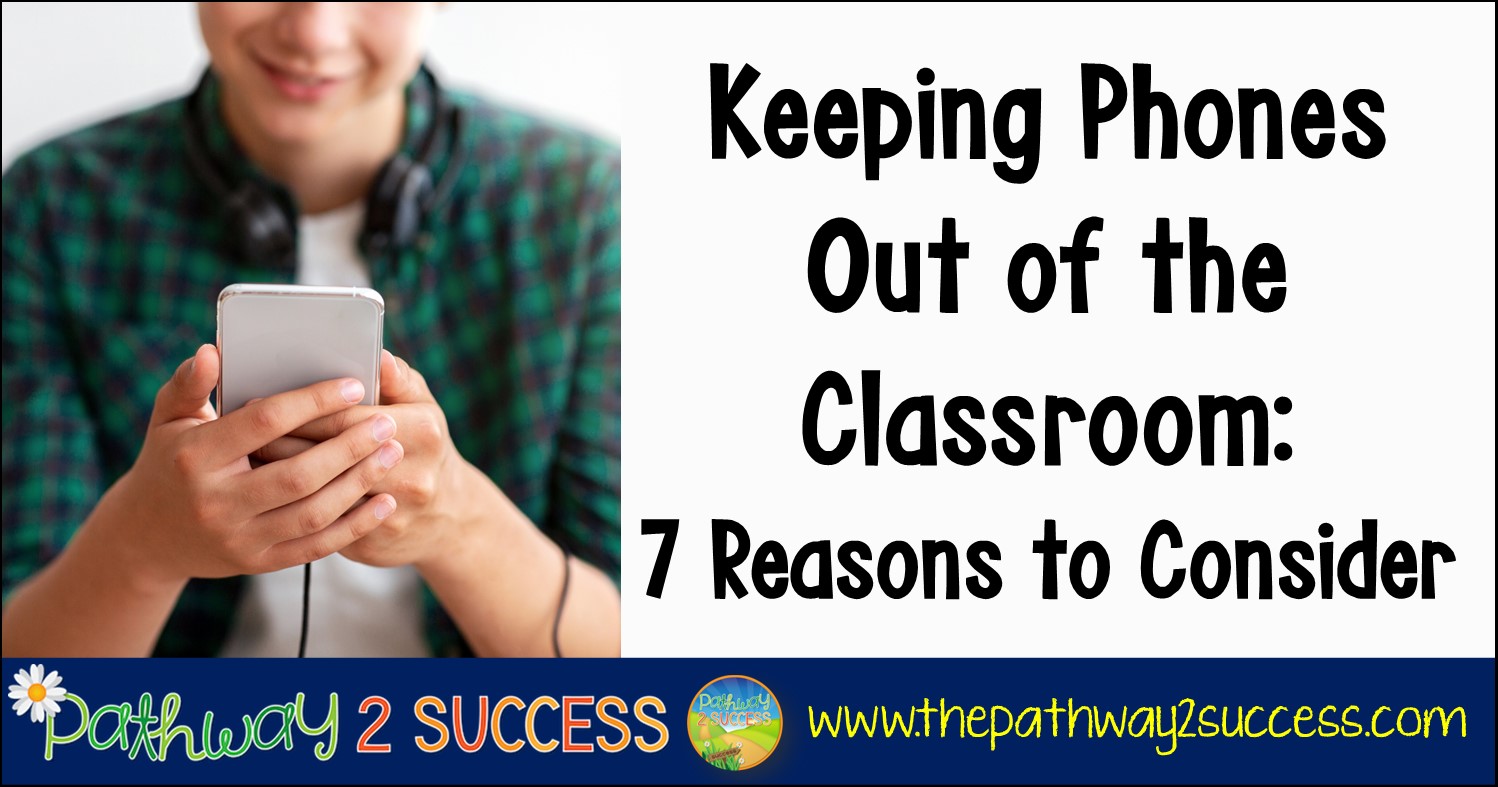
The human brain must unconsciously expend energy to inhibit the impulse to check the device. For a student trying to grasp complex algebraic equations or analyze historical literature, this invisible cognitive drain means fewer mental resources are available for the actual learning task.
Academic Achievement and Meta-Analytic Evidence
The negative correlation between mobile multitasking and academic performance is well-documented. A comprehensive 2024 meta-analysis by Chen, Yan, Moeyaert, and Bangert-Drowns examined the effects of mobile phone distraction on young adults’ immediate recall and overall academic standing. The findings confirmed what exhausted teachers have witnessed for years: mobile multitasking severely impairs information retention and lowers overall academic achievement.
Complementing this, a broad literature review by Amez and Baert (2020) synthesized multiple studies to conclude that unrestricted smartphone use in academic settings consistently drags down grades, particularly among students who are already academically vulnerable.
Official Statements and Stakeholder Perspectives
The debate surrounding school phone policies involves a complex interplay of perspectives from educators, parents, students, and policymakers.
The Safety Dilemma vs. School Realities
The number one objection raised by parents against school phone bans centers on emergency preparedness and direct communication. In an era marked by heightened anxiety regarding school safety, parents understandably want an immediate lifeline to their children.
However, educational safety experts and administrators offer a critical counter-perspective: during a genuine school crisis, students need to be entirely focused on the directives of trained adults in charge. Fumbling with a personal device, checking social media feeds, or attempting to text parents can inadvertently create panic, spread misinformation, and compromise physical security by drawing unnecessary attention or blocking emergency lines.
For routine communication—such as coordinating after-school pickup times or doctor appointments—traditional school administrative offices have always served this function reliably. Phones do not need to be active and in student hands all day to facilitate after-school logistics; they can simply be stored safely in lockers or locked pouches, accessible before and after school hours.

The Educator’s Burden: Eliminating Power Struggles
For teachers, enforcing partial or conditional cell phone policies—such as "phones allowed only for instructional purposes"—is a daily recipe for friction. Because smartphones are engineered to be psychologically addictive, developing adolescent brains struggle profoundly with self-regulation.
When a teacher attempts to enforce conditional rules, it inevitably triggers endless negotiations, defiance, and disruptive power struggles. A student attempts to check a notification under their desk; the teacher calls them out; the student pushes back. This transactional conflict not only wastes precious instructional minutes but also damages the relational rapport between teacher and student. Implementing a blanket "no-phone zone" policy removes subjectivity, eliminates constant policing, and restores the teacher’s role as an educator rather than a tech jailer.
Future Outlook: Building Healthier Boundaries for the Digital Age
As schools look toward the future, the momentum toward establishing comprehensive, distraction-free learning environments is accelerating. The objective is not merely to punish or isolate students from technology, but rather to teach vital life skills: impulse control, deep focus, and healthy digital boundaries.
School is, fundamentally, a place of specialized learning—much like a professional workplace, a courtroom, or a concert hall, where certain behaviors and distractions are naturally restricted to preserve the collective experience. By instituting device-free campuses, schools are providing students with a rare, protected sanctuary away from the algorithmic pull of social media.
In this protected space, students rediscover the lost art of face-to-face socialization, build authentic peer relationships, develop sustained attention spans, and practice the art of being fully present in the "right now." Ultimately, keeping phones out of the classroom is not an anti-technology stance; it is a pro-human, pro-learning imperative designed to equip the next generation with the cognitive resilience they need to thrive both inside and outside the school walls.
Phone Research Citations
- Skowronek, J., Seifert, A. & Lindberg, S. (2023). The mere presence of a smartphone reduces basal attentional performance. Scientific Reports, 13, 9363. https://doi.org/10.1038/s41598-023-36256-4
- Chen, Q., Yan, Z., Moeyaert, M., & Bangert-Drowns, R. (2024). Mobile Multitasking in Learning: A Meta-Analysis of Effects of Mobilephone Distraction on Young Adults’ Immediate Recall. Computers in Human Behavior, 157, 108432.
- Amez, Simon & Baert, Stijn. (2020). Smartphone use and academic performance: A literature review. International Journal of Educational Research, 103, 101618. https://doi.org/10.1016/j.ijer.2020.101618

