
Executive Overview
The holiday shopping season has officially broken traditional molds, with the retail sector witnessing a profound structural shift in how promotional calendars are managed. For families, educators, and holiday shoppers, the frantic, single-day dash of traditional Black Friday has given way to an extended, digitally driven promotional window. This transformation is nowhere more evident than in the market for Science, Technology, Engineering, and Math (STEM) toys and learning kits.
Driven by ongoing supply chain adaptations, shifting consumer habits, and a massive surge in online-only purchasing, major retailers are rolling out deep discounts on educational toys well ahead of the traditional post-Thanksgiving rush. Rather than waiting for the calendar to turn to late November, shoppers are encountering robust promotional campaigns as early as mid-November. This shift underscores a broader retail strategy: easing the logistical bottlenecks of brick-and-mortar congestion by funneling consumer demand directly into robust, digital storefronts.
For parents striving to balance educational value with holiday gift-giving, this early rollout presents a unique opportunity. Highly anticipated STEM toys—ranging from sophisticated programmable robots and chemistry labs to complex logic mazes and circuitry kits—are seeing unprecedented price cuts. This comprehensive market overview examines the shifting retail landscape, outlines the chronology of early holiday shopping trends, evaluates the leading educational products to watch, and provides an authoritative guide to the top fifteen STEM learning kits dominating this year’s seasonal promotions.
Detailed Chronology: The Evolution of the Early Holiday Shopping Window
To understand why Black Friday looks drastically different today than it did a decade ago, one must examine the chronological progression of retail strategies leading up to the fourth quarter.
The Pre-2020 Paradigm
Historically, the holiday retail engine operated on a strict, linear timeline. Halloween marked the official kickoff of holiday marketing, but actual deep-discount purchasing was tightly compressed. Retailers guarded their best margins, reserving their lowest prices for Thanksgiving night and the early morning hours of Black Friday. Cyber Monday served as a secondary, digitally focused extension primarily reserved for electronics and online-exclusive merchants. For educational toys and specialized learning kits, inventory often peaked in early November, leaving shoppers vulnerable to stockouts if they delayed their purchases.
The Pandemic Catalyst and the Pivot to Digital
The global disruptions of recent years forced an overnight evolution in retail logistics. With physical retail spaces facing operational hurdles and safety concerns, consumer behavior shifted overwhelmingly toward e-commerce. Retailers recognized that directing millions of shoppers to physical storefronts on a single Friday was no longer sustainable or desirable.
Consequently, major merchants began decentralizing the shopping season. The strategy shifted from a single day of doorbusters to a multi-week promotional marathon. Retailers heavily optimized their digital infrastructure, pouring capital into user experience, fast shipping capabilities, and online-exclusive bundles.
The Modern Mid-November Standard
Today, the timeline has settled into a predictable yet highly compressed cadence. Mid-November has become the new ground zero for holiday savings. E-commerce platforms launch phased promotional waves, starting with early-bird STEM deals designed to capture the attention of proactive parents and educators.
By pushing discounts forward into mid-November, retailers achieve two critical objectives:
- They smooth out fulfillment and shipping curves, avoiding the catastrophic carrier delays that plagued late-November shipping in previous years.
- They capture early consumer spending before household budgets become strained by other holiday expenses.
For the educational toy market, this means that the most sought-after coding robots and science kits are frequently marked down weeks before Thanksgiving, rewarding early shoppers with both full inventory availability and maximum cost savings.
Supporting Context & Metrics: The Surrounding STEM Education Boom
The aggressive discounting of STEM toys is not merely a byproduct of retail logistics; it is a direct response to a massive, secular surge in demand for educational play products. Modern parents view toys not merely as sources of temporary entertainment, but as vital developmental tools that prepare children for an increasingly technology-driven workforce.
Market Dynamics and Parental Priorities
Market research consistently highlights a growing emphasis on educational enrichment within the household. With school curricula increasingly integrating digital literacy, coding, and basic engineering principles, parents are eager to supplement classroom learning at home.
Key market drivers include:
- Screen-Time Balance: While digital devices are ubiquitous, parents are actively seeking "screen-free coding" and tactile engineering toys (such as mechanical robots and analog logic mazes) that foster critical thinking without requiring staring at a tablet or smartphone.
- Inclusivity in STEM: A concerted push by manufacturers to develop science kits specifically tailored to engage young girls—such as specialized chemistry and cosmetic science sets—has broadened the demographic appeal of educational toys.
- Durability and Longevity: Unlike disposable plastic toys that lose novelty within days, modular STEM kits (like circuit boards and expandable marble runs) offer infinite reconfigurability, providing high perceived value for budget-conscious families.
Official Statements & Industry Insights
Retail analysts and educational experts have weighed heavily on this year’s early promotional push, highlighting the unique convergence of digital retail efficiency and educational demand.
"The traditional concept of Black Friday as a twenty-four-hour sprint is effectively dead," notes a prominent retail supply chain strategist. "What we are witnessing is a sophisticated, data-driven promotional season that starts weeks in advance. For specialized categories like STEM toys—where inventory can be constrained by specialized microchips and components—buying early isn’t just about saving money; it’s about securing the item at all."
Educational developmental psychologists echo these sentiments from a learning perspective.
"When children engage with physical robots, circuit boards, or chemical reactions, they are building neural pathways associated with spatial reasoning and algorithmic thinking," explains an elementary STEM curriculum specialist. "The fact that these high-value learning tools are becoming more accessible through early-season retail promotions is a massive win for families who want to invest in their children’s cognitive development without breaking the bank."
The Top 15 STEM Toys and Learning Kits to Watch
As retailers roll out their most competitive digital-only deals, navigating the sheer volume of available products can be daunting. Below is an authoritative breakdown of the top 15 STEM toys and learning kits to monitor closely during the Black Friday and Cyber Monday promotional windows.
1. mBot Neo
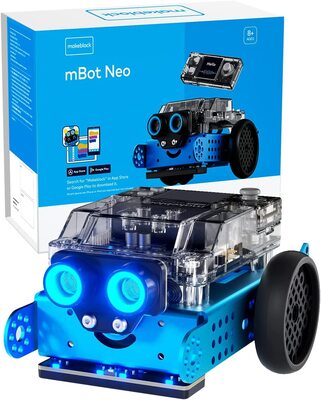
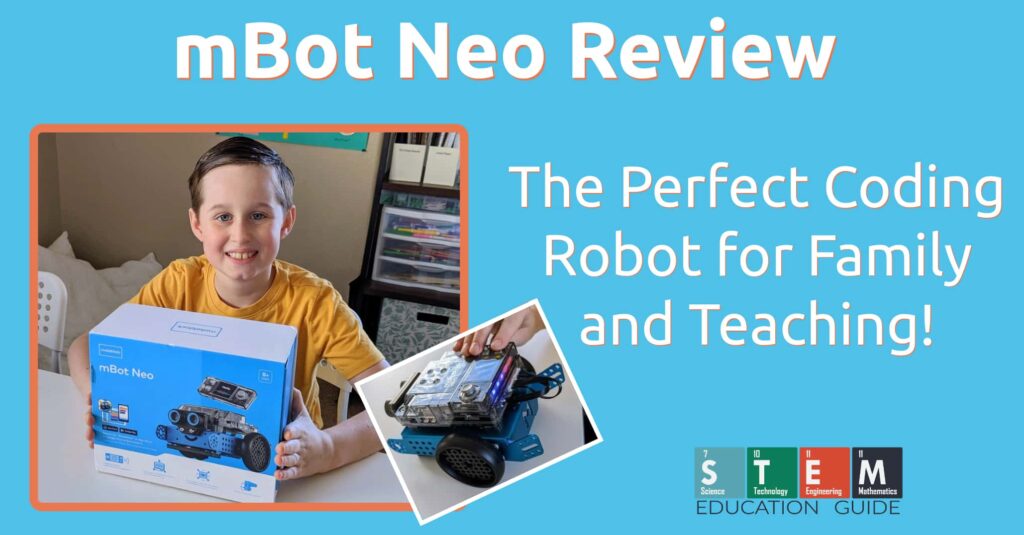
The mBot Neo stands as a premier choice for introducing children to robotics and programming. Built from robust aluminum and thick, durable plastics, this DIY coding robot requires young learners to assemble the hardware themselves. Once built, users leverage an intuitive app to write code that commands the robot to move, dance, light up, and sing. For children who are still mastering programming fundamentals, the kit includes a wide array of preprogrammed activities accessible via a physical controller. It is an exceptionally well-rounded tool for bridging physical assembly with digital logic.
2. Sphero BOLT
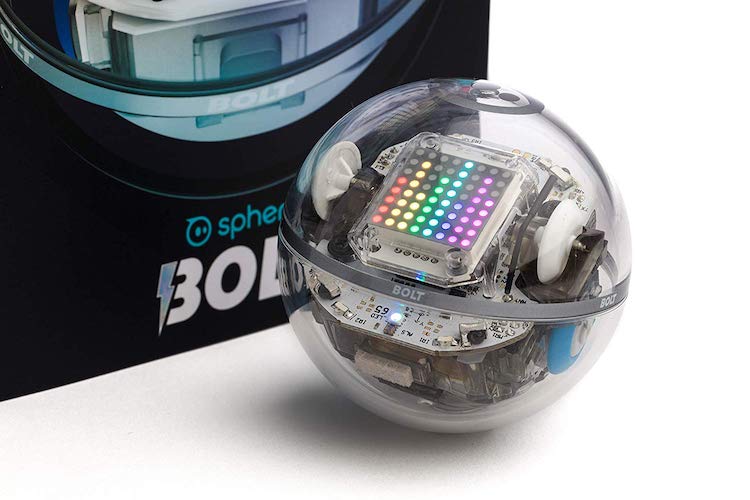
The Sphero BOLT is a shock-proof, waterproof, and exceptionally durable programmable robotic sphere. Designed for durability and endless versatility, users write custom code on compatible devices, and the robotic ball executes the commands with precision. Beyond basic rolling maneuvers, the BOLT features an advanced LED matrix display and programmable sensors. Educators and parents utilize it for everything from beginner navigational challenges to complex mathematical programming for older children.
3. Wonder Workshop Dash
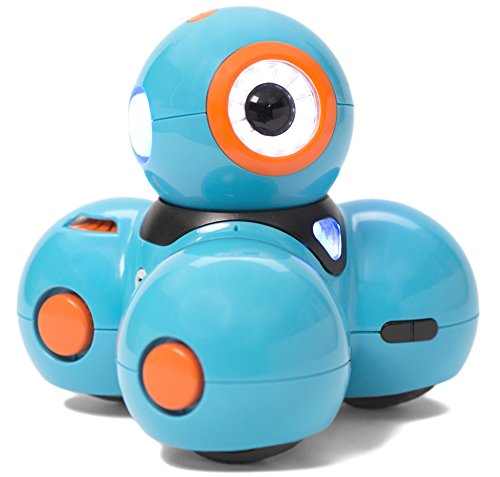
Targeted at children ages six and up, Wonder Workshop Dash is a charming, fast-moving, and fully programmable robot. One of its standout features is its accessibility: even parents with zero coding experience can easily facilitate learning, thanks to in-app challenge guides that walk children through progressive levels of complexity. Equipped with an onboard microphone for voice recording and playback, Dash can even interact with other Dash units, making it an engaging centerpiece for multi-child households or collaborative playgroups.
4. Makey Makey
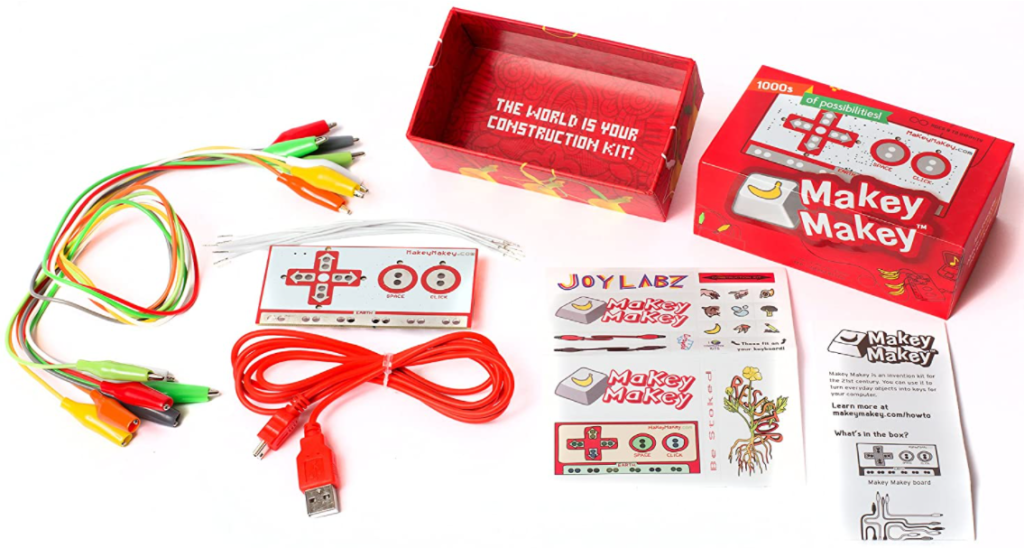
For a masterclass in hands-on, imaginative technology learning, the Makey Makey invention kit remains unrivaled. Using a simple circuit board, alligator clips, and a USB cable, children can turn everyday objects—such as bananas, Play-Doh, or graphite drawings—into touchpads for a computer. The kit emphasizes radical simplicity, teaching the fundamentals of electrical conductivity and computer interfacing in a way that feels entirely like play.
5. Kaboom Explosive Science Lab Kit
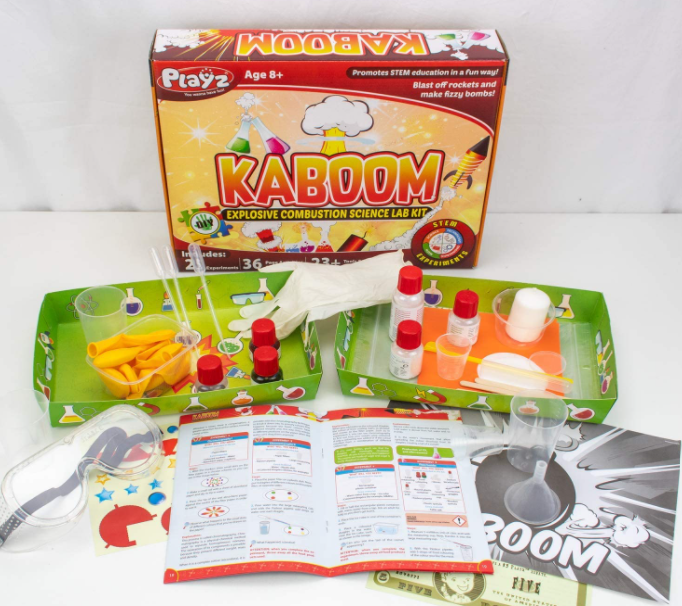
Science is rarely boring when explosions are involved. The Kaboom Explosive Science Lab Kit offers over 25 safe, combustion-focused experiments designed to get kids excited about chemistry. From launching backyard rockets to creating fireproof balloons, this kit teaches complex chemical reactions and transformations while explicitly explaining the scientific "why" behind each phenomenon, turning raw energy into structured education.
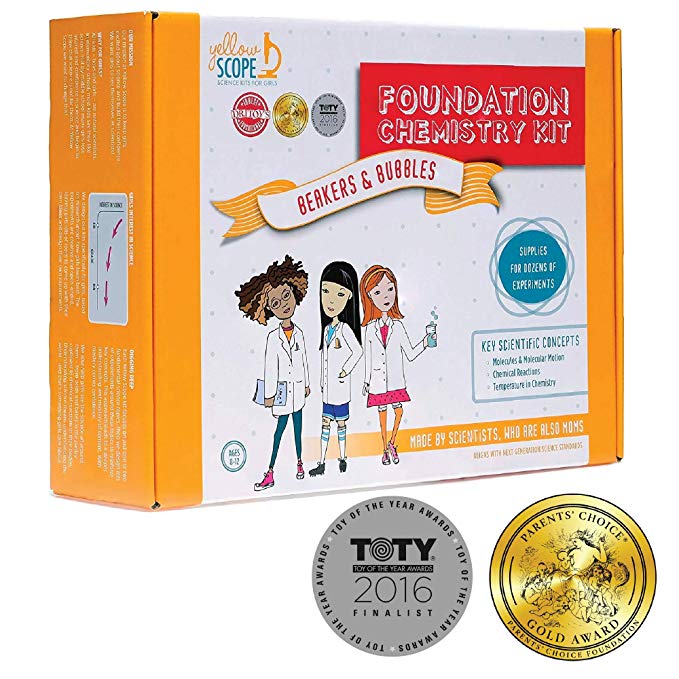
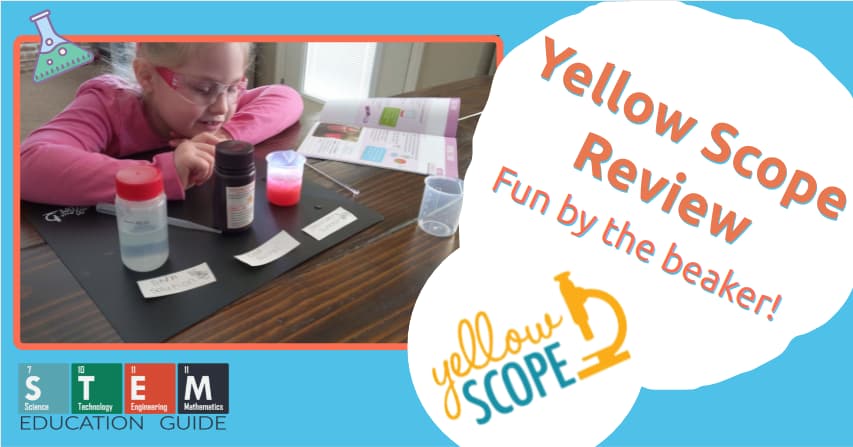
6. YELLOW SCOPE Foundation Chemistry Kit
Recognized widely for its intentional design catering to young female scientists, the YELLOW SCOPE Foundation Chemistry Kit (featuring sets like Beakers & Bubbles) bridges traditional laboratory science with real-world applications. By exploring the complex chemistry behind everyday items—such as cosmetic science, hair care products, and body formulations—this kit highlights diverse, often-overlooked STEM career paths while maintaining rigorous scientific standards.
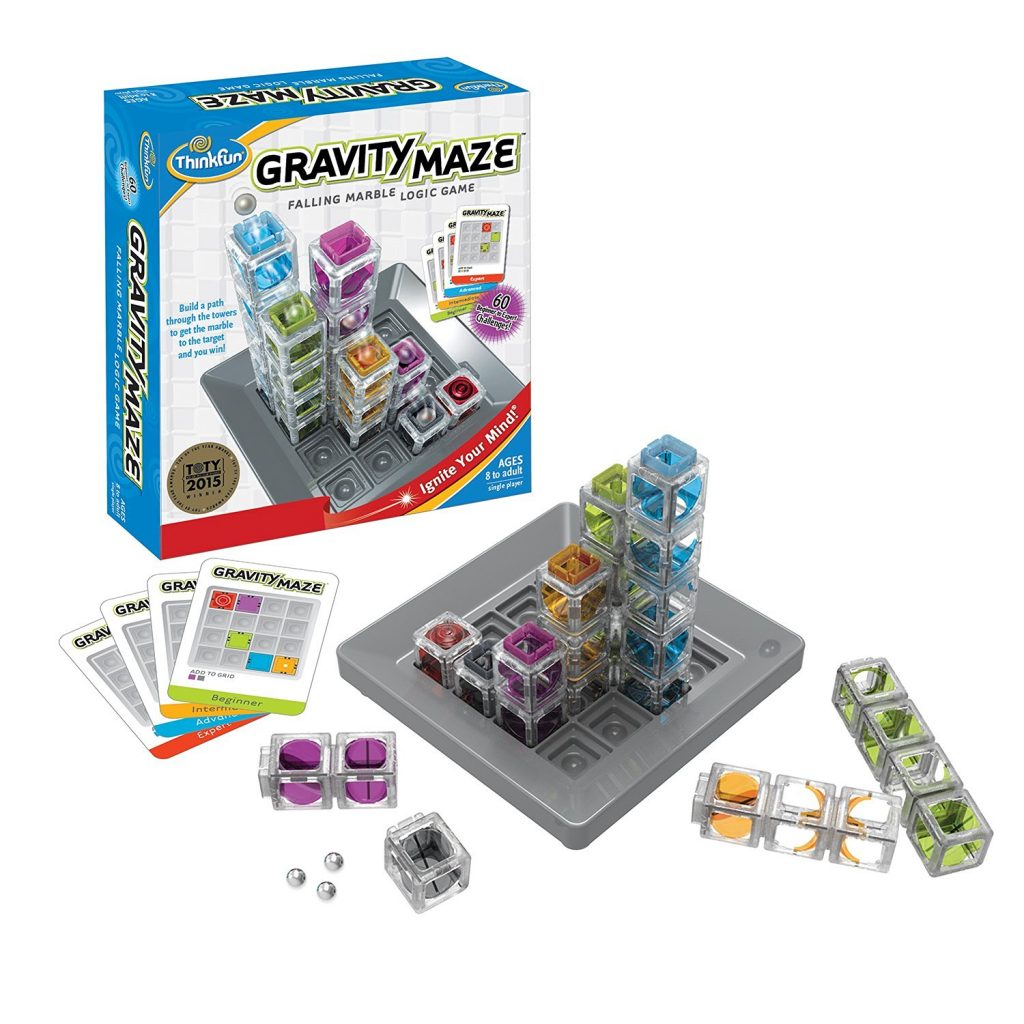
7. ThinkFun Gravity Maze Marble Run
Combining a traditional marble run with a high-level logic puzzle, the ThinkFun Gravity Maze challenges players to arrange modular towers to guide a marble from a starting point to a target destination using gravity. Accompanied by progressive challenge cards, this screen-free game builds spatial reasoning, planning, and sequential logic skills, making it an exceptional gift for children ages eight and older.
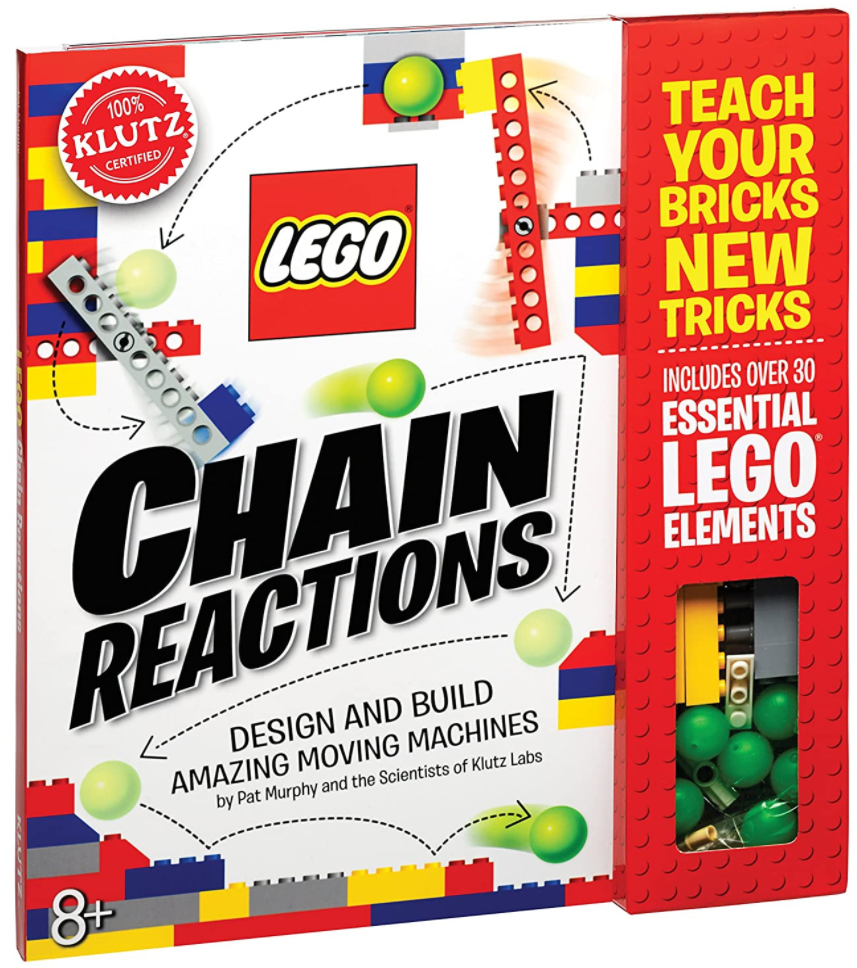
8. LEGO Chain Reactions
For budding mechanical engineers, LEGO Chain Reactions provides an ideal gateway into physics and kinetic energy. This building kit guides children through the creation of clever contraptions and domino-effect machines. Watching a self-built contraption successfully trigger movement in a subsequent mechanism instills profound confidence and encourages children to experiment with everyday household objects to design their own physical chain reactions.
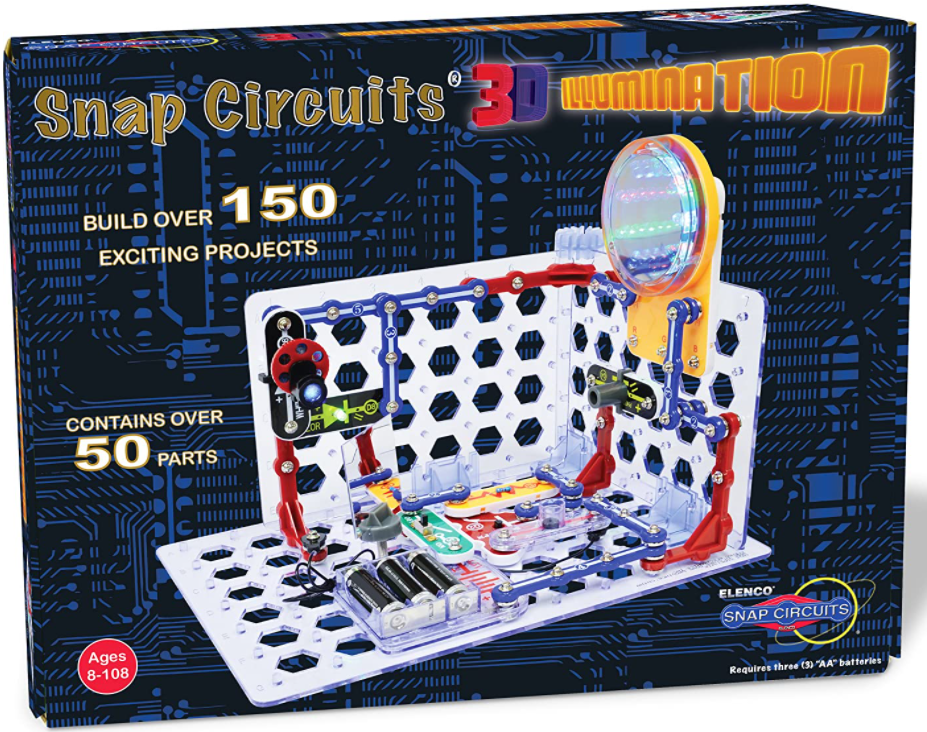
9. Snap Circuits 3D Illumination Electronics Exploration Kit
Snap Circuits is a legendary name in educational electronics, and the 3D Illumination kit takes circuit-building to the next level. By snapping together color-coded, modular plastic components, children learn the fundamentals of electrical currents while building glowing, three-dimensional structures. It provides a tangible, error-forgiving introduction to electronics that consistently ranks among the most reliable learning investments for young minds.
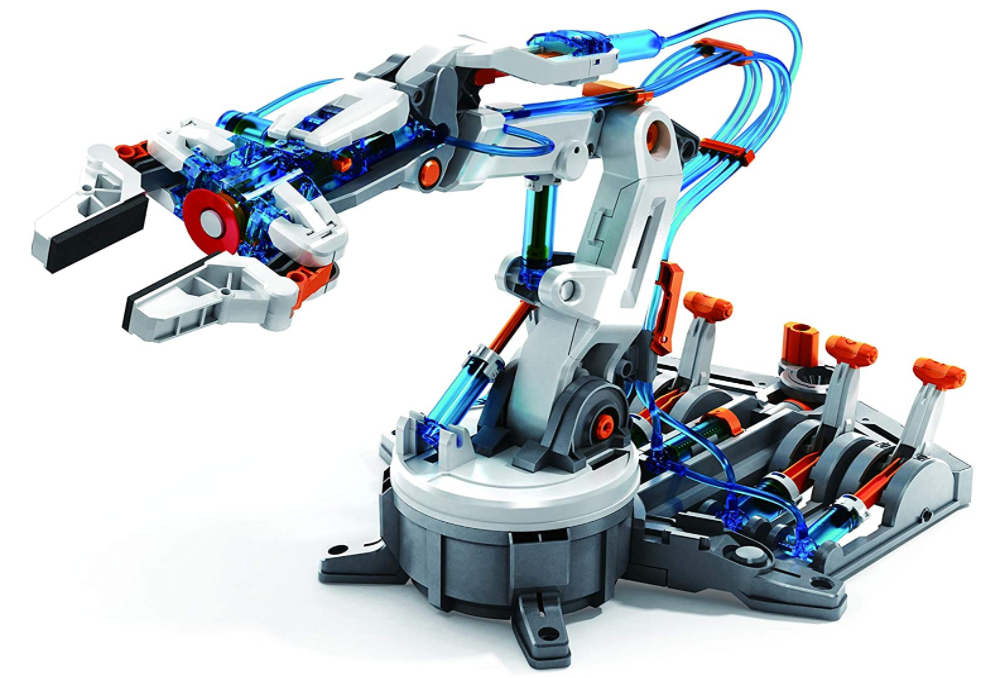
10. Elenco Teach Tech Hydraulic Kit (HydroBot Arm)
Introducing concepts of renewable energy and fluid mechanics, the Elenco Teach Tech HydroBot Arm utilizes hydraulic plungers and a 270-degree rotating arm to teach structural engineering. Children assemble the mechanical arm themselves and operate it using water-filled hydraulic controls, gripping, lifting, and moving objects. It is a brilliant, motor-free introduction to the power of physics and mechanics.
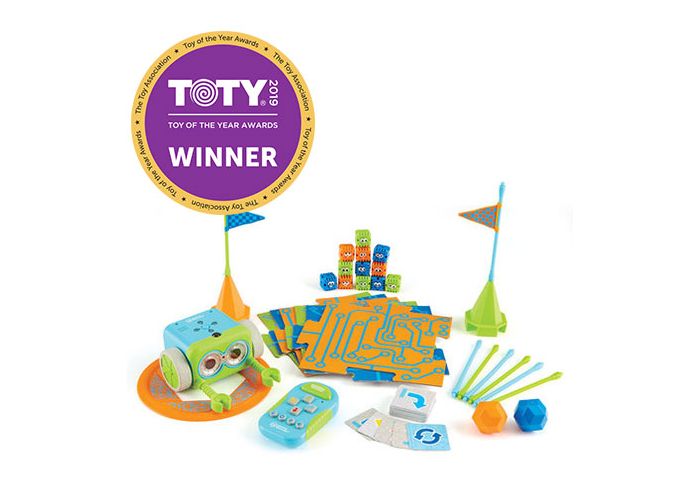
11. Botley The Coding Robot Activity Set
For younger learners who need a break from digital screens, Botley The Coding Robot offers a robust, 100% screen-free coding experience. Using a physical remote programmer, children transmit sequential directional commands to Botley, teaching foundational logic, loops, and obstacle-avoidance programming through physical play.
12. Elenco TEACH TECH Mech-5 Robot Kit
For children ready to advance beyond basic robotics, the Mech-5 Programmable Mechanical Robot offers a sophisticated coding experience without requiring batteries or computers. Children use a physical coding wheel to program the robot’s mechanical functions, enabling it to kick, throw, draw, lift, and spin. It is an engineering marvel that teaches logical sequencing through pure mechanical design.
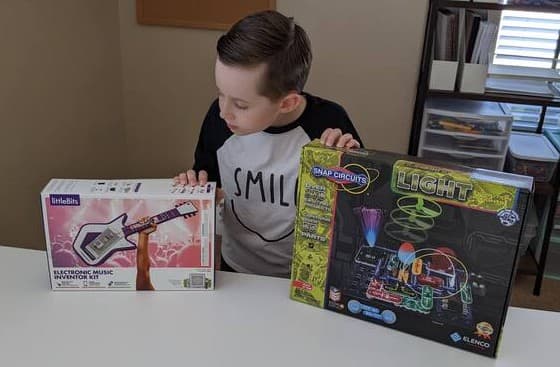
13. littleBits Electronic Music Inventor Kit
Merging engineering with the arts, the littleBits Electronic Music Inventor Kit allows children to build their own custom musical instruments—such as an electronic guitar—and program them using a companion app. By tinkering with modular electronic blocks, kids discover how circuits manipulate sound waves, making it an ideal collaborative project for small groups.
14. Kid K’NEX Education Set
Designed specifically for younger hands, Kid K’NEX features large, soft, colorful plastic pieces that eliminate the safety hazards of traditional construction toys while preserving the developmental benefits. By combining stacking with connection gears, toddlers can build animals, vehicles, and abstract structures, laying the early groundwork for spatial and structural engineering.

15. Ravensburger GraviTrax XXL Marble Run
The Ravensburger GraviTrax XXL system is a modular, action-packed marble run built upon a unique hexagonal grid. Entirely screen-free and reliant on mechanical physics, gravity, and magnetism, this expansive set challenges builders to carefully calculate angles, velocity, and momentum to ensure their marbles successfully navigate complex multi-tier tracks.
Future Outlook
As the retail and educational sectors continue to intertwine, the trajectory for STEM toy development points toward even greater integration of physical-digital hybrid play, sustainable materials, and personalized learning adaptation.

For holiday shoppers and educators, the takeaway is clear: the modern shopping season rewards the prepared. By recognizing the shift toward early, mid-November digital promotions, families can secure high-value educational tools well before holiday inventory bottlenecks occur. Investing in STEM toys is no longer just about filling space under the tree; it is a proactive investment in the critical thinking, problem-solving, and technological literacy required for the future.

