
Executive Overview
In the modern educational landscape, instructional coaching and professional development are widely heralded as the engines of school improvement. Yet, whenever school leaders or instructional coaches introduce new pedagogical frameworks, curricula, or administrative mandates, they frequently encounter an immovable force: teacher resistance. Traditionally, educational institutions have diagnosed this pushback as a personal deficit within the educator—a stubborn unwillingness to adopt modern practices, a fixed mindset, or outright insubordination.
However, renowned educator, author, and coach Elena Aguilar challenges this long-standing institutional paradigm. In her ninth and latest book, How to Coach Resistance: Turning Pushback Into Possibility, Aguilar posits a revolutionary thesis: resistance is not a solitary pathology belonging solely to the teacher, but rather a dynamic, relational tension co-created by both the educator and the coach.
This comprehensive report explores Aguilar’s transformative framework, dissecting the psychological underpinnings of pushback, the mechanics of the "ACE" and "Gaps" frameworks, and the critical distinction between obstructive resistance and righteous pushback. By shifting the focus from blame to curiosity, educational systems can dismantle adversarial coaching dynamics and unlock genuine, sustainable instructional growth.
Detailed Chronology: The Evolution of Professional Coaching and the Genesis of Resistance
To understand why pushback remains an enduring challenge in K-12 education, one must examine the historical trajectory of instructional coaching. Over the past three decades, the role of the instructional coach has transitioned from a remedial intervention for struggling teachers to a ubiquitous vehicle for systemic reform.
The Shift from Compliance to Collaboration
In the early days of formal instructional coaching, the model was heavily evaluative and compliance-driven. Coaches—often operating as extensions of school administration—would enter classrooms with rigid checklists, evaluate adherence to specific teaching methodologies, and issue corrective directives. Predictably, this generated high levels of anxiety and defensive pushback.
As educational research evolved toward adult learning theories, the field recognized that adult professionals cannot be managed the same way children are taught. Coaching shifted toward collaborative models rooted in trust and dialogue. Despite this evolution, however, the ghost of compliance remained. When coaches encountered teachers who balked at new initiatives, the institutional reflex too often defaulted to old assumptions: the teacher was simply "resistant to change."
Aguilar’s Intervention: Redefining the Dynamic
Elena Aguilar’s work over the past twenty years—culminating in her latest release—marks a critical turning point in this evolution. Rather than viewing coaching as a unidirectional delivery system of best practices, Aguilar positions it as an interpersonal ecosystem.
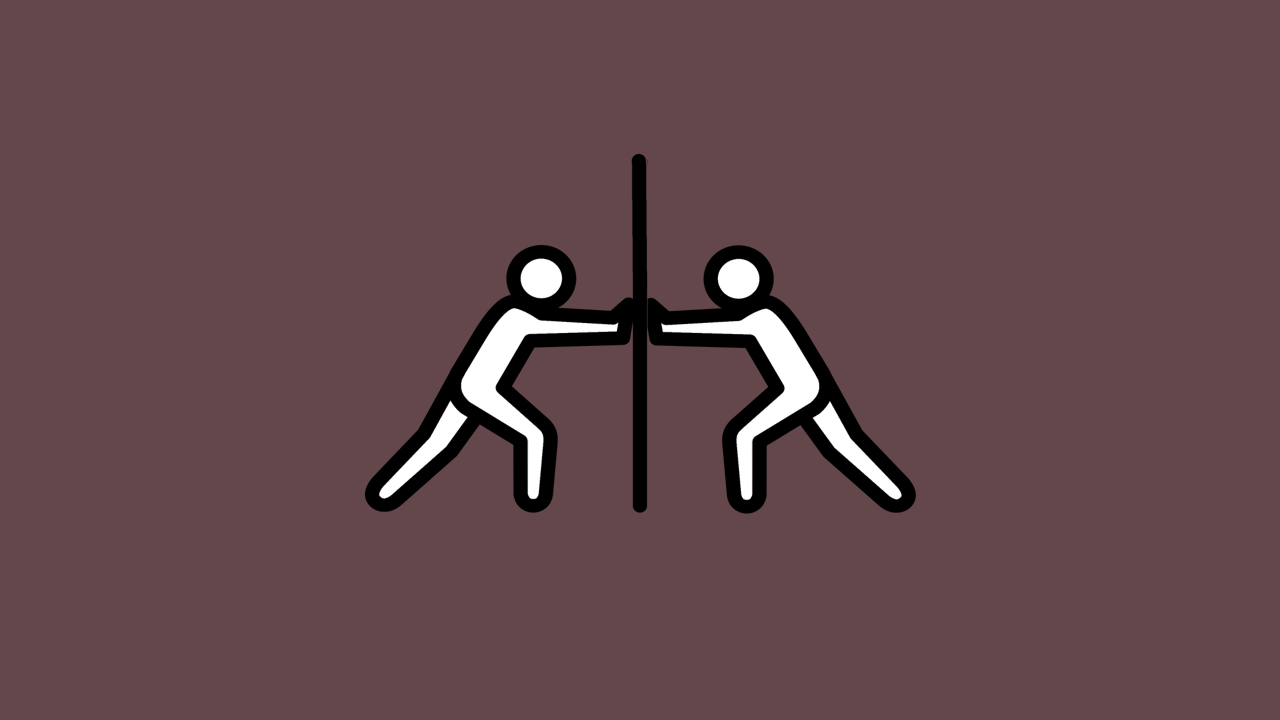
When a coach introduces a new curriculum and a teacher responds with skepticism or outright refusal, a psychological feedback loop is triggered. The teacher experiences fear, inadequacy, or skepticism and pushes back; the coach, feeling their professional efficacy threatened, doubles down on their directive and pushes back in response. Aguilar illustrates this through a vivid metaphor: two hands pushing forcefully against each other. The pressure is reciprocal.
By tracing this chronology of professional development, it becomes clear that traditional coaching often inadvertently manufactures the very resistance it seeks to eliminate. The solution, therefore, requires a fundamental alteration of the coach’s stance—specifically, the conscious act of dropping one’s hand to de-escalate the adversarial dynamic.
Supporting Context & Metrics: Unpacking the Frameworks of Transformation
To move beyond theoretical abstractions, Aguilar provides concrete, systematic tools designed to diagnose and resolve pushback. These frameworks—namely the ACE framework and the Gaps framework—offer coaches a diagnostic lens through which to view educator behavior.
1. The ACE Framework: Navigating the Emotional Terrain
When a coach successfully de-escalates a tense interaction by curbing their own defensiveness, they invariably encounter deep-seated emotions. Aguilar notes that teachers are often operating under intense stress, systemic burnout, and feelings of vulnerability. The ACE framework provides a three-step protocol to navigate these emotional landscapes:
- Acknowledge Emotions: Coaches do not need formal psychological training to validate a teacher’s emotional state. By making space to name emotions—such as fear, overwhelm, or shame—coaches communicate institutional acceptance rather than judgment. Utilizing tools like Aguilar’s Core Emotions inventory allows educators to pinpoint exact feelings rather than blanket statements like "I’m fine" or "This won’t work."
- Cultivate Compassion: Self-judgment is a primary barrier to instructional growth. Stressed educators frequently hold themselves to impossible standards. Aguilar suggests asking reflective prompts, such as, "What would you say to a best friend experiencing this exact challenge?" By fostering self-compassion, teachers become emotionally equipped to extend grace to themselves, their students, and their administrators. Furthermore, Aguilar stresses that coaches must authentically practice self-compassion; otherwise, invitations toward empathy feel hollow and performative.
- Expand the Story: Human beings naturally construct narratives to make sense of professional hardship. A teacher who fails a lesson may construct a limiting narrative: "My students are incapable of learning this material." Coaches must help educators unpack these internal scripts, examining the underlying beliefs and deliberately choosing to expand the narrative to encompass new possibilities.
2. The Gaps Framework: Diagnosing the True Barrier to Instruction
A common institutional error is misdiagnosing the root cause of a teacher’s reluctance. Traditional educational jargon often labels a hesitant educator as suffering from a "will gap"—the cynical assumption that the teacher simply does not want to succeed. Aguilar’s Gaps Framework dismantles this fallacy by categorizing instructional hurdles into six distinct domains:
- Skill: The mechanical ability to execute a pedagogical practice.
- Knowledge: Understanding the conceptual framework or content underlying the practice.
- Capacity: Having the necessary time, physical energy, and structural bandwidth.
- Will: Genuine motivational alignment or desire (the least common root cause of resistance).
- Emotional Intelligence: The ability to regulate one’s emotions and navigate interpersonal dynamics in the classroom.
- Cultural Competence: The awareness and capability to navigate cultural dynamics equitably among diverse student populations.
By systematically evaluating these six areas, coaches can stop prescribing generic interventions and instead target the actual structural or educational deficit hindering the teacher’s progress.
Official Perspectives and Expert Insights
The discourse surrounding Aguilar’s latest work highlights a growing movement within educational leadership toward human-centric professional learning. Instructional leaders across districts are increasingly recognizing that top-down edicts fail without psychological safety.
Educational psychologists note that adult learners possess autonomous identities tied deeply to their professional self-efficacy. When an instructional coach or administrator demands an immediate, uncritical pivot in teaching methodology, the educator perceives an existential threat to their professional competence.
"If you don’t want to experience resistance, drop your hand. Stop exerting your own pressure against their pressure," Aguilar emphasizes during her interviews on the subject.
This perspective shifts the locus of control. Rather than viewing the stubborn teacher as an insurmountable obstacle, the coach realizes that resistance is entirely malleable. Because resistance is a relational dynamic, changing one’s interactive approach alters the entire equation.
Moreover, Aguilar introduces a radical and validating concept: righteous resistance. Not all pushback is rooted in fear, skill gaps, or emotional fatigue. Sometimes, teachers push back because a mandate is pedagogically unsound, developmentally inappropriate, or ethically questionable—such as forcing early childhood educators to subject kindergarten students to prolonged, sedentary instructional blocks. In these instances, resistance is not a pathology; it is an ethical imperative. Coaches must learn to honor legitimate pushback and assist educators in navigating institutional channels to voice valid systemic concerns.

Future Outlook: The Horizon of Human-Centric Coaching
As school districts grapple with unprecedented teacher retention crises, rising burnout rates, and the complex fallout of educational disruptions, the traditional punitive coaching model is rapidly becoming obsolete. The future of educational leadership hinges on relational trust, emotional intelligence, and systemic empathy.
The implications of Aguilar’s work extend far beyond formal instructional coaching dyads. The principles outlined in How to Coach Resistance serve as a universal blueprint for anyone navigating complex human interactions—whether mentoring novice educators, facilitating grade-level PLCs (Professional Learning Communities), or managing challenging institutional reforms at the district level.
Moving forward, professional development programs must train instructional leaders not merely in curriculum delivery, but in the art of active listening, emotional literacy, and diagnostic flexibility. When teachers are met with curiosity rather than coercion—when they hear the message, "I’m not here to judge you; I want to be a partner in helping you work through this"—the adversarial walls crumble.
By transforming pushback from a professional dead-end into an exploratory gateway for mutual learning, educational systems can foster environments where both teachers and students thrive. The future of school improvement depends entirely on our willingness to stop pushing against one another and, instead, start building together.

