
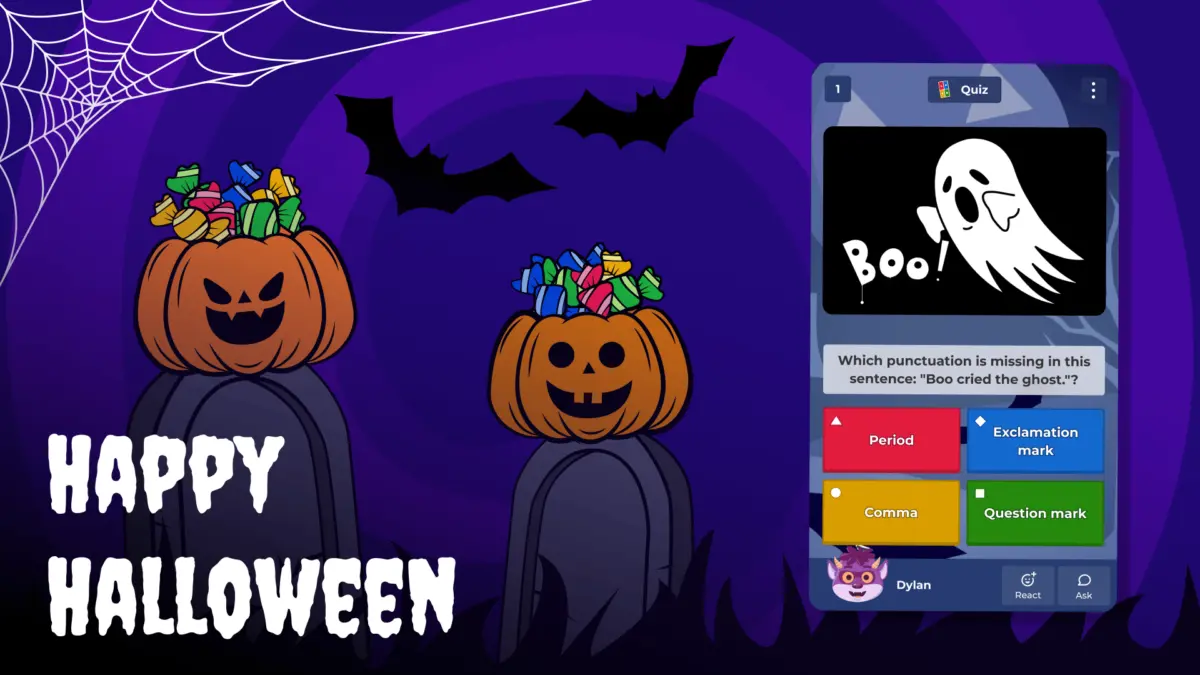
Executive Overview
As the autumn leaves turn and the cultural zeitgeist shifts toward the mysterious, the macabre, and the celebratory, educators, parents, and lifelong learners face a perennial challenge: maintaining engagement during a season brimming with external distractions. Enter Kahoot!, the global game-based learning platform, which has once again weaponized fun to combat the autumnal academic slump. By rolling out an expansive, curated suite of Halloween-themed educational content, Kahoot! is bridging the gap between recreation and rigorous study.
The platform’s latest seasonal initiative leverages high-profile partnerships with cultural heavyweights such as Disney, Marvel, Nickelodeon, TED-Ed, Wikipedia, and the World Wildlife Fund (WWF). Far more than a mere marketing gimmick, this extensive library of ready-made quizzes, interactive lessons, and trivia challenges is designed to seamlessly integrate into classrooms, living rooms, and study sessions alike. By marrying curriculum-aligned educational frameworks with beloved pop-culture icons—from SpongeBob SquarePants and Hello Kitty to Yoda and Charlie Brown—Kahoot! is redefining how students absorb complex concepts in science, mathematics, history, and language arts. This report provides a comprehensive analysis of Kahoot!’s seasonal campaign, examining its pedagogical foundations, its multi-tiered target audience deployment, and the broader implications of gamified learning in modern education.
Detailed Chronology and Deployment Strategy
The rollout of Kahoot!’s Halloween educational ecosystem represents a meticulously planned logistical and pedagogical endeavor, deployed across several distinct phases to capture maximum user engagement during the peak of the fall semester.
Phase 1: Curating the Classroom Catalyst (Early October)
As schools settled into the rhythm of the new academic year, the platform targeted educators seeking to harness the natural curiosity inspired by the Halloween season. Recognizing that traditional pedagogical methods often struggle against the sensory overload of upcoming holidays, Kahoot! partnered with institutions like TED-Ed to deliver history- and literature-focused modules. Students were introduced to the historical realities and legendary lore behind iconic figures like Dracula and the Salem Witch Trials, transforming spooky narratives into critical historical inquiries. Simultaneously, channels featuring Nickelodeon and Disney brought familiar characters into the science and language arts matrix, allowing teachers to preemptively capture student attention before holiday restlessness could take hold.
Phase 2: Engaging the Home Front and Young Learners (Mid-October)
As families navigated the weeks leading up to October 31st, Kahoot! shifted its focus toward the home. The platform recognized that parents often struggle to keep children focused on foundational skills outside of school hours. By deploying interactive courses such as Spooky Season with Hello Kitty and Friends, Marvel Midnight Monster Math starring Groot, and It’s the Great Pumpkin, Charlie Brown, the platform created a bridge between play and practice. Counting, addition, subtraction, and emotional literacy were embedded directly into festive narratives, proving to young learners that mathematical equations and emotional intelligence can be sweeter—and far less intimidating—than a bucket of Halloween candy.
Phase 3: Fortifying Exam-Season Study Habits for Students (Late October)
With mid-terms and early winter examinations looming on the horizon, older students often experience academic fatigue. Kahoot! strategically positioned its Halloween content as a robust study aid. Collaborating with the Museum of Science, the platform introduced STEM-focused challenges addressing complex physical concepts, such as why the moon changes its phases, alongside explorations of creepy-crawly ecosystems. Furthermore, partnerships with the WWF (Not-so-spooky wildlife) and Wiktionary (Wicked words for Halloween) allowed high school and university-bound students to expand their biological knowledge and linguistic repertoires, proving that rigorous study sessions can successfully coexist with seasonal festivities.
Phase 4: Fostering Lifelong Learning and Social Gatherings (Halloween Week)
In the final stretch leading up to Halloween night, the platform expanded its scope outward to encompass lifelong learners, corporate teams, and social circles. By releasing trivia collections curated by Wikipedia on the historical origins and global traditions of the holiday, alongside intergalactic pop-culture challenges like Star Wars: Happy Ghoul-actic Halloween, Kahoot! positioned itself as a centerpiece for community engagement. Friends, family members, and colleagues could test their knowledge, proving that playful competition knows no age limit.
Supporting Context and Metrics: The Science of Gamified Learning
To understand the impact of Kahoot!’s seasonal campaign, one must examine the broader pedagogical shift toward gamification in education. Decades of educational research underscore the efficacy of game-based learning models in reducing cognitive anxiety, improving information retention, and fostering intrinsic motivation.
The Neuroscience of Play
When students engage with platforms like Kahoot!, the brain releases dopamine—a neurotransmitter intimately tied to reward, pleasure, and motivation. By transforming high-stakes assessments or complex mathematical puzzles into fast-paced, interactive challenges, anxiety levels plummet. A student who might freeze up during a traditional pop quiz on lunar phases or algebraic subtraction feels liberated within the safe, game-like parameters of a Kahoot! session featuring Groot or the Peanuts gang.
Curricular Alignment and Cognitive Load Theory
Kahoot!’s content is not merely entertaining; it is rigorously mapped to national and international educational standards. For instance, modules developed in partnership with SciShow Kids and the Museum of Science directly address benchmarks such as 1-ESS1-1 Earth’s Place in the Universe. By breaking down complex scientific phenomena into bite-sized, visually stimulating questions supported by high-definition illustrations and video assets, the platform respects Cognitive Load Theory. It ensures that students are neither overwhelmed by extraneous data nor under-stimulated by rote memorization.

Demographic Reach and Accessibility
The breadth of Kahoot!’s Halloween initiative highlights the platform’s unique market positioning as an omnipresent educational utility. Operating seamlessly across HTML5 web browsers, Android, and iOS devices, the platform ensures equitable access whether a student is sitting in a heavily funded suburban high school, a remote rural classroom, or at a kitchen table using a parent’s smartphone. The inclusion of tiered subscription options—such as the Kahoot!+ Gold plans tailored specifically for K-12 educators, independent students, and personal home users—underscores an institutional commitment to unlocking premium, ad-free, verified content across diverse socio-economic demographics.
Official Statements and Industry Insights
Educational technology leaders and institutional partners have increasingly emphasized the necessity of meeting students where they are—both cognitively and culturally. While corporate press releases from Kahoot! emphasize the "fang-tastic fun" and "eerie-sistible excitement" of their seasonal campaigns, underlying these playful idioms is a serious commitment to educational equity and modern pedagogical science.
Industry analysts point out that seasonal content campaigns serve a dual purpose in EdTech: they drive short-term user acquisition and platform engagement while reinforcing long-term brand loyalty. By securing intellectual property partnerships with major entertainment conglomerates (Disney, Marvel, Lucasfilm, Sanrio) and esteemed educational institutions (TED-Ed, Museum of Science, WWF, Wiktionary), Kahoot! has established a unique moat.
"Education cannot exist in a vacuum separated from culture," notes one prominent EdTech researcher. "When a child sees characters they adore—whether it’s SpongeBob exploring marine science or Hello Kitty tackling basic arithmetic—the psychological barrier to entry vanishes. Learning is no longer perceived as a chore imposed by authority figures, but as an extension of play."
Furthermore, educators have reported a noticeable decline in behavioral disruptions during high-energy calendar events like Halloween when structured, gamified activities are introduced into the lesson plan. Teachers utilizing the platform have repeatedly noted that competitive yet collaborative quiz formats channel student exuberance into productive academic inquiry, turning what was once a disruptive day into a breakthrough learning moment.
Future Outlook: The Evolution of Seasonal and Gamified Education
As we look beyond the current academic year, the success of Kahoot!’s Halloween initiative offers a clear roadmap for the future of digital learning. The blurring lines between entertainment media and educational tools will only intensify, driven by advancements in artificial intelligence, immersive media, and cloud-based collaborative platforms.
1. Hyper-Personalization of Seasonal Content
Future iterations of seasonal campaigns are expected to leverage machine learning algorithms to adapt quiz difficulty in real-time based on individual student performance. While a classroom plays a Marvel-themed math kahoot together, the platform may dynamically adjust the complexity of equations for different students, ensuring that advanced learners are sufficiently challenged while struggling students receive targeted scaffolding—all wrapped within the same festive narrative.
2. Expansion into Immersive and Spatial Learning
As augmented reality (AR) and virtual reality (VR) technologies become more accessible in classrooms, interactive platforms like Kahoot! are poised to move beyond the traditional two-dimensional smartphone or desktop screen. Imagine a future Halloween lesson where students don AR headsets not merely to answer multiple-choice questions about the Salem Witch Trials, but to virtually walk through a historically accurate, interactive reconstruction of the era, guided by primary-source documents integrated directly into spatial quiz mechanics.
3. Lifelong Learning and Corporate Wellness
The modern workforce is increasingly adopting gamification principles for professional development, onboarding, and team-building exercises. Kahoot!’s expansion into lifelong learning—evidenced by its trivia collections for adults and corporate teams—signals a permanent shift in how society views education. Learning is no longer confined to youth; it is a continuous, lifelong pursuit that benefits immensely from social, game-based interaction, regardless of whether the topic is Shakespearean vocabulary, space exploration, or historical holiday traditions.
Conclusion
Kahoot!’s comprehensive Halloween campaign demonstrates that academic rigor and festive entertainment are not mutually exclusive. By expertly weaving together pop culture icons, trusted scientific institutions, and curriculum-aligned lesson plans, the platform has created an invaluable resource for teachers, parents, students, and lifelong learners alike. As the educational landscape continues to evolve, initiatives like these prove that when learning is made engaging, accessible, and fun, the pursuit of knowledge is truly timeless—and a little bit of spooky magic can go a long way.

