The retail landscape for holiday gift-giving has undergone a profound structural shift. For families looking to inspire the next generation of engineers, scientists, coders, and mathematicians, the traditional post-Thanksgiving rush to brick-and-mortar storefronts has been largely superseded by an extended, digital-first shopping season. Industry analysts report that major retailers are rolling out aggressive Black Friday and Cyber Monday discounts on Science, Technology, Engineering, and Math (STEM) toys as early as mid-November.
This strategic pivot toward online-exclusive promotions is designed to circumvent supply chain bottlenecks, mitigate overcrowded retail environments, and capture consumer spending long before the traditional holiday rush. For parents, educators, and gift-givers, this prolonged sales window presents a unique opportunity: deeper discounts, better inventory availability on top-tier educational kits, and ample time to research the most effective learning tools on the market.
This comprehensive guide analyzes the top 15 STEM toys and learning kits featured in this season’s early holiday sales. By examining educational value, durability, age appropriateness, and potential savings, this report equips buyers with the authoritative insights needed to make informed purchasing decisions during the 2023 holiday shopping season.
Detailed Chronology of the 2023 Holiday Sales Shift
The timeline for holiday toy purchasing has accelerated dramatically over the past several years. Understanding how and when these deals materialize can help savvy consumers maximize their holiday budgets.
Early November: The Digital Soft Launch
Beginning in the first and second weeks of November, major e-commerce platforms and specialty toy manufacturers initiate "early bird" promotions. Unlike previous decades where deep discounts were hoarded for the Friday immediately following Thanksgiving, modern retail algorithms rely on early data collection. Retailers launch select STEM products—particularly high-demand coding robots and chemistry kits—at competitive discount rates to test consumer demand and lock in early sales.
Mid-November: The Online-Only Pivot
By mid-November, the emphasis shifts entirely to online channels. Recognizing that modern consumers prefer browsing from home rather than navigating crowded shopping aisles on Black Friday morning, retailers allocate their most aggressive promotional budgets to web-exclusive bundles and flash sales. This is the optimal window for securing high-demand items like programmable robots and complex logic games before stock depletion sets in.
Black Friday to Cyber Monday: The Peak Confluence
While many discounts go live early, the official weekend spanning Black Friday through Cyber Monday remains the high-water mark for sitewide price drops. During this four-day window, cross-category promotions—such as bundled learning kits and manufacturer-wide rebates—reach their maximum depth. However, consumers must remain vigilant, as popular items frequently face backorders or sell out entirely during this peak period.
Supporting Context & Metrics: The Rise of STEM Learning at Home
The surge in demand for educational toys is not merely a seasonal marketing trend; it reflects a broader cultural and educational movement. Modern parents increasingly view playtime as a critical vehicle for early cognitive development.
The Skill Gap: According to recent educational labor reports, the demand for STEM-literate professionals continues to outpace supply. Introducing foundational concepts like algorithmic thinking, basic circuitry, and spatial reasoning at an early age significantly correlates with long-term academic confidence.
Screen-Free vs. Digital Balance: The current market bifurcates neatly into two distinct categories: digital/programmable tools (which teach syntax, logic, and robotics via apps and remote devices) and tactile/analog kits (which foster mechanical intuition, physics understanding, and tactile exploration through blocks, gears, and chemistry sets).
Inclusivity in STEM: A notable trend in recent product development is the intentional design of gender-inclusive science kits. Products explicitly engineered to dismantle historical gender biases in scientific fields have seen a massive surge in market share and consumer approval ratings.
The Top 15 STEM Toys and Learning Kits to Watch
Below is an in-depth breakdown of the most sought-after STEM toys featured in this season’s holiday sales events, categorized by discipline and developmental benefit.
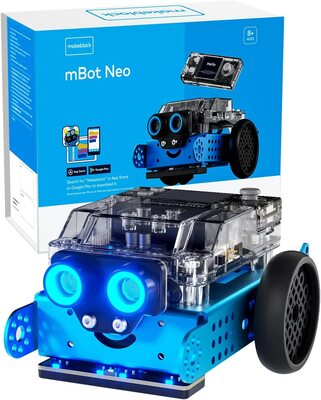
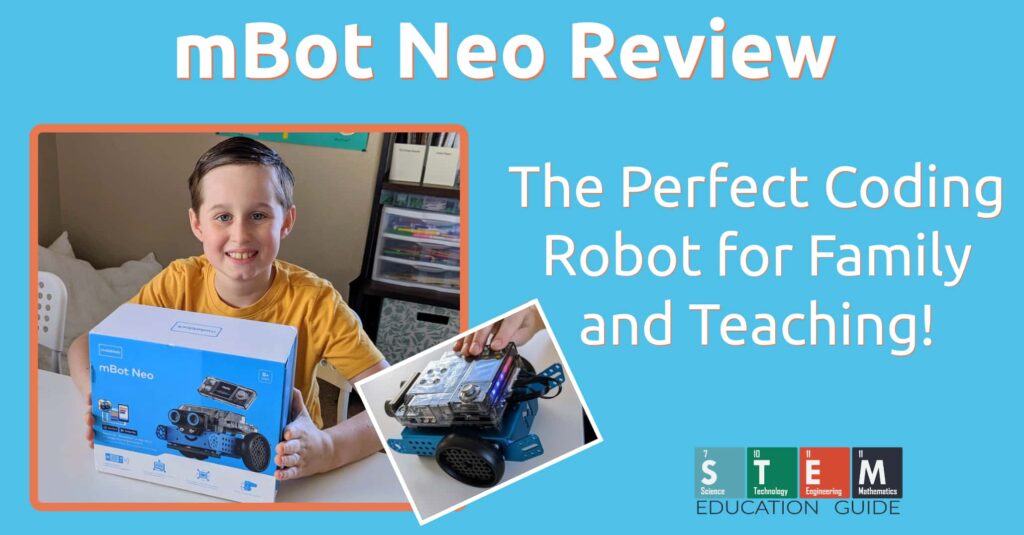
1. mBot Neo (Robotics & Coding)
Target Audience: Kids interested in robotics and beginner-to-intermediate coding.
Overview: The mBot Neo is a robust, DIY coding robot constructed from high-grade aluminum and thick plastics. Children assemble the robot themselves before using a companion app to program its movements, lights, sounds, and interactive routines.
Key Features: Beyond app-based block coding, it features preprogrammed activities accessible via a physical controller, making it exceptionally user-friendly for absolute beginners. It stands out as a premier entry point into mechanical assembly and software logic.
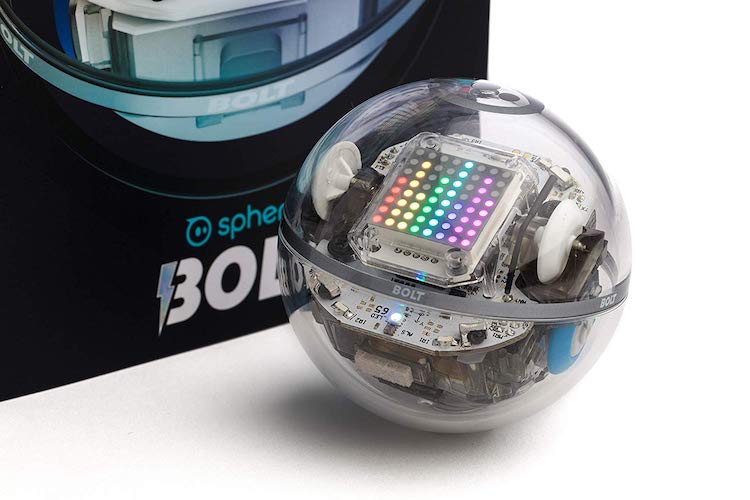
2. Sphero BOLT (Programmable Robotics)
Target Audience: Tech-savvy kids ready for versatile, durable robotics.
Overview: The Sphero BOLT is a shock-proof, waterproof, transparent robotic sphere that brings abstract code to life. Users write programs on external devices, and the BOLT executes complex navigation paths, light displays, and sensor-based interactions.
Key Features: Supported by an extensive library of classroom and home-use activities, the BOLT scales effortlessly from beginner drawing-based commands to advanced JavaScript for older learners.
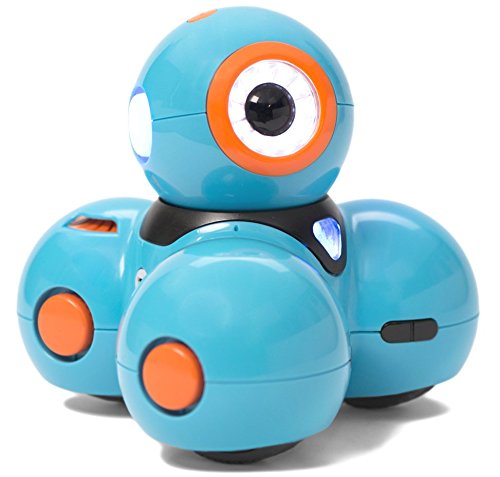
3. Wonder Workshop Dash (Interactive Robotics)
Target Audience: Ages 6 and up.
Overview: Dash is an agile, highly expressive robot designed to introduce young children to sequential logic.
Key Features: Equipped with a built-in microphone for voice playback and responsive sensors, Dash can interact not only with its user but also with other Dash units in the vicinity. In-app challenges gently guide learners through increasingly complex logic puzzles without requiring prior coding experience from parents. Look out for holiday "STEAM Creativity Bundles" that include complementary accessories.
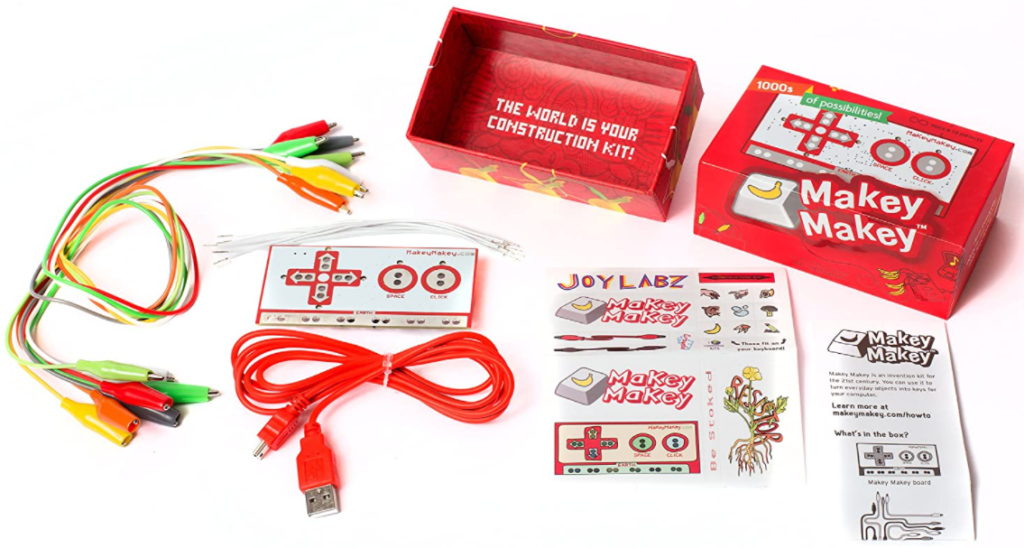
4. Makey Makey (Invention & Circuitry)
Target Audience: Hands-on tech learners and young inventors.
Overview: Makey Makey transforms everyday objects into touchpads. By connecting alligator clips to items like bananas, playdough, or aluminum foil, kids can turn ordinary household objects into computer keys.
Key Features: Celebrated for its radical simplicity, this invention kit requires no technical installation—just plug in the USB cable, connect your objects, and let imagination take over. It provides an immediate, tangible demonstration of electrical conductivity.
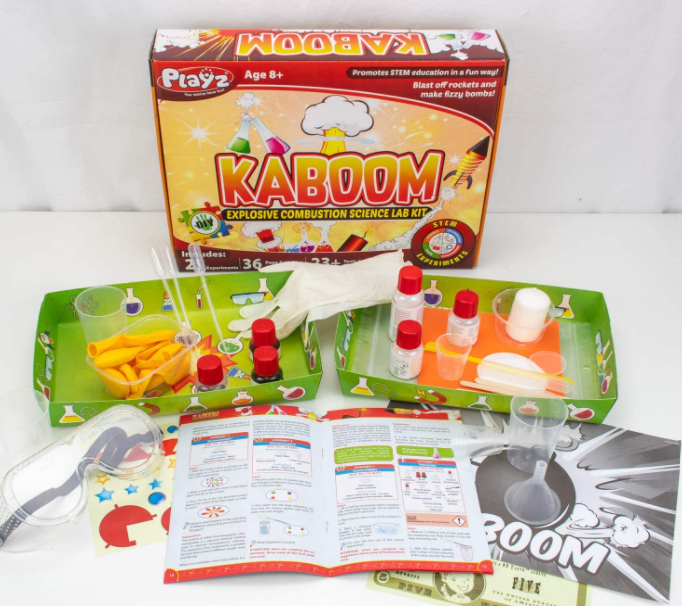
Target Audience: Energetic learners who learn best through dynamic experiments.
Overview: Ditching dry textbook theory, this kit features over 25 explosive, combustion-themed experiments designed to show chemistry in action.
Key Features: Kids can build outdoor rockets or test fireproof balloons while learning about chemical transformations and molecular reactions. Crucially, the kit emphasizes the "why" behind every reaction, transforming explosive fun into a structured educational curriculum.
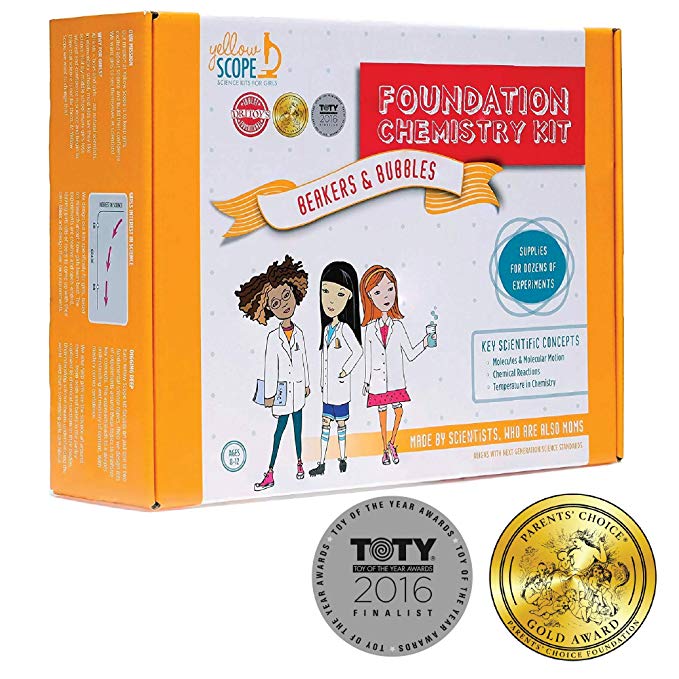
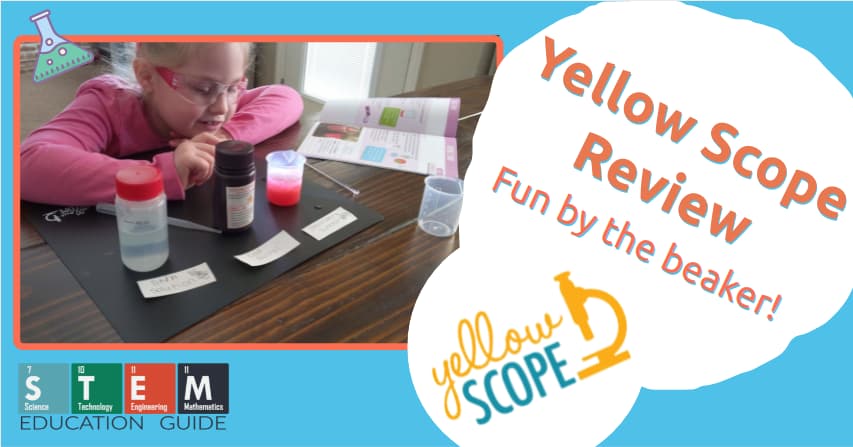
6. YELLOW SCOPE Foundation Chemistry Kit (Targeted Science)
Target Audience: Young scientists, with a strong focus on inspiring girls in STEM.
Overview: Created by female scientists, the "Beakers & Bubbles" chemistry kit explores real-world industrial and cosmetic science.
Key Features: By investigating the chemistry behind everyday beauty and body products, this kit bridges the gap between abstract laboratory science and relatable, real-world career paths. It is widely recognized as one of the premier science sets on the market for fostering female scientific leadership.
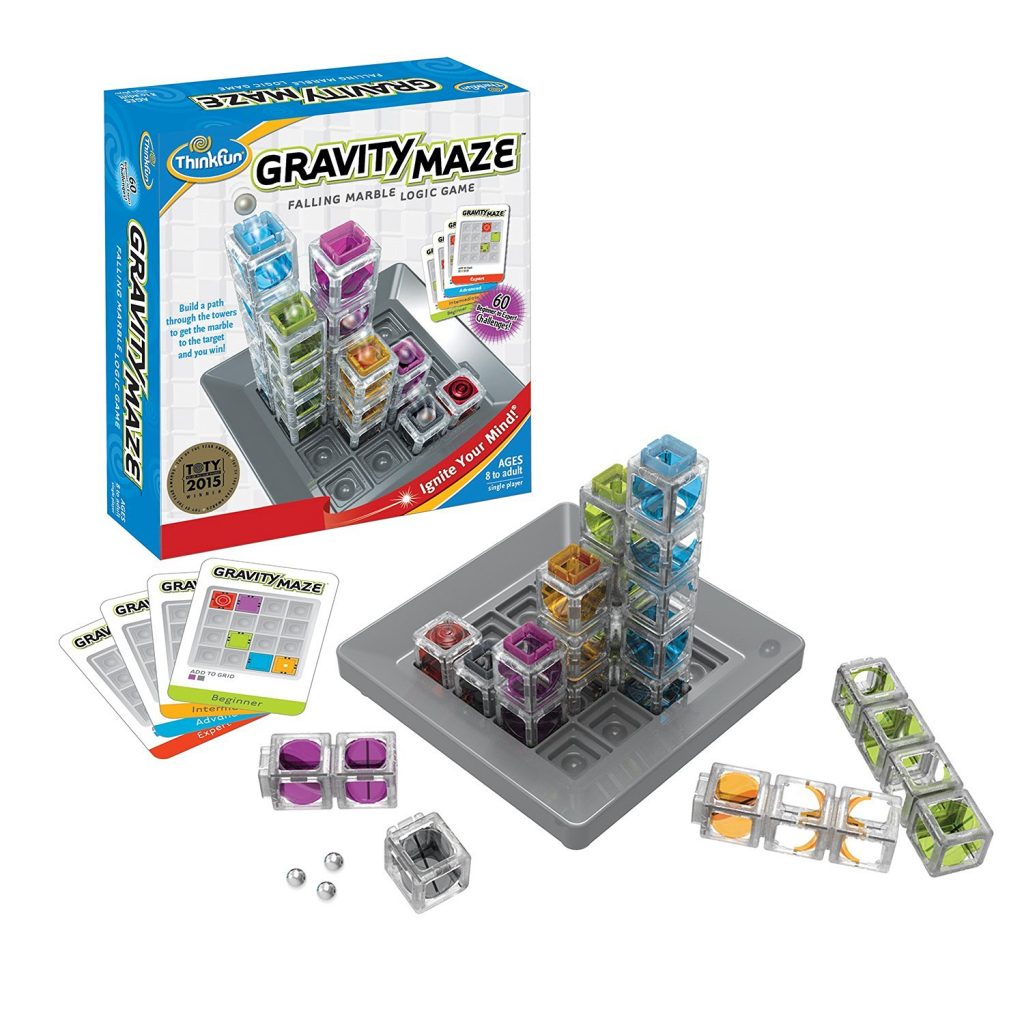
7. ThinkFun Gravity Maze Marble Run (Logic & Spatial Reasoning)
Target Audience: Ages 8 and up.
Overview: A brilliant fusion of a traditional marble run and a deductive logic puzzle. Players use challenge cards to construct vertical towers and pathways that guide a marble to a target destination.
Key Features: With dozens of multi-level challenges, this game forces children to visualize three-dimensional space, anticipate gravity, and troubleshoot structural flaws. It offers endless replay value without requiring screens or batteries.
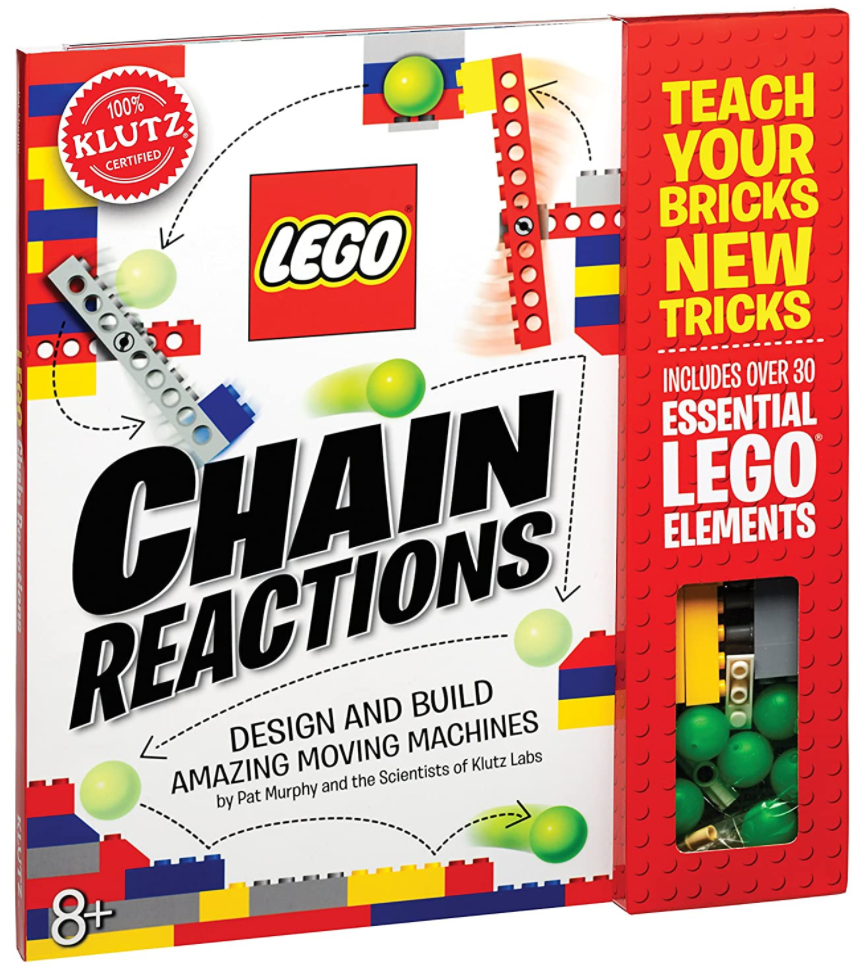
8. LEGO Chain Reactions (Engineering & Physics)
Target Audience: Aspiring young mechanical engineers.
Overview: Utilizing classic LEGO bricks paired with specialized mechanical components, this kit teaches kids how to design complex Rube Goldberg-style contraptions.
Key Features: Children learn about cause-and-effect, momentum, and kinetic energy as they build machines that pivot, swing, drop, and roll. Successfully executing a multi-step chain reaction builds immense engineering confidence.
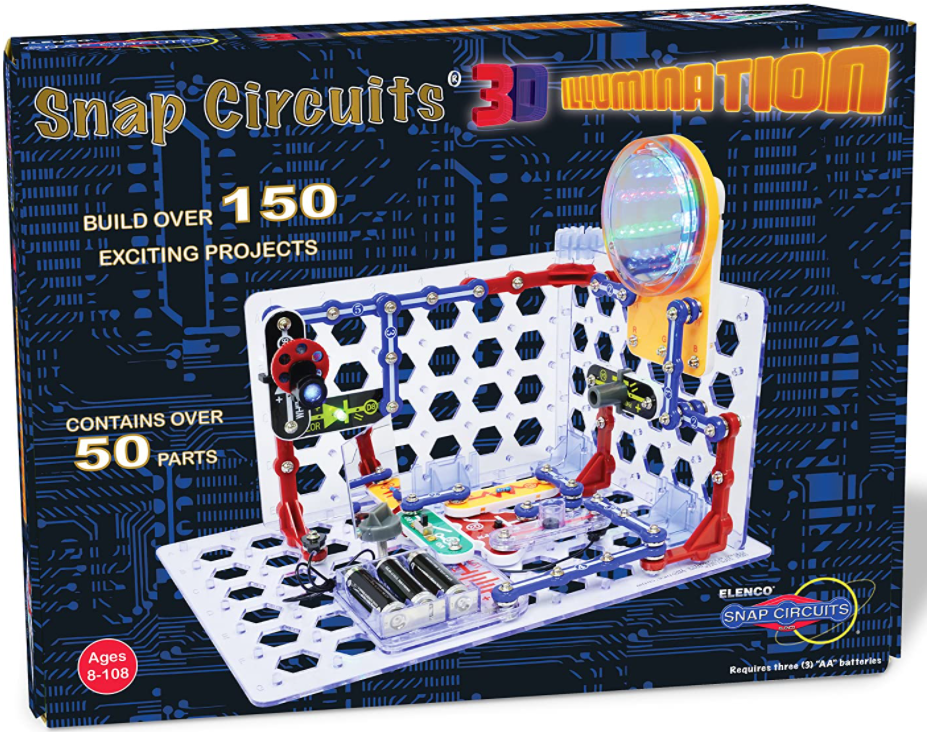
9. Snap Circuits 3D Illumination Electronics Exploration Kit (Electronics)
Target Audience: Kids curious about how electrical currents work.
Overview: Snap Circuits revolutionizes electronics education by mounting components onto snap-together plastic grids. The 3D Illumination edition adds vertical building and lighting effects to standard circuitry.
Key Features: Safe, modular, and exceptionally intuitive, this kit allows children to build working lamps, alarms, and optical illusions while learning the fundamentals of electrical engineering.
Target Audience: Tinkers fascinated by mechanics and fluid power.
Overview: The HydroBot Arm introduces children to hydraulic power through direct assembly. Utilizing water-filled plungers and mechanical linkages, users control a multi-axis robotic arm.
Key Features: With a 270-degree rotation range and real gripping power, this kit provides a tangible lesson in fluid dynamics, mechanical advantage, and renewable energy concepts.
11. Botley The Coding Robot Activity Set (Screen-Free Coding)
Target Audience: Younger children beginning their coding journey.
Overview: Botley is a cheerful, completely screen-free coding robot that is programmed using a dedicated handheld remote programmer.
Key Features: Children can program sequences, detect objects, navigate obstacle courses, and set loops without ever staring at a tablet or computer screen, making it an ideal introduction to computational thinking for early learners.
Target Audience: Advanced young builders looking for deeper challenges.
Overview: Mech-5 is a programmable mechanical robot that operates entirely without microcontrollers or batteries. Instead, kids program its movements by snapping coding tiles directly onto a mechanical coding wheel.
Key Features: The robot can kick, throw, draw, lift, and spin based entirely on the physical program input by the user, providing a brilliant tactile lesson in how mechanical computing works.
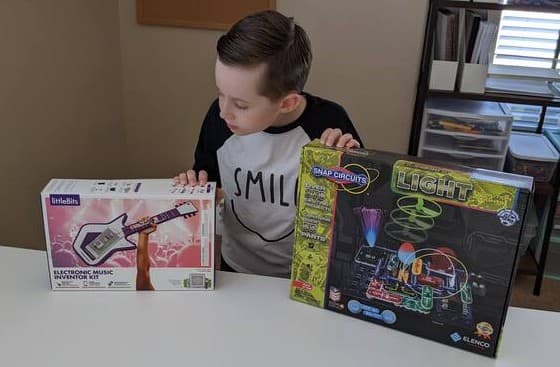
13. littleBits Electronic Music Inventor Kit (Creative Technology)
Target Audience: Music-loving kids and creative tinkerers.
Overview: This kit allows children to build their own customizable electronic guitar and program its sound profiles using a companion app.
Key Features: By snapping modular electronic bits together, kids explore sound synthesis, digital audio, and circuit design. It excels as a collaborative group activity for friends and siblings.
14. Kid K’NEX Construction Set (Early Engineering)
Target Audience: Toddlers and younger children.
Overview: Traditional construction toys can pose choking hazards or prove too complex for small hands. Kid K’NEX utilizes large, soft, colorful plastic pieces and connection gears designed specifically for early motor skill development.
Key Features: Kids can build animals, vehicles, and abstract structures, laying the foundational spatial and mechanical intuition necessary for advanced engineering later in life.
15. Ravensburger GraviTrax XXL Marble Run (Modular Physics)
Target Audience: Kids who love open-ended construction and physics experiments.
Overview: A modular, expandable marble run system built around a unique hexagonal grid foundation.
Key Features: Completely screen-free and battery-free, GraviTrax challenges users to experiment with magnetism, kinetics, and gravity to keep marbles moving through elaborate, multi-tiered architectural layouts.
Official Statements and Industry Insights
Educational toy manufacturers and child development specialists have emphasized the unique nature of this year’s holiday shopping cycle.
"The evolution of STEM toys over the last five years has transformed them from niche educational novelties into mainstream holiday staples," notes one prominent toy industry analyst. "When retailers push these deals into mid-November, they aren’t just chasing early revenue—they are responding to parents who want to invest purposefully in educational play during periods when children spend more time indoors."
Furthermore, educators point out that early holiday promotions allow schools and community learning centers to stretch tight budgets further when purchasing classroom sets of tools like Makey Makey, Sphero, and Snap Circuits.
Future Outlook: What to Expect Beyond the Holiday Season
As the holiday shopping season transitions from early-bird promotions to final inventory clearances, several key trends will continue to shape the educational toy market:
Increased Integration of Augmented Reality (AR): Manufacturers are increasingly blending physical toys with AR app environments, offering hybrid play experiences that bridge tactile building with digital world-building.
Sustainability Focus: Eco-friendly plastics, biodegradable packaging, and sustainably sourced wooden components are rapidly becoming standard expectations for conscientious consumers purchasing educational toys.
Subscription Model Growth: Alongside traditional retail purchases, STEM subscription boxes (such as KiwiCo and similar services) are projected to see continued growth, offering ongoing monthly educational engagement long after the holiday wrapping paper has been cleared away.
By capitalizing on early November online promotions, researching age-appropriate capabilities, and selecting toys that balance entertainment with genuine cognitive challenge, gift-givers can secure exceptional value while empowering the innovators of tomorrow.