
Executive Overview
In an era defined by an avalanche of digital information, navigating nuance, evaluating credibility, and constructing evidence-based arguments have never been more critical for students. To address this educational imperative, the National Council of Teachers of English (NCTE) has forged a dynamic, ongoing partnership with the Library of Congress as an active member of the prestigious Teaching with Primary Sources (TPS) Consortium.
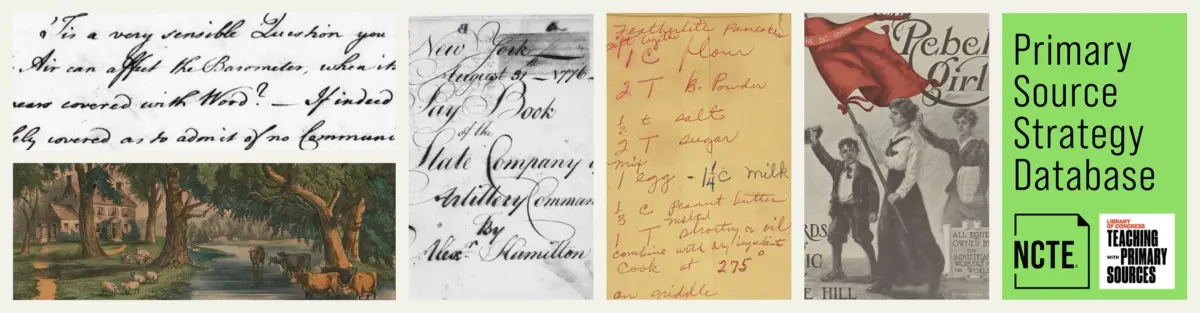
This collaborative initiative is designed to fundamentally expand the ways literacy teachers and students integrate primary sources into their daily pedagogical habits. At the heart of this partnership lies a newly developed, highly searchable digital database featuring instructional strategies for more than 150 specific artifacts drawn directly from the Library of Congress’s vast digitized collections.
Crafted by more than two dozen distinguished educators and leaders in English Language Arts (ELA) education, these curated strategies do more than merely archive historical items; they articulate precise literacy merits for modern curricula. Every entry links historical artifacts—ranging from 19th-century newspaper editorials to foundational visual arts—to suggested classroom themes, specific instructional units, and state learning standards.
By leveraging searchable tags such as picture book and argument, the database empowers instructors to seamlessly bridge history, rhetoric, and critical literacy. This article explores the mechanics of this ambitious initiative, investigates a compelling sample artifact from the archive, and analyzes the broader implications of primary-source-driven literacy instruction for the future of American education.
Detailed Chronology: The Evolution of the TPS Partnership and Digital Database
The integration of Library of Congress primary sources into ELA classrooms did not happen overnight; it represents the culmination of years of targeted cross-institutional collaboration aimed at modernizing humanities education.
- Foundational Alignment: Recognizing a gap in how historical documents were utilized—traditionally siloed within social studies classrooms rather than leveraged for linguistic and rhetorical analysis in ELA—educational leaders sought to build interdisciplinary bridges. The Library of Congress established the Teaching with Primary Sources program to scale up access to its historical repositories.
- Consortium Formation: The NCTE formally integrated its extensive network of language arts professionals into the TPS Consortium. This move acknowledged that historical documents are, fundamentally, texts rich in rhetoric, narrative structure, and persuasive strategy.
- Collaborative Curriculum Design: Over two dozen expert educators, curriculum developers, and ELA thought leaders were convened to vet, contextualize, and design pedagogical frameworks for over 150 digitized items from the Library of Congress archives.
- Database Launch and Tagging Architecture: The teams developed a robust, user-friendly digital repository. Content was systematically categorized using intuitive tags—such as argument, nonfiction, picture book, and various thematic umbrellas like Government, Law, and Politics and Arts and Culture—to ensure maximum utility for busy educators.
- Ongoing Expansion and Standards Mapping: The database continues to evolve, incorporating granular alignment with state-specific educational frameworks (such as the Missouri Learning Standards) to ensure that teachers can directly map historical document analysis to high-stakes reading, writing, and critical thinking benchmarks.
Supporting Context & Metrics: Examining a Case Study in Primary Source Literacy
To understand the immense pedagogical value housed within the NCTE–Library of Congress database, one must examine how individual artifacts are deconstructed for classroom use. A prime example featured within the repository is an 1851 letter to the editor published in The Mountain Sentinel, titled "The New Costume."
The Historical Backdrop: The Bloomer Revolution
The 1851 letter offers students a vivid window into the fierce debates surrounding women’s fashion, bodily autonomy, and societal norms in 19th-century America. The document fiercely defends the controversial "Bloomer costume"—a revolutionary outfit featuring shorter skirts paired with loose trousers underneath.
While widely associated with Amelia Bloomer—a prominent women’s rights advocate and editor of the feminist newspaper The Lily, who popularized the style through her written advocacy—the costume was actually invented by Elizabeth Smith Miller. By wearing the outfit publicly, Bloomer and her contemporaries sparked a fiery national conversation regarding the intersection of women’s clothing and oppressive societal expectations.
Challenging Victorian Norms
During the mid-19th century, Victorian standards mandated that women wear heavy, multi-layered skirts supported by tightly laced corsets. These garments severely restricted movement, impacted physical health, and served as physical manifestations of women’s restricted social and political status.
The introduction of the Bloomer costume challenged these norms head-on by prioritizing freedom of movement, comfort, and health. Unsurprisingly, it provoked immediate backlash. Traditionalists and cultural critics decried the outfit as immodest, radical, and unfeminine. However, progressive supporters—such as the anonymous author of The Mountain Sentinel letter, who signed their work "Amicus"—pioneered arguments defending the practical and physiological benefits of dress reform.
Although the mainstream popularity of the Bloomer costume eventually waned in the face of intense social pressure, the movement left an indelible mark. It endures as a powerful historical symbol of women’s early organized fight for equality, bodily autonomy, and radical self-expression.
Pedagogical Utility and Rhetorical Power
Why is an 1851 newspaper letter an invaluable tool for modern ELA classrooms? According to the NCTE database instructional notes, the document is a goldmine for teaching argumentative writing and rhetorical analysis.
Students examining "The New Costume" are encouraged to look beyond the historical novelty of fashion debates and focus on the mechanics of the author’s writing:
- Rhetorical Strategies: The letter’s author masterfully employs classical rhetorical devices to advance a distinct point of view and purpose.
- Counterarguments: The text provides a clear model of how writers acknowledge, confront, and dismantle opposing viewpoints.
- Accessible Language: Despite its 19th-century origins, the letter features accessible language that lowers the barrier to entry for high school students learning how to decode historical texts.
- Thematic Resonance: The document opens the door to discussions regarding gender roles, societal pressure, self-expression, and the historical roots of modern social justice movements.
Direct Standards Alignment
The database links artifacts directly to state-level educational benchmarks, proving that primary source analysis is not an "extra" activity, but a core driver of academic rigor. For instance, the analysis of "The New Costume" directly fulfills major curriculum requirements, such as:
- MLS.9-10.RI.2.B: Analyze how an author uses rhetoric to advance a point of view or purpose.
- MLS.11-12.RI.2.D: Evaluate an author’s argument and reasoning for effectiveness, validity, logic, credibility, and relevance of the evidence.
Official Perspectives: Bridging History and Language Arts
The collaboration between the NCTE and the Library of Congress reflects a broader pedagogical shift: the recognition that history and language arts are deeply interdependent. Educators and institutional leaders have long advocated for a holistic approach to literacy that treats informational texts, historical ephemera, and visual arts as foundational reading materials.
By opening the Library of Congress’s massive digital archives to ELA teachers, the initiative democratizes access to primary sources that were once confined to elite research institutions or specialized university archives. Furthermore, by tasking leading classroom educators with writing the instructional strategies, the database ensures that every featured item comes with practical, classroom-tested methods for deployment.
Rather than handing teachers a raw historical document and leaving them to figure out its instructional worth, the NCTE-TPS partnership provides a comprehensive roadmap. It details the text’s argumentative structure, potential challenges, thematic connections, and standards alignment, saving educators invaluable planning time while dramatically elevating instructional rigor.
Future Outlook: The Next Frontier in Primary Source Literacy
As education systems worldwide grapple with the rapid proliferation of artificial intelligence, synthetic media, and digital misinformation, the ability to critically analyze source material has transformed from a baseline academic skill into an essential survival competency.
The ongoing work between the National Council of Teachers of English and the Library of Congress points the way forward for modern literacy instruction. Future phases of the TPS Consortium partnership promise to expand the searchable database, incorporating an even wider array of multimedia primary sources—including audio recordings, historical photographs, maps, and multimedia advertisements—into the ELA curriculum.
By institutionalizing the use of primary sources within English Language Arts, educators are training a new generation of critical thinkers. Students who learn to dissect an 1851 letter about women’s trousers are simultaneously learning how to interrogate modern media, evaluate complex arguments, and recognize the rhetorical strategies shaping the world around them today. Through this vital initiative, the past is not merely preserved in amber; it becomes a living, breathing laboratory for the literacy leaders of tomorrow.

