
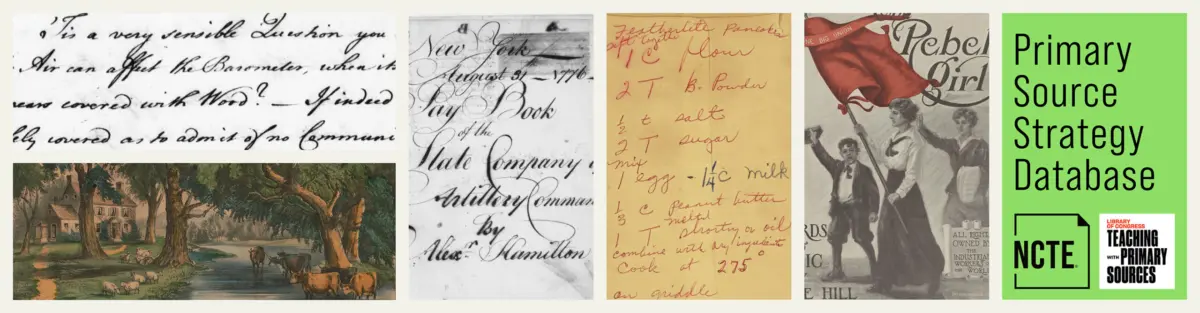
Executive Overview
In an era defined by an overwhelming abundance of digital information, the ability to critically analyze source material has never been more vital for students. Addressing this educational imperative, the National Council of Teachers of English (NCTE) has forged a dynamic partnership with the Library of Congress as part of the prestigious Teaching with Primary Sources (TPS) Consortium. This nationwide initiative is systematically expanding the integration of authentic, digitized primary sources into the daily teaching and learning habits of literacy educators and students alike.
At the heart of this collaboration is a newly unveiled, highly searchable digital database featuring pedagogical strategies for more than 150 specific items drawn directly from the Library of Congress’s vast archival collections. Developed by over two dozen veteran educators and leaders in English Language Arts (ELA) education, these instructional strategies provide rigorous frameworks for assessing the literacy merit of historical artifacts. By tagging content with intuitive descriptors such as "picture book" and "argument," the database empowers teachers to seamlessly embed primary sources into existing curricula, align lessons with state educational standards, and elevate student engagement through critical inquiry.
This report examines the scope of the NCTE-Library of Congress initiative, explores a representative instructional module centered on the 1957 promotional video In the Suburbs, and analyzes how such tools are transforming the landscape of modern literacy and historical education.
Detailed Chronology: The Evolution of the TPS Consortium and ELA Integration
The integration of primary sources into language arts classrooms is not merely a modern pedagogical trend; it is the culmination of years of targeted collaboration between cultural institutions and educational networks.
- Foundation of the TPS Network: The Library of Congress established the Teaching with Primary Sources program to help educators connect students to the nation’s library holdings. By partnering with universities and educational organizations across the United States, the TPS Consortium scales access to millions of historical artifacts, manuscripts, maps, audio recordings, and films.
- Expansion into English Language Arts: Historically, primary sources were predominantly utilized within social studies and history curricula. Recognizing the immense rhetorical, narrative, and analytical value of these artifacts, the NCTE joined the TPS Consortium to bridge the gap between historical inquiry and English Language Arts. The partnership sought to prove that primary sources are powerful texts for literacy instruction, capable of fostering close reading, argumentative writing, and media literacy.
- Collaborative Curriculum Design: Over two dozen prominent ELA teachers and instructional leaders convened to pilot, test, and refine teaching strategies for over 150 distinct Library of Congress items. These educators translated archival assets into actionable classroom strategies, aligning them with rigorous state learning standards and thematic units.
- Digital Database Launch: The culmination of this collaborative effort resulted in the deployment of the searchable NCTE-TPS database. Designed with user accessibility in mind, the platform allows educators to filter resources by media type, rhetorical function (such as argumentative analysis), and thematic relevance, transforming how primary sources are discovered and deployed in contemporary classrooms.
Supporting Context & Metrics: Decoding Mid-Century America Through In the Suburbs
To understand the practical application of the NCTE-Library of Congress database, one must examine how individual artifacts are operationalized within a classroom setting. A prime example featured in the repository is the 1957 promotional video In the Suburbs, produced by Redbook magazine.
Archival Profile: In the Suburbs (1957)
- Creators: Carlo Arcamone, Tracy Ward, Bert Spielvogel, On Film, Inc., and Redbook Magazine
- Repository Reference: Library of Congress, Item ID:
2019600440 - Media Format: Promotional video / Advertising film
- Publication Context: United States, 1957
Instructional Value and Cross-Curricular Applications
In the Suburbs offers a vivid, highly stylized portrayal of post–World War II American suburban living. Emphasizing the era’s economic optimism, consumer culture, and shifting family dynamics, the film serves as a multi-layered text for high school ELA and social studies classrooms.
Educators utilize the video to unpack complex socio-cultural concepts, including:
- Gender Roles and Domesticity: The film constructs specific expectations for men and women within the postwar nuclear family, providing a rich focal point for discussions on societal conformity and evolving gender norms.
- Consumerism and the American Dream: As an advertising vehicle for Redbook, the video explicitly links domestic homeownership and material consumption with the attainment of the mid-century American Dream.
- Media Literacy and Historical Persuasion: Students analyze how moving-image media actively shaped cultural aspirations, maintained mid-century stereotypes, and promoted a homogenized vision of the "ideal life."
In cross-curricular frameworks combining ELA and economics, the video acts as a catalyst for inquiry-based learning. Students explore foundational questions regarding the definition of a "home" and investigate the historical ties between mortgage policy, suburban expansion, and economic stability. By pairing In the Suburbs with supplementary texts—such as historical overviews of 1950s suburban growth—students engage in comparative analyses that evaluate how media representations reinforce or challenge prevailing socioeconomic paradigms.
Standards Alignment: Rigor in Practice
The instructional strategies accompanying In the Suburbs are meticulously mapped to state academic benchmarks, such as the Louisiana K-12 English Language Arts Standards. Specifically, the module addresses:
- RI.11-12.4: Determining the meaning of words and phrases as they are used in a text, including figurative, connotative, and technical meanings, and analyzing how an author uses and refines key terms over the course of a text.
- RL.11-12.4: Analyzing the impact of specific word choices and audiovisual techniques on meaning, tone, and overall rhetorical effect.
Through these standards-aligned activities, students move beyond passive viewing, engaging in rigorous close-reading practices that treat historical media with the same critical eye traditionally reserved for classic literature.
Official Statements and Pedagogical Philosophy
The intersection of literacy education and archival research represents a fundamental shift in how educators view reading material. In official communications regarding the partnership, leaders from both the NCTE and the Library of Congress have emphasized the transformative power of primary source-based instruction.
"Primary sources are not merely illustrative windows into the past; they are complex, rhetorical texts that demand sophisticated analytical skills," notes curriculum design documentation within the NCTE-TPS initiative. "When students interrogate a 1950s advertising film or a handwritten abolitionist tract, they are practicing the exact competencies required for modern civic participation: evaluating authorial intent, identifying bias, and synthesizing diverse perspectives across media formats."
Educators participating in the development of the database echo these sentiments, highlighting the ways in which digitized artifacts bridge generational divides in the classroom. By confronting primary sources directly, students transition from being passive consumers of textbook narratives to active historians and critical literacy practitioners.
Future Outlook: Expanding Access and Transforming ELA Instruction
As the NCTE and the Library of Congress continue to expand the Teaching with Primary Sources Consortium, the implications for the future of education are profound. Several key developments mark the horizon for this initiative:
- Database Expansion: Plans are underway to incorporate additional primary sources into the searchable repository, scaling the collection well beyond its current inventory of 150 items. Future additions will cover a broader historical timeline, spanning from early American history to contemporary digital culture.
- Professional Development Integration: To maximize the utility of these resources, the NCTE is rolling out targeted professional development webinars, workshops, and teacher-training modules. These programs are designed to build educator confidence in utilizing multimedia primary sources within standard-driven ELA classrooms.
- Enhanced Digital Interactivity: Future updates to the database aim to introduce more interactive student-facing tools, enabling collaborative annotation, digital source comparison, and multimedia composition directly aligned with archival assets.
- Strengthening Media Literacy: In an age characterized by misinformation and synthetic media, the analytical frameworks provided by the NCTE-TPS partnership offer an essential defense. By training students to dissect the persuasive techniques of 20th-century advertising and historical documents, educators are equipping them with the skepticism and discernment necessary to navigate 21st-century information ecosystems.
Through ongoing collaboration, the NCTE and the Library of Congress are ensuring that the nation’s historical treasures do not remain locked behind institutional archives, but instead serve as vibrant, living texts that inspire the next generation of critical thinkers, writers, and citizens.

