In the rapidly evolving landscape of 21st-century education, the demand for early digital literacy has transitioned from an extracurricular luxury to an essential core competency. As school districts, educators, and parents grapple with how to effectively introduce children to the foundational logic of the digital age, traditional text-heavy textbooks and passive video tutorials are increasingly falling short. Enter CodeMonkey, an award-winning, game-based gamified programming platform designed to bridge the gap between abstract computer science theories and engaging, hands-on play.
Targeting demographics ranging from preschool-aged children to eighth-grade students, CodeMonkey utilizes a gamified narrative—where users write real code to guide a digital monkey through the retrieval of stolen bananas—to demystify complex languages such as JavaScript, Python, and CoffeeScript. Rather than forcing young learners to memorize intimidating syntactical structures right out of the gate, the platform systematically scaffolds knowledge. It begins with visual, block-based logic puzzles for early childhood learners before scaling up to robust, text-based programming environments for older students.
This investigative review explores the pedagogical mechanics, curriculum design, underlying computer science concepts, and practical applications of CodeMonkey across both traditional and homeschool learning environments. By evaluating its gamification strategies, progress-tracking metrics, and overall adaptability, this report provides an authoritative assessment of whether CodeMonkey succeeds as a modern pedagogical tool for cultivating the next generation of coders.
Detailed Chronology: The Evolution of CodeMonkey’s Curriculum
To fully understand how CodeMonkey achieves its educational objectives, one must examine the chronological progression of its curriculum design. The platform is not merely a collection of isolated mini-games; rather, it is a meticulously structured, progressive journey that scales alongside a child’s cognitive development.
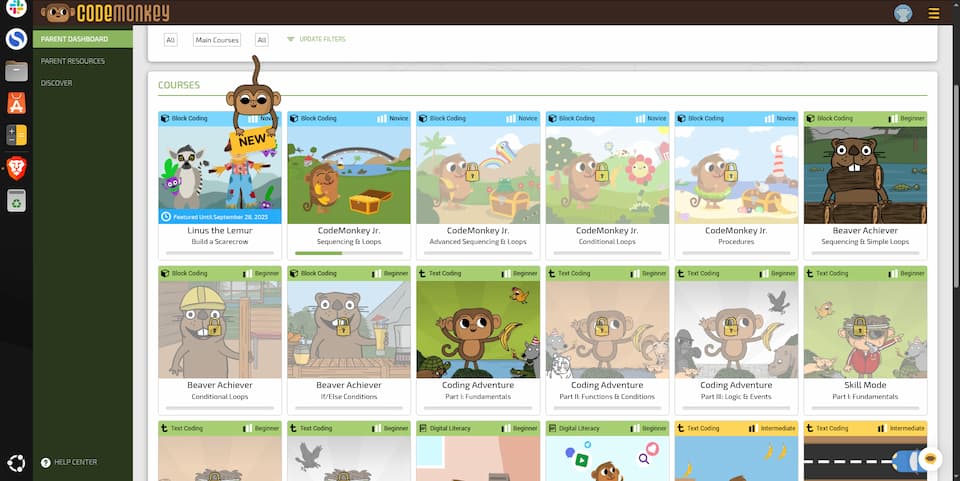
Phase 1: Early Childhood Introduction (CodeMonkey Jr.)
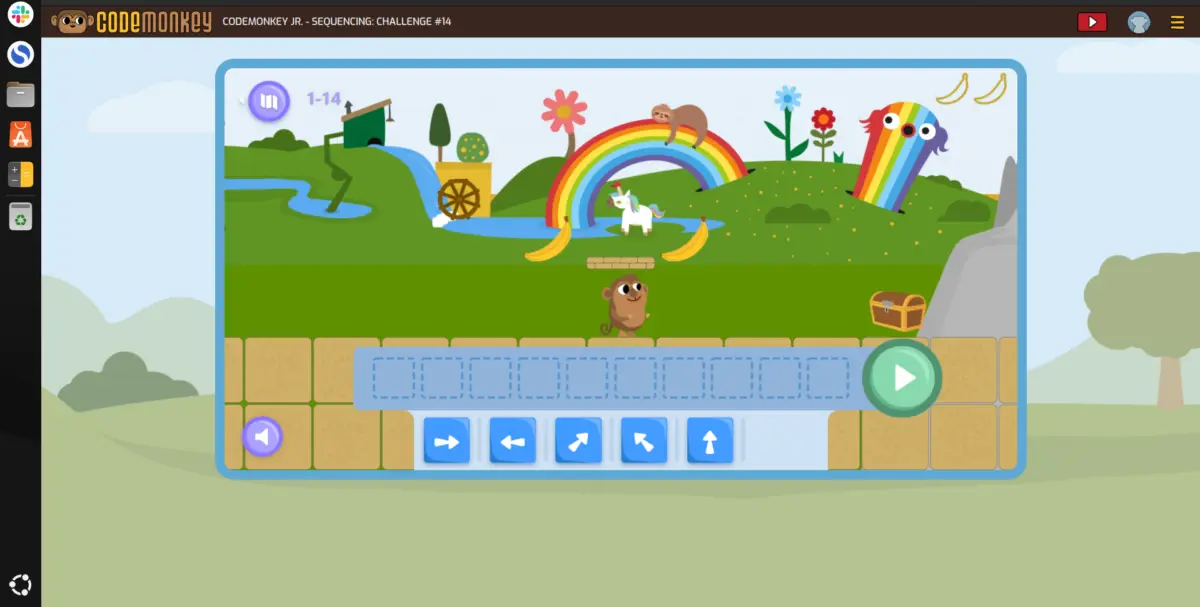
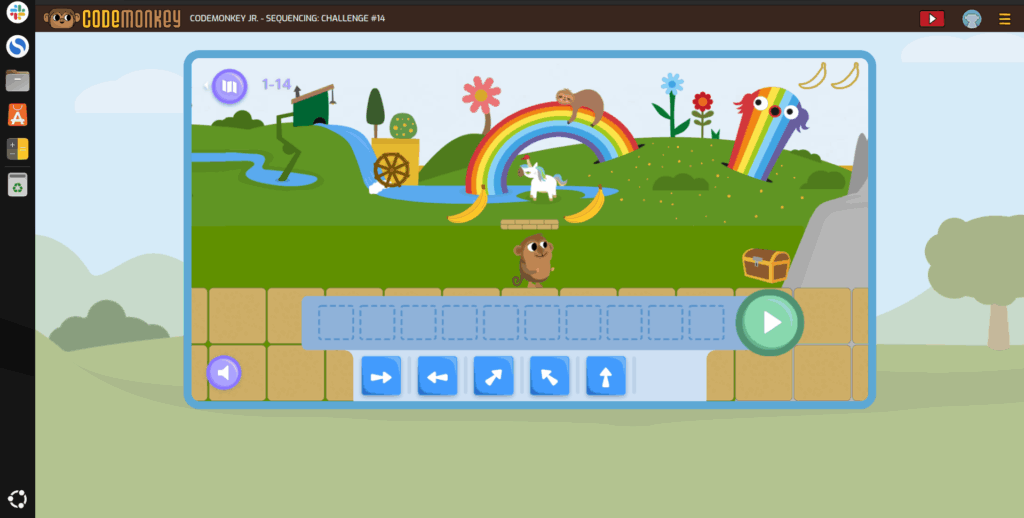
The developmental journey often begins with CodeMonkey Jr., a specialized environment tailored specifically for preschoolers and early elementary students. Recognizing that children at this developmental stage may not yet possess advanced reading comprehension skills, the platform relies on intuitive, visual, block-based coding puzzles.
Mechanism: Children manipulate visual blocks to solve spatial puzzles, laying the necessary groundwork without the cognitive overload of text-based syntax.
Phase 2: Core Mastery (Coding Adventure)
Once foundational logic is established, students transition to the platform’s flagship offering: Coding Adventure. Spanning nearly 400 distinct challenges, this phase marks the introduction of actual programming languages.
The Transition to Text: Students begin with CoffeeScript—a streamlined language designed to mirror the structural logic of JavaScript—before naturally graduating to standard JavaScript and Python.
The Gameplay Loop: In each challenge, the user writes code to navigate the monkey toward its bananas. Correct execution is rewarded with a three-star rating system, encouraging iterative problem-solving and debugging. If a solution fails, the platform encourages students to analyze their errors, tweak their code, and re-test their hypotheses.
Phase 3: Advanced Application and Game Builder
As students conquer the core challenges of Coding Adventure, the curriculum expands into autonomous creation.
The Game Builder: This tool allows students to transition from consumers of programmed content to creators. Utilizing the vocabulary of loops, functions, variables, and conditional statements they have acquired, learners can build, customize, and share their own playable games.
Real-World Relevance: By the culmination of the curriculum, students possess a functional comprehension of computer science fundamentals that rival introductory high school courses, equipping them with skills directly translatable to secondary education and future technology-driven careers.
Supporting Context & Metrics: Pedagogical Framework and Technical Concepts
CodeMonkey’s success relies on a rigorous alignment with established educational theories, specifically constructivism and gamified learning. By dissecting the underlying programming concepts taught within the platform, educators can better understand the depth of cognitive development occurring beneath the veneer of a monkey-and-banana game.
Core Programming Concepts Mastered
Loops: Rather than forcing students to redundantly write out repetitive commands—akin to telling a robot to "pick up a toy" one hundred times—CodeMonkey introduces loops. This teaches efficiency, automation, and pattern minimization.
Functions and Function Calls: Students learn to construct reusable blocks of code (comparable to culinary recipes) that can be invoked multiple times throughout a program, significantly reducing code bloat and enhancing readability.
Objects and Arrays: The platform introduces data structures by conceptualizing objects as containers for assorted data types and arrays as ordered lists (resembling children standing in a lunch line), enabling students to manage complex datasets.
Variables and Conditional Logic: Variables are introduced as storage boxes for data. Meanwhile, Boolean conditions and if-else statements teach logical branching, empowering programs to make dynamic decisions based on variable states (e.g., “If the player’s score exceeds 100, execute victory sequence; else, continue game”).
Technical Metrics and Data Privacy
Operating as an online, cloud-based platform, CodeMonkey relies on general-purpose platform session cookies to maintain core web functionalities.
Privacy Focus: Unlike third-party trackers utilized for behavioral advertising, CodeMonkey’s cookies are strictly functional—responsible solely for maintaining active student login states and recording progress metrics.
Transparency: Families maintain complete autonomy, retaining the ability to opt out or modify cookie preferences directly through their browser settings. Furthermore, the platform features automated grading systems, providing instant feedback loops that eliminate bureaucratic grading delays and allow self-paced learners to advance unhindered.
Official Statements and Stakeholder Perspectives
The validity of any educational technology is best measured by the real-world experiences of its primary stakeholders: teachers, homeschooling parents, and the students themselves.
The Educator and Homeschooling Perspective
Across classrooms and home-learning pods, CodeMonkey has earned high praise for its accessibility and comprehensive instructor support systems.
Instructional Resources: Teachers and homeschooling parents are provided with robust lesson plans, pedagogical guides, and automated dashboards. These tools yield top-down perspectives on student achievement, highlighting mastered concepts alongside areas requiring remediation.
Specialized Modes: The inclusion of a dedicated "skill mode" allows educators to pinpoint exact competencies, while integrated AI chatbots and extensive video tutorial libraries ensure that neither students nor supervisors remain stalled when encountering a difficult puzzle.
"CodeMonkey doesn’t just teach programming—it introduces computer science concepts in a fun way. Younger students can see how coding connects to the real world, from building games to understanding how websites use cookies to run." — STEM Education Reviewer
User Feedback and Community Reception
Independent evaluations, including user testimonials aggregated on platforms like Trustpilot, underscore the widespread appeal of CodeMonkey.
The "Hour of Code" Phenomenon: Many educators leverage CodeMonkey’s introductory modules during global computer science initiatives like the Hour of Code, citing its immediate visual engagement as an ideal hook for hesitant learners.
Intrinsic Motivation: Parents routinely note that the gamification elements—earning stars, unlocking levels, and building personal games—transform coding from a mandatory chore into a preferred leisure activity.
Future Outlook: The Trajectory of Gamified STEM Learning
As the global job market shifts increasingly toward automated, data-driven industries, platforms like CodeMonkey represent a critical evolution in how foundational technical skills are disseminated.
Continuous Platform Innovation
CodeMonkey’s developers are not resting on their laurels; the platform is subject to continuous iteration. Future updates promise deeper integrations with advanced programming languages, expanded artificial intelligence assistance for debugging, and more granular analytics dashboards for institutional purchasers.
Accessibility and Equity in Coding Education
By lowering the barrier to entry—removing the prerequisite of advanced literacy for young children and replacing intimidating command-line interfaces with intuitive, narrative-driven puzzles—CodeMonkey democratizes computer science education. It ensures that demographics historically underrepresented in technology fields, including very young children and female students, can build early confidence and competence in STEM disciplines.
Conclusion
CodeMonkey successfully transcends the limitations of traditional instructional media. By marrying the structural rigor of real-world programming languages (Python, JavaScript, CoffeeScript) with the addictive, rewarding mechanics of puzzle-solving games, it creates an immersive educational ecosystem. Whether deployed within a bustling modern classroom or integrated into a personalized homeschooling curriculum, CodeMonkey provides an authoritative, scalable, and genuinely enjoyable pathway toward lifelong digital literacy.