For decades, classroom quizzes and review sessions have relied on a familiar formula: rapid-fire questioning paired with a relentless, real-time leaderboard. While this competitive model has successfully energized classrooms worldwide, it often harbors an unintended side effect. Speed frequently eclipses comprehension, leaving slower thinkers feeling alienated or defeated before a lesson even reaches its halfway mark.
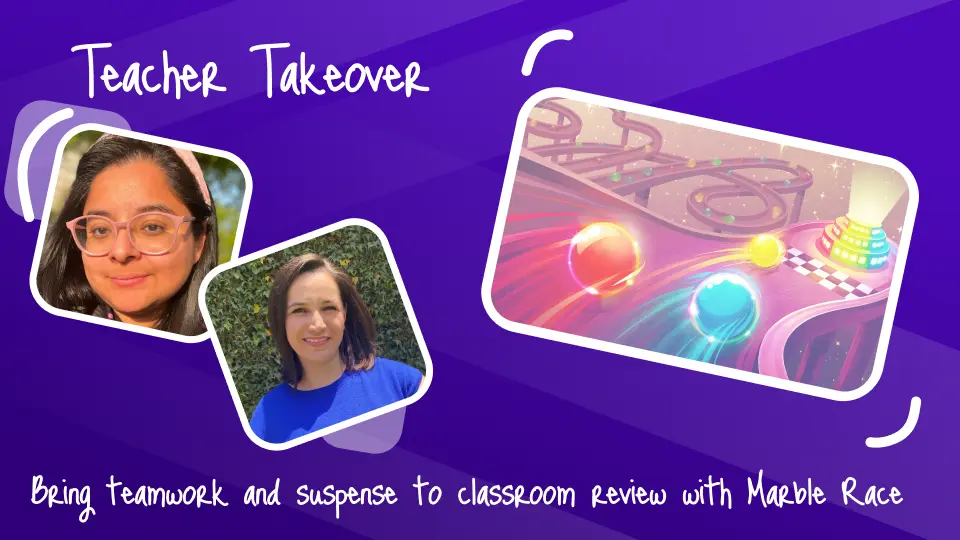
Enter Marble Race, a groundbreaking game mode from the globally renowned interactive learning platform Kahoot!. By pivoting away from pure speed-based metrics and introducing a physics-driven, pinball-inspired visual narrative, Marble Race alters the psychological landscape of educational competition.
In this new paradigm, correct answers translate into earned marbles for randomized student teams. Between questioning rounds, the entire classroom pauses to watch these marbles tumble, collide, and navigate a whimsical obstacle course. The result is a profound shift in classroom dynamics: students focus less on frantically clicking first and more on mastering the underlying material. Educators across the globe—from New York City STEM labs to middle schools in Indonesia and international institutions in Mexico City—are reporting unprecedented levels of sustained engagement, reduced assessment anxiety, and a revitalized classroom culture built on collective success.
Detailed Chronology: The Evolution of Classroom Gamification
To understand the disruptive impact of Marble Race, one must trace the evolutionary arc of digital classroom gamification over the last fifteen years.
Phase 1: The Digitization of Drill-and-Practice
In the early days of educational technology, interactive tools primarily served as digital flashcards. While more engaging than paper worksheets, these early programs often isolated learners, treating education as a solitary race against a digital clock.
Phase 2: The Rise of the Podium
Platforms like Kahoot! revolutionized this space by introducing live, synchronized, multiplayer quiz formats. By gamifying assessment—incorporating upbeat background tracks, vibrant countdown timers, and immediate feedback loops—learning became a spectator sport. However, the traditional mechanics predominantly rewarded two variables: correct answers and reaction times. While high-achieving, quick-processing students thrived in this high-octane environment, students who required additional processing time often disengaged early, convinced the leaderboard was mathematically out of reach.
Phase 3: The Collaborative, Unpredictable Era (Marble Race)
Recognizing the limitations of speed-biased competition, instructional designers sought ways to inject suspense, equity, and collaboration into the review process. Marble Race represents the culmination of this pedagogical evolution. By decoupling the act of answering questions from the immediate display of rankings, the platform introduced a buffer: the pinball-inspired race.
In this current phase, the timeline of a typical lesson transforms. Instead of a linear sprint where the leader is crowned early and stagnation sets in for the rest of the pack, a lesson now flows in rhythmic waves:
The Cognitive Phase: Students quietly and carefully analyze questions, prioritizing accuracy and deep conceptual understanding over reckless speed.
The Accumulation Phase: Correct answers populate randomized teams with physical assets (marbles).
The Suspense Phase: Instruction pauses for a shared cinematic viewing experience as marbles race down unpredictable tracks, ensuring that no lead is ever truly safe and every student remains invested until the final bounce.
Supporting Context & Metrics: Why Accuracy and Equity Matter in Learning
The pedagogical design of Marble Race is deeply rooted in contemporary educational research concerning cognitive load, test anxiety, and collaborative learning theories.
Mitigating Test Anxiety and Cognitive Load
Educational psychologists have long warned that high-stakes, speed-driven environments can trigger "stereotype threat" or generalized performance anxiety. When students feel rushed, their working memory capacity diminishes. By eliminating the constant pressure of a shifting live podium during the question phase, Marble Race lowers affective filters. Students can allocate their full cognitive resources toward reading comprehension, scientific reasoning, or mathematical problem-solving.
The Power of Randomized Teams and Shared Goals
Human motivation thrives on connection. Traditional quiz formats pit individual against individual, which can foster a fixed mindset ("I am just not good at this"). Marble Race utilizes randomized teams, fostering a growth mindset and shared accountability. Because a student’s individual accuracy contributes to a collective good, peer encouragement naturally emerges. High-performing students support their peers, and struggling learners find themselves buoyed by the collective momentum of the team.
Seamless Integration for Educators
From an operational standpoint, educational technology adoption often stalls when teachers are forced to reinvent the wheel. Marble Race is engineered for maximum utility: it requires zero additional prep time. Educators can take any pre-existing quiz from their personal Kahoot! library or public curricula, select "Marble Race" as the designated format, and immediately deploy the experience. This frictionless integration bridges the gap between innovative pedagogy and practical classroom management.
Official Statements: Perspectives from the Educational Frontlines
The true efficacy of any educational tool is best measured by those who implement it daily. Ambassadors and educators from around the world have shared transformative insights regarding the deployment of Marble Race in diverse learning environments.
Leveling the Playing Field
Ika M., a middle school educator in Indonesia and a dedicated Kahoot! Ambassador, emphasizes the psychological shift the game provides:
"The best part is that it levels the playing field. It successfully captures the excitement of a live game while shifting the focus from ‘who is the fastest clicker’ to ‘who actually understands the material.’ It creates a healthy, high-energy competition where everyone feels they still have a chance to catch up."
Ika further elaborates on the visual narrative aspect:
"Teachers will love it because it transforms abstract scores into a dynamic visual narrative. Instead of students just staring at shifting numbers on a leaderboard, they see a live race driven by their knowledge. It naturally promotes healthy competition, turns repetitive review sessions into an exciting classroom event, and requires zero extra prep time since it applies to any existing quiz."
Sustaining Focus Across Diverse Subject Matter
In the United States, STEM educator Elisabeth Lainez in New York City observed a distinct change in student stamina and attention spans during complex review sessions:
"The most beneficial aspect of Marble Race was its ability to motivate students to participate and stay focused on answering questions. Students were excited by the marble racing theme and were eager to see how their performance would influence the outcome of the race."
Lainez advocates for utilizing Marble Race across various instructional intervals—whether checking for understanding mid-lesson, reinforcing newly introduced STEM concepts, or conducting high-stakes comprehensive reviews prior to formal unit assessments.
Redefining Winning and Participation
Carla C., Director of Innovation in Mexico City, points out how the game reshapes the emotional atmosphere of the classroom:
"It changes the traditional concept of the leaderboard and podium… it shifts students’ attention away from points and winning while they are answering the questions, allowing them to focus more on participation and accuracy."
This sentiment is echoed by educators internationally. Jisun Lee, a primary school educator and Ambassador in South Korea, highlights the pure joy of the unpredictable finish:
"The fun part is that it’s hard to predict the outcome because the rankings change depending on where the beads land."
Alex L., an educator in New York, captures the student sentiment succinctly:
"They have so much fun at the end when the marbles fall."
Future Outlook: The Next Horizon of Interactive Pedagogy
As educational institutions continue to navigate the integration of digital tools into physical and hybrid classrooms, the demand for emotionally intelligent, inclusive technology will only accelerate. Tools like Marble Race offer a glimpse into the future of educational design—one where engagement is not manufactured through artificial stress or hyper-competition, but rather through shared cinematic experiences, equity, and narrative-driven play.
Moving forward, we can expect developers to lean further into "gamified pedagogy," where game mechanics directly mirror cognitive best practices. By turning abstract data analytics into tangible, physics-based adventures, platforms are proving that rigor and joy are not mutually exclusive.
Ultimately, Marble Race reminds educators and students alike of a fundamental truth about learning: the most memorable moments in a classroom are rarely about who crossed the finish line first in isolation. Instead, they occur when an entire community of learners leans forward in unison, holding their collective breath as they cheer one another across the finish line together.