
Executive Overview
In an era defined by an unrelenting deluge of digital media, misconstrued facts, and fragmented attention spans, the ability to critically analyze information has never been more urgent. To meet this defining pedagogical challenge, the National Council of Teachers of English (NCTE) has forged a dynamic, forward-thinking collaboration with the Library of Congress. Operating as part of the esteemed Teaching with Primary Sources (TPS) Consortium, this nationwide initiative is strategically designed to fundamentally transform how literacy teachers and students interact with history, literature, and culture.
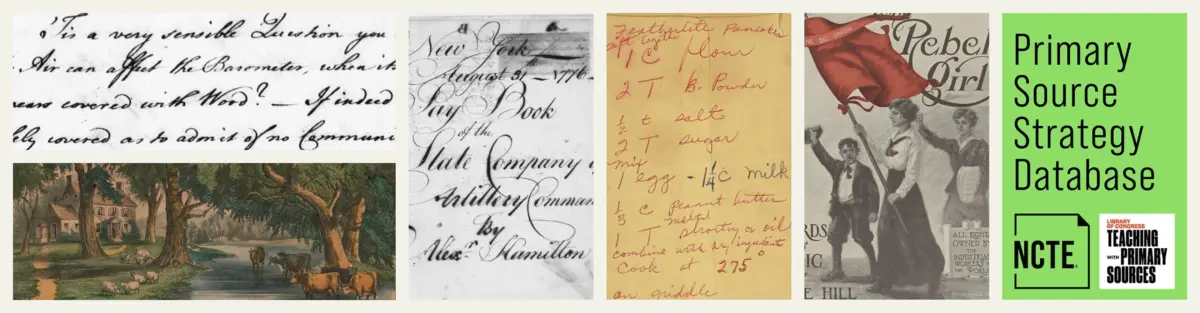
At the heart of this collaborative effort is a robust, searchable digital database housing instructional strategies for more than 150 specific artifacts drawn directly from the Library of Congress’s vast digitized primary source collections. Conceived, tested, and refined by over two dozen veteran educators and leaders in English language arts (ELA) education, these resources do far more than offer historical context. They bridge the gap between archival artifacts and contemporary literacy standards, articulating clear instructional merit, suggesting thematic units, and aligning directly with state educational frameworks.
By integrating tags such as "picturebook" and "argument," the database enables educators to seamlessly weave authentic historical documents into everyday curriculum. These primary sources serve as powerful springboards for discussions around systemic inequality, cultural identity, and social norms. Among the array of rich artifacts featured in the database, historical advertisements—such as a turn-of-the-century promotional piece for PORO Hair Grower published in The Statesman—provide a poignant lens through which students can investigate the deep intersection of appearance, power structures, and systemic racism.
This comprehensive report examines the structural mechanics of the NCTE-Library of Congress partnership, analyzes specific classroom applications of marginalized historical texts, addresses the socio-political challenges inherent in teaching systemic bias, and outlines the transformative future outlook for primary source-driven literacy education.
Detailed Chronology: The Evolution of the NCTE and Library of Congress Partnership
The integration of primary sources into American classrooms is not a novel concept, but the systematic, nationwide scaling of this practice through the lens of modern English language arts represents a watershed moment in educational reform.
Phase I: Laying the Foundation
For decades, primary sources were largely sequestered within the domain of social studies and history curricula. While history teachers utilized letters, photographs, and government documents to recount chronologies, English language arts classrooms traditionally focused on canonical literature, grammar, and formal composition. However, as educational research increasingly underscored the importance of multimodal literacy—the ability to read, comprehend, and evaluate diverse types of texts—educational leaders recognized that primary sources offered unparalleled opportunities for critical literacy instruction.
Recognizing this potential, the Library of Congress established the Teaching with Primary Sources (TPS) program to help educators connect students with the library’s unmatched holdings of millions of digitized historical items. Through the TPS Consortium, organizations with national reach were invited to partner with the Library of Congress to develop specialized pedagogical strategies tailored to specific academic disciplines.
Phase II: The NCTE Intervention
The National Council of Teachers of English stepped into this space to champion the integration of historical artifacts specifically through the prism of language arts, rhetoric, and cultural analysis. NCTE mobilized more than two dozen distinguished educators, curriculum developers, and ELA leaders to review over 150 items from the Library of Congress’s digitized vaults.
These educators were tasked with answering a critical question: How can a historical document—whether a 19th-century political cartoon, a suffragist pamphlet, or a vintage advertisement—serve as a text for deep literacy instruction?
The result of this multi-year collaborative effort is the current searchable database. Each entry provides educators with:
- A clear summary and description of the artifact.
- The instructional and curricular value of the primary source.
- Alignment with state content standards (such as New Mexico Adopted Content Standards for Speaking, Listening, and History/Social Studies).
- Proactive guidance on navigating potential pushback or community challenges.
- Searchable metadata tags (including Comprehension, Grammar, Spelling, picturebook, and argument).
Phase III: Deployment and Digital Expansion
Today, the initiative functions as a living, breathing digital repository. Educators nationwide can access the clearinghouse directly through the NCTE portal. The database continues to evolve as new instructional modules are added, empowering teachers to transition students away from passive consumption of textbooks and toward active, inquiry-based interrogation of historical and cultural artifacts.
Supporting Context & Metrics: Case Study of a Primary Source
To truly understand the pedagogical power of the NCTE-Library of Congress initiative, one must examine how individual artifacts are deployed within the classroom. A prime example featured in the database centers on an advertisement for PORO Hair Grower published in the historical periodical Franklin’s The Statesman.
Artifact Breakdown: The PORO Hair Grower Advertisement
- Visual Content: The advertisement features photographs of PORO founder Annie Malone Pope-Turnbo alongside a woman identified as L. L. Roberts, both showcasing exceptionally long, straight hair.
- Textual Captions: The captions read: "4 years ago my hair was only a finger-length, and my temples were bald halfway up my head" (Pope-Turnbo) and "4 years ago my hair just covered my shoulders" (Roberts).
- Commercial Messaging: Beyond personal testimonies, the advertisement issues a stark warning to readers, cautioning them against fraudulent hair growth products currently flooding the market and advising them to verify official PORO branding.
The Intersect of Appearance, Power, and Systemic Racism
While at first glance a vintage commercial may appear to be a simple artifact of early 20th-century consumerism, ELA educators utilizing the NCTE framework leverage the PORO advertisement to unpack profound socio-political themes.
Systemic racism and cultural assimilation in the United States have historically targeted Black hair as a site of control, regulation, and marginalization. Seemingly trivial aspects of physical appearance are, in reality, deeply intertwined with dominant power structures. By examining how historical products marketed Eurocentric beauty standards—or conversely, how Black-owned enterprises like Annie Malone’s navigated and reshaped those markets—students confront how dominant norms attempt to enforce cultural conformity and erase authentic identity.
Through structured inquiry into hair discrimination, students learn to:
- Analyze and Question Social Norms: Examine how beauty standards are artificially constructed across different historical epochs and how those standards perpetuate social inequality.
- Identify Institutional Biases: Trace the historical continuity between early 20th-century marketing pressures and contemporary professional, educational, and social policies that penalize natural Black hairstyles.
- Build Empathy and Compassion: Understand the psychological and emotional toll that systemic discrimination takes on individuals and entire communities.
- Embrace Cultural Heritage: For marginalized students in particular, exploring the history of hair discrimination provides vital context that combats harmful stereotypes, validates lived experiences, and encourages self-acceptance.
Standards Integration and Curricular Alignment
The pedagogical robustness of this primary source is mirrored in its formal alignment with rigorous academic standards. According to the New Mexico Adopted Content Standards integrated into the lesson framework, analyzing artifacts like the PORO advertisement directly fulfills core educational benchmarks:
- Speaking & Listening (SL.11-12.3): Students evaluate a speaker or creator’s point of view, reasoning, and use of evidence and rhetoric, assessing stance, premises, word choice, and tone.
- Literacy in History/Social Studies (RH.11-12.1): Students cite specific textual evidence to support rigorous analysis of primary and secondary sources, connecting granular details to a holistic understanding of the text.
- Literacy in History/Social Studies (RH.11-12.2): Students determine the central ideas or information of a source and construct accurate summaries mapping the relationships among key historical details.
Official Statements and Pedagogical Philosophy
The leadership driving the NCTE and Library of Congress partnership has consistently emphasized that literacy education cannot exist in a vacuum. Reading comprehension, grammatical analysis, and rhetorical critique are most powerful when applied to texts that matter—texts that reflect the complexities of the human experience.
Educational leaders within the TPS Consortium note that primary sources democratize the classroom. When students are handed a textbook, they are presented with history as a finished, undisputed narrative. When students are handed a primary source—a handwritten letter, a faded photograph, or a 19th-century broadside—they become historians, literary critics, and active investigators. They must weigh evidence, detect authorial bias, evaluate rhetorical strategies, and construct independent arguments based on verifiable facts.
Furthermore, NCTE emphasizes that the inclusion of diverse cultural artifacts is essential for fostering inclusive classrooms. By incorporating materials that reflect the histories, struggles, and triumphs of marginalized communities, educators validate the identities of all students while equipping the entire student body with the critical consciousness required to navigate a pluralistic society.
Navigating Challenges and Resistance
Despite the overwhelming educational value of integrating primary sources that address systemic issues, educators embarking on this work frequently encounter institutional and community resistance. Recognizing these potential roadblocks, the NCTE framework proactively outlines the sources of pushback and offers strategic guidance for addressing them.
1. The Myth of Colorblindness and Avoidance of "Divisive" Topics
A prominent hurdle in contemporary education is the belief held by some community members and administrators that race, systemic oppression, and historical discrimination should not be factors in public education. Critics operating from this perspective often argue that focusing on issues like hair discrimination or racialized beauty standards causes unnecessary social division.
- The Educational Counter-Response: Educators are encouraged to ground their instruction firmly in academic standards—such as rhetorical analysis, evidence-based argumentation, and media literacy—demonstrating that examining historical advertisements is a fundamental exercise in media analysis rather than partisan indoctrination.
2. Misunderstandings Surrounding Critical Race Theory (CRT)
In various school districts across the nation, conservative political opposition has targeted discussions of systemic racism, categorizing them under broad, often misapplied definitions of Critical Race Theory.
- The Educational Counter-Response: Proponents of the NCTE framework stress the importance of transparency, sharing primary source documents openly with parents and administrators to prove that the curriculum is anchored in verifiable historical evidence (such as archival newspapers and documented commercial practices) rather than abstract ideological theory.
3. Perceived Distractions from "Core" Curricula
Some traditionalists argue that exploring cultural identity and historical social dynamics detracts from fundamental academic subjects like grammar, spelling, and basic reading comprehension.
- The Educational Counter-Response: The NCTE database explicitly links primary source analysis to core literacy markers, demonstrating that evaluating a primary source requires advanced vocabulary acquisition, complex grammatical parsing, rigorous comprehension, and structured expository writing.
4. Lack of Historical Context
Resistance is occasionally born out of a genuine lack of awareness regarding the historical and contemporary significance of issues like hair discrimination within the Black community.
- The Educational Counter-Response: By providing comprehensive background notes, teacher guides, and curated resource links within the database, NCTE ensures that educators are fully supported and well-equipped to guide sensitive classroom discussions with historical accuracy and pedagogical confidence.
Future Outlook: The Next Frontier in Literacy Education
As the NCTE and Library of Congress partnership looks toward the future, the horizons of primary source education are expanding rapidly. Several key trajectories are set to define the next phase of this initiative:
Deepening Digital Interactivity
Plans are underway to enhance the searchable database with interactive digital tools. Future iterations will likely incorporate multimedia annotations, allowing students to digitally collaborate across classrooms nationwide as they dissect historical documents, debate rhetorical strategies, and build collaborative digital archives of their own local histories.
Expanding Archival Scope
While the current repository features over 150 meticulously curated items, the vast ocean of the Library of Congress remains largely untapped by comparison. Future expansions will place increased emphasis on incorporating underrepresented voices, indigenous histories, immigrant narratives, and labor movements, ensuring that the database continually reflects the evolving tapestry of American history and global literacy.
Professional Development and Teacher Training
Recognizing that access to tools is only half the battle, NCTE is scaling its professional development offerings. Workshops, webinars, and regional training institutes will coach educators on how to scaffold primary source analysis for diverse learners, English language learners, and students with varying reading abilities. By building teacher capacity, the initiative ensures that archival materials do not merely sit in a digital repository, but actively ignite critical thinking in thousands of classrooms daily.
Conclusion
The collaboration between the National Council of Teachers of English and the Library of Congress represents a triumphant synthesis of archival preservation and modern pedagogical practice. By unlocking the treasures of the nation’s library and transforming them into rigorous literacy tools, the initiative challenges students to look beyond the surface of texts, interrogate the structures of power that shape our daily lives, and develop the critical voice necessary to participate meaningfully in a democratic society. Through thoughtful curation, robust standards alignment, and unwavering dedication to inclusive education, this partnership is actively shaping the future of American literacy.

