

Executive Overview
In the fast-evolving landscape of modern education, educators are constantly bombarded with sweeping pedagogical trends, heavy systemic overhauls, and exhaustive curriculum adjustments that promise the world but often deliver burnout. Enter the concept of the classroom micro-experiment—a lean, agile, and evidence-based approach to professional practice. Rather than forcing a high-stakes, semester-long commitment to an unfamiliar routine, a micro-experiment invites teachers to isolate a single variable, deploy it over a short, fixed window of time, and evaluate the empirical results.
This installment marks Part 3 of an ongoing Back-to-School series exploring how micro-experiments can transform day-to-day instruction. While Part 1 investigated the efficacy of weekly formative checks, and Part 2 decentralized assessment creation by handing the reins over to students, Part 3 addresses a fundamental pillar of cognitive science: the social construction of knowledge.
By shifting the review dynamic from isolated solo play to collaborative, small-group discourse, educators can unlock deeper conceptual understanding, foster peer-to-peer accountability, and make formative assessment infinitely more revealing. This article explores the mechanics, cognitive benefits, implementation strategies, and broader implications of transitioning your classroom’s weekly review sessions from solo endeavors to vibrant, team-based micro-experiments.
Detailed Chronology: The Anatomy of a Classroom Micro-Experiment
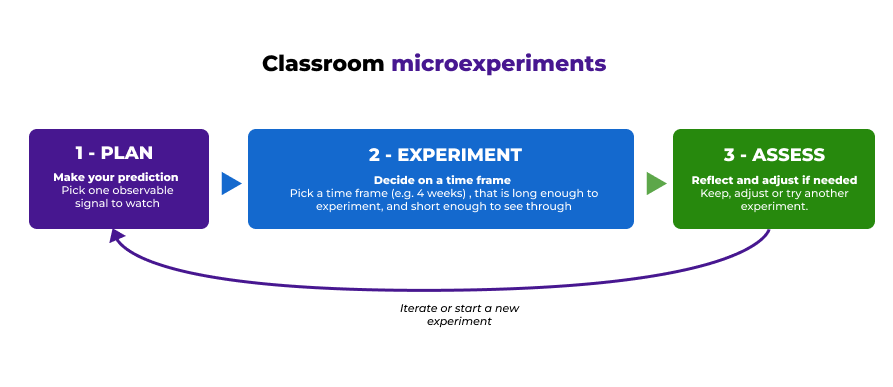
To understand the weight of this pedagogical shift, one must first master the micro-experiment framework. The methodology is designed to bypass the inertia that keeps teachers from innovating in a packed schedule.
Phase 1: The Design and Commitment Window
A traditional curriculum change requires lesson planning, textbook reallocation, administrative approval, and months of patience to see if it "worked." Conversely, a micro-experiment operates on a compact timeline—typically lasting between two and four weeks.
- Define the Hypothesis: What specific outcome are you targeting? (e.g., "If students are forced to verbally justify their answers to teammates, conceptual errors will surface and self-correct more rapidly than in solo play.")
- Establish Boundaries: Keep the intervention isolated. Do not change your entire grading rubric or lesson structure; simply alter one operational mechanic—such as switching from individual device play to team-based modes.
Phase 2: Execution and Data Gathering
During the designated window, the teacher steps back from being the primary knowledge arbiter and steps into the role of a facilitator-observer. When utilizing gamified learning platforms—such as team-based Kahoot! modes (including specialized collaborative experiences like The Lost Pyramid)—the classroom dynamics immediately shift. Students are no longer racing merely against a clock or their own anxiety; they are negotiating a shared mental model.
Phase 3: Evaluation and Iteration
At the conclusion of the four-week test, the educator evaluates the qualitative and quantitative data. Did engagement rise? Were learning gaps closed faster? Based on these insights, the teacher faces three clear paths:
- Adopt: Institutionalize the strategy as a permanent part of the weekly routine.
- Iterate: Refine group sizes, time limits, or role assignments and run a secondary, fine-tuned test.
- Pivot: Discard the approach and experiment with an entirely different variable.
Supporting Context & Metrics: The Cognitive Mechanics of Peer Discussion
Why bother forcing students into groups when individual assessment provides clean, unadulterated metrics on a student-by-student basis? The answer lies in the profound difference between surface recognition and deep cognitive processing.
[Individual Review] -> Student knows/doesn't know -> Surface-level metric
[Collaborative Review] -> Debate -> Justification -> Cognitive Conflict -> Deep Understanding
Unmasking Surface-Level Competence
During traditional individual review—whether conducted via pen-and-paper quizzes or solo digital clickers—a student either selects the correct option or misses it. However, a correct answer can occasionally be misleading. A student might guess correctly, rely on superficial pattern recognition, or memorize a rote definition without grasping the underlying principles. Conversely, an incorrect answer might stem from a simple reading error rather than a foundational misunderstanding.
When working in isolation, there is rarely an immediate mechanism to diagnose why a student answered the way they did.
The Power of Cognitive Conflict and Verbalization
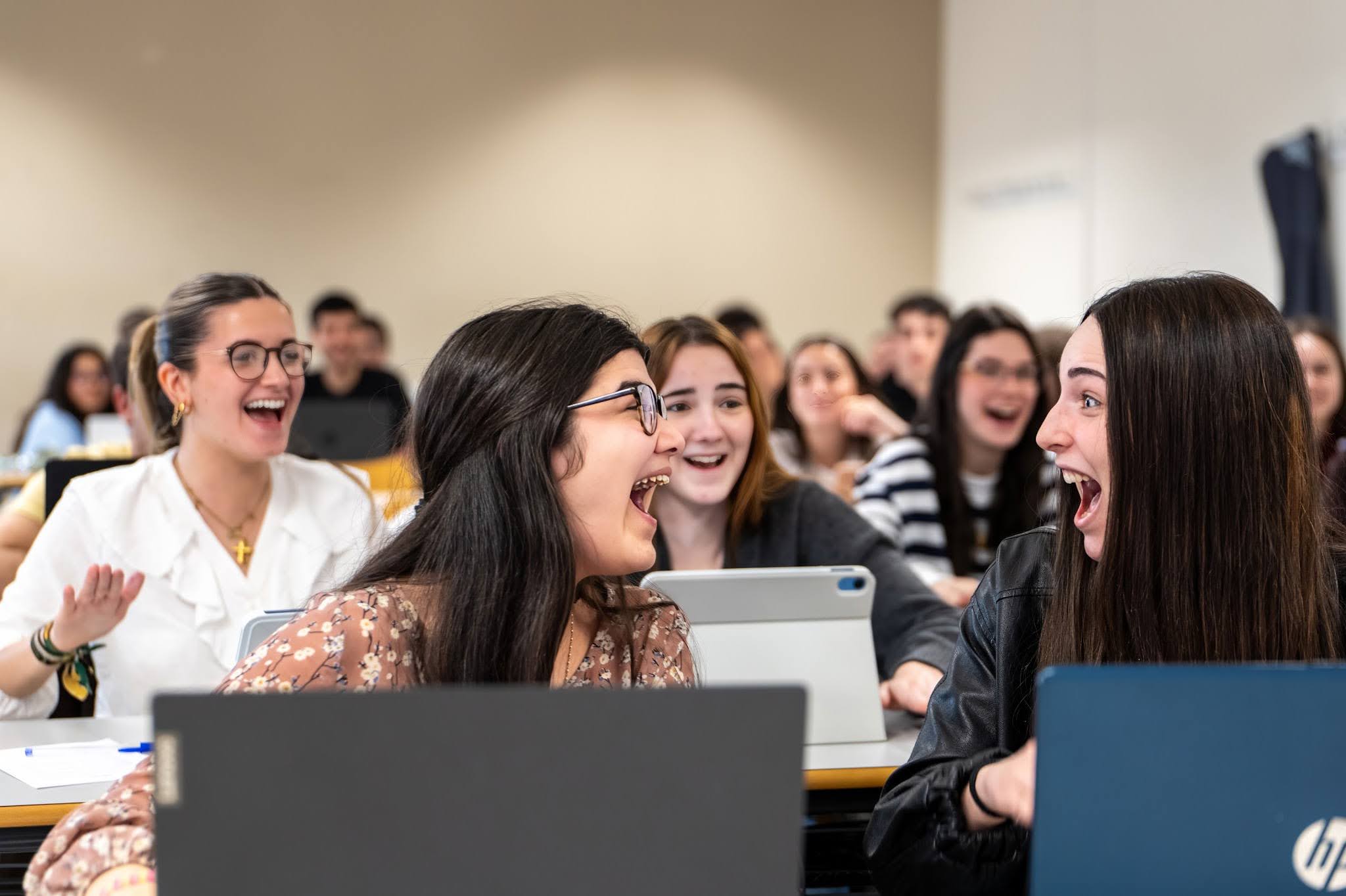
When students are placed in small groups and instructed that the team must discuss and agree before submitting an answer, the pedagogical dynamic changes entirely.
- Articulating Thought Processes: To convince a teammate, a student must translate abstract thoughts into structured, spoken arguments. Educational research consistently shows that explaining a concept out loud forces the brain to review, organize, and sharpen its own understanding.
- Productive Struggle and Peer Scaffolding: If teammates disagree, they must defend their choices. This creates a moment of "cognitive conflict." A student who misunderstood the core concept gets to hear an explanation delivered in peer-to-peer language, which often transcends the formal, academic tone of a textbook or the direct instruction of an educator.
- Lowering Affective Filters: Whole-class discussions are notorious for inducing anxiety; many students freeze up when forced to speak in front of thirty peers. Small groups act as a safe container—an incubator where learners can test ideas, make mistakes, and refine their logic without fear of public embarrassment.
Official Perspectives and Implementation Blueprint
Implementing a successful collaborative micro-experiment requires intentionality. Teachers cannot simply throw students into groups and expect high-level academic discourse to materialize organically.
Structuring the Four-Week Micro-Experiment
For educators looking to deploy this specific four-week test, the implementation roadmap involves precise structural controls:
-
Week 1: Establishing Group Norms and Team Roles
- Form balanced groups of 3 to 4 students, mixing academic strengths to ensure robust discussions.
- Introduce the concept of collective accountability: the team’s score reflects the collective understanding, meaning everyone shares the responsibility of ensuring teammates comprehend the rationale behind each choice.
- Keep the review session tightly bound—10 to 15 minutes is the sweet spot. It is long enough to foster deep conversations, but short enough to maintain high energy and focus.
-
Week 2: Scaffolding the Argumentation
- Explicitly prompt students to practice justification phrases (e.g., "I think it’s B because…", "Wait, did you consider that…", "Can you explain why you chose that?").
- Monitor group dynamics closely, stepping in not to give answers, but to model probing questions that deepen inquiry.
-
Week 3: Introducing Confidence Metrics and Reflection
- Utilize gamified team modes (such as those that require teams to evaluate their collective confidence levels alongside their answers).
- Observe whether teams are successfully identifying their own areas of uncertainty or if certain dominant personalities are railroading the group decisions.
-
Week 4: Review, Assessment, and Decision Making
- Compare student performance and qualitative feedback against baseline data from solo review sessions.
- Survey the students: Did they feel more confident? Did the discussions clarify confusing topics?
Best Practices for Team-Based Reviews
- Optimize Group Composition: Avoid random grouping every single session, but also prevent rigid cliques from forming. Intentional, semi-permanent grouping fosters psychological safety over the course of the four-week window.
- Keep Time Constrained: High-urgency timers prevent off-task conversation and force students to prioritize their most critical arguments quickly.
- Define Success Criteria: Clearly communicate to students that the goal of the team play is not merely to win the game, but to ensure every member can explain the winning answer.
Future Outlook: The Horizon of Agile Teaching
The broader implications of classroom micro-experiments extend far beyond a single weekly review session. In an era where educational reform is frequently bogged down by bureaucracy, micro-experimentation empowers teachers to reclaim their agency as classroom researchers.
By treating the classroom as a living laboratory—where small variables are tested, measured, and iterated upon—educators can build a personalized, highly effective toolkit tailored precisely to the unique demographics and cognitive needs of their students. The shift from solo isolation to collaborative peer discourse is merely one node in this network of agile teaching methods.
As we look toward the conclusion of this Back-to-School series, the journey of micro-experimentation continues. In Part 4, we will flip the traditional lesson model on its head entirely: What if the review happened before class even started? By testing a short diagnostic digital assessment prior to direct instruction, we will explore how proactive formative checks can fundamentally reshape the economy of classroom time, opening up unprecedented space for deep, inquiry-based learning.
Until then, take a look at your next weekly review session, step away from the solo screens, group your students together, and let the power of peer discussion transform your classroom dynamic.

