
Executive Overview
As the autumn leaves fall and the nights grow longer, educators, parents, and students alike brace for the annual challenge of maintaining classroom momentum amidst the distractions of the spooky season. Historically, Halloween has been viewed by instructors as a pedagogical hurdle—a period of heightened excitement and fractured attention that threatens academic focus. However, a paradigm shift is underway in educational technology. Rather than combating seasonal enthusiasm, platforms are increasingly leveraging it.
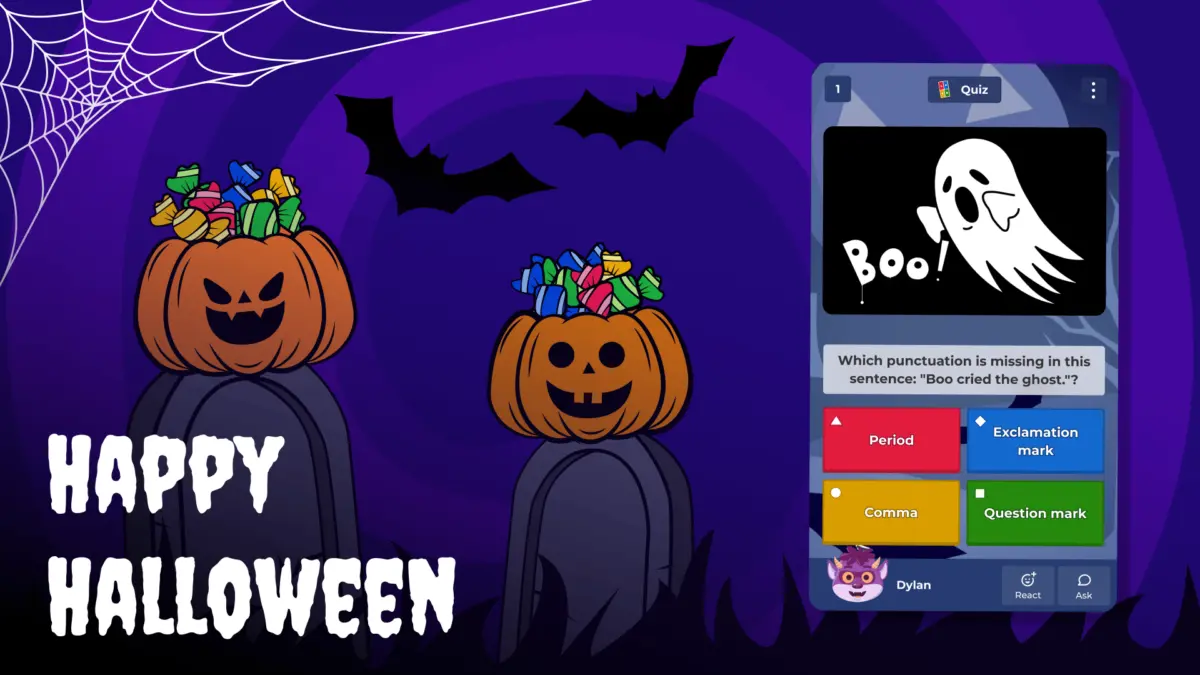
At the vanguard of this movement is Kahoot!, the global game-based learning platform. By rolling out an expansive, curated suite of Halloween-themed learning content, Kahoot! has fundamentally altered the calculus of seasonal lesson planning. From K-12 classrooms and home-schooling environments to university study groups and corporate team-building events, the platform is deploying gamification to turn pop culture icons, historical mysteries, and STEM curricula into immersive, interactive experiences.
This initiative is not merely about playing games in costume; it is a calculated pedagogical strategy designed to harness intrinsic motivation. By integrating beloved franchises—ranging from Disney and Nickelodeon to Marvel and Star Wars—with rigorous academic frameworks, Kahoot! is demonstrating that cognitive development and playful festivity are not mutually exclusive. This report explores the mechanics, content partnerships, and broader implications of Kahoot!’s Halloween rollout, examining how interactive quizzes are redefining engagement across diverse demographics.
Detailed Chronology of the Seasonal Rollout
The deployment of Kahoot!’s comprehensive Halloween ecosystem represents the culmination of strategic partnerships and iterative digital content development designed to address the psychological and developmental needs of learners throughout the autumn semester.
Phase 1: Curating the K-12 Classroom Experience
In the early weeks of October, as teachers finalize their mid-semester syllabi, Kahoot! launched its educator-focused initiatives. Recognizing that October brings a natural spike in student curiosity regarding the mysterious and the macabre, the platform partnered with premier content creators to bridge historical inquiry with gamified assessments.
The integration of TED-Ed kahoots allowed middle and high school students to dive into historical narratives, navigating the nuanced socio-political dynamics of the Salem Witch Trials or exploring the literary lineage of Bram Stoker’s Dracula. Simultaneously, partnerships with Nickelodeon and Disney bridged foundational subjects—such as mathematics and language arts—with universally recognized characters like SpongeBob SquarePants and Disney’s iconic catalog. This phase ensured that teachers had immediate access to cross-curricular resources that required zero setup time while maintaining alignment with state and national educational standards.
Phase 2: Engaging the Home Front and Early Childhood Education
As classrooms embraced the seasonal shift, attention pivoted toward the domestic sphere. Recognizing that parents often struggle to sustain educational routines during holiday build-ups, Kahoot! unveiled targeted collections for younger learners.
By mid-October, releases featuring Sanrio’s Hello Kitty and Friends introduced foundational cognitive and mathematical challenges wrapped in festive aesthetics. These were swiftly followed by Marvel-themed math modules starring Groot and his cosmic companions, alongside socio-emotional learning (SEL) modules featuring Charles Schulz’s Peanuts gang. The timing of these releases coincided with the streaming availability of seasonal classics like It’s the Great Pumpkin, Charlie Brown on Apple TV, creating a synergistic multi-platform loop that reinforced emotional literacy and narrative comprehension at home.
Phase 3: Fortifying Exam-Season Study Habits for Students
By late October, the academic calendar shifts toward midterm examinations and preliminary assessments. To combat the cognitive fatigue that often accompanies this period, Kahoot! rolled out advanced study modules tailored for older students.
Collaborating with institutions like the Museum of Science, the platform introduced interactive STEM modules exploring lunar phases and ecological dynamics. Concurrently, the WWF Wild Classroom provided context on misunderstood seasonal animals, challenging ecological myths with empirical science. For language arts students, advanced vocabulary modules developed in partnership with Wiktionary provided rigorous, high-level lexical challenges designed to test comprehension of archaic and unusual English terminology.
Phase 4: Frightfully Fun Adult and Lifelong Learning
Finally, as Halloween night approaches, the platform expanded its scope beyond formal education to cater to lifelong learners, corporate teams, and social gatherings. Leveraging data and crowdsourced trivia from Wikipedia, alongside an intergalactic Star Wars-themed quiz titled "Star Wars: Happy Ghoul-actic Halloween," the platform targeted the adult demographic. These games were architected to foster social bonding, cultural literacy, and lighthearted cognitive exercise, proving that gamified learning extends well past the traditional classroom boundary.
Supporting Context & Metrics: The Science of Gamified Engagement
To understand the efficacy of Kahoot!’s seasonal campaign, one must examine the underlying cognitive and psychological principles driving game-based learning. Modern educational psychology underscores that sustained attention relies heavily on emotional resonance and active participation—two elements inherent to gamification.

The Neurobiology of Play and Retention
Traditional lecture-based formats often fail to trigger the dopaminergic reward pathways essential for long-term memory consolidation. When students participate in a live, timed Kahoot! session, their brains experience a micro-surge of adrenaline and dopamine associated with competitive play and immediate feedback loops.
According to internal educational metrics across the ed-tech sector, interactive quiz formats significantly outperform passive reading or video-watching in information retention rates. By embedding mathematical equations within a "haunted house" narrative (as seen in the Hello Kitty collection) or tying ecological data to nocturnal wildlife (via the Museum of Science and WWF modules), the platform reduces cognitive load. The learner focuses on the game mechanics, while the brain unconsciously processes and retains the underlying academic concepts.
Demographic Reach and Content Diversity
The scale of Kahoot!’s educational ecosystem is vast, servicing millions of active monthly users across more than 200 countries. The Halloween collection exemplifies a multi-tiered content strategy designed to cater to distinct user personas:
| Target Demographic | Primary Content Partners | Core Academic Focus | Pedagogical Objective |
|---|---|---|---|
| K-12 Educators | TED-Ed, Nickelodeon, Disney | History, STEM, Language Arts | Spark curiosity, connect pop culture to core curricula, ease lesson planning. |
| Parents & Young Learners | Hello Kitty, Marvel, Peanuts | Early Math, Counting, SEL | Reinforce foundational skills at home without intimidation; build emotional literacy. |
| Students & Test-Preppers | Museum of Science, WWF, Wiktionary | Advanced STEM, Ecology, Lexicon | Maintain study momentum ahead of midterms; expand critical vocabulary. |
| Lifelong Learners & Groups | Wikipedia, Lucasfilm (Star Wars) | Cultural History, Trivia, Pop Culture | Foster social engagement, team-building, and intergenerational entertainment. |
Official Statements and Industry Insights
The intersection of entertainment IP (Intellectual Property) and educational technology has garnered significant commentary from industry leaders and institutional partners alike.
In statements accompanying the rollout of seasonal content packages, curriculum developers have repeatedly emphasized the necessity of meeting learners where they are. “Education does not happen in a vacuum, and neither do children’s interests,” noted one curriculum specialist involved in the design of the platform’s pop-culture integrations. “When a child sees Groot or SpongeBob tackling a mathematical puzzle, the intimidation factor of the subject matter dissolves. The barrier to entry is lowered, and suddenly, practicing subtraction feels less like a chore and more like a quest.”
Furthermore, institutional partners like the Museum of Science have lauded digital platforms for democratizing access to complex scientific phenomena. By translating astronomical concepts—such as the orbital mechanics governing lunar phases—into accessible, visually driven mobile and browser-based formats, educational institutions can reach audiences far beyond their physical brick-and-mortar facilities.
Educators across global forums have similarly praised the inclusivity of the platform’s adaptive design. Whether utilized in a high-tech suburban high school with one-to-one device ratios or a rural community center utilizing mobile smartphones, the asynchronous and synchronous play options ensure that socioeconomic barriers do not preclude participation in high-value interactive learning.
Future Outlook: The Evolution of Seasonal Ed-Tech
As we look toward the future of educational technology, the success of campaigns like Kahoot!’s Halloween rollout signals a permanent shift in how academic institutions and content creators will approach seasonal programming.
The Convergence of IP and Pedagogy
The trend of leveraging major entertainment franchises for educational outcomes is projected to accelerate. As media companies seek deeper, more meaningful engagement with their audiences, educational platforms offer a unique environment where IP is actively interacted with rather than passively consumed. Future iterations of seasonal campaigns will likely incorporate advanced generative AI tools, allowing educators to instantly spin up customized quizzes featuring students’ favorite characters tailored to specific, localized curriculum standards.
Expanding Beyond Halloween
While autumn festivities provide a clear template for engagement, the underlying methodology is already being adapted across the entire academic calendar. From Earth Day ecological challenges and Black History Month historical deep-dives to winter holiday science modules and spring-testing prep, the blueprint established by these seasonal content collections is becoming the industry standard.
Ultimately, Kahoot!’s approach illustrates a vital truth for modern educators: engagement is the precursor to mastery. By transforming the spooky season into an opportunity for intellectual exploration, collaborative play, and cognitive growth, platforms like Kahoot! are proving that the most effective learning often happens when students are having too much fun to realize they are studying. For educators, parents, and students looking to elevate their academic journey, unlocking unlimited access through advanced plans—such as Kahoot!+ Gold for schools, students, and families—ensures that these dynamic learning opportunities remain accessible all year round.

