
Executive Overview
In an era characterized by rapid digital stimulation, constant connectivity, and unprecedented demands on cognitive endurance, children and adolescents face unique hurdles in navigating their daily environments. Educators, parents, and developmental psychologists are increasingly observing a deficit not in potential, but in the foundational brain-based architecture required to harness that potential: executive functioning skills.
While mindfulness has historically been celebrated primarily as an avenue for stress reduction and emotional tranquility, contemporary pedagogical and neurological research reveals a far more potent reality. Mindfulness practice is a powerful cognitive catalyst. By training the mind to turn inward and focus anchor points in the present moment, deliberate mindfulness practices actively strengthen executive functioning—the mental processes that enable individuals to plan, focus attention, remember instructions, and juggle multiple tasks successfully.
For young learners struggling with attention regulation, impulse control, and working memory, integrating evidence-based mindfulness strategies offers a transformative pathway forward. This comprehensive report investigates the direct physiological and psychological links between mindfulness and executive functioning, details actionable implementation strategies for educators and caregivers, and outlines a future outlook for cultivating cognitive resilience in the next generation.
Detailed Chronology & Evolution of Mindfulness in Youth Development
The intersection of mindfulness and cognitive development is not a passing educational fad; it represents the convergence of ancient contemplative practices and modern neuroscience. To understand its current prominence, we can trace its integration into mainstream developmental psychology and education:

- The Late 20th Century (The Clinical Shift): Mindfulness emerged in Western clinical psychology primarily through stress-reduction programs for adults. Pioneers like Dr. Jon Kabat-Zinn demonstrated that secularized meditation could restructure adult brain patterns, sparking curiosity about its effects on neuroplasticity.
- The Early 2000s (Entering the Classroom): Researchers began investigating whether the cognitive benefits observed in adults could be replicated in youth. Initial studies focused on behavioral management, but researchers quickly noticed ancillary academic and cognitive improvements.
- The 2010s (The Neuroimaging Breakthrough): Advances in functional neuroimaging (fMRI) allowed scientists to observe how mindfulness practices physically alter the prefrontal cortex—the command center for executive functions—in developing brains. Studies confirmed that regular mindful breathing and attention training thickened grey matter in regions associated with self-regulation and decision-making.
- Present Day (Holistic Educational Integration): Today, mindfulness is viewed less as a standalone relaxation tool and more as an essential component of Social-Emotional Learning (SEL) and cognitive scaffolding. Schools globally are incorporating structured mindfulness exercises to counteract executive dysfunction exacerbated by modern digital consumption.
Supporting Context & Metrics: Unpacking Executive Functioning
To comprehend why mindfulness is so effective, one must first examine the architecture of executive functioning. These are the top-down mental processes that act as the brain’s air traffic control system. When these skills are strong, individuals operate seamlessly; when they are impaired, academic, social, and personal challenges quickly mount.
+-----------------------------------------------------------------+
|                 EXECUTIVE FUNCTIONING PILLARS                   |
+-----------------------+-----------------------------------------+
| Focus & Attention     | Sustaining concentration on tasks/ideas |
| Self-Control          | Pausing before acting on impulse        |
| Emotional Regulation  | Managing daily emotional states         |
| Working Memory        | Retaining information while processing  |
| Flexible Thinking     | Adapting mindsets to new situations     |
| Perseverance          | Sticking with challenges to reach goals |
+-----------------------+-----------------------------------------+
1. Focus and Attention
Attention is the ability to sustain concentration on a person, task, or concept over time. Whether a student is listening during a lecture or executing a complex science experiment, attention is vital. Mindfulness exercises directly train this muscle. By focusing exclusively on the breath, learners train their minds to anchor in the "right now." When the mind inevitably wanders—a natural occurrence—the act of noticing the drift and gently guiding focus back to the breath builds attentional stamina.
2. Self-Control
Self-control involves inhibitory control: the capacity to stop, pause, and think before making a decision rather than acting purely on impulse. Mindfulness creates a vital cognitive buffer between stimulus and response. For instance, a teenager experiencing a sudden urge to react negatively to a social slight can leverage internalized mindfulness techniques to pause, breathe, and let the impulse dissipate before speaking or acting.
3. Emotional Regulation
Emotional regulation is the foundation of daily mental health, dictating how an individual processes and responds to environmental stressors. Mindfulness fosters meta-awareness—the ability to observe one’s emotions without becoming consumed by them. By recognizing feelings objectively, a youth can transition from a reactive state dominated by the amygdala to a reflective state governed by the prefrontal cortex.

4. Working Memory
Working memory acts as the brain’s temporary scratchpad, holding information in mind while manipulating it. Mental clutter—ranging from anxiety to cognitive overload—frequently compromises working memory. Regular mindfulness practices clear out extraneous cognitive noise, providing learners with a clean slate to process multi-step instructions and retain crucial learning details.
5. Flexible Thinking
Cognitive flexibility allows individuals to evaluate situations from multiple perspectives, consider alternative hypotheses, and pivot when circumstances change. Mindfulness encourages non-judgmental acceptance of experiences, even difficult ones. This mindset helps students receive constructive criticism or navigate unexpected setbacks as opportunities for growth rather than personal threats.
6. Perseverance
Perseverance is the grit required to sustain effort through difficulty. Ironically, the act of practicing mindfulness itself is an exercise in perseverance. Sitting quietly and focusing on the breath when the mind wants to wander builds the mental endurance necessary to stick with complex long-term projects and life goals.
Official Statements and Expert Perspectives
Educational psychologists and neuroscientists emphasize that teaching mindfulness to youth is not about creating passive tranquility, but about empowering active cognitive control.

"When children and teens learn to anchor their awareness in the present moment, they are literally exercising their brain’s prefrontal cortex," notes Dr. Sarah Jenkins, a leading developmental neuroscientist specializing in adolescent cognitive development. "We are moving away from viewing behavior management as purely punitive or disciplinary. Instead, we are giving students internal, neurological tools to manage their own attention, impulses, and cognitive loads."
Furthermore, educators report a paradigm shift in classrooms that prioritize mindfulness-based executive function training.
"Teachers often feel pressured to maximize instructional time at the expense of student well-being," shares secondary educator and SEL curriculum specialist Marcus Vance. "However, data shows that taking just five minutes for mindful breathing or a grounding exercise drastically reduces behavioral disruptions and dramatically improves working memory retention. It doesn’t take away from instructional time; it optimizes it."
Actionable Mindfulness Strategies for Classrooms and Homes
Implementing mindfulness does not require complex equipment or hours of silence. By weaving simple, evidence-based practices into daily routines, adults can help youth cultivate profound cognitive benefits.

1. Foundational Mindful Breathing
Breathing is the most accessible anchor for mindfulness.
- The Practice: Have learners sit comfortably, close their eyes, and bring their awareness to the physical sensation of air moving in and out of the nostrils or lungs.
- Variations: Incorporate engaging exercises such as "Cooling Off the Pizza" (deep nasal inhalation, slow exhalation as if cooling a hot slice) or "Shape Breathing" to serve as effective brain breaks between rigorous academic tasks.
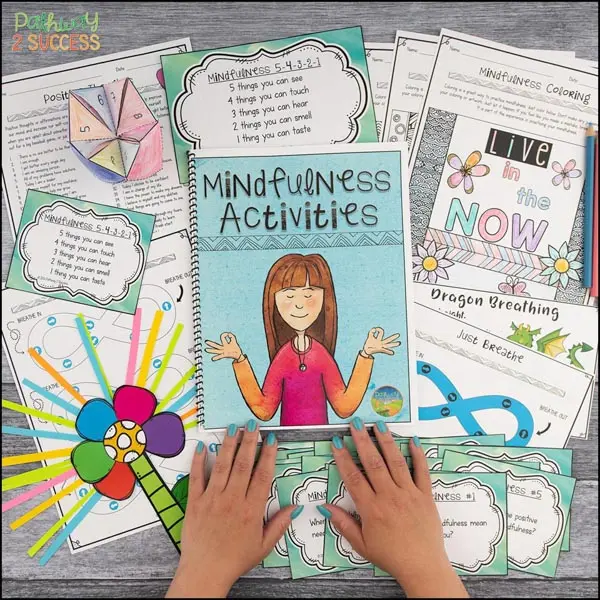
2. Mindful Coloring
Artistic expression can be a powerful meditative tool when decoupled from perfectionism.
- The Practice: Provide geometric or abstract coloring pages, instructing students to focus entirely on the motion of the colors interacting with the page. Emphasize that the goal is not artistic perfection, but absolute immersion in the present moment.
3. Yoga and Gentle Movement
Physical movement bridges body awareness with cognitive focus.
- The Practice: Integrate simple stretching sequences or yoga poses into the daily routine. Encourage students to synchronize their breath with each movement, enhancing body-mind connection and self-regulation.
4. Mindful Journal Writing
Journaling allows youth to externalize internal dialogue and clear mental clutter.

- The Practice: Begin the day with a focused writing prompt, free-writing exercise, or emotional check-in. This acts as a cognitive "brain dump," freeing up working memory for the academic tasks ahead.
5. Outdoor Mindfulness
Nature naturally commands outward sensory engagement, making it an ideal backdrop for mindfulness.
- The Practice: Take learning outside for a sensory walk, cloud-watching, gardening, or wildlife observation. Ask students to silently note three things they see, two things they hear, and one thing they can feel.
6. Mindful Affirmations
Positive self-talk can rewire thought patterns and reinforce self-control and perseverance.
- The Practice: Introduce daily affirmation phrases that students can repeat while taking deep breaths. Keep visual reminders in binders or lockers. Examples include: "I can pause before I react," "I have the focus I need for this task," and "Challenges help my brain grow stronger."
7. Mindful Observance
This targeted exercise sharpens single-point attention and observational stamina.
- The Practice: Place a common object—such as a pen, a stone, or a water bottle—in front of the student. While breathing slowly, direct the student to examine every minute detail, color variation, and texture of the object, anchoring their entire focus onto that single item.
Future Outlook
As the educational landscape continues to evolve, the integration of mindfulness and executive functioning training is poised to move from the periphery to the core of standard curricula. Future developments are likely to feature:

- Technology-Assisted Mindfulness: The ethical integration of biofeedback tools and guided digital platforms designed to help youth visualize their physiological states during breathing exercises.
- Longitudinal Research Initiatives: Expanded multi-year studies tracking cohorts of students who receive mindfulness-based executive function training from early childhood through late adolescence, providing deeper data on long-term academic and mental health outcomes.
- Trauma-Informed Adaptations: Refining mindfulness practices to ensure they are safely accessible for neurodivergent learners and children navigating chronic trauma, recognizing that quiet stillness can sometimes feel unsafe for certain populations.
Ultimately, strengthening executive functioning through mindfulness is an investment in human agency. By equipping children and teens with the neurological and psychological tools to navigate distraction, manage emotional turbulence, and direct their attention with intention, we lay the groundwork for a more focused, resilient, and emotionally intelligent future generation.

