
Executive Overview
From the effortless click of a household door latch to the colossal pulleys hoisting elevators up skyscrapers, simple machines are the invisible scaffolding of modern civilization. Defined fundamentally as mechanical devices with few or no moving parts that alter the magnitude or direction of a force, these six core tools—the lever, the inclined plane, the wedge, the screw, the wheel and axle, and the pulley—form the bedrock of all mechanical engineering.
Far from being relics of ancient history, these foundational mechanisms are experiencing a renaissance in educational methodologies worldwide. As global emphasis shifts heavily toward Science, Technology, Engineering, and Mathematics (STEM) education, educators and parents alike are rediscovering the power of hands-on mechanical projects. By bridging abstract physical concepts with tactile learning, children are moving past rote memorization and developing a genuine, intuitive understanding of physics.
This article explores the physics of work, breaks down the six classic simple machines through engaging, classroom-tested projects, dismantles common physical misconceptions, and examines the future outlook of mechanical engineering education in an increasingly digital world.
Detailed Chronology: The Evolution of Mechanical Advantage
To understand the profound impact of simple machines, one must look back at how humanity has harnessed mechanical advantage throughout history. Long before the formal codification of physics, ancient civilizations intuitively grasped the core principles of force, distance, and work.
- Circa 2500 BCE (The Age of the Inclined Plane): Ancient builders utilized massive earth ramps—essentially giant inclined planes—to move multi-ton limestone blocks during the construction of the Great Pyramids of Giza. This technique distributed gravitational resistance over an extended distance, making the impossible achievable through sustained human effort.
- Circa 3rd Century BCE (The Archimedean Breakthrough): Greek mathematician and engineer Archimedes revolutionized mechanics by mathematically formalizing the principle of the lever. Famously declaring, "Give me a place to stand, and I shall move the Earth," Archimedes articulated the mechanical advantage provided by a rigid beam pivoting on a fulcrum. Around the same time, the Archimedes Screw was conceptualized to efficiently lift water for irrigation.
- The Industrial Revolution (Standardization and Complex Integration): The 18th and 19th centuries marked the transition from isolated simple machines to complex, interdependent industrial engines. Simple machines were standardized, cast in iron, and combined into compound machinery, driving textile mills, steam locomotives, and massive factory assemblies.
- The 21st-Century STEM Renaissance: In modern pedagogy, educators have returned to these fundamental blocks. Recognizing that digital screens often isolate students from physical reality, schools and homeschooling networks have heavily integrated hands-on simple machine building kits, maker spaces, and DIY craft projects to cultivate spatial reasoning and early engineering skills.
Supporting Context & Metrics: The Physics of Work
In everyday conversation, "work" might refer to a demanding job, typing up a report, or running errands. However, in the realm of classical mechanics, work ($W$) possesses a rigorous, mathematically precise definition: work is the measurement of energy transfer that occurs when an object is moved over a distance by an external force.
Expressed through the canonical physics equation:
$$W = F times d$$
(Where $W$ represents Work, $F$ represents Force, and $d$ represents Distance.)
The Myth of Decreased Work
A pervasive misconception among students—and even adults—is that simple machines reduce the total amount of work required to complete a task. In a closed physical system governed by the conservation of energy, this is fundamentally false.
Simple machines do not decrease the work; rather, they trade force for distance. To lift a heavy object straight up, a massive input force ($F$) is required over a short distance ($d$). By introducing a simple machine—such as an inclined plane or a pulley system—the required input force is significantly diminished. The catch? That lesser force must now be applied over a much longer distance or duration. This trade-off is known as mechanical advantage.
Statistical Insights in Modern STEM Education
Recent educational metrics underscore the urgency of tactile STEM initiatives:
- Spatial Reasoning Gains: Studies in primary education indicate that children who regularly engage in hands-on building and mechanical manipulation score up to 25% higher in spatial reasoning assessments compared to peers limited to two-dimensional, screen-based learning.
- Early Interest Retention: According to educational research compiled by leading STEM guides, children introduced to fundamental physics concepts through tactile projects before the age of 10 are nearly 40% more likely to pursue engineering or hard-science tracks in higher education.
Official Statements & Educational Frameworks
Educational authorities and curriculum developers worldwide emphasize that intuitive physics must precede abstract mathematical formulas.
Dr. Helena Vance, a leading researcher in developmental cognitive mechanics at the Institute for Applied Pedagogy, notes:
"When a child builds a functional pulley out of a spool and string, or designs a cardboard wheel-and-axle car, they aren’t just playing—they are internalizing Newton’s laws of motion. They feel the resistance, they witness the mechanical advantage firsthand, and they build a mental framework that textbook diagrams can never replicate."
Furthermore, national science education standards increasingly mandate that engineering design processes be integrated alongside traditional scientific inquiry. By challenging students to solve open-ended problems using simple machines—such as constructing a device to safely lower an object from a designated height—educators foster critical problem-solving skills, resilience, and collaborative teamwork.
6 Hands-On STEM Projects to Bring Simple Machines to Life
To bridge theory and practice, educators and parents can utilize these six classroom-tested, highly engaging DIY projects. Each activity targets one of the classic simple machines, utilizing accessible, everyday materials.
1. The DIY Pulley: Lifting the Unliftable
- Target Machine: Pulley
- Materials Needed: Empty thread spools, strong twine or string, a sturdy cardboard box or hanger, and small weights (like metal washers or small toys).
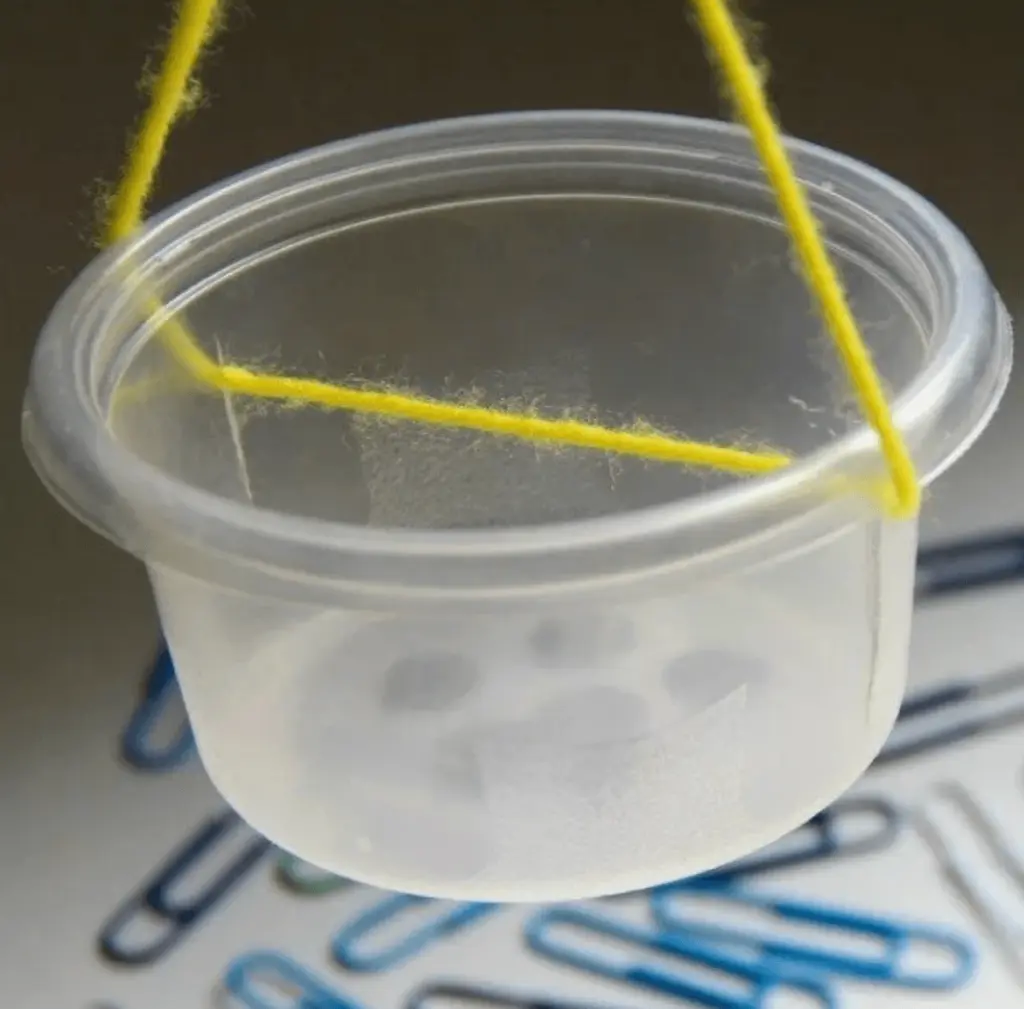
- Project Execution: Suspend a thread spool from a stable frame using a hanger or wire. Thread your string over the groove of the spool, tying one end to a weight bucket and holding the other in your hand.
- Educational Takeaway: Challenge students to lift the weight directly versus pulling down on the string threaded through the pulley. Discuss how changing the direction of the applied force transforms an awkward vertical heave into a manageable downward pull.
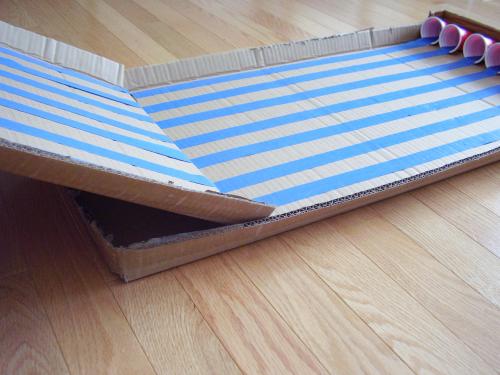
2. The Marble Run Inclined Plane
- Target Machine: Inclined Plane
- Materials Needed: Cardboard tubes (from paper towels), painter’s tape, books of varying thickness, and marbles or toy cars.
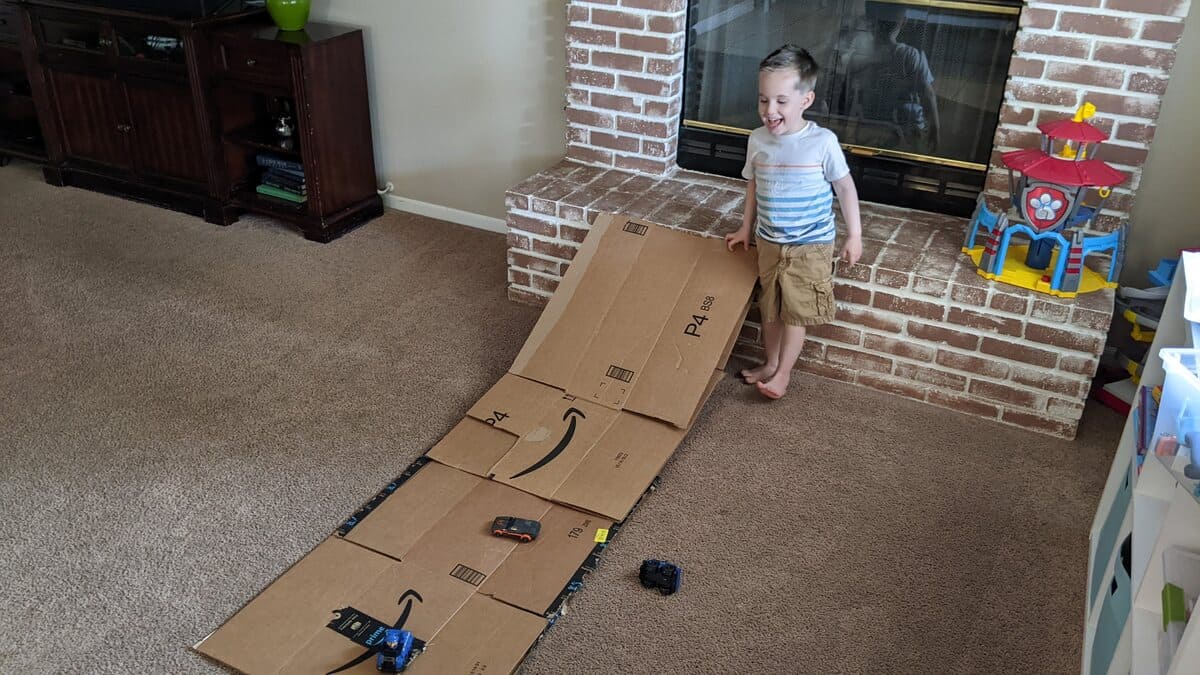
- Project Execution: Construct a winding racecourse using inclined cardboard half-tubes propped up by stacks of books. Experiment with varying the steepness (slope) of the plane.
- Educational Takeaway: Observe how decreasing the steepness of the incline increases the distance the marble must travel, while drastically reducing the gravitational force required to move it from top to bottom.
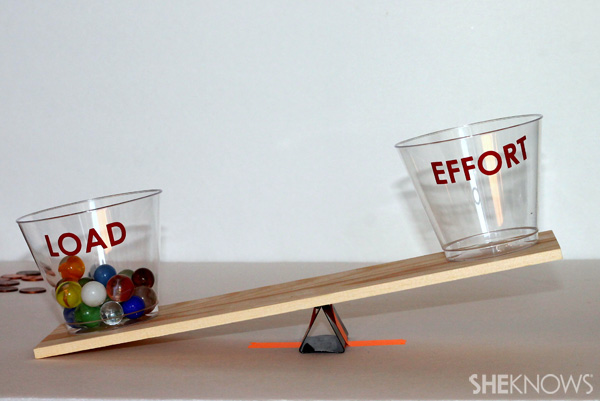
3. The Binder Clip Lever
- Target Machine: Lever
- Materials Needed: Large binder clips, craft popsicle sticks, and small weights (coins or erasers).
- Project Execution: Clip a binder clip to the center of a craft stick to act as a fulcrum. Place a small coin on one end and press down on the opposite end to launch or lift the weight.
- Educational Takeaway: Introduce the three classes of levers. Demonstrate how shifting the fulcrum closer to the load (the load arm versus the effort arm) alters the mechanical advantage, making it effortless to lift heavier items.
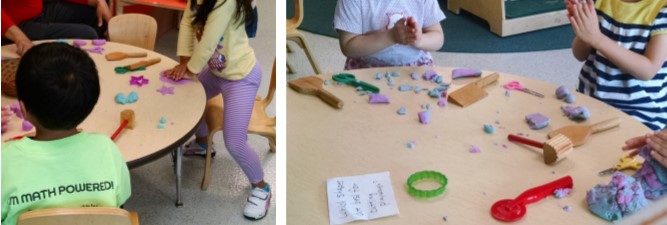
4. Splitting Play-Doh with a Wedge
- Target Machine: Wedge
- Materials Needed: Play-Doh, plastic or wooden triangular wedge blocks.
- Project Execution: Roll Play-Doh into thick, cylindrical "logs." Instruct students to try dividing the log using only the flat, blunt edge of their hand. Naturally, it resists. Next, press a triangular wedge into the log and observe how the downward force is redirected sideways to split the material cleanly.
- Educational Takeaway: Relate this back to real-world applications like axe heads, doorstops, and zipper teeth, illustrating how inclined planes placed back-to-back create powerful splitting forces.
5. The Wood and Screw Resistance Test
- Target Machine: Screw
- Materials Needed: A soft block of wood, a standard steel nail, and a threaded wood screw.
- Project Execution: Have students attempt to push a steel nail straight into the wood using only hand pressure. Next, demonstrate how effortlessly a screw penetrates the wood when rotational force (torque) is applied.
- Educational Takeaway: Explain that a screw is simply an inclined plane wrapped around a central cylinder. The spiral threads convert rotational motion into linear force, securing materials with incredible grip via friction.
6. Recycled Cardboard Wheel and Axle Cars
- Target Machine: Wheel and Axle
- Materials Needed: Toilet paper rolls or plastic water bottles, wooden skewers or plastic straws, bottle caps, and hot glue.
- Project Execution: Pierce the base of a cardboard tube, running a straw (housing a skewer axle) horizontally through it. Attach plastic bottle caps to the ends of the skewers to form free-spinning wheels.
- Educational Takeaway: Test the car’s rolling efficiency on smooth floors versus carpet. Discuss how the wheel and axle dramatically minimize sliding friction, allowing heavy loads to traverse vast distances with minimal input force.
Dismantling Common Physical Misconceptions
Even among older students, persistent misunderstandings regarding basic mechanics can hinder advanced scientific comprehension. Addressing these misconceptions directly ensures a robust foundation:
- Misconception: All levers function identically.
- Reality: Levers are classified into three distinct categories based on the relative positioning of the fulcrum ($F$), load ($L$), and effort ($E$). A seesaw represents a Class 1 lever (fulcrum in the middle); a wheelbarrow is a Class 2 lever (load in the middle); and a pair of kitchen tongs or tweezers is a Class 3 lever (effort in the middle). Understanding these distinctions is crucial for mechanical design.
- Misconception: Friction is always an adversary.
- Reality: While mechanical engineers often strive to minimize friction in bearings and gears to preserve energy, many simple machines rely entirely on friction to function. A wedge (such as a doorstop) would slide right back out without friction, and a wheel and axle would experience continuous slippage against the ground without tractive friction.
- Misconception: Simple machines generate energy.
- Reality: No machine can create energy. They merely transform input force and distance into a more advantageous output configuration, always subject to losses from thermal energy and friction (efficiency < 100%).
Future Outlook: Mechanical Ingenuity in the Digital Age
As we look toward the horizon of technological development—dominated by artificial intelligence, automation, and quantum computing—it is easy to overlook the physical mechanics that anchor our world. Yet, the future of engineering relies heavily on mastering these exact foundations.
Advanced robotics, micro-electromechanical systems (MEMS), and macro-scale industrial engineering all trace their lineage directly back to the six simple machines. Modern robotic limbs, for instance, utilize complex arrangements of levers and pulleys (tendons and joints) to mimic biological movement. Furthermore, the burgeoning popularity of complex Rube Goldberg machines—where simple machines are chained together in elaborate sequences to perform trivial tasks—demonstrates that spatial problem-solving and inventive creativity remain deeply engaging to young learners.
By continuing to prioritize tactile, hands-on STEM education, educators and parents are equipping the next generation with more than just academic knowledge; they are instilling an intuitive, mechanical literacy. When children understand how a wedge splits, how a pulley hoists, and how a lever lifts, they realize a profound truth: they do not just live in the world—they have the power to engineer it.

